
Preparing Mayan Xocolātl — The Bitter Cacao Drink of the Gods
Chocolate began as a bitter, spicy drink in Mesoamerica around 1900 BCE. The Olmec, Maya, and Aztec civilizations cultivated cacao (Theobroma cacao — literally 'food of the gods') and processed the beans into a frothy, unsweetened beverage called xocolātl (from Nahuatl: xococ 'bitter' + ātl 'water'). Cacao beans were so valuable that the Aztecs used them as currency — a rabbit cost 10 beans, a slave cost 100.
Mayan xocolātl was nothing like modern hot chocolate. It was served cold or at room temperature, flavoured with chilli peppers, vanilla, annatto (for red colour), and sometimes maize flour for body. It was whipped to a thick froth by pouring it repeatedly between two vessels from a height — the froth was considered the most desirable part. Elite Maya drank xocolātl from elaborately painted cylindrical vessels, and cacao residues have been found in tombs dating to 600 BCE.
The chemical compounds in cacao — theobromine (a mild stimulant related to caffeine), phenylethylamine (the 'love chemical'), and anandamide (which binds to the same brain receptors as cannabis) — explain why ancient Mesoamericans considered it sacred. The Spanish conquistadors brought cacao to Europe in the 16th century, where sugar was added and the drink was served hot — transforming the bitter ritual beverage of Maya priests into the sweet treat consumed by billions today.
Anweisungen
Harvest and ferment cacao pods
Harvest and ferment cacao pods
Cacao pods grow directly on the trunk and major branches of the Theobroma cacao tree — an unusual botanical trait called cauliflory. Harvest ripe pods when they turn from green to yellow-orange (Forastero variety) or red-purple (Criollo variety). Cut the pod from the tree with a sharp knife without damaging the bark — the same spot will produce fruit again.
Split the pod open and scoop out the beans and their surrounding white mucilaginous pulp. The raw beans are intensely bitter and astringent — they taste nothing like chocolate. Pile the beans and pulp in a heap, cover with banana leaves, and allow to ferment for 5-7 days. This fermentation is critical: naturally present yeasts and bacteria convert the sugars in the pulp to alcohol and acetic acid, which penetrates the beans, kills the embryo (preventing germination), and triggers complex biochemical reactions inside the bean that develop the precursors of chocolate flavour.
Materialien für diesen Schritt:
 Kakaobohnen500 g
 Banane6 Stück
Benötigte Werkzeuge:
 Messer
Dry the fermented beans
Dry the fermented beans
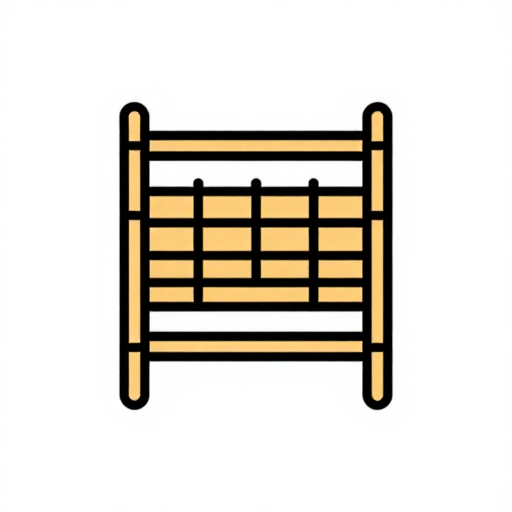
After fermentation, spread the beans in a single layer on bamboo mats or wooden platforms in direct sunlight. Dry for 5-7 days, turning the beans several times daily to ensure even drying. The moisture content must drop from approximately 60% to below 7% — at this point the beans are shelf-stable and ready for roasting.
During drying, the beans change from purple-grey to brown as the polyphenols oxidise. The acetic acid from fermentation evaporates (if it doesn't, the chocolate will taste vinegary). Well-dried beans should be brittle enough to snap cleanly when broken, with a dark brown interior. Underdried beans will mould; overdried beans become too brittle to process. The Maya dried their beans on stone patios in the tropical sun — a process essentially unchanged on modern small-scale cacao farms.
Benötigte Werkzeuge:
 Bambus-Trockengestell
Roast the cacao beans
Roast the cacao beans
Roasting develops the chocolate flavour through the Maillard reaction — the same browning chemistry responsible for the flavour of bread crust, coffee, and grilled meat. The Maya roasted beans in clay pots over charcoal fires, stirring continuously to prevent burning. The target temperature is approximately 120-150°C for 20-40 minutes — the beans should darken, the shells should become papery and loose, and the aroma should shift from raw and acidic to rich and nutty.
The roasting temperature and duration are the most important variables in chocolate flavour. Light roasting preserves fruity, acidic notes; dark roasting develops deep, bitter, smoky flavours. The Maya preferred a moderate roast that balanced bitterness with the complex fruity notes of Criollo cacao — a variety that modern chocolatiers consider the finest and most flavourful, but which produces lower yields than the hardier Forastero variety that dominates modern production.
Materialien für diesen Schritt:
 Holzkohle2 kg
Crack and winnow to remove shells
Crack and winnow to remove shells
After roasting and cooling, the thin papery shell surrounding each bean must be removed to access the cacao nib inside — the pure cacao that will become chocolate. Crack the roasted beans by rolling them between your palms, pressing with a flat stone, or gently crushing with a wooden pestle. The shells should fracture easily away from the nib.
Winnow the cracked beans by tossing them in a shallow basket or pouring them between two bowls in a light breeze. The lightweight shell fragments blow away while the heavier nibs fall back into the bowl. The Maya used flat baskets tossed in the open air — the same winnowing technique used for grain separation since the Neolithic. The cleaned nibs should be free of all shell fragments, which contribute bitterness and a papery texture if left in.
Benötigte Werkzeuge:
 Steinmörser mit Pistill
Grind the nibs to cacao paste on a metate
Grind the nibs to cacao paste on a metate
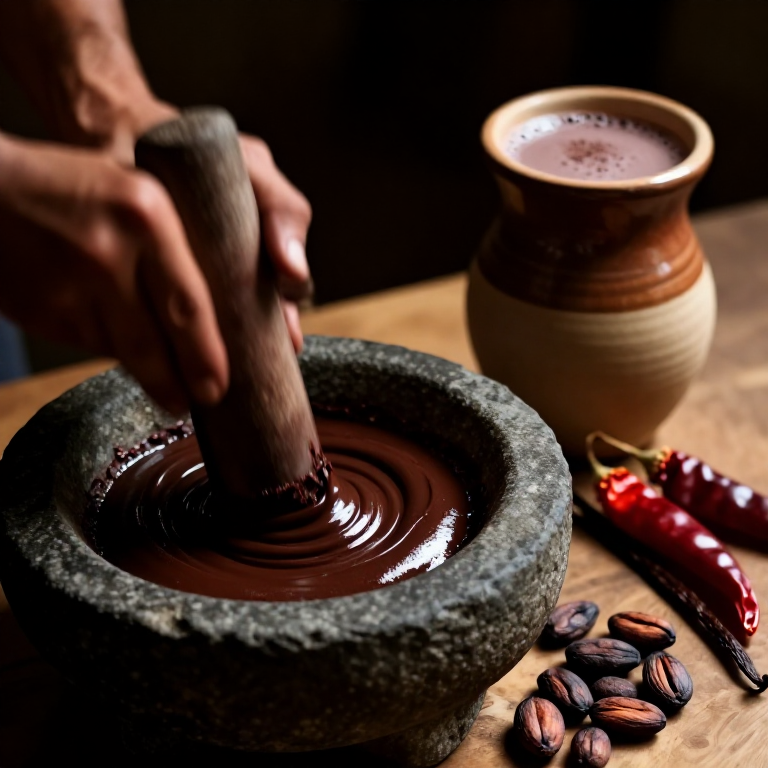
The traditional Mesoamerican grinding tool is the metate — a large flat stone with a curved surface and a cylindrical hand stone (mano). Place the cacao nibs on the metate and grind with the mano using a back-and-forth rolling motion. The friction and pressure rupture the cacao cells, releasing the cocoa butter (the natural fat that comprises approximately 50% of the nib by weight) and creating a smooth, glossy paste called cacao liquor or cacao mass.
This grinding takes considerable effort — 30-60 minutes of continuous work for a small batch. The heat generated by friction melts the cocoa butter, and the paste gradually transforms from a gritty, dry mass to a smooth, flowing liquid chocolate. The finer the grind, the smoother the final drink. Some Maya ground the paste on a heated metate to keep the cocoa butter fluid, allowing longer grinding for finer particle size. The finished paste can be formed into cakes and stored for months — Aztec merchants carried dried cacao paste cakes on trading journeys as both food and currency.
Benötigte Werkzeuge:
 Mahlstein
Mix the xocolātl drink
Mix the xocolātl drink
Dissolve approximately 30-40 grams of cacao paste in 250 ml of water (the Maya used room-temperature or slightly warm water, not boiling). Add flavourings in the Mayan tradition: a pinch of dried ground chilli pepper (for heat), a scraping of vanilla bean (vanilla is native to Mesoamerica and was used with cacao for millennia before Europeans encountered either), and optionally a pinch of annatto seed paste for a red-orange colour that the Maya associated with blood and vitality.
The Maya did NOT add sugar — sugarcane did not exist in the pre-Columbian Americas. The drink was genuinely bitter, which is why the Nahuatl name xocolātl means 'bitter water.' Honey could be added for sweetness in some regional variations, but the elite drink was unsweetened — the bitterness was considered a sign of strength and spiritual potency. Theobromine and caffeine in the cacao provided real stimulant effects that reinforced the sacred status of the drink.
Materialien für diesen Schritt:
 Schwarze Pfefferkörner5 g
 Wasser500 ml
Whip the froth — the soul of xocolātl
Whip the froth — the soul of xocolātl
The froth was the most prized element of Mayan xocolātl — it was called the 'heart' of the drink, and a xocolātl without froth was considered incomplete. The traditional frothing method: pour the prepared drink from one vessel into another from a height of approximately 50-60 cm, allowing the falling stream to aerate the liquid. Repeat 10-20 times until a thick, stable foam forms on the surface.
After the Spanish conquest, the molinillo (a carved wooden whisk rotated between the palms) was developed as a faster frothing tool — but the original pouring method remains effective and produces a distinctive foam texture. The foam is stabilised by the cocoa butter and the saponins naturally present in cacao — the same compounds that make it slightly soapy-feeling on the tongue. Serve immediately in a wide-mouthed ceramic cup that shows off the foam. The Maya drank xocolātl at feasts, religious ceremonies, and before battle — the theobromine acting as a mild stimulant that sharpened focus without the jittery anxiety of high-dose caffeine.
Materialien
5- 500 gPlatzhalter
- 6 StückPlatzhalter
- 2 kgPlatzhalter
- Platzhalter
- 500 mlPlatzhalter
Dieser Bauplan stellt her
Verwandte Blueprints
Diese Blueprints teilen Wissen — Techniken, Materialien oder Prinzipien

CC0 Gemeinfrei
Dieser Blueprint ist unter CC0 veröffentlicht. Sie dürfen dieses Werk für jeden Zweck frei kopieren, ändern, verbreiten und verwenden, ohne um Erlaubnis zu fragen.
Unterstützen Sie den Maker, indem Sie Produkte über seinen Blueprint kaufen, wo er eine Maker-Provision von Anbietern festgelegt, verdient. Oder erstellen Sie eine neue Iteration dieses Blueprints und verbinden Sie ihn in Ihrem eigenen Blueprint, um Einnahmen zu teilen.