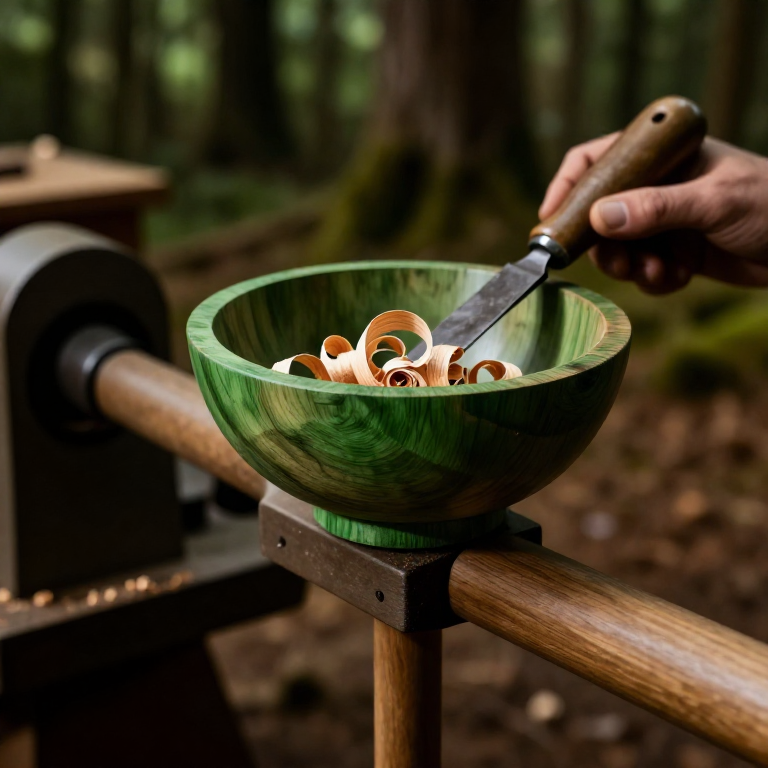


Turning a Bowl on a Pole Lathe — Foot-Powered Green Wood Turning
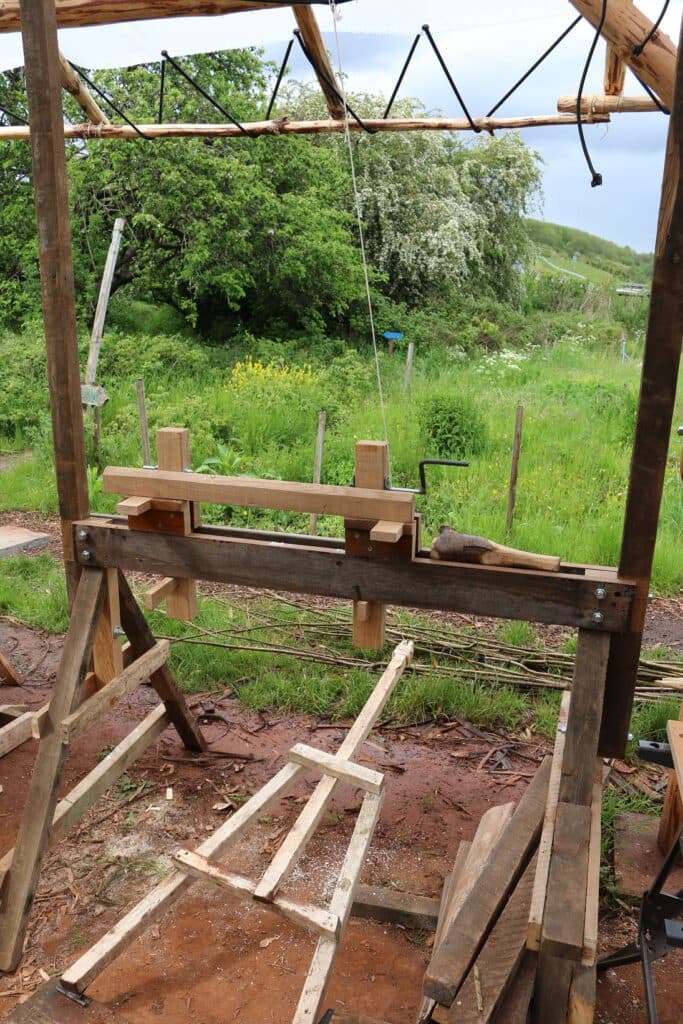
The pole lathe is the oldest form of powered turning — a foot treadle spins the workpiece against a cutting tool, and the spring of a bent pole returns the treadle for the next stroke. It produces work identical in quality to a modern lathe but operates on human power alone. Bowl turning on a pole lathe was a specialist trade in medieval Europe — the bodger (itinerant chair-maker) and the bowl turner worked in the forest where the timber grew, using nothing but a pole lathe, a drawknife, and a set of turning gouges.
Pole lathe turning is intermittent — the workpiece spins toward the tool on the down-stroke (cutting) and reverses on the return stroke (no cutting). This alternating motion means the turner only cuts on half the cycle, but the rhythm becomes natural within minutes. The key advantage is control: the speed is proportional to the foot pressure, so the turner can slow down for delicate finishing cuts and speed up for roughing.
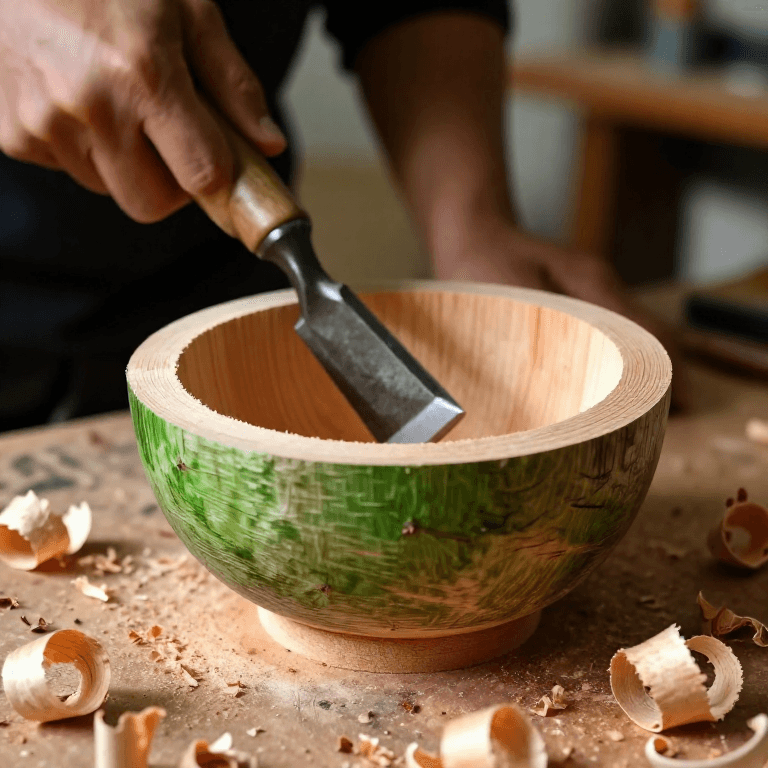
Bowls are turned from a disc-shaped blank cut across the grain of a green log. Green wood turns easily, producing long ribbons of shaving. The finished bowl is removed from the lathe while still damp and left to dry slowly — it will distort slightly into an oval as the grain shrinks unevenly, a characteristic signature of pole-lathe work.
Anweisungen
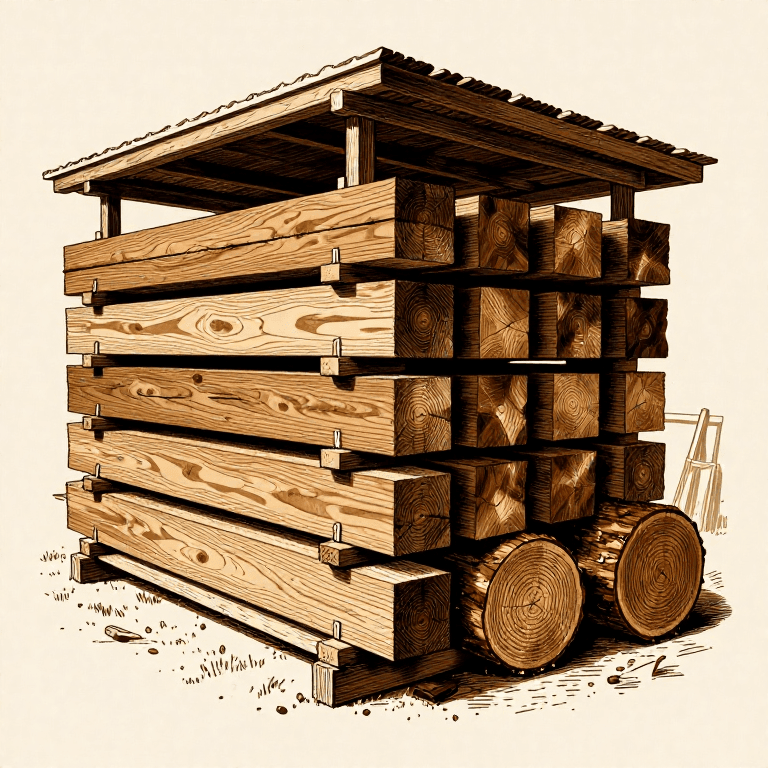
Prepare a bowl blank from a green log
Prepare a bowl blank from a green log
Materialien für diesen Schritt:
 Grünes Rundholzstück
Mount the blank on the pole lathe
Mount the blank on the pole lathe
Benötigte Werkzeuge:
 Wippdrehbank
Rough-turn the outside
Rough-turn the outside
Benötigte Werkzeuge:
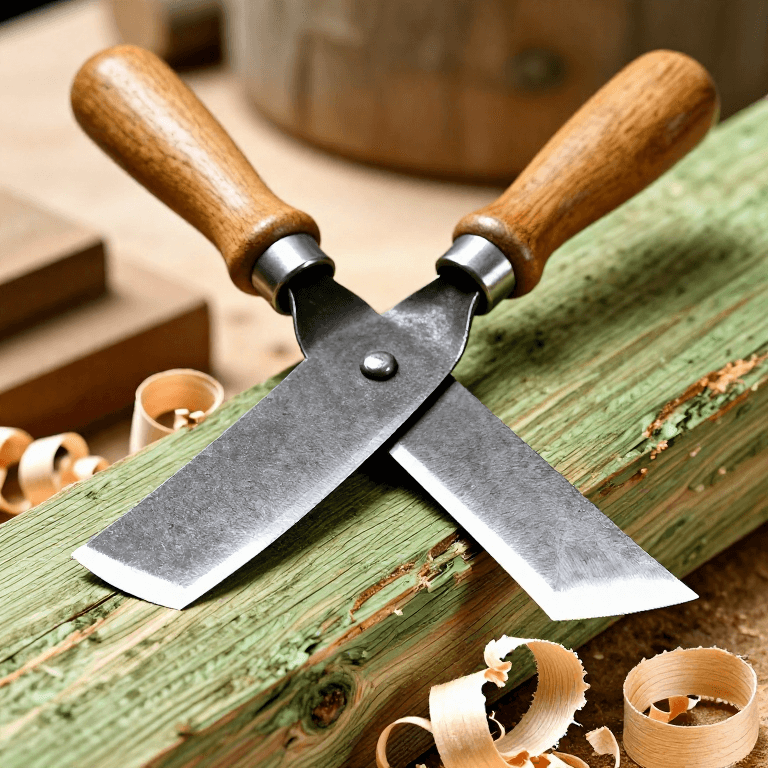
 Hohlbeitel
 Drechselröhre
Hollow the inside
Hollow the inside
Finish-turn and smooth
Finish-turn and smooth
Part off and dry the bowl
Part off and dry the bowl
Benötigte Werkzeuge:
 Abstechstahl
Materialien
1- 1 StückPlatzhalter
Benötigte Werkzeuge
4- Platzhalter
- Platzhalter
- Platzhalter
- Platzhalter
Materialien verbundener Blueprints
Dieser Bauplan stellt her

Verwandte Blueprints
Diese Blueprints teilen Wissen — Techniken, Materialien oder Prinzipien
CC0 Gemeinfrei
Dieser Blueprint ist unter CC0 veröffentlicht. Sie dürfen dieses Werk für jeden Zweck frei kopieren, ändern, verbreiten und verwenden, ohne um Erlaubnis zu fragen.
Unterstützen Sie den Maker, indem Sie Produkte über seinen Blueprint kaufen, wo er eine Maker-Provision von Anbietern festgelegt, verdient. Oder erstellen Sie eine neue Iteration dieses Blueprints und verbinden Sie ihn in Ihrem eigenen Blueprint, um Einnahmen zu teilen.