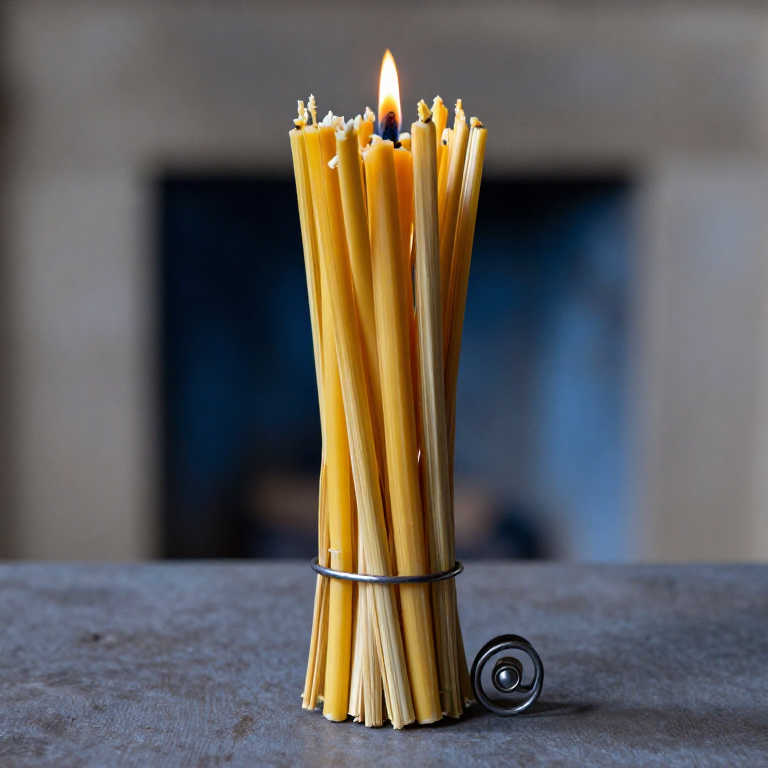


Making Rushlights — The Cheapest Light in History
Before candles were affordable, most households across Europe and Asia lit their evenings with rushlights — the peeled pith of a rush stem dipped in tallow or grease. A rushlight is not a candle: it has no wick inside a body of wax. Instead, the porous rush pith itself is the fuel, with the absorbed fat making it burn slowly rather than flashing to ash.
Rushlights cost virtually nothing. Rushes grow wild in every damp meadow and ditch. The grease came from kitchen drippings — bacon fat, mutton drippings, any leftover cooking grease. A family could gather a year's supply of rushes in an afternoon and dip them in an evening. In England, rushlights remained the primary domestic lighting for rural labourers well into the 1800s, long after candles and oil lamps were common in towns.
A single rushlight 30 cm long burns for about 15-20 minutes with a soft, flickering flame roughly equal to a modern tea light. Held in a simple iron clip (a rushlight holder), it provides enough light to eat supper, mend clothes, or spin wool by.
Anweisungen
Harvest the rushes
Harvest the rushes
Peel the rush stems
Peel the rush stems
Dry the peeled rushes
Dry the peeled rushes
Melt the grease
Melt the grease
Materialien für diesen Schritt:
 Animal Fat (Tallow)500 g
Dip the rushes
Dip the rushes
Cool and store
Cool and store
Burn in a rushlight holder
Burn in a rushlight holder
Materialien
1- 500 gPlatzhalter
Materialien verbundener Blueprints
Verwandte Blueprints
Diese Blueprints teilen Wissen — Techniken, Materialien oder Prinzipien
Related blueprints
Other builds that share materials, tools, or techniques with this one.
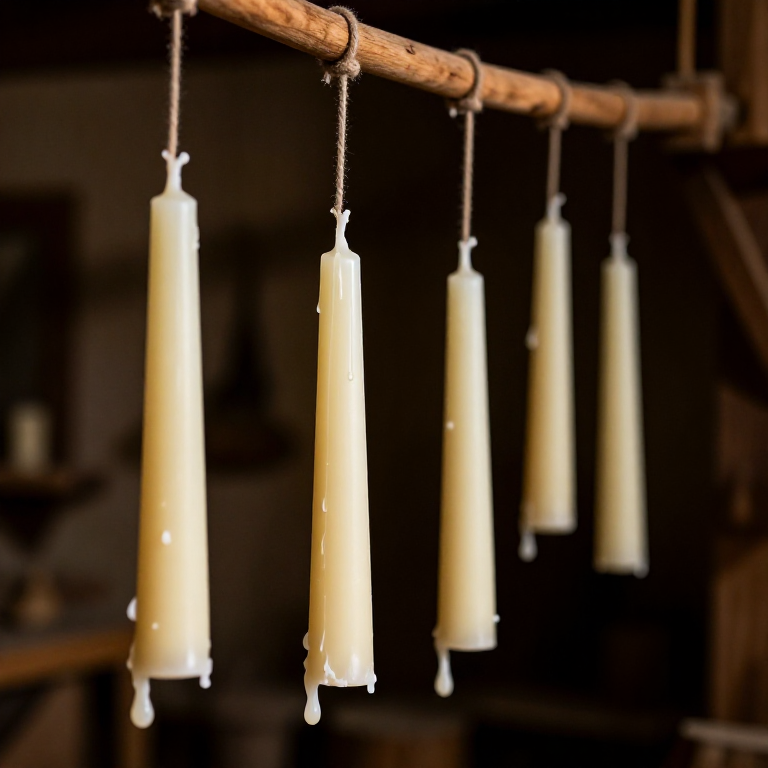
CC0 Gemeinfrei
Dieser Blueprint ist unter CC0 veröffentlicht. Sie dürfen dieses Werk für jeden Zweck frei kopieren, ändern, verbreiten und verwenden, ohne um Erlaubnis zu fragen.
Unterstützen Sie den Maker, indem Sie Produkte über seinen Blueprint kaufen, wo er eine Maker-Provision von Anbietern festgelegt, verdient. Oder erstellen Sie eine neue Iteration dieses Blueprints und verbinden Sie ihn in Ihrem eigenen Blueprint, um Einnahmen zu teilen.