Zusammenarbeit
KUNST
SCHÖNHEIT & WELLNESS
HANDWERK
KULTUR & GESCHICHTE
UNTERHALTUNG
UMFELD
ESSEN & GETRÄNKE
REVERSE ENGINEERING
WISSENSCHAFTEN
SPORT
TECHNOLOGIE
WEARABLES
Rocking Barrel Brake-Pin Churn: Cream Rushes End to End Through Rows of Pins, a Diagonal Board Gathers the Butter
Buttercup

Erstellt von

Buttercup

11. November 2026IE
2
0
0
0
0

Rocking Barrel Brake-Pin Churn: Cream Rushes End to End Through Rows of Pins, a Diagonal Board Gathers the Butter

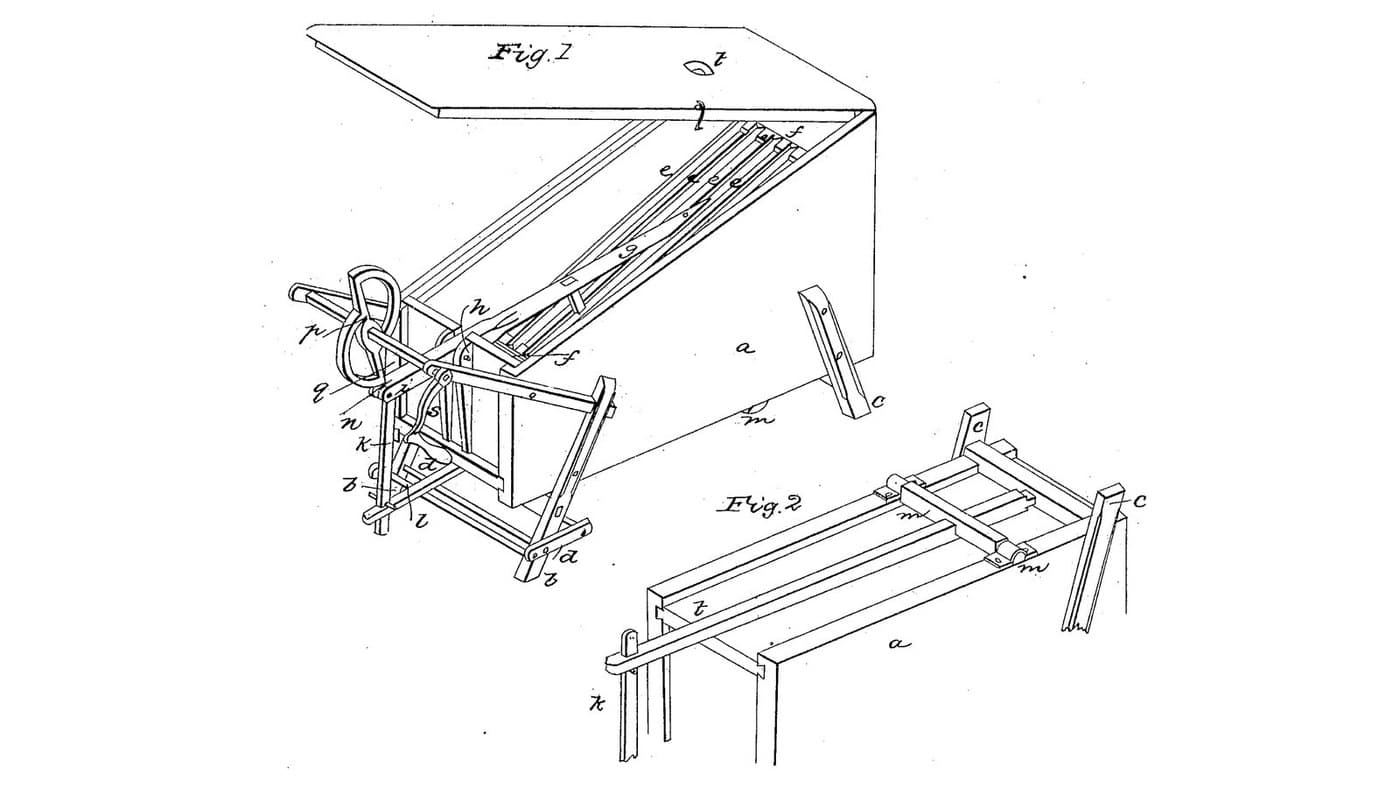
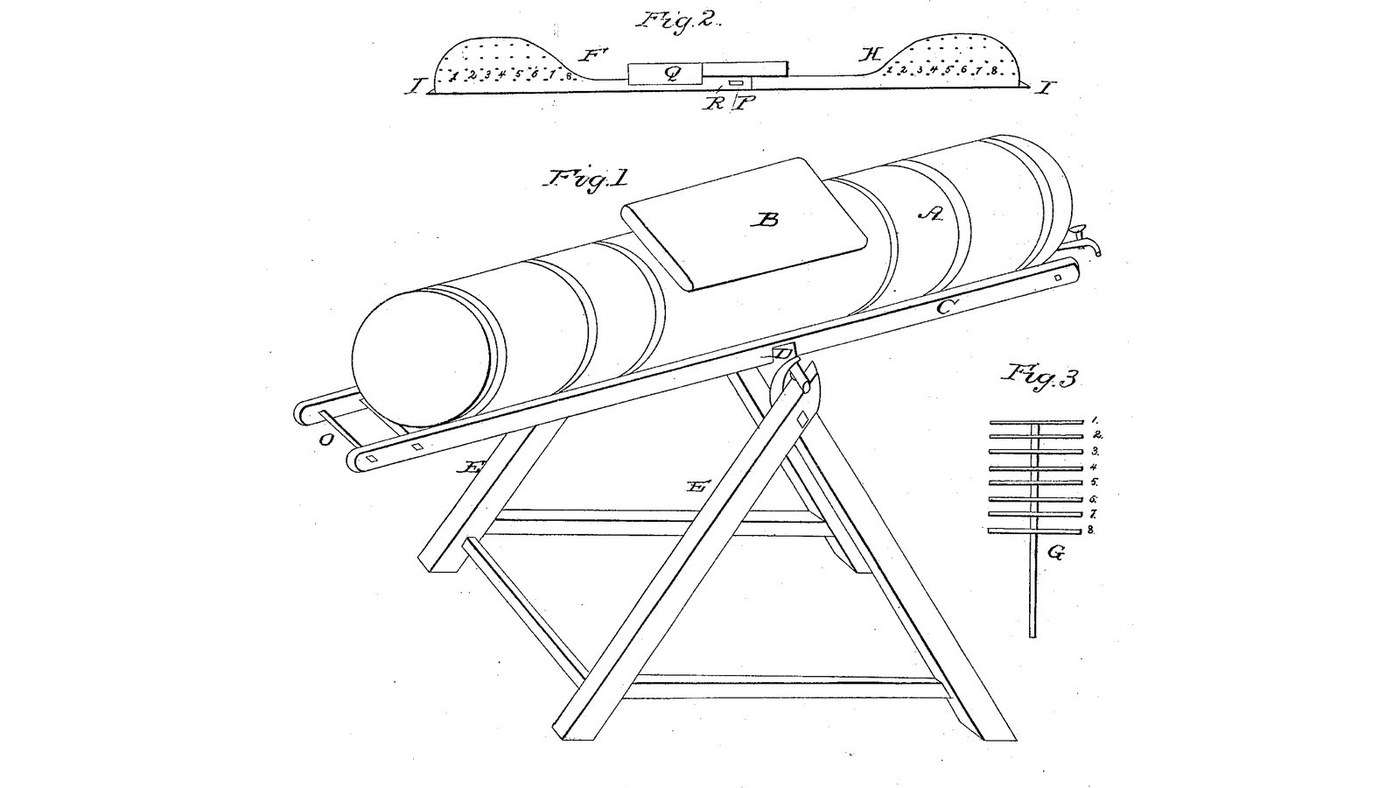
David Newbrough of Clarksburg, Indiana, received US 27,377, dated 6 March 1860, for a churn. A long, narrow barrel pivoted on a saw-buck is rocked end over end, forty degrees each way; the cream rushes from end to end through rows of pins on a brake at each end, which break it to butter. Rocked slowly, a diagonal board in the middle gathers the butter. The patent suggests a barrel about twelve inches across and three or four feet long; all other sizes are ours.
Fortgeschritten
About 2 days

Anweisungen

1

Why a long, narrow barrel

Jupyter-Notebook wird geladen …
2

A rocking churn, the year before

Gissinger rocks his churns to work their dashers. Newbrough's barrel has no dasher: rocking moves the cream itself.
3

A long box churn, one week before

Cunningham drives strips through still cream. Newbrough holds the pins still and drives the cream through them.
4

Read US 27,377

"The rationale of this process is—that the gravity of the cream, or milk, causes it to rush violently from one end of the barrel to the other, and thus—as it dashes through the meshes of the brake-pins the butter globules (of the cream) are broken, and the butter liberated in a granular form, and these myriads of granules are afterward aggregated in a solid butter mass by the gatherer."
5

Barrel A, spigot and lid B

Cut 1030 mm of food-grade PE pipe 315 mm across with a 12 mm wall. Cut two discs to fit inside it from 15 mm HDPE sheet. Screw a stainless screw eye into the middle of each disc's inner face, 15 mm above the bottom, for the brake's points I; bore one disc 35 mm above the bottom for the spigot and fit it. Press the discs into the pipe's ends, screw them through the wall with eight stainless screws each, and seal inside with silicone sealant. Cut an aperture 460 x 200 mm in the top's middle; keep the piece as the lid, screw two HDPE strips 35 mm wide along its long edges so it rests on the pipe, and hold it with two hooks and eyes.

Materialien für diesen Schritt:

HDPE-RohrHDPE-Rohr1 Stück
HDPE-PlatteHDPE-Platte1 Stück
Ringschraube mit HolzgewindeRingschraube mit Holzgewinde2 Stück
PVC-AuslaufhahnPVC-Auslaufhahn1 Stück
MaschinenschraubenMaschinenschrauben24 Stück
Sicherungsmutter mit KunststoffeinsatzSicherungsmutter mit Kunststoffeinsatz8 Stück

SilikondichtmasseSilikondichtmasse1 Stück
Haken und ÖseHaken und Öse2 Stück

Benötigte Werkzeuge:

StichsägeStichsäge
Lochsägen-SetLochsägen-Set
AkkubohrschrauberAkkubohrschrauber
BohrersatzBohrersatz
Feilen (Handfeile)Feilen (Handfeile)
Schraubendreher-SatzSchraubendreher-Satz
Bandmaß (Rollmeter)Bandmaß (Rollmeter)
6

Frame C and handle o

Cut two hardwood rails 30 x 60 mm, 1200 mm long, and bolt one along each side of the barrel at its axis height, with stainless machine screws through rail and pipe wall, the heads inside sealed with silicone, lock nuts outside: 45 mm beyond the spigot end, 125 mm beyond the other. Bore both rails 20.5 mm across at their middle for the pivot. Pass a 30 mm hardwood dowel 480 mm long through the rails 25 mm from their long ends as the handle o.

Materialien für diesen Schritt:

HartholzbrettHartholzbrett2 Stück
MaschinenschraubenMaschinenschrauben8 Stück
Sicherungsmutter mit KunststoffeinsatzSicherungsmutter mit Kunststoffeinsatz8 Stück
SilikondichtmasseSilikondichtmasse1 Stück
HartholzdübelHartholzdübel1 Stück
HolzleimHolzleim1 Stück

Benötigte Werkzeuge:

TischkreissägeTischkreissäge
AkkubohrschrauberAkkubohrschrauber
BohrersatzBohrersatz
Flachfräsbohrer-SatzFlachfräsbohrer-Satz
RollgabelschlüsselRollgabelschlüssel
Schraubendreher-SatzSchraubendreher-Satz
Bandmaß (Rollmeter)Bandmaß (Rollmeter)
7

Saw-buck E and pivot D

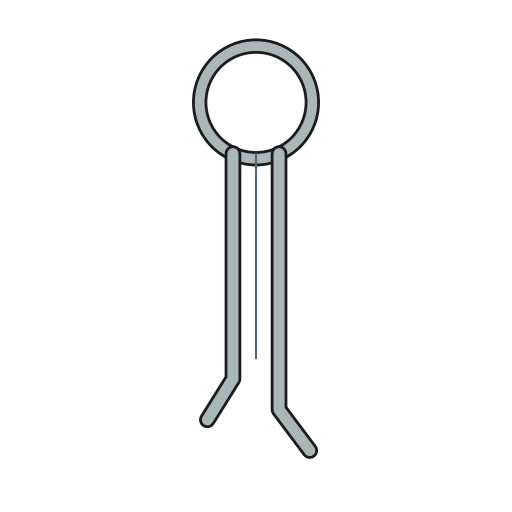
Make two X's from 50 mm hardwood dowel legs 960 mm long, crossing 650 mm above the floor with their feet 840 apart, and stand them 530 mm apart, one beside each rail. Join them near the floor with two hardwood braces 40 x 30 mm, 560 long. Bore each crossing 20.5 mm across. Lift the barrel between the X's and pass a 20 mm stainless pin 150 mm long through each crossing into its rail; secure with split pins.

Materialien für diesen Schritt:

HartholzdübelHartholzdübel4 Stück
HartholzbrettHartholzbrett1 Stück
HolzschraubenHolzschrauben8 Stück
HolzleimHolzleim1 Stück
EdelstahlstabEdelstahlstab1 Stück
SplintSplint2 Stück

Benötigte Werkzeuge:

Bügelsäge (Metallsäge)Bügelsäge (Metallsäge)
AkkubohrschrauberAkkubohrschrauber
BohrersatzBohrersatz
Flachfräsbohrer-SatzFlachfräsbohrer-Satz
Schraubzwinge mit SchiebebügelSchraubzwinge mit Schiebebügel
Schraubendreher-SatzSchraubendreher-Satz
Feilen (Handfeile)Feilen (Handfeile)
8

Brake frame F and H, key R and gatherer Q

From 20 mm hardwood cut the brake board in two halves, 984 mm long together, 40 mm high, rising at each end to a hump 190 high over the last 190 mm, with a point I 6 mm long at each end to enter the screw eye. Halve them together 100 mm at the middle, the joint P, and cut a mortise through it for a hardwood key R. In each hump bore eight columns of 6 mm holes, numbered 1 to 8 as in the patent, 20 mm apart from 335 mm out from the middle, in four rows 25, 65, 105 and 145 mm up; drive in 6 mm stainless pins, centred, 145 mm long in the bottom row and 190 in the others. Screw a hardwood gatherer 200 x 100 mm across the board at 45 degrees, 110 mm from the middle. Pass each half in through the aperture, its point into its screw eye, join them at P and drive the key.

Materialien für diesen Schritt:

HartholzbrettHartholzbrett1 Stück
EdelstahlstabEdelstahlstab2 Stück
HolzschraubenHolzschrauben4 Stück
HolzleimHolzleim1 Stück

Benötigte Werkzeuge:

TischkreissägeTischkreissäge
StichsägeStichsäge
AkkubohrschrauberAkkubohrschrauber
BohrersatzBohrersatz
Bügelsäge (Metallsäge)Bügelsäge (Metallsäge)
Feilen (Handfeile)Feilen (Handfeile)
SchraubstockSchraubstock
SchleifpapierSchleifpapier
9

The build in 3D

FreeCAD model of this build, tipped 15 degrees, the barrel cut through the middle: the brake board with its pinned humps F and H, the gatherer Q and key R, the points I in their screw eyes, the rails C with the handle o, and the saw-buck E with the pivot pins D.
DesigndateiBLENDCC0 - Free
10

Churn

Pour in about 15 litres of heavy cream at about 15 °C, checked with the thermometer, and close the lid. Take the handle, lift that end until the barrel is at about forty degrees, then drop it so the other end rises as far, and repeat in quick succession, timing it. When the butter comes, rock very slowly: the patent says the slow rocking "causes eddies around the gatherer in the center". Draw off the buttermilk at the spigot into a bowl, open the lid, lift out the butter, wash it in cold water until it runs clear, salt and weigh it.

Materialien für diesen Schritt:

SchlagsahneSchlagsahne15 l
Grobes MeersalzGrobes Meersalz1 Stück
WasserWasser1 Stück

Benötigte Werkzeuge:

Einsteck-FühlerthermometerEinsteck-Fühlerthermometer
StoppuhrStoppuhr
Digitale KüchenwaageDigitale Küchenwaage
Große Rührschüssel aus EdelstahlGroße Rührschüssel aus Edelstahl
11

Troubleshooting

Rocking barrel churn troubleshooting.

Flow

Loading...
12

History and honest limits

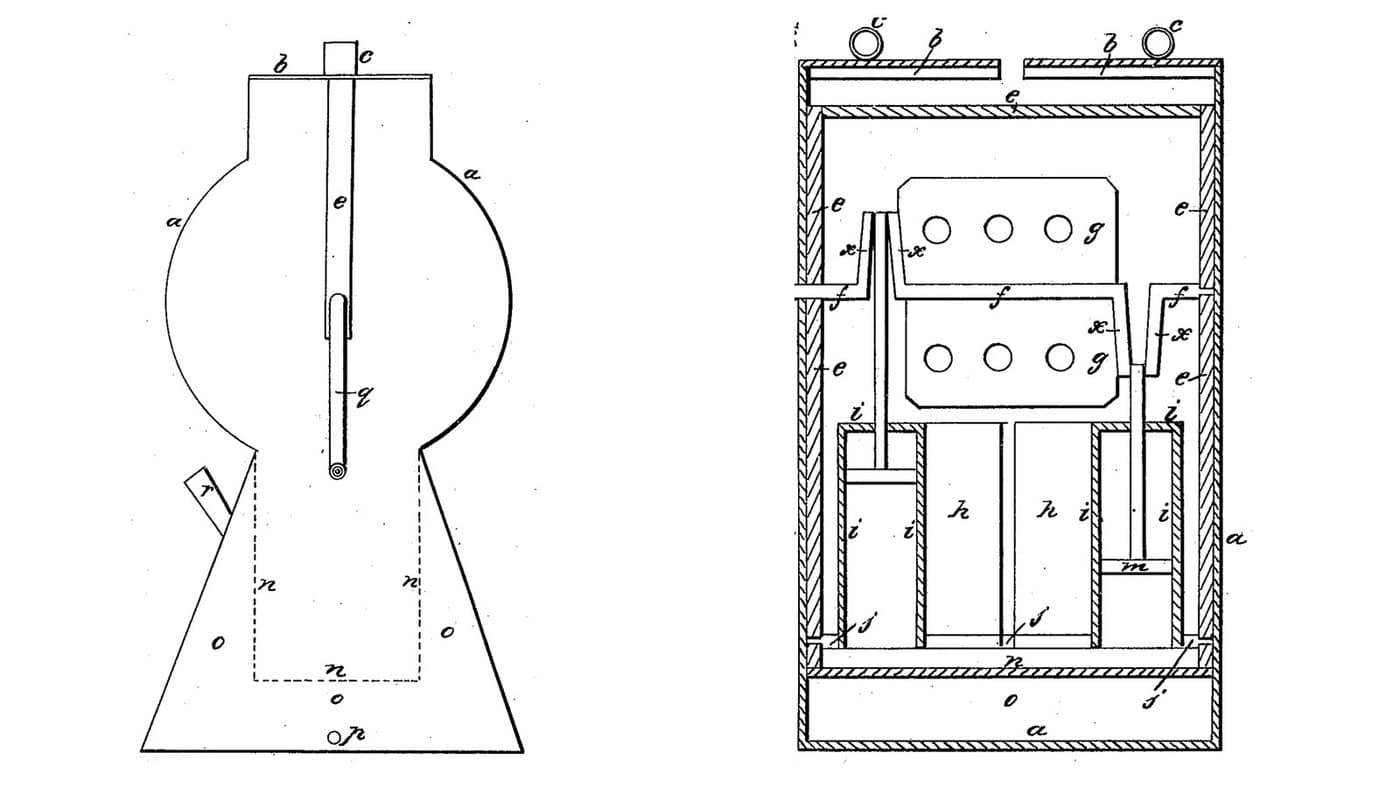
**David Newbrough** of Clarksburg, Decatur County, Indiana, US 27,377, 6 March 1860, "Churn". He claimed the cream receptacle A, brakes F and H, with gatherer Q, and noted that D. F. Hite and John McLaughlin had already made oscillating churns hinged on a frame, with a perforated board across the middle; his brakes stand at the ends instead. The patent suggests the barrel's size; the PE pipe, the pin rows and lengths, and all other sizes are ours.

Materialien

17

Benötigte Werkzeuge

18

Designdateien

1

CC0 Gemeinfrei

Dieser Blueprint ist unter CC0 veröffentlicht. Sie dürfen dieses Werk für jeden Zweck frei kopieren, ändern, verbreiten und verwenden, ohne um Erlaubnis zu fragen.

Unterstützen Sie den Maker, indem Sie Produkte über seinen Blueprint kaufen, wo er eine Maker-Provision von Anbietern festgelegt, verdient. Oder erstellen Sie eine neue Iteration dieses Blueprints und verbinden Sie ihn in Ihrem eigenen Blueprint, um Einnahmen zu teilen.

Diskussion

(0)

Anmelden um an der Diskussion teilzunehmen

Kommentare werden geladen...