KUNST
SCHÖNHEIT & WELLNESS
HANDWERK
KULTUR & GESCHICHTE
UNTERHALTUNG
UMFELD
ESSEN & GETRÄNKE
REVERSE ENGINEERING
WISSENSCHAFTEN
SPORT
TECHNOLOGIE
WEARABLES
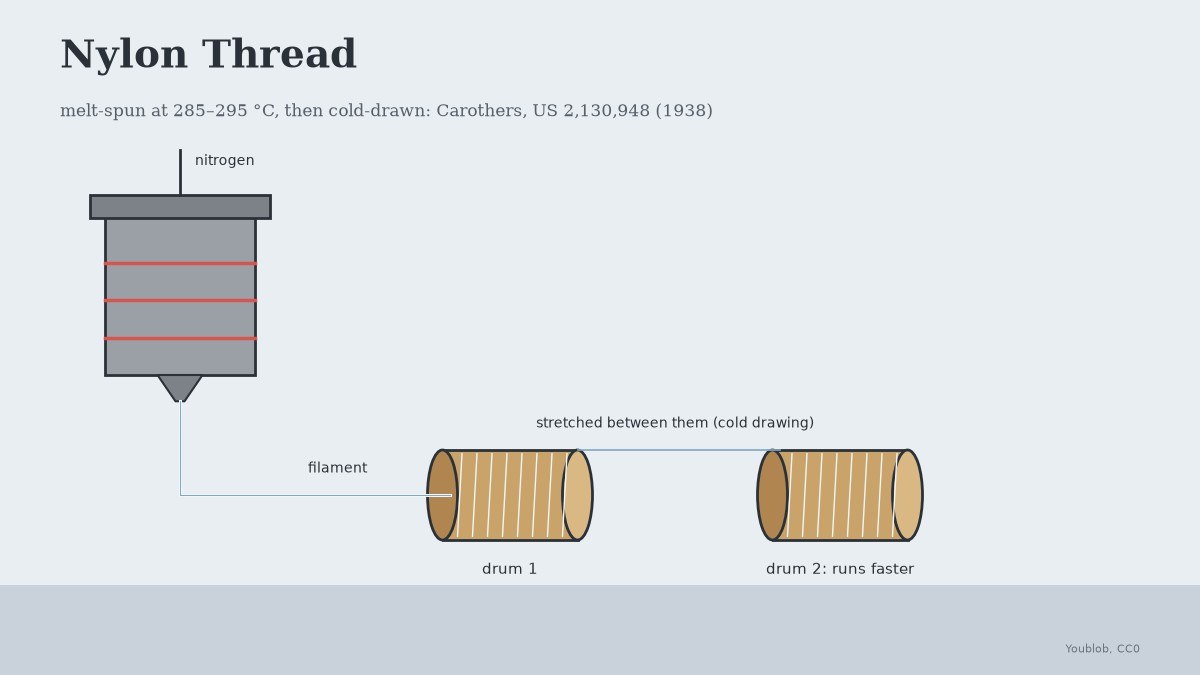


Nylon Thread: Melt-Spun Monofilament, Cold-Drawn Between Two Drums, Carothers
Nylon sewing thread is a single clear strand, a monofilament. Carothers' patent (1938) spins nylon 66 straight from the melt at 285–295 °C, with oxygen kept out, and catches the strand on a drum. A second, faster drum then stretches it (cold drawing), which makes it strong.
The picture: our own drawing.
Erfahren
1 day
Anweisungen
1
1
Load the pot under nitrogen
Load the pot under nitrogen
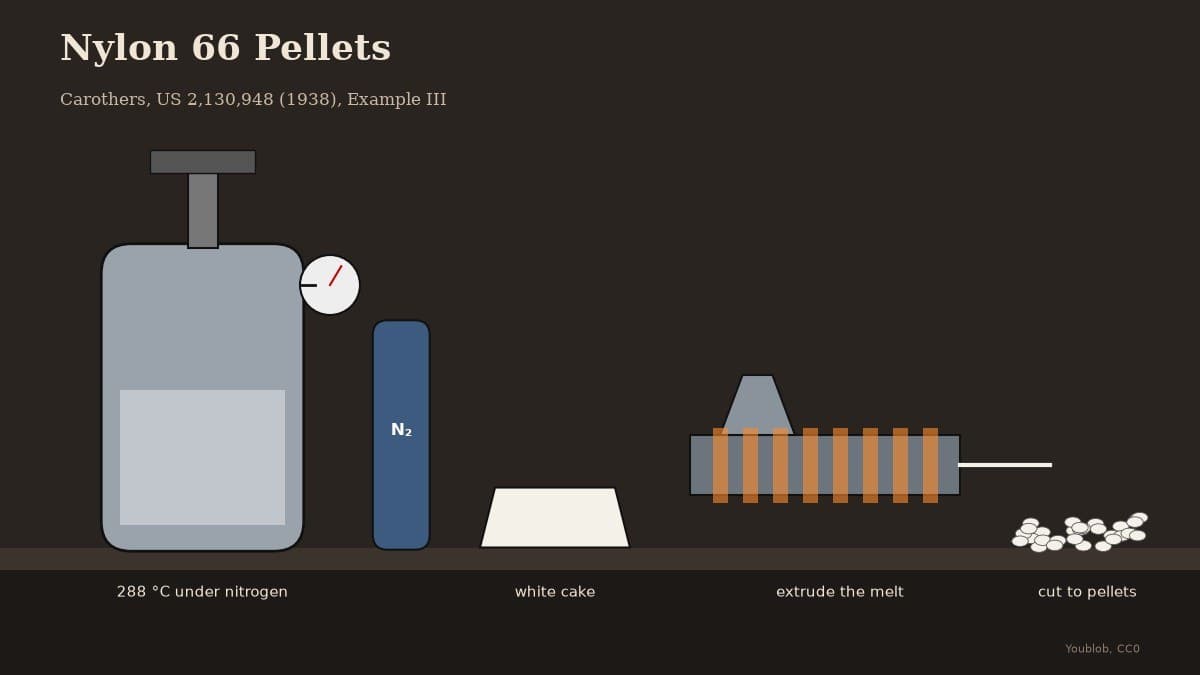
Fill the melt-spinning pot with dry nylon 66 pellets and close it. Flush it with nitrogen and keep it under nitrogen: oxygen must stay out of the molten polymer.
Materialien für diesen Schritt:
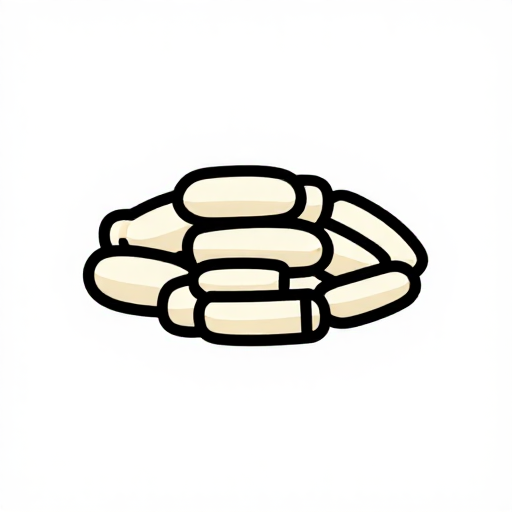 Nylon-Granulat500 g
Benötigte Werkzeuge:
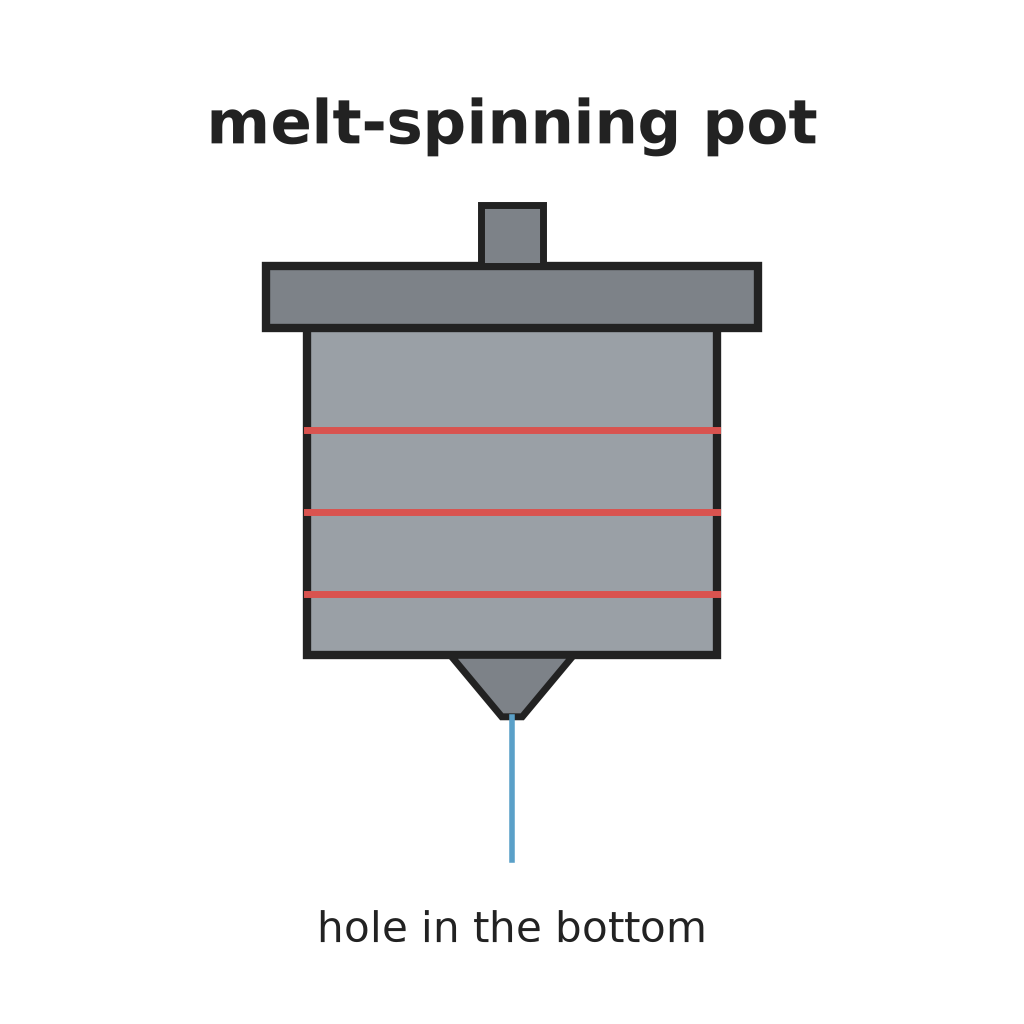 Schmelzspinntopf
 Stickstoff
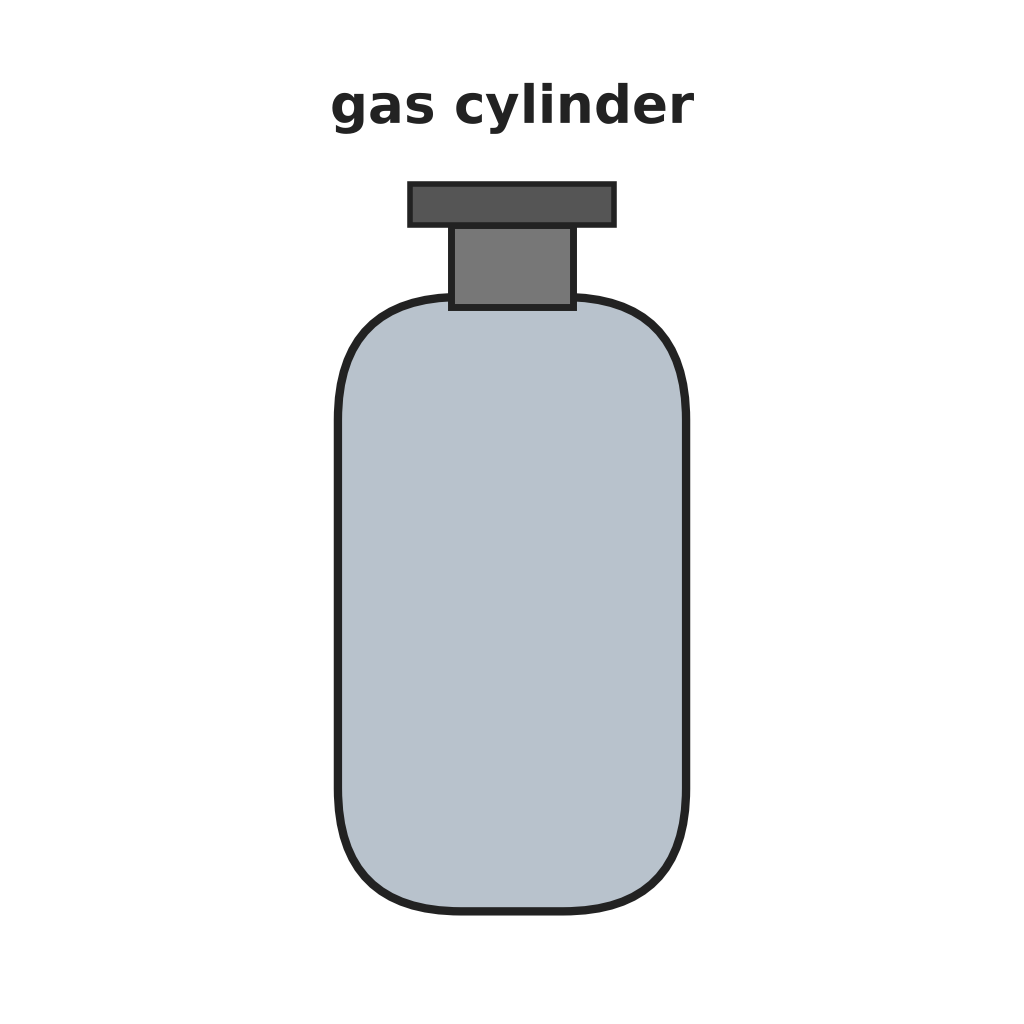 Druckgasflasche
2
2
Melt at 285–295 °C
Melt at 285–295 °C
Heat to 285–295 °C, the best spinning heat for nylon 66. Cooler gives poorer filament; hotter makes it too runny, and it may break down.
Benötigte Werkzeuge:
Schmelzspinntopf Thermoelement mit Anzeige
3
3
Extrude and catch it
Extrude and catch it
Press the melt out through the hole with nitrogen pressure (Carothers' example used 50 lb/in²). Catch the strand on a motor-driven drum. A larger hole gives a thicker strand; hotter melt and faster winding give a finer one.
Benötigte Werkzeuge:
StickstoffDruckgasflasche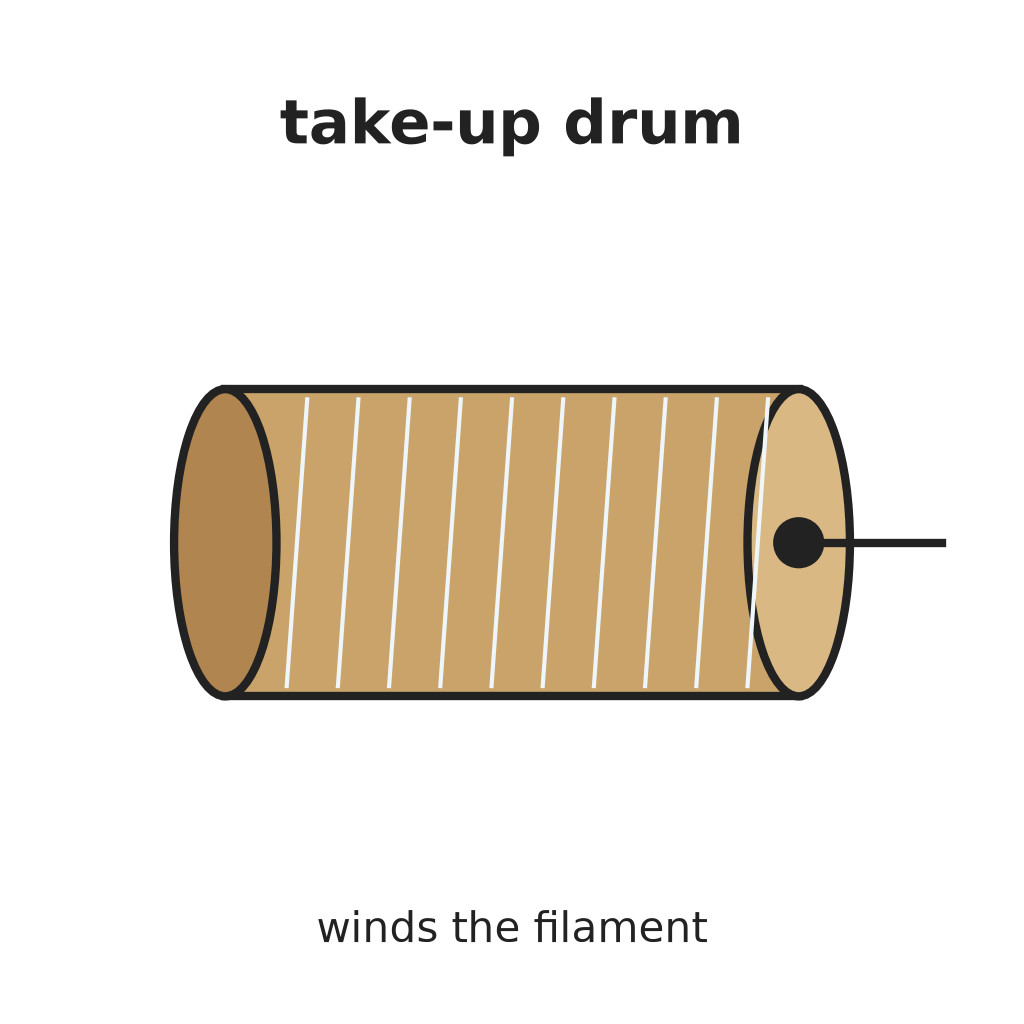 Aufwickeltrommel
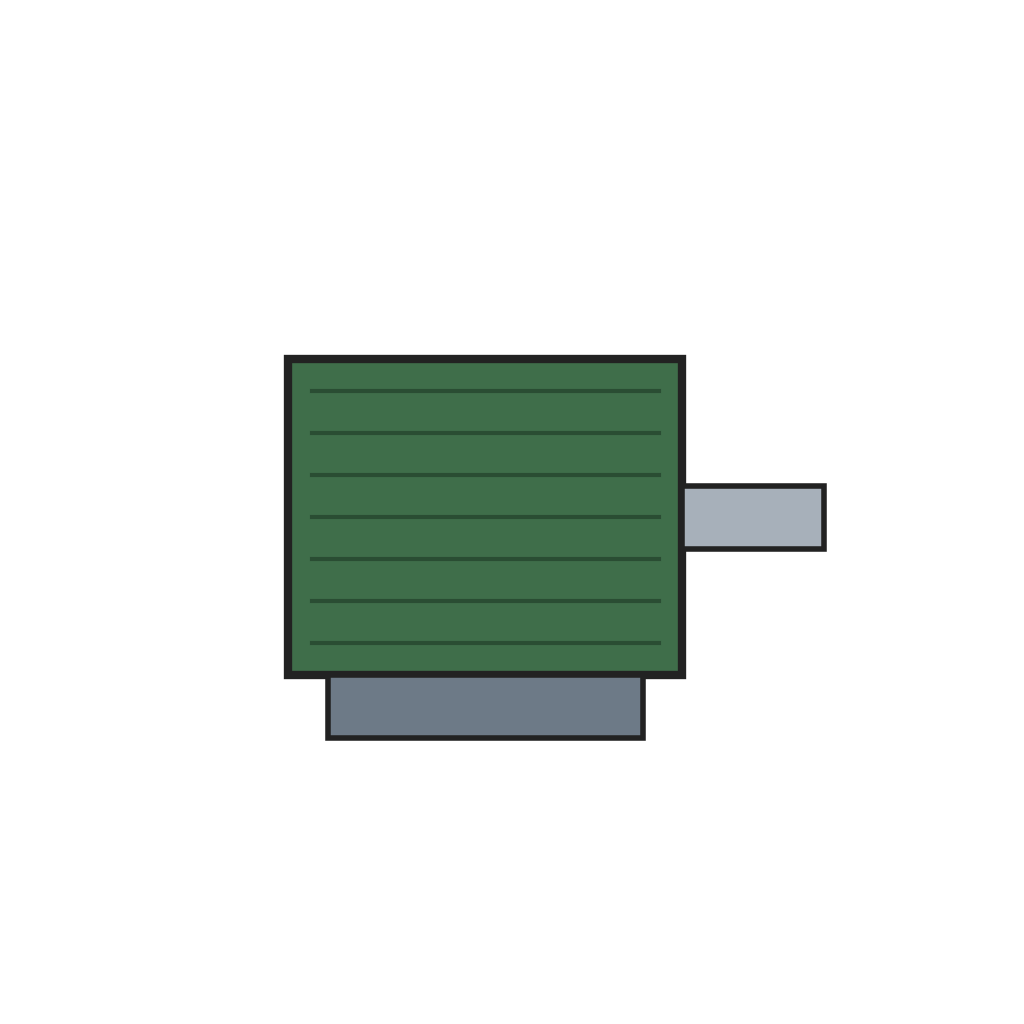 Elektromotor
4
4
Cold-draw onto a faster drum
Cold-draw onto a faster drum
Run the strand from the first drum onto a second drum turning faster, which stretches it. In Carothers' example the drums ran at 300 and 1020 ft/min. Keep the strand wet: wet filament draws better and holds no static.
Benötigte Werkzeuge:
AufwickeltrommelElektromotor Wasser
5
5
Help a thick strand
Help a thick strand
Thick strands are harder to draw. Soak them in water, or warm them to about 100 °C, before drawing.
Benötigte Werkzeuge:
 StielkasserolleWasser
Materialien
1- 500 gPlatzhalter
Dieser Bauplan stellt her

Verwandte Blueprints
Diese Blueprints teilen Wissen — Techniken, Materialien oder Prinzipien

CC0 Gemeinfrei
Dieser Blueprint ist unter CC0 veröffentlicht. Sie dürfen dieses Werk für jeden Zweck frei kopieren, ändern, verbreiten und verwenden, ohne um Erlaubnis zu fragen.
Unterstützen Sie den Maker, indem Sie Produkte über seinen Blueprint kaufen, wo er eine Maker-Provision von Anbietern festgelegt, verdient. Oder erstellen Sie eine neue Iteration dieses Blueprints und verbinden Sie ihn in Ihrem eigenen Blueprint, um Einnahmen zu teilen.