Zusammenarbeit
KUNST
SCHÖNHEIT & WELLNESS
HANDWERK
KULTUR & GESCHICHTE
UNTERHALTUNG
UMFELD
ESSEN & GETRÄNKE
REVERSE ENGINEERING
WISSENSCHAFTEN
SPORT
TECHNOLOGIE
WEARABLES
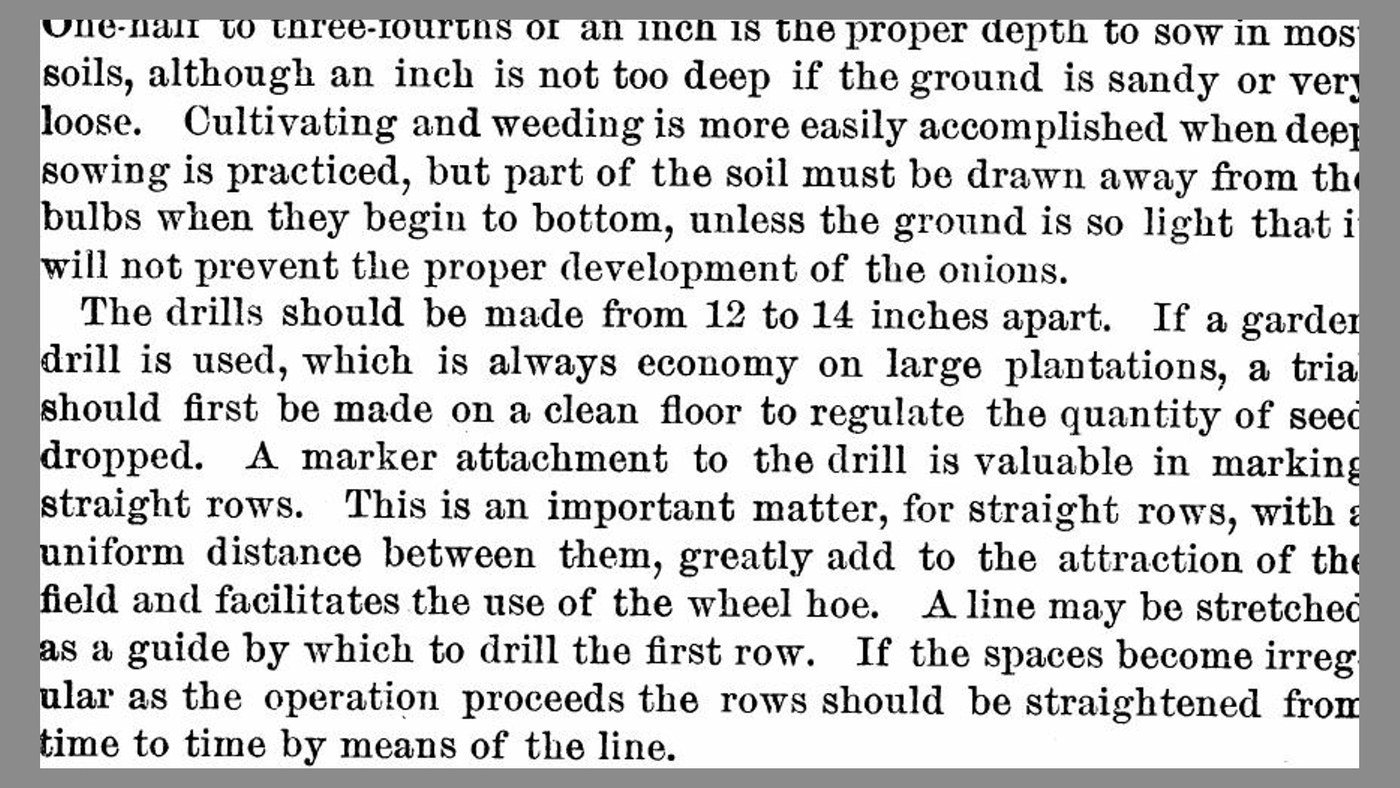


Onion: Grown from Seed Sown in the Field (USDA, 1896)
Field onions the way most American growers raised them in the 1890s: plough in autumn, harrow fine, drill about 4 lb of seed to the acre in rows 12 to 14 in apart, keep the wheel hoe going and weed by hand, then pull the crop when the necks turn yellow and cure it in windrows.
An Ohio grower averaged over 800 bushels an acre by this method in 1895.
Source: USDA Farmers' Bulletin 39, Onion Culture (1896), pp. 10-23. Picture: the bulletin's text on field sowing.
Fortgeschritten
One growing season; curing 1 to 10+ days
Anweisungen
1
1
Plough in autumn
Plough in autumn
Plough in the fall, as late as possible, with any manure short enough to be turned fully under. On rich, loose soil 10 in or more deep there is little danger of ploughing too deep, but never turn up a stiff heavy subsoil.
Benötigte Werkzeuge:
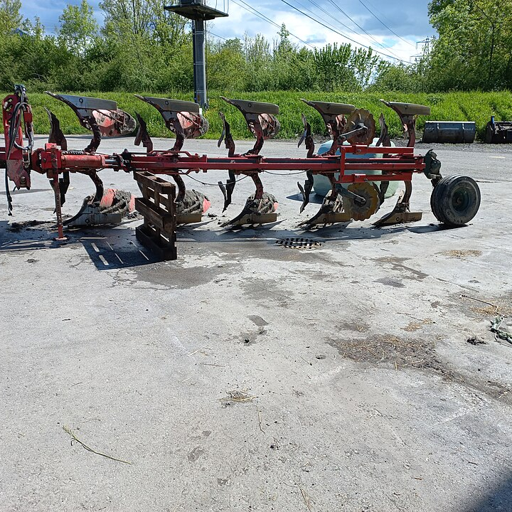 Streichblechpflug
2
2
Harrow fine and level
Harrow fine and level
Spare no work to make the soil thoroughly fine: use a disk harrow if there are many clods, alternating with the roller; finish with a plank drag to level and smooth the surface. Harrow it fit for sowing on the first day the soil is dry enough to work.
Benötigte Werkzeuge:
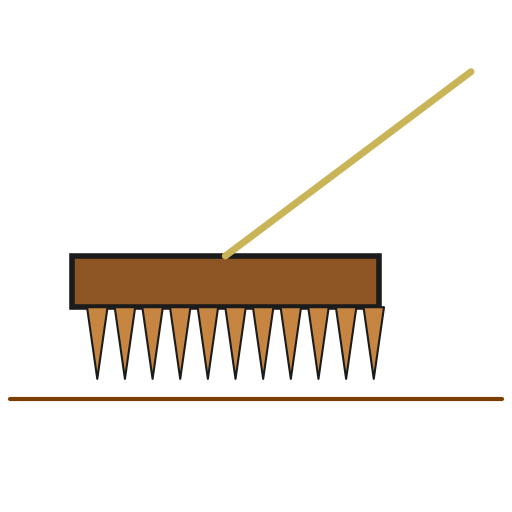 Egge
 Brett
3
3
Drill the seed
Drill the seed
Sow by hand or with a garden drill, first trialled on a clean floor to set the rate: about 4 lb of seed per acre, 12 to 14 seeds per foot, 1/2 to 3/4 in deep (up to 1 in in sandy or very loose ground), in rows 12 to 14 in apart. Stretch a line to drill the first row straight and re-straighten from time to time. Use more foreign-grown seed, which germinates less readily.
Materialien für diesen Schritt:
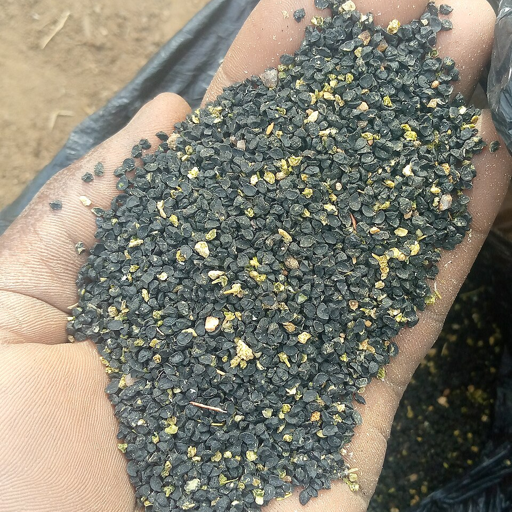 Zwiebelsamen1 about 4 lb per acre
Benötigte Werkzeuge:
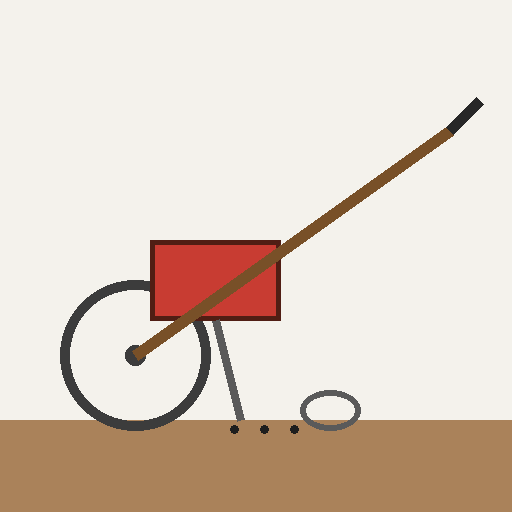 Handsämaschine
 Maurerschnur
4
4
Cultivate with the wheel hoe
Cultivate with the wheel hoe
Start the wheel hoe as soon as the rows can be seen, and stir the soil often, especially after rain. Use horizontally cutting blades while the plants are small; when the bulbs begin to bottom use vertical cutters, not deep enough to hurt the roots, and the turn-plough attachment to throw soil away from the bulbs.
Benötigte Werkzeuge:
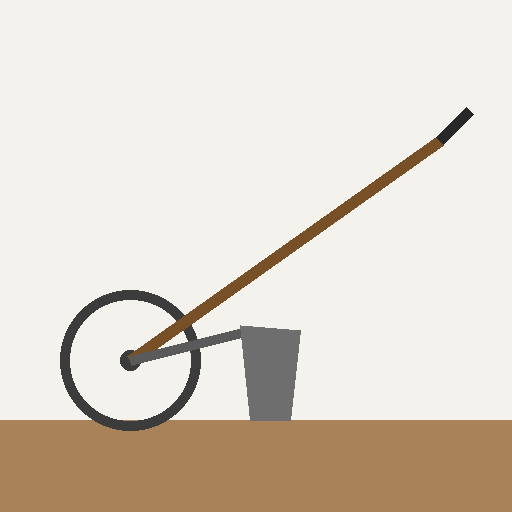 Radhacke
5
5
Weed and thin by hand
Weed and thin by hand
Weed by hand, kneeling astride the rows with knees padded in cloth covered with leather, throwing the soil and small weeds away from the rows with a simple tool. At the second weeding thin the plants to about one to the inch. Pull large late weeds by hand when the tops mat.
Benötigte Werkzeuge:
 Hacke
6
6
Pull and cure in windrows
Pull and cure in windrows
Harvest promptly when most necks have turned yellow and withered, green tops and all. Pull by hand into windrows of three or four rows and leave them until fully cured, a week to ten or more days; on bright days stir very gently with a wooden rake. If rain threatens, cure in open sheds or on a barn floor; in very hot sun gather into barrel-sized piles under thin straw so the bulbs do not turn green. Then sort, and top if desired.
Benötigte Werkzeuge:
 Holzrechen
 Stroh
Materialien
1- 1 about 4 lb per acrePlatzhalter
Dieser Bauplan stellt her

CC0 Gemeinfrei
Dieser Blueprint ist unter CC0 veröffentlicht. Sie dürfen dieses Werk für jeden Zweck frei kopieren, ändern, verbreiten und verwenden, ohne um Erlaubnis zu fragen.
Unterstützen Sie den Maker, indem Sie Produkte über seinen Blueprint kaufen, wo er eine Maker-Provision von Anbietern festgelegt, verdient. Oder erstellen Sie eine neue Iteration dieses Blueprints und verbinden Sie ihn in Ihrem eigenen Blueprint, um Einnahmen zu teilen.