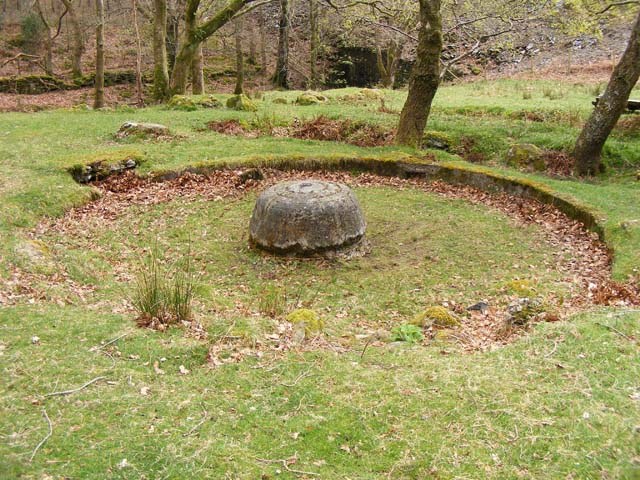


Ore Dressing
Anweisungen
Find the liberation size
Find the liberation size
You cannot separate two minerals until they are physically separate particles.
- Break a piece of mixed rock coarsely and look at the fragments with a lens.
- Note how many pieces still contain BOTH minerals joined.
- Crush finer and look again.
Materialien für diesen Schritt:
 Konvexlinse1 Stück
Benötigte Werkzeuge:
 Schnitzklüpfel
Size the crushed material
Size the crushed material
Separation by density only works on particles of similar size.
- Screen the crushed ore into two or three size fractions.
- Keep them separate from here on.
- Weigh each fraction.
Benötigte Werkzeuge:
 Digitale Küchenwaage
 Sieb 60 Mesh
 Klassiersieb
Build a buddle
Build a buddle
A gentle slope, a thin film of water, and time.
- Set a shallow board at a slight incline with a water supply at the head.
- Feed sized ore slowly onto the top.
- Let a thin sheet of water carry material down the slope.
Materialien für diesen Schritt:
 Weißeichenbrett1 board
Calculate recovery and grade
Calculate recovery and grade
Two numbers judge every separation, and they fight each other.
- Weigh the feed, the concentrate and the tailings.
- Grade = how rich the concentrate is.
- Recovery = what fraction of the valuable mineral ended up in the concentrate.
History and context
History and context
Georgius Agricola's De Re Metallica of 1556 illustrates this whole sequence — crushing stamps, washing buddles, sizing sieves — in woodcuts detailed enough to work from, and it remained the standard text for two centuries. It is one of the earliest books that treats industrial process as a subject worth systematic description.
Who did the work matters. On Cornish mines the surface dressing floors were worked largely by women and children — the bal maidens — breaking and washing ore in the open air for low pay. The same pattern held in the German and Bohemian mining districts. The technology is usually described without them, and it should not be.
The nineteenth century mechanised it with jigs that pulse water up through a bed of ore, shaking tables with riffles that walk heavy and light particles in different directions, and eventually froth flotation around 1900 — which separates minerals by surface chemistry rather than density and made low-grade copper ores economic for the first time. Flotation is arguably the single most consequential development in mineral processing, and it works on differences a buddle cannot see.
The tailings are the long tail. Fine ground rock left in ponds is chemically reactive in ways solid rock is not — sulphide minerals oxidise and generate acid mine drainage that can run for centuries. Historic dressing floors across Cornwall, Wales and the Harz still contaminate their catchments. Making the mineral available also made the waste available.
Materialien
2- 1 StückPlatzhalter
- 1 boardPlatzhalter
Benötigte Werkzeuge
4- Platzhalter
- Platzhalter
- Platzhalter
- Platzhalter
Verwandte Blueprints
Diese Blueprints teilen Wissen — Techniken, Materialien oder Prinzipien


CC0 Gemeinfrei
Dieser Blueprint ist unter CC0 veröffentlicht. Sie dürfen dieses Werk für jeden Zweck frei kopieren, ändern, verbreiten und verwenden, ohne um Erlaubnis zu fragen.
Unterstützen Sie den Maker, indem Sie Produkte über seinen Blueprint kaufen, wo er eine Maker-Provision von Anbietern festgelegt, verdient. Oder erstellen Sie eine neue Iteration dieses Blueprints und verbinden Sie ihn in Ihrem eigenen Blueprint, um Einnahmen zu teilen.