KUNST
SCHÖNHEIT & WELLNESS
HANDWERK
KULTUR & GESCHICHTE
UNTERHALTUNG
UMFELD
ESSEN & GETRÄNKE
REVERSE ENGINEERING
WISSENSCHAFTEN
SPORT
TECHNOLOGIE
WEARABLES
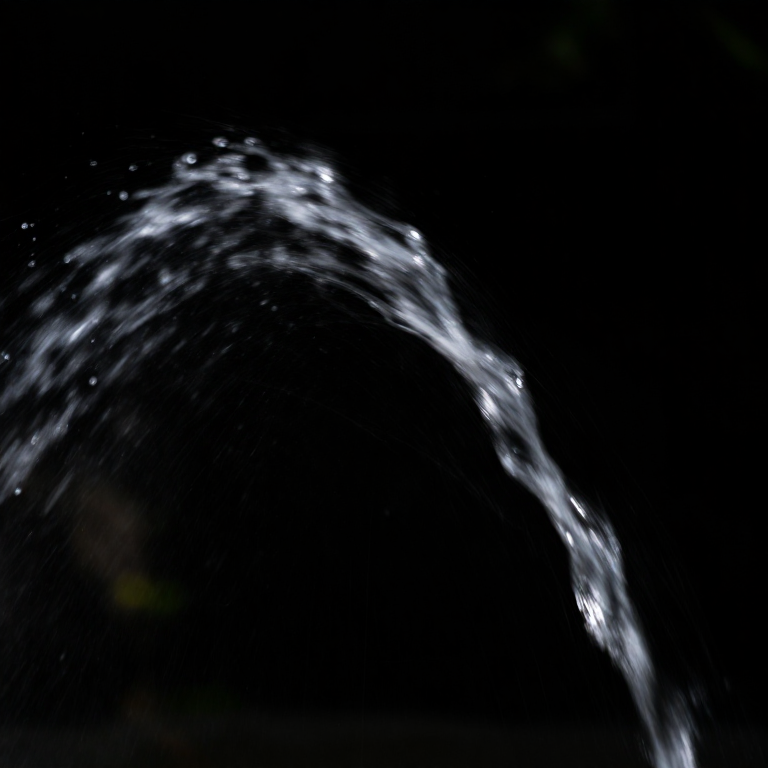


Projectile Motion — Launch a Ball and Measure Its Flight
A hands-on school project: roll a ball off a table or launch it at an angle, measure where it lands, and discover that its path is a parabola made of two independent motions — steady sideways and falling. A Python cell turns your landing distance into the launch speed, and a compendium explains why 45 degrees flies farthest.
Anfänger
30 minutes
Anweisungen
1
1
Two motions at once
Two motions at once
Throw a ball and it does two things together: it moves steadily sideways and it falls under gravity. Galileo realised these two motions are independent and simply add up, and the result is always a curved path called a parabola. You will launch a ball and measure it.
2
2
Set up a launch
Set up a launch
Simplest version: let a ball roll off the edge of a table so it leaves flat and horizontal. Measure the table height with a tape measure, and tape a sheet of paper on the floor where you think it will land to mark the spot. For an angled launch, prop a ramp at a measured angle (use a protractor) and note the angle.
Materialien für diesen Schritt:
 Stahlkugellager (Satz)1 Stück
Benötigte Werkzeuge:
 Bandmaß (Rollmeter)
 Winkelmesser / Winkelmessgerät
3
3
Launch and measure where it lands
Launch and measure where it lands
Send the ball off the edge the same way several times and mark each landing spot — carbon paper or flour on the floor records the exact points. Measure the horizontal distance from directly below the launch to the landing marks and average them. Try launching faster and slower and watch the distance change while the drop stays the same.
Materialien für diesen Schritt:
 Papier1 Blatt
4
4
Work out the launch speed
Work out the launch speed
Jupyter-Notebook wird geladen …
Benötigte Werkzeuge:
 Desktop-Computer
 Rechner
5
5
Compendium: the arc of everything thrown
Compendium: the arc of everything thrown
What your launches show. (1) The sideways and downward motions are INDEPENDENT — a ball that dribbles slowly off the table and one that rockets off fast hit the floor at the same moment, because their sideways speed does nothing to their falling. (2) For a launch at an angle, the range is largest at 45 degrees, and any two angles that add to 90 (like 30 and 60) land in exactly the same place. (3) Air resistance bends real trajectories away from a perfect parabola, which is why a golf ball is dimpled and a cannonball is not a bad approximation. (4) The same physics governs a basketball's arc, a fountain's spray, a long-jumper's flight — and, pushed to orbital speed, the parabola curves right around the planet and becomes an orbit.
Benötigte Werkzeuge
5- 1 vendor sell this, none ship to you yetPlatzhalter
- Platzhalter
- Platzhalter
- Platzhalter
- Platzhalter
Verwandte Blueprints
Diese Blueprints teilen Wissen — Techniken, Materialien oder Prinzipien



CC0 Gemeinfrei
Dieser Blueprint ist unter CC0 veröffentlicht. Sie dürfen dieses Werk für jeden Zweck frei kopieren, ändern, verbreiten und verwenden, ohne um Erlaubnis zu fragen.
Unterstützen Sie den Maker, indem Sie Produkte über seinen Blueprint kaufen, wo er eine Maker-Provision von Anbietern festgelegt, verdient. Oder erstellen Sie eine neue Iteration dieses Blueprints und verbinden Sie ihn in Ihrem eigenen Blueprint, um Einnahmen zu teilen.