Zusammenarbeit
KUNST
SCHÖNHEIT & WELLNESS
HANDWERK
KULTUR & GESCHICHTE
UNTERHALTUNG
UMFELD
ESSEN & GETRÄNKE
REVERSE ENGINEERING
WISSENSCHAFTEN
SPORT
TECHNOLOGIE
WEARABLES
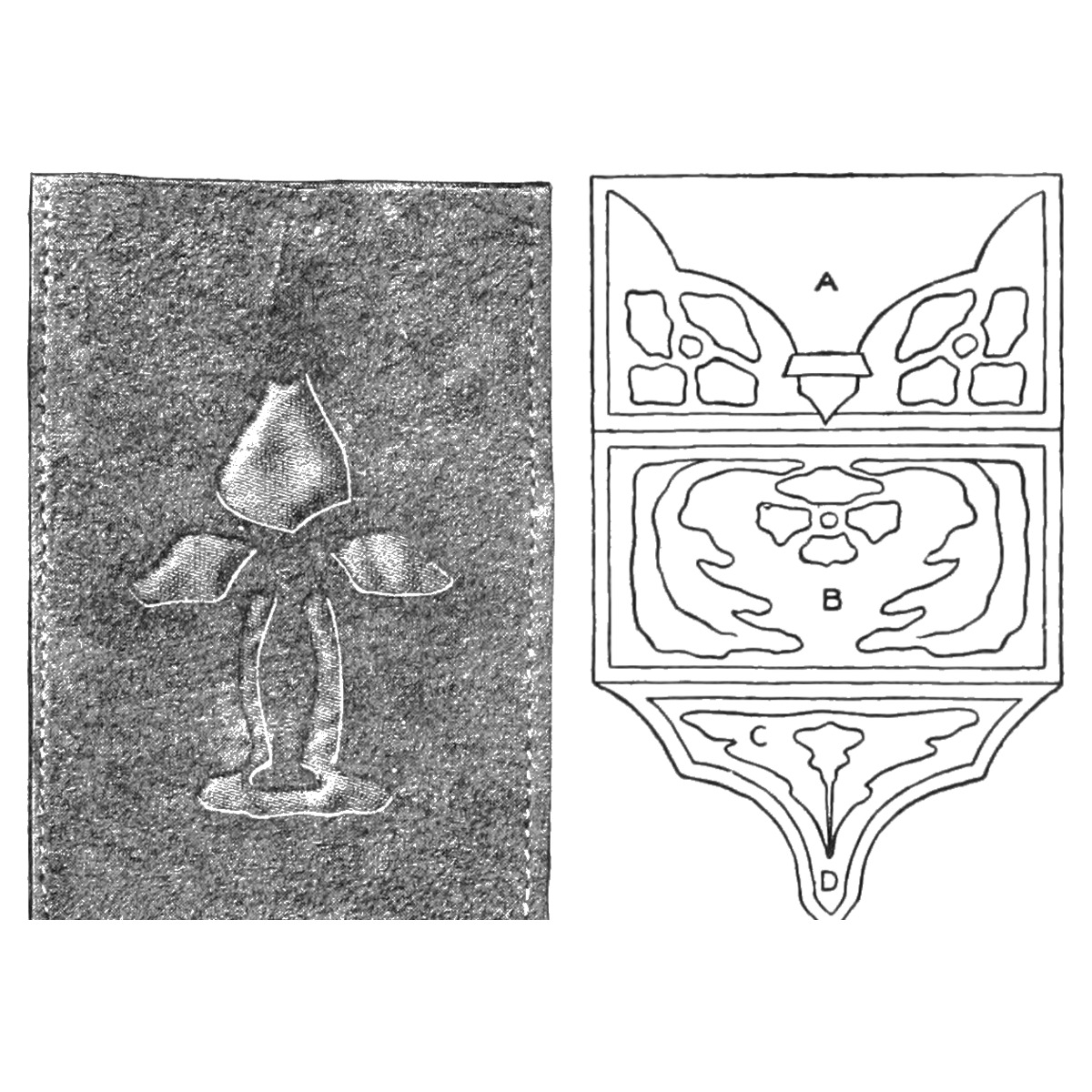


Tooled Stamp Case or Needle Book: Three-Part Fold With a Tongue-and-Slit Closure (Boy Mechanic, 1915)
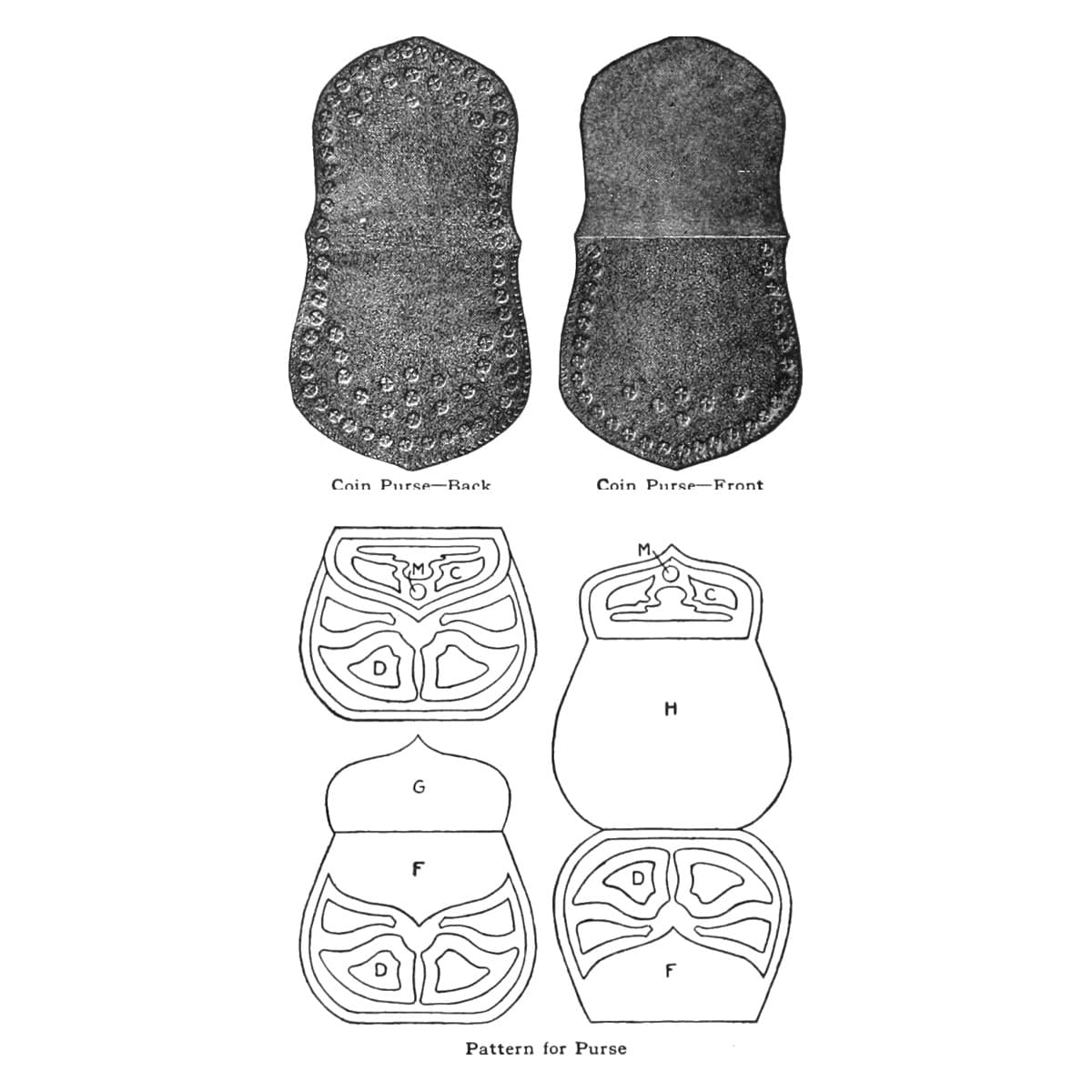
Mary C. Scovel's needle book or stamp case (The Boy Mechanic, Book 2, 1915): a 6-1/4 by 3-3/4 in piece of Russian calf folded in three, the flap ending in a long narrow tongue that slips through two slits in the front.
Anfänger
About 2 hours
Anweisungen
1
1
Her sizes in centimetres
Her sizes in centimetres
Jupyter-Notebook wird geladen …
2
2
Read The Boy Mechanic, Book 2
Read The Boy Mechanic, Book 2
Her outfit: "two special tools costing 50 cents each, one with a narrow edge for lining patterns, and one with broad ends for tooling; and a piece of tin, plate glass, or very smooth hard wood, which should not be smaller than 9 by 12 in. A soft sponge, a triangle, a rule, tracing paper and a hard pencil are also needed." Russian calfskin is best for tooling and stamping.
3
3
Make the paper pattern
Make the paper pattern
Cut Russian calf 6-1/4 by 3-3/4 in, which allows 1/4 in on each side and end for pinning. Fold paper into three equal parts: A the front; B the back, folded under A; C the flap, which folds up with B and over A. With the pattern open, all the design is on the same side; the design for B goes on upside down so it reads upright when folded. Shape C as you like, but keep its tongue D long and narrow.
Materialien für diesen Schritt:
 Kalbleder1 Stück
Benötigte Werkzeuge:
 Pauspapier
 Bleistift
 Schere
 Lineal
4
4
Damp the leather and transfer the design
Damp the leather and transfer the design
Draw the whole design for the stamp case on tracing paper. Wet the leather on the wrong (unfinished) side with a soft sponge: pat it to moisten, not soak, it; too wet and the tool sticks and leaves an uneven background. Pin the design firmly on the leather, tack the leather down on its outer margin to the glass or board, and go over every line with a hard pencil, with firm, even pressure. Lift the paper and go over the lines with the narrow lining tool, with a strong, firm stroke. A line design can stop here.
Materialien für diesen Schritt:
Kalbleder1 StückBenötigte Werkzeuge:
 SchwammPauspapierBleistift
 Reißzwecken (Schachtel mit 50 Stück)
 Glasscheibe
 Lederpunzier- und Modellierwerkzeug
5
5
Tool or stamp the background
Tool or stamp the background
Leave at least 1/8 in between the edge of the pattern and the design. To tool, press the background down with the broad end in even, long strokes; if it will not go down, the leather is too dry, so take it off and damp the back again. Keep the edges sharp between pressed and raised parts. To stamp instead, strike a small carpenter's nail set lightly with a wooden mallet in rows of circles; too hard a blow cuts the leather.
Benötigte Werkzeuge:
Lederpunzier- und Modellierwerkzeug Nageltreiber (Versenker)
 Holzhammer (Klüpfel)Schwamm
6
6
Cut the slits and sew
Cut the slits and sew
Make two horizontal cuts in the front A about 3/16 in apart, a little wider than the tongue, as far from the bottom of A as the narrowest part of the tongue is from its end, so the tongue fits them. Sew parts A and B together. Stitch on a sewing machine with a long stitch, a large needle and silk as heavy as the needle takes; try it on a scrap first, and put tissue paper over the leather if the foot marks it. Without a machine, prick holes with an awl and sew with needle and silk, running or over-and-over; going over-and-over to the end and back gives an X stitch.
Materialien für diesen Schritt:
 Nähseide1 Stück
Benötigte Werkzeuge:
 BastelmesserLineal
 Nähmaschine
 Ahle
 Zwei Sattlernadeln
7
7
Troubleshooting
Troubleshooting
Stamp case troubleshooting.
Flow
Loading...
8
8
History and honest limits
History and honest limits
From Mary C. Scovel, "Arts-Crafts Leather Work", in **The Boy Mechanic, Book 2**, Popular Mechanics, 1915 (Project Gutenberg 44585; checked on the archive.org scan boymechanicbook200chic2, pp. 432-441), Part I. Part II adds that ooze cow or calf can be used with a cut-out design lined with silk; that version is not made here. The tools and metric figures are ours.
Benötigte Werkzeuge
14- Platzhalter
- 1 vendor sell this, none ship to you yetPlatzhalter
- Platzhalter
- Platzhalter
- Platzhalter
- Platzhalter
- Platzhalter
- Platzhalter
- Platzhalter
- Platzhalter
- Platzhalter
- Platzhalter
- Platzhalter
- Platzhalter
Dieser Bauplan stellt her
Verwandte Blueprints
Diese Blueprints teilen Wissen — Techniken, Materialien oder Prinzipien
CC0 Gemeinfrei
Dieser Blueprint ist unter CC0 veröffentlicht. Sie dürfen dieses Werk für jeden Zweck frei kopieren, ändern, verbreiten und verwenden, ohne um Erlaubnis zu fragen.
Unterstützen Sie den Maker, indem Sie Produkte über seinen Blueprint kaufen, wo er eine Maker-Provision von Anbietern festgelegt, verdient. Oder erstellen Sie eine neue Iteration dieses Blueprints und verbinden Sie ihn in Ihrem eigenen Blueprint, um Einnahmen zu teilen.