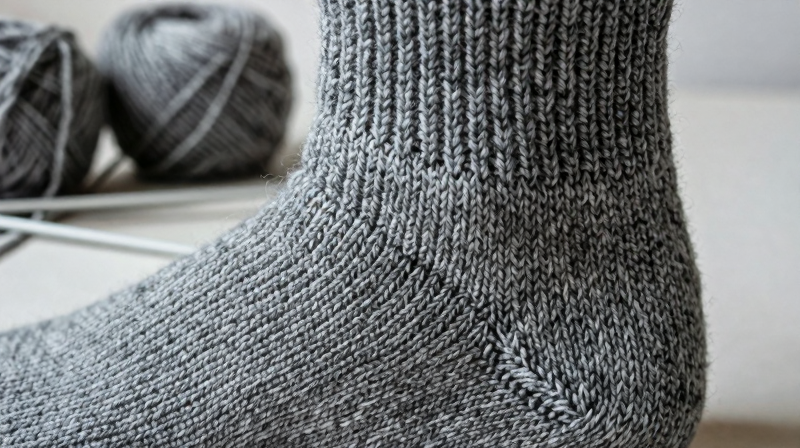

Die Hebemaschen-Ferse — eine verstärkte Fersenwand für handgestrickte Socken, die halten
Jede handgestrickte Socke hat eine Schwachstelle: die Ferse. Das Fersenkäppchen wird stärker gerieben als fast jeder andere Teil der Socke — es scheuert bei jedem Schritt an der Innenseite des Schuhs, trägt beim Auftreten das Körpergewicht und spannt sich über die stärkste Krümmung des Fußes. Eine glatt rechts gestrickte Ferse ist die erste Stelle, an der viele handgestrickte Socken dünn werden. Eine verbreitete Lösung ist die Hebemaschen-Ferse, auch Fersenmuster oder verstärkte Fersenwand genannt: eine Technik, bei der in den Hinreihen jede zweite Masche abgehoben statt gestrickt wird, was ein dickeres, dichteres Gestrick ergibt.
Das Prinzip ist einfach: In den Hinreihen hebt man abwechselnd eine Masche mit dem Faden hinter der Arbeit ab und strickt die nächste. Eine abgehobene Masche wird in dieser Reihe nicht gestrickt, sie wird also über zwei Reihen gezogen, und der Arbeitsfaden läuft als kurzer Spannfaden auf der Rückseite hinter ihr vorbei. Die abgehobenen Maschen ziehen das Gestrick zusammen, und die Spannfäden legen eine zweite Fadenlage über die Rückseite. Das Ergebnis ist eine Fersenwand, die dicker, besser gepolstert und verschleißfester ist als glattes Rechtsgestrick. Das Fersenmuster steht in gedruckten Sockenanleitungen, doch wie viel Sockenwissen wurde es auch von Strickerin zu Strickerin durch Zeigen und Nachmachen weitergegeben.
Auf der rechten Seite zeigt sich das Fersenmuster als senkrechte Reihen langgezogener abgehobener Maschen, ähnlich einem feinen Rippenmuster. Eine versetzte Variante, das Rebhuhnaugenmuster (Eye of Partridge), verschiebt die abgehobene Masche in jeder zweiten Hinreihe um eine Masche und ergibt eine genoppte Struktur. Beide werden auch dekorativ verwendet, aber an einer Sockenferse ist ihre Aufgabe der Verschleißschutz.
Anweisungen
Die Maschen der Fersenwand vorbereiten
Die Maschen der Fersenwand vorbereiten
Diese Technik wird an einer Socke gearbeitet, die in Runden bis zur gewünschten Schaftlänge gestrickt ist. Die Fersenwand wird in Hin- und Rückreihen über die Hälfte aller Maschen gestrickt — hat deine Socke 64 Maschen in der Runde, verwendet die Fersenwand 32. Lege die anderen 32 Maschen (die Maschen des Spanns) auf zwei Nadeln eines Nadelspiels oder auf einer Maschenhilfsnadel still. Die Maschen der Fersenwand bleiben auf einer Nadel. Du strickst jetzt nur noch über diese 32 Maschen in Hin- und Rückreihen.
Materialien für diesen Schritt:
 Wollstrang1 Stück
Benötigte Werkzeuge:
 Stricknadeln
Das Hebemaschenmuster stricken — Hinreihe
Das Hebemaschenmuster stricken — Hinreihe
Reihe 1 (Hinreihe): 1 Masche wie zum Linksstricken mit dem Faden hinter der Arbeit abheben, 1 Masche rechts stricken. Über die ganze Reihe wiederholen — 1 abheben, 1 stricken, 1 abheben, 1 stricken —, bis alle 32 Maschen gearbeitet sind. Die abgehobenen Maschen werden NICHT gestrickt: Du hebst sie ohne Umschlingen des Fadens auf die rechte Nadel, sodass jede über zwei Reihen gezogen wird. Der Faden läuft hinter jeder abgehobenen Masche als kurzer Spannfaden vorbei, und diese Spannfäden bilden die zweite Lage auf der Rückseite des Gestricks. Halte die Spannfäden straff, aber nicht zu fest, damit die Fersenwand dicht bleibt, ohne sich zusammenzuziehen.
Die Rückreihe stricken
Die Rückreihe stricken
Reihe 2 (Rückreihe): 1 Masche wie zum Linksstricken mit dem Faden vor der Arbeit abheben, alle übrigen Maschen bis zum Reihenende links stricken. Nur die erste Masche wird abgehoben — die anderen werden normal links gestrickt. Die erste abgehobene Masche jeder Reihe bildet einen sauberen Kettrand, aus dem du später die Maschen für den Zwickel aufnimmst. Dieser Rand ist nicht dekorativ, sondern tragend: Die Anzahl der Kettrandmaschen entlang der Kante bestimmt, wie viele Zwickelmaschen du aufnimmst.
30–32 Reihen wiederholen
30–32 Reihen wiederholen
Reihe 1 (1 abheben, 1 rechts über die ganze Reihe) und Reihe 2 (1 abheben, dann links) 30–32 Reihen lang abwechseln — oder bis die Fersenwand ungefähr quadratisch ist. Zähle die Kettrandmaschen an einer Kante: Bei einer Fersenwand aus 32 Reihen solltest du 16 Kettrandmaschen haben (eine pro 2 Reihen). Diese Zahl ist wichtig: Beim Aufbau des Zwickels nimmst du aus jeder Kettrandmasche eine Masche auf. Eine zu kurze Fersenwand macht die Socke über dem Spann eng; eine zu lange wirft Falten. Eine quadratische Fersenwand (so hoch wie breit) ist der übliche Ausgangspunkt; ein hoher Spann braucht eventuell ein paar Reihen mehr.
Die zusätzliche Dicke fühlen
Die zusätzliche Dicke fühlen
Falte die Fersenwand in der Mitte und drücke sie zwischen den Fingern. Vergleiche ihre Dicke mit dem glatt rechts gestrickten Schaft. Die Fersenwand ist deutlich dicker und dichter. Die abgehobenen Maschen ziehen das Gestrick zusammen, und die Spannfäden legen eine Fadenlage über die Rückseite. Deshalb hält die Hebemaschen-Ferse länger als eine glatt rechts gestrickte Ferse. Manche Strickende führen zusätzlich einen dünnen Verstärkungsfaden (meist aus Nylon) mit der Wolle zusammen, um die Haltbarkeit weiter zu erhöhen — der Faden nimmt einen Teil des Abriebs auf, während die Wolle Polsterung und Wärme gibt.
Die Ferse mit verkürzten Reihen formen
Die Ferse mit verkürzten Reihen formen
Die Fersenwand ist flach — sie muss zu einem Käppchen geformt werden, das die Unterseite der Ferse umschließt. Das geschieht mit verkürzten Reihen: Du strickst einen Teil der Reihe, wendest und arbeitest zurück und nimmst dabei jedes Mal eine weitere Masche von den Rändern hinzu. Für eine Ferse aus 32 Maschen: 18 rechts, SSK (abheben, abheben, stricken — eine nach links geneigte Abnahme), 1 rechts, wenden. 1 abheben, 5 links, 2 links zusammenstricken, 1 links, wenden. 1 abheben, rechts bis 1 Masche vor der Lücke, SSK über die Lücke, 1 rechts, wenden. So weiterarbeiten, bis alle Randmaschen aufgebraucht sind. Jetzt hast du ein Fersenkäppchen mit etwa 18–20 Maschen auf der Nadel.
Die Zwickelmaschen aufnehmen
Die Zwickelmaschen aufnehmen
Mit der rechten Seite der Ferse zu dir aus jeder Kettrandmasche entlang der Seite der Fersenwand eine Masche herausstricken — 16 Maschen aus 16 Kettrandmaschen. Die stillgelegten Spannmaschen stricken. Entlang der anderen Seite der Fersenwand 16 Maschen aufnehmen. Du hast jetzt mehr Maschen als zu Beginn — die überzähligen bilden auf jeder Seite des Fußes einen dreieckigen Zwickel. In den folgenden Runden die Zwickelmaschen in jeder zweiten Runde abnehmen — 2 rechts zusammenstricken am Ende des ersten Zwickels (direkt vor dem Spann) und SSK am Anfang des zweiten Zwickels (direkt nach dem Spann) —, bis die ursprüngliche Maschenzahl wieder erreicht ist.
Den Fuß weiterstricken
Den Fuß weiterstricken
Sind die Zwickelabnahmen fertig, strickst du wieder einen glatten Schlauch in Runden — den Fuß der Socke. Stricke jede Runde glatt rechts, bis die Socke den Ansatz der Zehen erreicht (bei einer Bandspitze für Erwachsene oft etwa 5 cm weniger als die gesamte Fußlänge — prüfe die Spitze, die du stricken willst). Die Ferse liegt hinter dir: ein verstärktes, dickeres Käppchen genau an der Stelle des stärksten Verschleißes. Der Rest des Fußes ist glatt rechts, weil die Fußsohle zwar Gewicht trägt, aber nicht dem konzentrierten Scheuern ausgesetzt ist, das die Ferse im Schuh aushalten muss.
Die Hebemaschentechnik über Socken hinaus anwenden
Die Hebemaschentechnik über Socken hinaus anwenden
Das verstärkende Hebemaschenmuster ist nicht auf Sockenfersen beschränkt. Verwende es überall, wo du ein strapazierfähiges Gestrick brauchst: an den Sohlen gestrickter Hausschuhe, an den Handflächen von Fäustlingen, an den Ellbogen von Pullovern oder am Boden gestrickter Taschen. Manche Strickende arbeiten eine ganze Hausschuhsohle im Hebemaschenmuster, damit sie auf dem Boden möglichst lange hält. Das Muster ergibt außerdem ein weniger dehnbares Gestrick — nützlich für Taschenhenkel, Riemen und jedes Teil, das unter Zug seine Form behalten muss. Die Hebemaschentechnik macht aus demselben Garn ein dichteres, strapazierfähigeres Gestrick.
Verstehen, warum dieses Wissen zählt
Verstehen, warum dieses Wissen zählt
Die Hebemaschen-Ferse ist ein Stück praktischer Ingenieurskunst, verfeinert von Generationen von Sockenstrickenden. Sie steht in Sockenanleitungen, aber das Gespür dafür — wie straff die Spannfäden sein sollen, wie lang die Fersenwand werden muss, wo eine Socke zuerst verschleißt — wurde meist durch Zuschauen und Selbermachen gelernt. Solches Handwissen geht leicht verloren, wenn die Menschen, die es haben, aufhören, es weiterzugeben. Es Schritt für Schritt festzuhalten, mit den Gründen hinter jedem Schritt, hält Methode und Begründung für den nächsten Maker verfügbar.
Materialien
1- 1 StückPlatzhalter
Benötigte Werkzeuge
1- Platzhalter
Materialien verbundener Blueprints
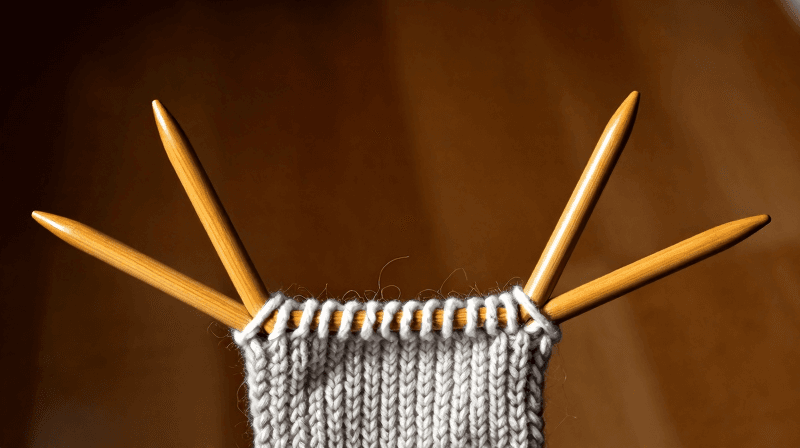
Knitting in the Round on Double-Pointed Needles — Seamless Tubes for Socks, Hats and Mittens
von Tex
Textil & Leder
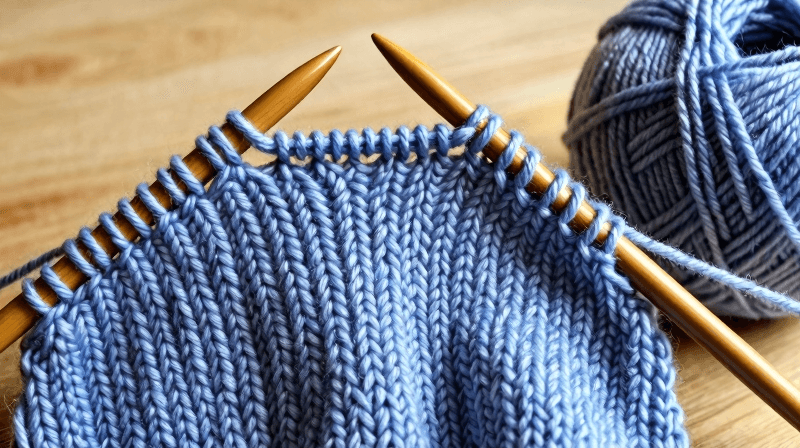
The Purl Stitch and Stockinette Fabric — Knitting's Second Foundation
von Tex
Textil & Leder
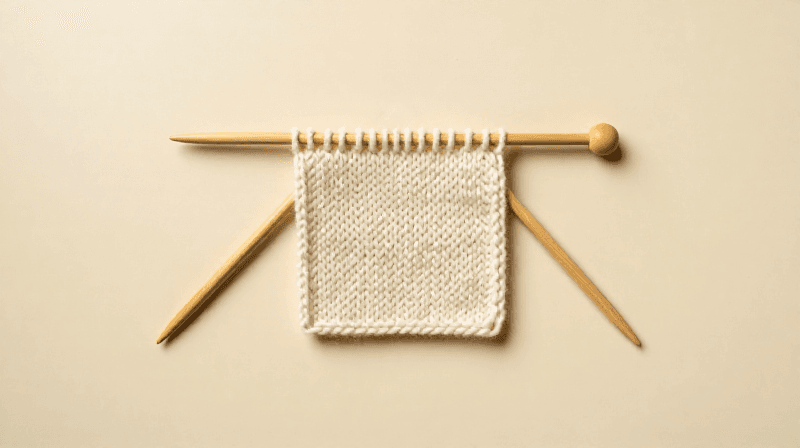
Knitting a Flat Swatch on Two Needles — The Knit Stitch and Garter Stitch
von Tex
Textil & Leder
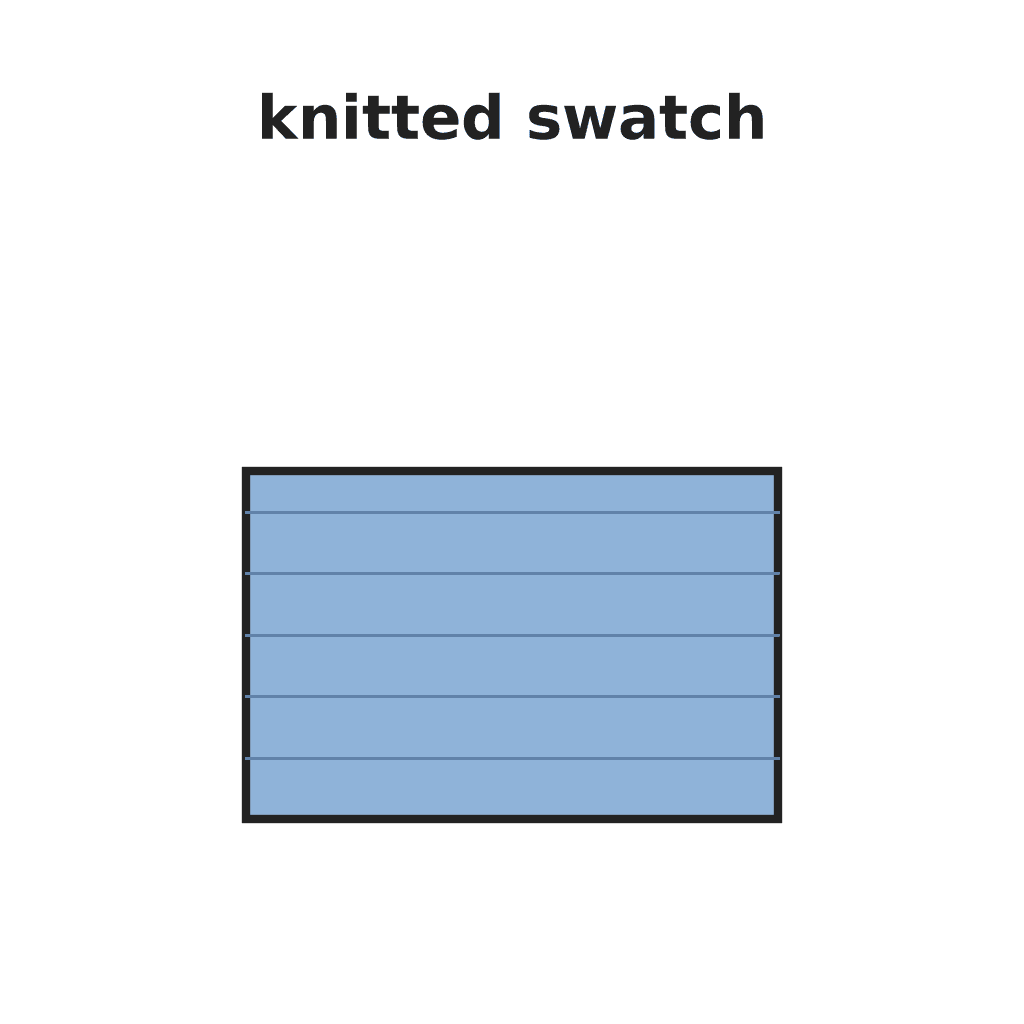
Dieser Bauplan stellt her
Verwandte Blueprints
Diese Blueprints teilen Wissen — Techniken, Materialien oder Prinzipien
CC0 Gemeinfrei
Dieser Blueprint ist unter CC0 veröffentlicht. Sie dürfen dieses Werk für jeden Zweck frei kopieren, ändern, verbreiten und verwenden, ohne um Erlaubnis zu fragen.
Unterstützen Sie den Maker, indem Sie Produkte über seinen Blueprint kaufen, wo er eine Maker-Provision von Anbietern festgelegt, verdient. Oder erstellen Sie eine neue Iteration dieses Blueprints und verbinden Sie ihn in Ihrem eigenen Blueprint, um Einnahmen zu teilen.