KUNST
SCHÖNHEIT & WELLNESS
HANDWERK
KULTUR & GESCHICHTE
UNTERHALTUNG
UMFELD
ESSEN & GETRÄNKE
REVERSE ENGINEERING
WISSENSCHAFTEN
SPORT
TECHNOLOGIE
WEARABLES
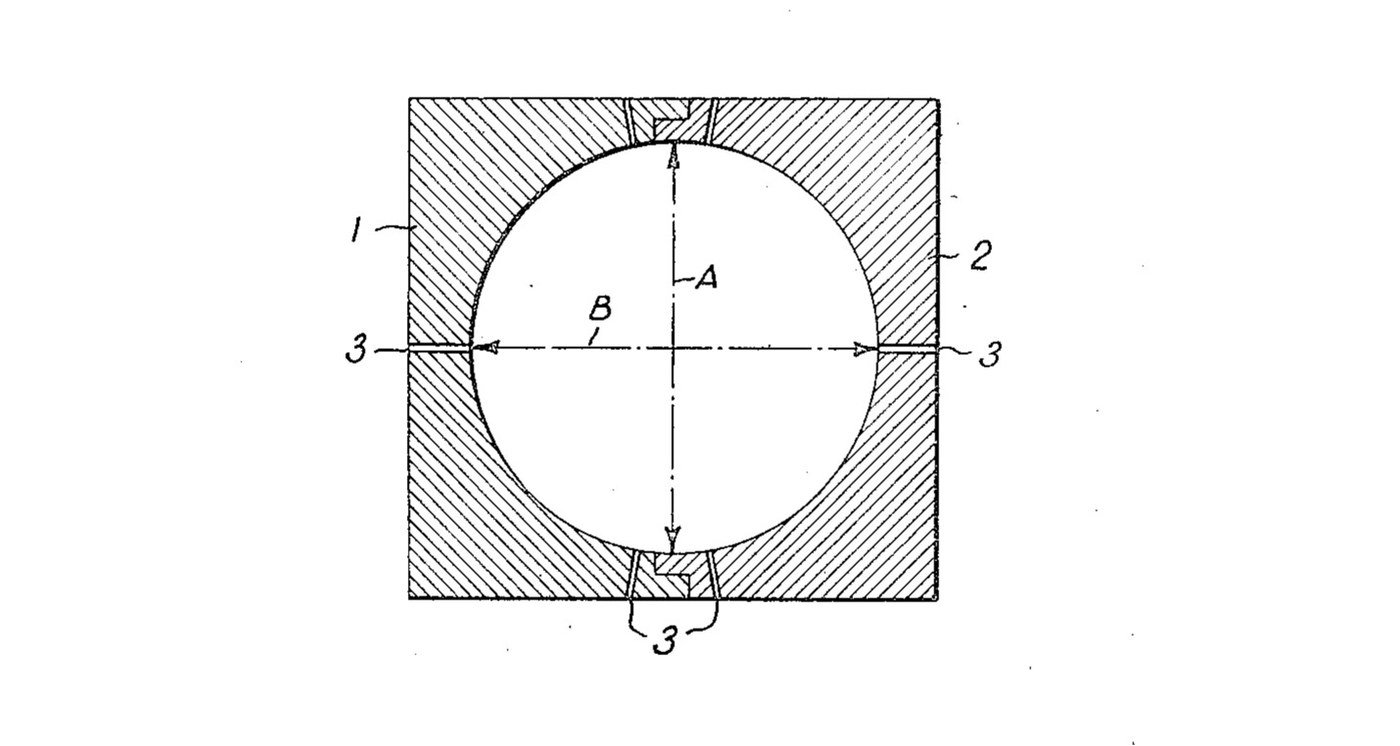
J. M. Jaques · Public domain (US patent)


Table Tennis Balls: Celluloid Halves Blown in an Out-of-Round Mould (Jaques 1935)
A celluloid table tennis ball is two stamped halves sealed with acetone, then blown out round by its own air in a hot mould. The overlapped seam shrinks a little as it cools, so the ball ends slightly narrower across the seam. John Jaques made the mould wider across the seam by just that amount, so the ball cools truly round.
Source: J. M. Jaques, US 2,025,455 (1935). The patent gives no sheet thickness, ball size or temperatures. The press, pot and micrometer are ours. Picture: the patent drawing.
Fortgeschritten
1 day
Anweisungen
1
1
Stamp two halves from hot sheet
Stamp two halves from hot sheet
Stamp two half-balls out of celluloid sheet while it is hot. The patent gives no temperature.
Materialien für diesen Schritt:
 Celluloid1 Blatt
Benötigte Werkzeuge:
 Halbkugel-Prägewerkzeug
 Stanzpresse
2
2
Seal the halves with acetone
Seal the halves with acetone
Wet the edges of both halves with acetone, fit them together with the edges overlapping and let them seal. You now have a closed rough ball with a seam round its middle.
Benötigte Werkzeuge:
 Aceton
3
3
Measure the seam shrinkage
Measure the seam shrinkage
Blown balls come out narrower across the seam than across the poles: about one to two ten-thousandths of an inch on the celluloid balls Jaques measured. For your own celluloid, measure it on a test ball.
Benötigte Werkzeuge:
 Mikrometer
4
4
Use a mould wider at the seam
Use a mould wider at the seam
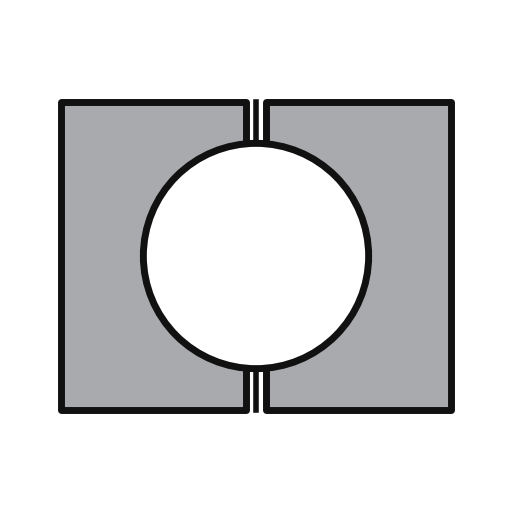
The split mould is not a true sphere. Measured in the plane where its two halves meet (diameter A), it is wider than at right angles to that plane (diameter B) by the amount the seam shrinks, and it has small vents to let air out.
Benötigte Werkzeuge:
 Geteilte KugelformMikrometer
5
5
Set the ball seam to joint
Set the ball seam to joint
Lay the rough ball in the mould with its seam exactly on the mould joint, and hold it there with a little petroleum jelly so it cannot move.
Benötigte Werkzeuge:
Geteilte Kugelform Vaseline
6
6
Blow it out in hot water
Blow it out in hot water
Close the mould and put it in hot water. The air inside the ball expands and blows the ball out to fill the mould.
Benötigte Werkzeuge:
Geteilte Kugelform Großer Kochtopf
 Wasser
7
7
Cool and take out
Cool and take out
Let the mould cool, then open it and take the ball out. As the seam shrinks it comes back to the same diameter as the rest, so the ball is as near round as it can be.
Benötigte Werkzeuge:
Geteilte KugelformDieser Bauplan stellt her
CC0 Gemeinfrei
Dieser Blueprint ist unter CC0 veröffentlicht. Sie dürfen dieses Werk für jeden Zweck frei kopieren, ändern, verbreiten und verwenden, ohne um Erlaubnis zu fragen.
Unterstützen Sie den Maker, indem Sie Produkte über seinen Blueprint kaufen, wo er eine Maker-Provision von Anbietern festgelegt, verdient. Oder erstellen Sie eine neue Iteration dieses Blueprints und verbinden Sie ihn in Ihrem eigenen Blueprint, um Einnahmen zu teilen.