KUNST
SCHÖNHEIT & WELLNESS
HANDWERK
KULTUR & GESCHICHTE
UNTERHALTUNG
UMFELD
ESSEN & GETRÄNKE
REVERSE ENGINEERING
WISSENSCHAFTEN
SPORT
TECHNOLOGIE
WEARABLES


One Can, Many Tools: The 18650 and the Safety Devices in Its Cap
Yoshino's cell worked. That is not the same as a cell you can buy.
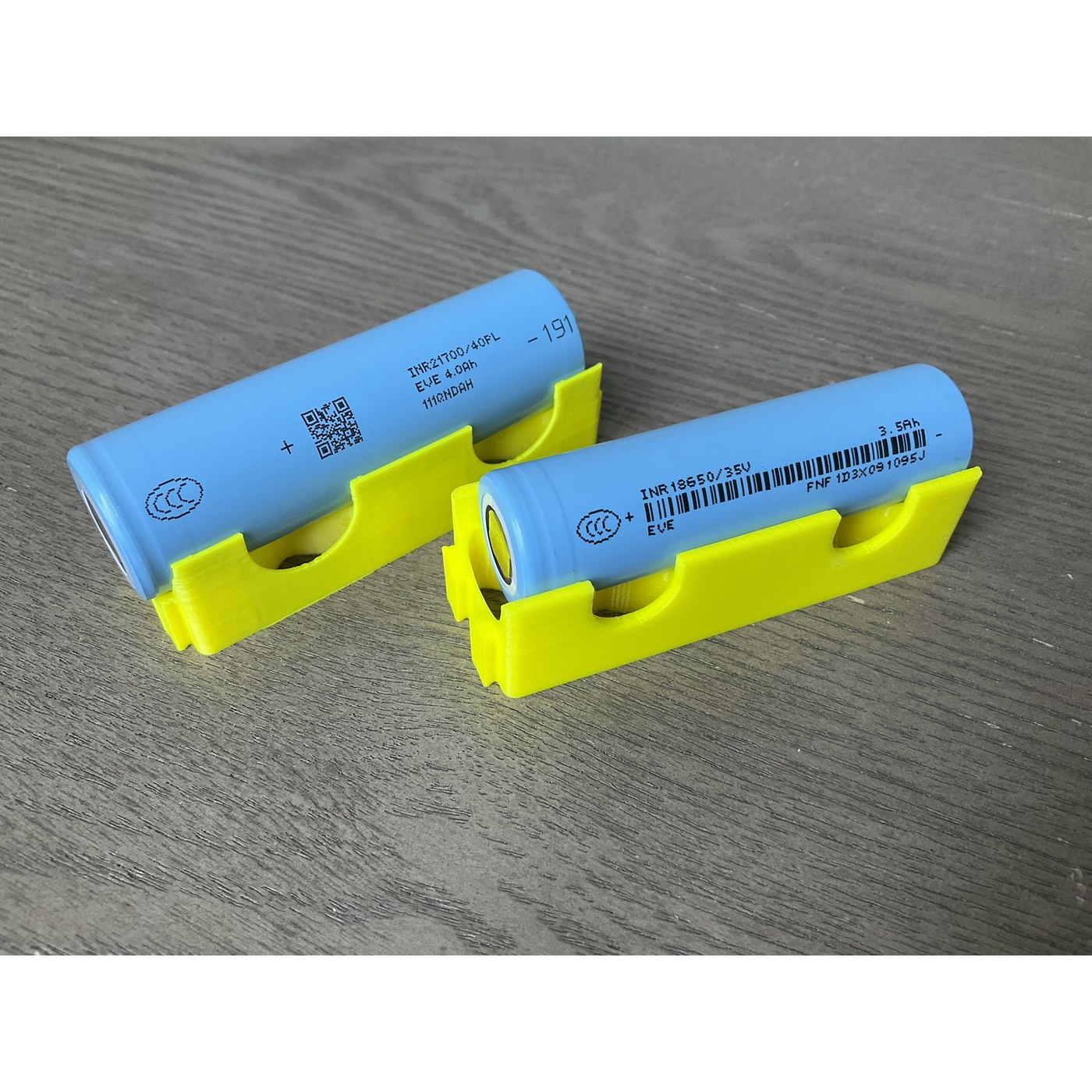
What turned lithium-ion from a chemistry into an industry was a **can with fixed dimensions**: 18 mm across, 65 mm long, first sold by Sony in 1991. Once the can was fixed, a tool designer could specify 'ten cells' the way they specify a bearing, and a cell maker could build a factory without knowing what the cells would end up in.
This rung measures that can, works out what its shape costs, and looks closely at the crimped cap — because packed into that cap are two safety devices that most people never know are there, and a third that they had better not defeat.
Anfänger
About 2 hours
Anweisungen
1
1
Measure the format, and calculate what it holds
Measure the format, and calculate what it holds
Take an 18650 and a 21700 and put the calipers on both. The names are the dimensions: **18 mm diameter, 65 mm long**, and the trailing zero means 'cylindrical'. A 21700 is 21 mm by 70 mm. Measure and confirm; protected cells with a circuit board under a wrapper run a millimetre or two longer, which is why some torches take one and not the other.
Weigh both. Read the printed capacity and the nominal voltage off the wrapper. Multiply for watt-hours, divide by mass for watt-hours per kilogram, and divide by the volume you just measured for watt-hours per litre. Write all six figures down.
Now compare with the sub-C NiCd figure from rung 1. It is the same comparison, made with your own calipers rather than from a table, and that is worth doing once.
One thing to notice in passing: the printed capacity is a **rating at a particular discharge rate**, usually a gentle one. Pull 20 A from a 3,000 mAh cell and you will not get 3,000 mAh out of it, because the internal resistance of rung 2 takes its cut. A cell wrapper that advertises a huge capacity *and* a huge current is advertising two numbers that were not measured at the same time.
Benötigte Werkzeuge:
 Digitaler Messschieber 6 Zoll
 Digitalwaage
 Digitalmultimeter — automatische Bereichswahl, True RMS
 Lithiumzelle 18650
 Lithiumzelle 21700
2
2
Look into the cap
Look into the cap
Stand a cell on end under good light and look at the positive cap. It is not a lid; it is an assembly, and there are three separate safety devices crimped into it.
**The PTC.** A polymer disc that conducts when cool and goes almost insulating when hot. Pull a heavy current, the disc self-heats, its resistance climbs by orders of magnitude, and the current falls to near nothing. Remove the fault and it cools and conducts again. It is a resettable fuse and it protects against an *external* short.
**The CID — current interrupt device.** A thin metal diaphragm. If internal pressure rises past a set point, the diaphragm deforms and **tears the connection to the cathode tab**. That is permanent: the cell goes open-circuit forever. It is a one-shot response to an internal problem, and a cell that reads open-circuit for no visible reason has very often fired its CID and is telling you something.
**The vent.** Score marks pressed into the cap, so that if pressure keeps rising after the CID has fired, the cap ruptures there and not somewhere unpredictable. Look for the thin radial lines or the small holes around the button.
Do not test any of these. Provoking a PTC is a deliberate short of a lithium cell, and the CID and vent cannot be tested at all without destroying the cell and possibly the bench. The point of this step is recognition: know they are there, know which are resettable and which are not, and never buy a cell whose wrapper claims to have removed them for extra current.
Benötigte Werkzeuge:
Digitaler Messschieber 6 Zoll Digitalmikroskop
 Klare Schutzbrille
3
3
What the shape costs
What the shape costs
Jupyter-Notebook wird geladen …
4
4
Build the string you will need in the next rung
Build the string you will need in the next rung
Put four matched 18650 cells into a four-cell holder in series and measure the string: each cell against its neighbours, and the whole string end to end. Four cells at 3.7 V nominal is a **4S** pack, 14.8 V nominal, which is the shape of a small tool battery.
Write down every cell's voltage to three decimals now, before anything has happened to them. This is your baseline. Rung 7 takes the same string, uses it, and measures the same four cells again — and the difference between those two tables is the entire subject of that rung.
Label the cells 1 to 4 with a marker so the same cell stays in the same position. It matters: a cell at the end of a holder runs cooler than one in the middle, and after a few cycles that shows up in the measurements.
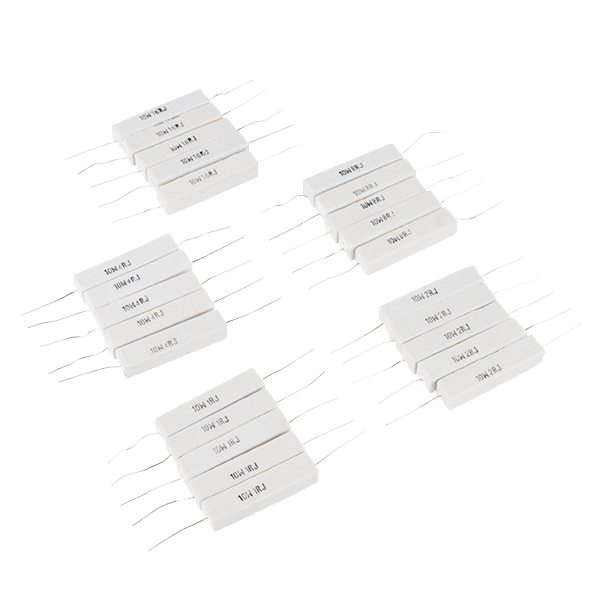
Check the string with the infrared thermometer after a short discharge through the power resistor — a minute at an amp is plenty. The middle cells should read warmer. That temperature gradient is real, it is a consequence of the packing arithmetic in step 3, and it is one of the two reasons cells in a pack drift apart.
Never put cells of different ages, brands or capacities in one series string, and never charge a string like this without per-cell supervision. Rung 7 fits that supervision.
Benötigte Werkzeuge:
 18650-Batteriehalter für 4 ZellenDigitalmultimeter — automatische Bereichswahl, True RMS
 Infrarot-Thermometer
 Power Resistor Kit - 10W (25 pack)
 Kühlkörpersortiment (Aluminium)
 Messleitungen mit Krokodilklemmen
 Laborjournal (mit Durchschlag)Klare SchutzbrilleLithiumzelle 18650
5
5
History and context
History and context
**Attribution, stated honestly.** Sony brought the first commercial lithium-ion cell to market in **1991**, in the 18650 size. No patent number is asserted here, and none should be: a *format* is not a patentable invention. The cell chemistry inside it is Goodenough's cathode and Yoshino's anode, both already in the catalogue as their own rungs; the contribution here is the decision to standardise a shape and let everyone else build on it.
That is a kind of innovation worth naming, because it keeps recurring and it never wins prizes. The 18650 did for portable power what the standard screw thread did for fastening and what the shipping container did for freight: it made a thing interchangeable, and interchangeability is what lets an industry get on with the next problem.
**What it enabled.** Laptops first, then power tools, then torches, then — famously — electric cars: the early Tesla Roadster pack was some 6,800 commodity 18650 cells, chosen precisely because they were a commodity. The 21700 that replaced it in newer packs is the same argument made once more with slightly better arithmetic, as step 3 shows.
**Honest limits.** A cylinder wastes 9–21% of the space it occupies, depending on how you pack it, and a pouch cell does not. Every cell needs its own welded connections, so a thousand-cell pack has thousands of joints, each of which is a resistance and a possible failure. And the standard format has an ugly side effect: loose 18650 cells circulate on the open market, often with exaggerated ratings, sometimes with the safety devices of step 2 removed, and they end up in devices built by people who had no way to tell.
Benötigte Werkzeuge
13- Platzhalter
- Platzhalter
- Lithiumzelle 1865010% ProvisionPlatzhalter
- Lithiumzelle 2170010% ProvisionPlatzhalter
- Platzhalter
- Platzhalter
- Platzhalter
- Platzhalter
- Power Resistor Kit - 10W (25 pack)10% Provision€5.13
- Kühlkörpersortiment (Aluminium)10% ProvisionPlatzhalter
- Platzhalter
- Laborjournal (mit Durchschlag)10% ProvisionPlatzhalter
Verwandte Blueprints
Diese Blueprints teilen Wissen — Techniken, Materialien oder Prinzipien

CC0 Gemeinfrei
Dieser Blueprint ist unter CC0 veröffentlicht. Sie dürfen dieses Werk für jeden Zweck frei kopieren, ändern, verbreiten und verwenden, ohne um Erlaubnis zu fragen.
Unterstützen Sie den Maker, indem Sie Produkte über seinen Blueprint kaufen, wo er eine Maker-Provision von Anbietern festgelegt, verdient. Oder erstellen Sie eine neue Iteration dieses Blueprints und verbinden Sie ihn in Ihrem eigenen Blueprint, um Einnahmen zu teilen.