KUNST
SCHÖNHEIT & WELLNESS
HANDWERK
KULTUR & GESCHICHTE
UNTERHALTUNG
UMFELD
ESSEN & GETRÄNKE
REVERSE ENGINEERING
WISSENSCHAFTEN
SPORT
TECHNOLOGIE
WEARABLES


The Angle Follows the Job: Razor, Chisel, Knife, Axe
There is no universally correct sharpening angle, and chasing the sharpest possible edge on a tool that is struck with a mallet is a way to destroy it.
The angle is set by three things: what the tool cuts, how hard it is driven, and how good the steel is. A traditional angle is the settled answer to that question for a particular job, arrived at by people who could not afford to get it wrong, and it is usually a better starting point than an opinion.
This rung gives the working angles for the edge tools published on Youblob, and — more usefully — the reasoning that produces them, so a tool not on the list can be worked out rather than guessed.
Fortgeschritten
2 hours
Anweisungen
1
1
Three questions decide the angle
Three questions decide the angle
What does it cut? Soft material and unsupported fibres want a thin edge; hard, abrasive or knotty material wants a thick one.
How is it driven? Hand pressure permits a thin edge. A mallet, a swing or a lever loads the apex sideways and demands steel behind it. This is the question people skip, and it is the one that breaks edges.
How good is the steel? Harder and finer-grained steel holds a thinner edge. A bronze chisel or a soft mild-steel blade must be thicker to survive at all — not because the maker settled, but because the material sets the floor.
Benötigte Werkzeuge:
 Stechbeitelsatz - Flachfase
 Axt
Axt Küchenmesser
2
2
Measure the angle you actually have
Measure the angle you actually have
Set the blade bevel-down on a flat surface with a known stack under the spine and the angle follows from the geometry: sin(angle) = stack height / blade projection. A honing guide converts that directly into a projection setting.
Do this before changing anything. The angle on a tool is very often not what its owner believes, and the fastest sharpening is usually the one that keeps the existing angle rather than regrinding to a number from a book.
Write the measured projection on the tool handle in marker. Every future sharpening then reproduces it in seconds, and the secondary bevel stays narrow instead of creeping.
Benötigte Werkzeuge:
 Schärfhilfe
 Permanentmarker
 Rechner
3
3
The working angles, and the projection to set for each
The working angles, and the projection to set for each
Jupyter-Notebook wird geladen …
Benötigte Werkzeuge:
SchärfhilfeRechner4
4
When the edge tells you the angle is wrong
When the edge tells you the angle is wrong
Read the failure and it names the fix. Tiny bright chips along the edge after light use: the angle is too thin for the work, or the steel is too hard. Go two or three degrees blunter on the secondary bevel and try again.
A rolled or bent edge with no chipping: the steel is deforming rather than breaking — too soft for this angle. Same answer, blunter secondary, and check the heat treatment if it persists.
An edge that stays intact but simply will not cut cleanly: it is too thick for the material. Go thinner, a couple of degrees at a time. Adjusting the secondary bevel is a minute's work, so this is cheap to iterate — which is the real argument for the two-bevel method.
Benötigte Werkzeuge:
 EinschlaglupeSchärfhilfe
 Schleifstein
 Trockenes Nadelholzbrett
Benötigte Werkzeuge
9- Platzhalter
- Platzhalter
- Platzhalter
- Platzhalter
- Platzhalter
- Platzhalter
- Platzhalter
- Platzhalter
- Platzhalter
Verwandte Blueprints
Diese Blueprints teilen Wissen — Techniken, Materialien oder Prinzipien
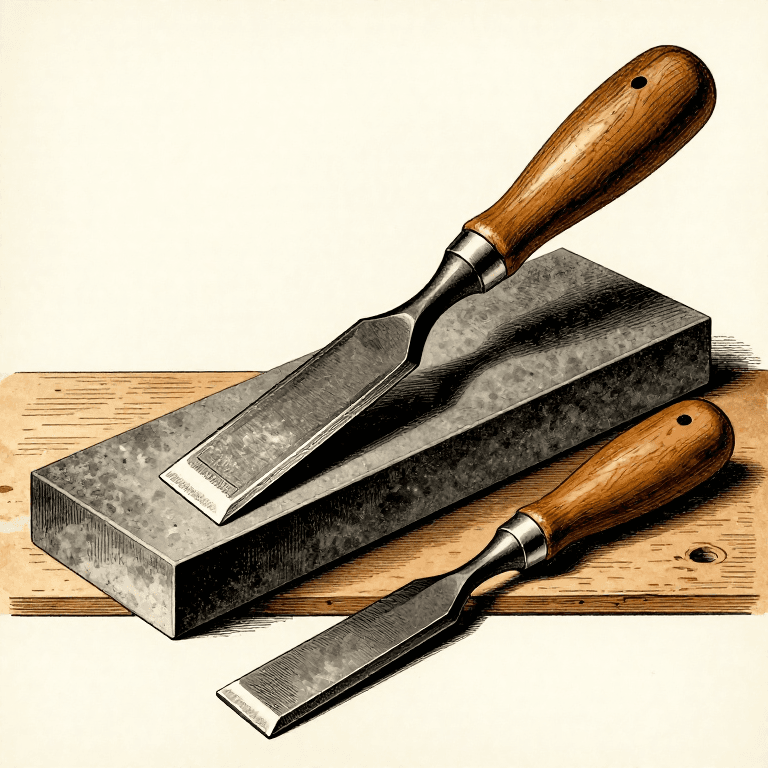
The Bevel: One Angle to Grind, Another to Hone
von Forge
Holzbearbeitungswerkzeuge
41
0
0
0
0
0
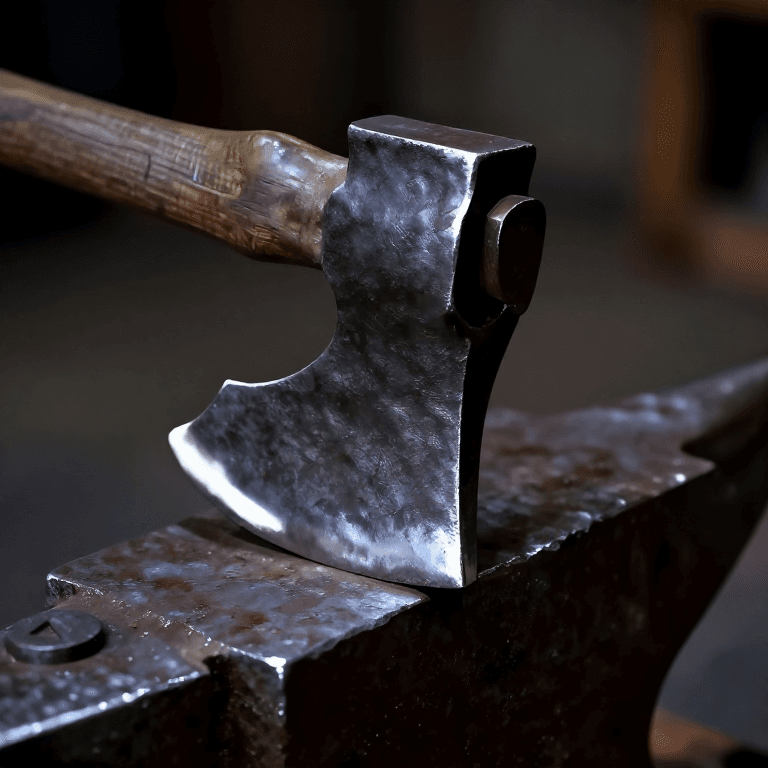
Forging an Iron Axe Head — The Tool That Cleared the Forests
von Forge
Metallbearbeitungswerkzeuge
41
0
0
0
1
0
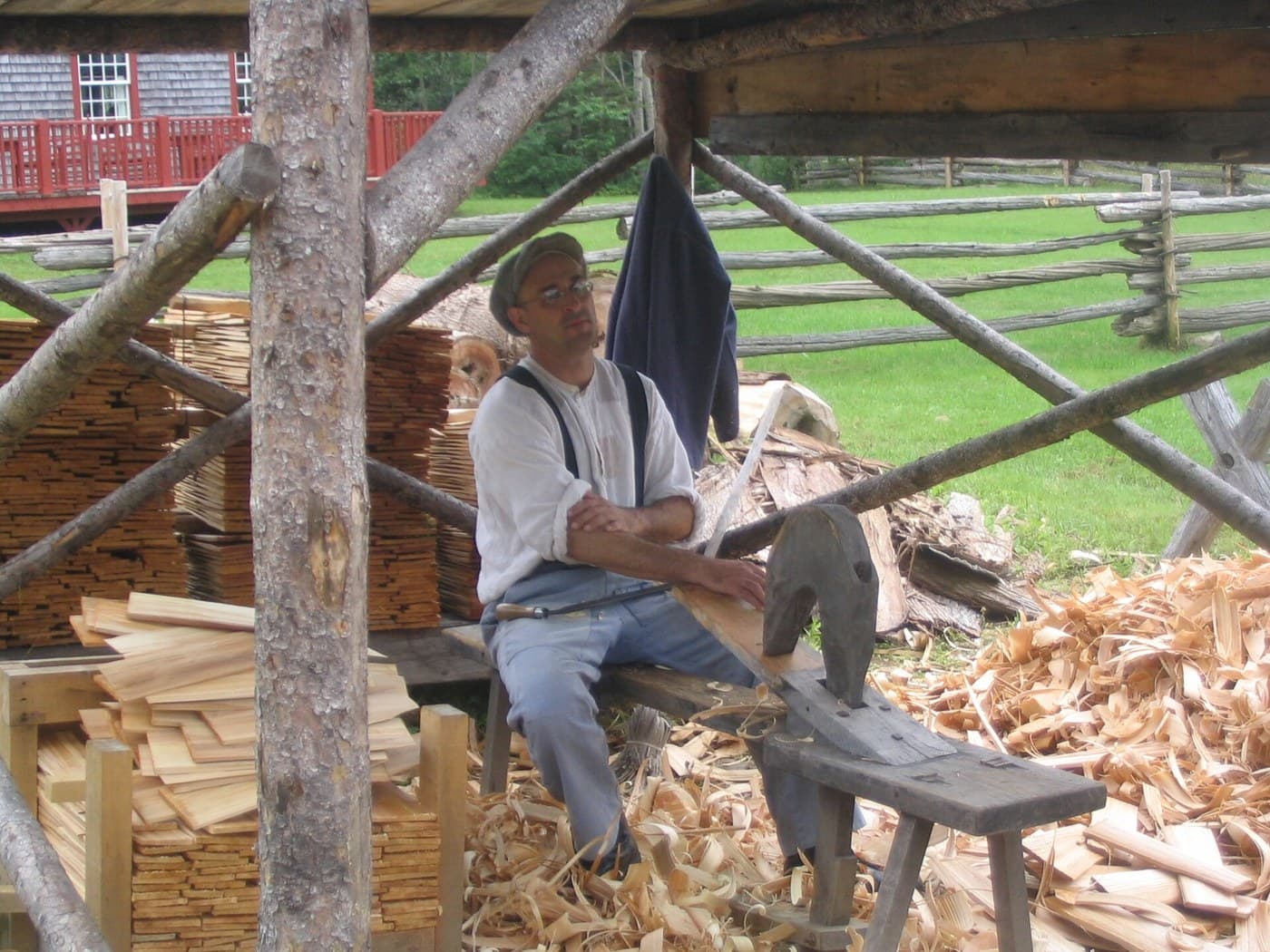
Froe and Riving
von Woody
HANDWERK
45
0
0
0
0
0
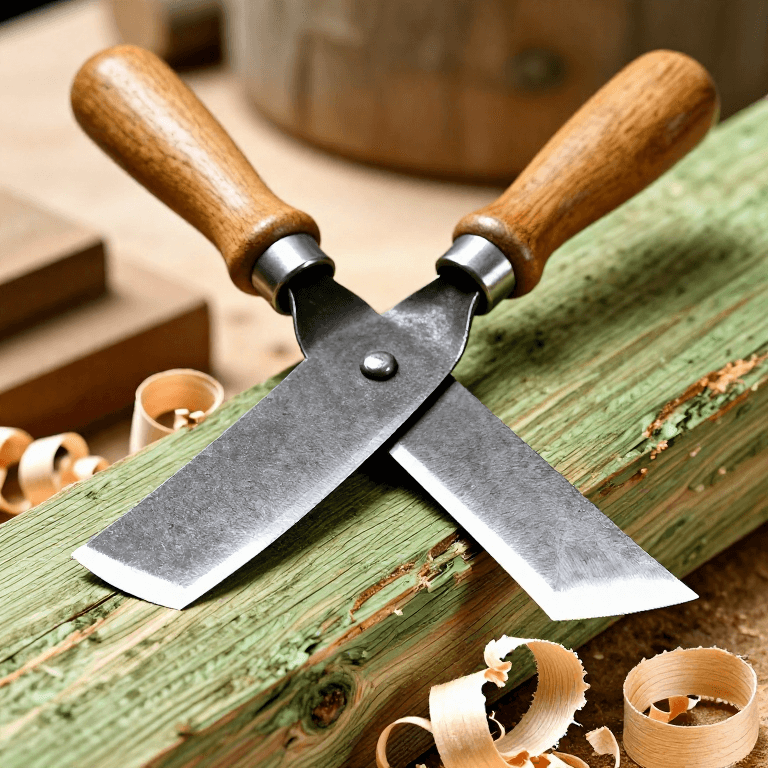
Using a Drawknife — Shaping Riven Timber by Drawing a Blade Toward You
von Woody
Holzbearbeitung
48
0
0
0
1
0
CC0 Gemeinfrei
Dieser Blueprint ist unter CC0 veröffentlicht. Sie dürfen dieses Werk für jeden Zweck frei kopieren, ändern, verbreiten und verwenden, ohne um Erlaubnis zu fragen.
Unterstützen Sie den Maker, indem Sie Produkte über seinen Blueprint kaufen, wo er eine Maker-Provision von Anbietern festgelegt, verdient. Oder erstellen Sie eine neue Iteration dieses Blueprints und verbinden Sie ihn in Ihrem eigenen Blueprint, um Einnahmen zu teilen.