KUNST
SCHÖNHEIT & WELLNESS
HANDWERK
KULTUR & GESCHICHTE
UNTERHALTUNG
UMFELD
ESSEN & GETRÄNKE
REVERSE ENGINEERING
WISSENSCHAFTEN
SPORT
TECHNOLOGIE
WEARABLES

Double-Cutting Shears: Blades That Cut Both Ways
Trimming a lawn edge with shears is open, close, open, close — and only the closing half of the work cuts anything.
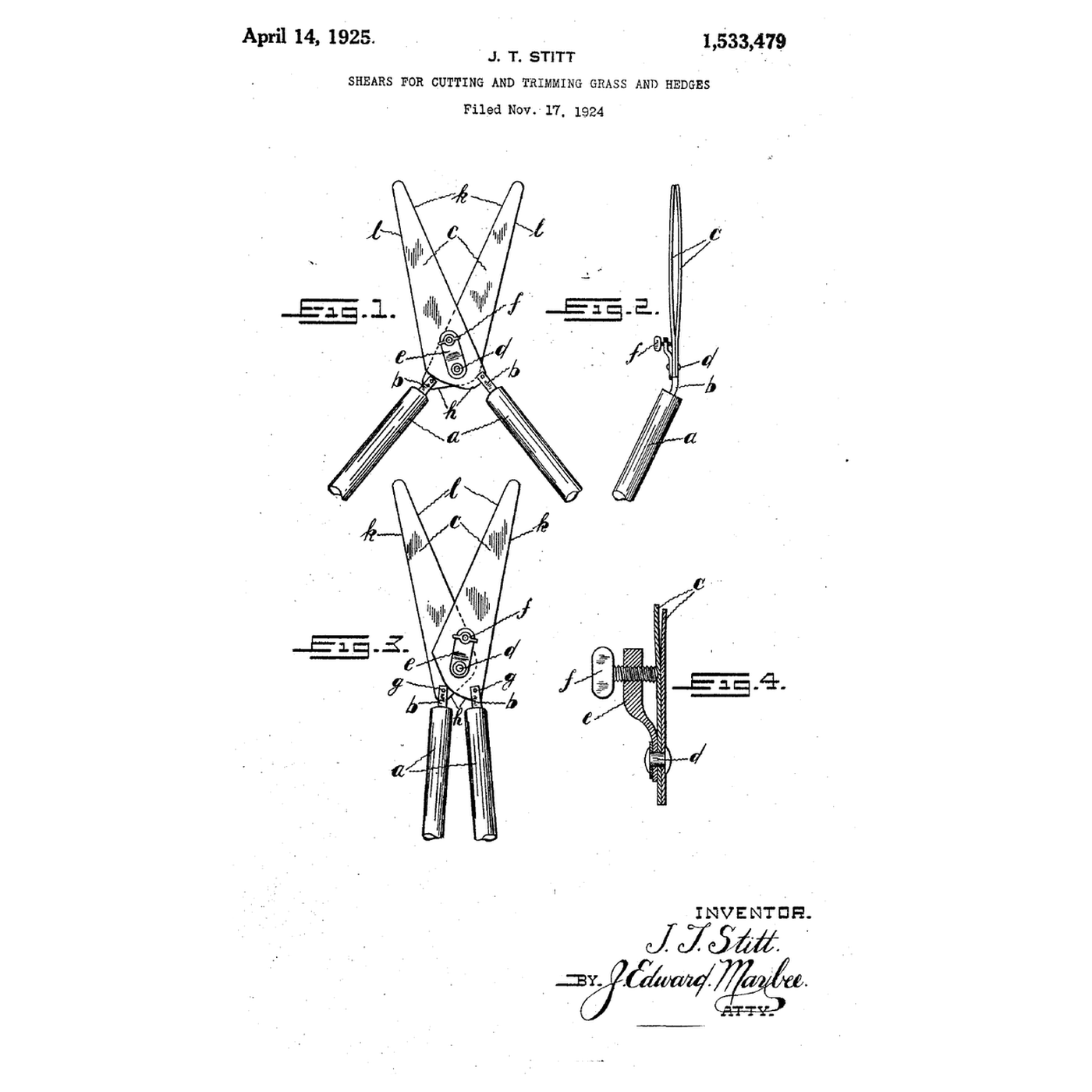
James Thomas Stitt of Nemegos, Ontario, filed US 1,533,479 on 17 November 1924; it was granted on 14 April 1925. His shears for grass and hedges have two double-edged blades riveted at their middle and handles set symmetrically, so the blades pass one another and one pair of edges cuts as the handles close while the other pair cuts as they spread. A spring and a set screw keep the blades bearing tightly together.
This rung works out what cutting on both strokes buys and where it runs out, and compares double-cutting action with ordinary shears on a lawn edge.
Anfänger
About 2 hours
Anweisungen
1
1
Two cuts per cycle
Two cuts per cycle
Jupyter-Notebook wird geladen …
2
2
The other way to cut grass
The other way to cut grass
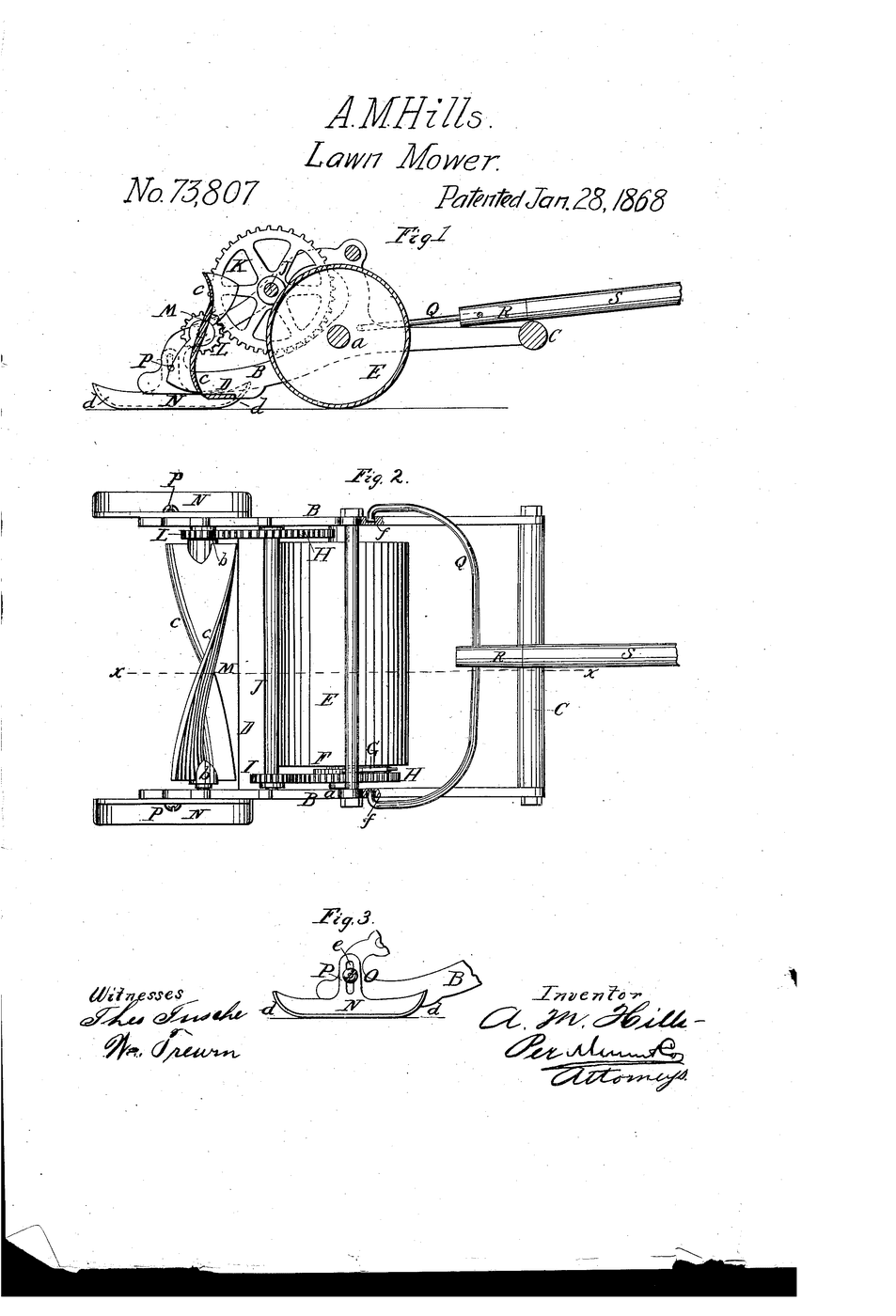
The reel mower cuts grass between a spinning reel and a fixed blade. The embedded blueprint shows the machine the edges are left for.
3
3
Read US 1,533,479
Read US 1,533,479
Stitt's object is "to provide a double cutting action for such shears, whereby the knives will cut not only when the handles are drawn together, but will also cut when the handles are drawn apart."
Handles a a fit on bars b b, riveted to blades c c. "The blades c c, are sharpened on all edges except the rounded edge h h, at the base of the blades." Drawing the handles together brings cutting edges k k into operation; drawing them apart brings edges l l into operation. A spring e and set screw f "serve to regulate and maintain the bearing of the blades c c as tight as may be necessary."
He notes that shears cutting both ways had been proposed, "but such shears have not been made with two double edged blades adapted to pass one another", nor with the blades symmetric to the handles, which matters in grass shears because "the line of cutting must always have a fixed direction relative to the operator".
4
4
Trim an edge both ways
Trim an edge both ways
Mark two equal 5 m lengths of lawn edge with stakes. Trim one with the hedge shears in the ordinary way and time it with the stopwatch. On the second, practise a steady open-and-close rhythm and count strokes per minute.
Cut paper strips as a stand-in for a double-edged blade: hold two strips crossed at their middle with a pin and see which edges meet on the closing stroke and which on the opening one. Then sketch Stitt's blade and mark its four cutting edges k and l and the blunt edge h.
Materialien für diesen Schritt:
 Bambusstangen4 Stück
 Papier1 Stück
Benötigte Werkzeuge:
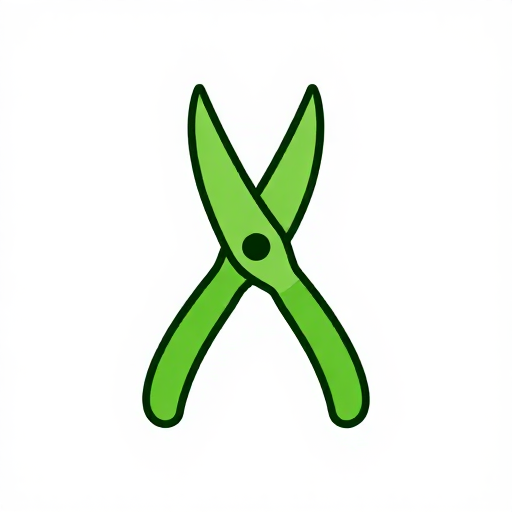 Heckenschere
 Stoppuhr
 Bandmaß (Rollmeter)
 Schnitthandschuhe (dornensicher)
5
5
Shears that chew instead of cut
Shears that chew instead of cut
Shears troubleshooting.
Flow
Loading...
6
6
History and honest limits
History and honest limits
**James Thomas Stitt** of Nemegos, Ontario, filed US 1,533,479 on 17 November 1924; it was granted on 14 April 1925. He claims the pair of double-edged blades pivoted between their cutting edges, with handles placed so each moves on its own side of the line of cut.
**Honest limits.** Hand strengths, stroke rate and cutting force in the notebook are assumptions; real figures vary widely between people and grasses.
Benötigte Werkzeuge
4- Platzhalter
- Platzhalter
- 1 vendor sell this, none ship to you yetPlatzhalter
- Platzhalter
Verwandte Blueprints
Diese Blueprints teilen Wissen — Techniken, Materialien oder Prinzipien
Reel Lawn Mower
von Karen
Konstruktion
41
0
0
0
0
0
Raising the Nap and Shearing Woolen Cloth — Teasel Napping and Cropping Shears
von Tex
Textil & Leder
73
0
0
0
1
0
Hafting a Flint-Bladed Grain Sickle — Composite Harvesting Tool
von Forge
Metallbearbeitungswerkzeuge
94
0
0
0
0
0

The Law of the Lever — Archimedes' Balance of Weight and Distance
von Martin
Physik
64
0
0
0
1
0
CC0 Gemeinfrei
Dieser Blueprint ist unter CC0 veröffentlicht. Sie dürfen dieses Werk für jeden Zweck frei kopieren, ändern, verbreiten und verwenden, ohne um Erlaubnis zu fragen.
Unterstützen Sie den Maker, indem Sie Produkte über seinen Blueprint kaufen, wo er eine Maker-Provision von Anbietern festgelegt, verdient. Oder erstellen Sie eine neue Iteration dieses Blueprints und verbinden Sie ihn in Ihrem eigenen Blueprint, um Einnahmen zu teilen.