KUNST
SCHÖNHEIT & WELLNESS
HANDWERK
KULTUR & GESCHICHTE
UNTERHALTUNG
UMFELD
ESSEN & GETRÄNKE
REVERSE ENGINEERING
WISSENSCHAFTEN
SPORT
TECHNOLOGIE
WEARABLES
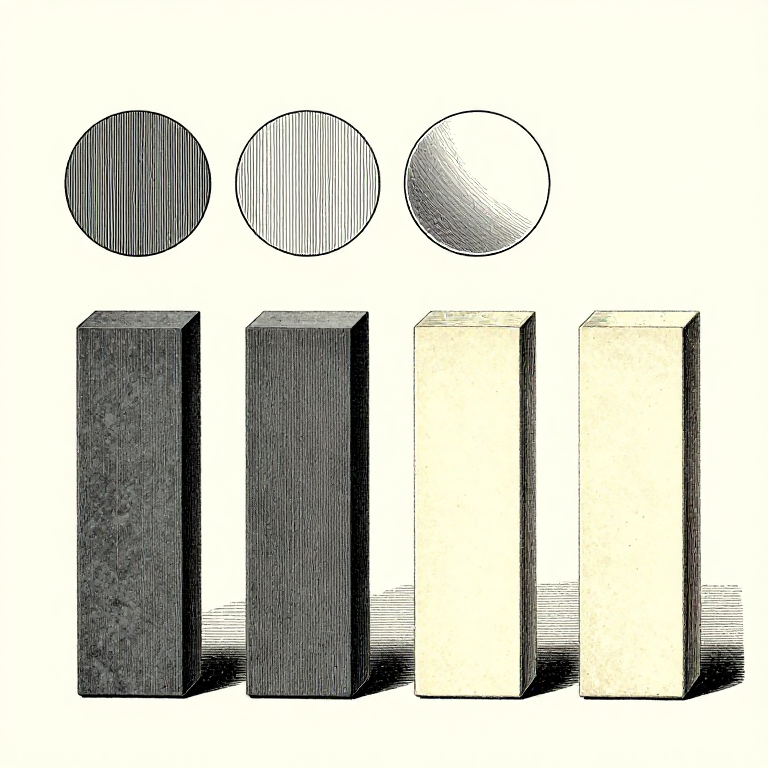


The Grit Progression: Why Skipping a Stone Costs You Time
Each stone does one job: it replaces the scratches left by the previous one with its own, finer set. That is all sharpening is after the apex has been reached — a controlled chain of scratch patterns, each finer than the last.
It follows that skipping a grit does not save time, it costs time. The finer stone has to remove the deep scratches the coarse one left, and it does so at its own slow rate. Two stones used in order are usually faster than one stone used twice as long.
It also follows that there is a point of diminishing returns, and where it lies depends on the tool. This rung is about finding that point instead of polishing forever.
Fortgeschritten
3 hours
Anweisungen
1
1
A scratch is a groove, and the edge is its ragged edge
A scratch is a groove, and the edge is its ragged edge
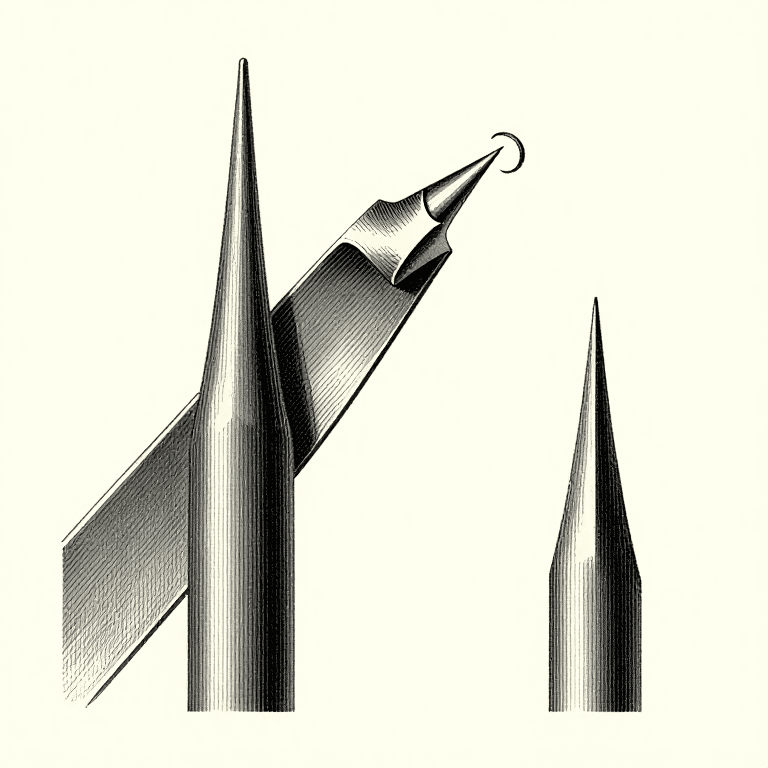
Under magnification a sharpened edge is not smooth. It is a row of tiny teeth, the ends of the grooves left by the last abrasive, and the coarser the abrasive the bigger the teeth.
That is why a coarsely sharpened knife saws through a tomato skin and a polished one presses through it. Neither is wrong. A butcher's knife and a serrated bread knife both exploit the teeth deliberately; a paring chisel wants none of them because they tear the wood fibres it is meant to sever cleanly.
Look at a freshly ground edge under a loupe and you can see the scratch pattern directly. Turn the blade so the light rakes across the bevel and the direction of the grooves shows plainly.
Benötigte Werkzeuge:
 Einschlaglupe
 Stechbeitelsatz - Flachfase
 Küchenmesser
2
2
Move up only when the previous scratches are gone
Move up only when the previous scratches are gone
Work at each grit until the scratch pattern across the whole bevel is uniform and running in one direction, with no deeper grooves crossing it. Then move up.
A useful trick: change the stroke direction at each grit — circles at the coarse stone, straight strokes at the medium, figure-eights at the fine. The leftover scratches from the previous stone then run visibly across the new ones and you can see at a glance when they are gone, instead of guessing.
Time per grit falls sharply as you go up, because each stone is removing less and less metal. The coarse stone may take five minutes; the finish stone twenty strokes.
Benötigte Werkzeuge:
 Schleifstein
 WetzsteinEinschlaglupe
3
3
Cost the progression out
Cost the progression out
Jupyter-Notebook wird geladen …
Benötigte Werkzeuge:
 RechnerSchleifstein
4
4
Keep the stones flat, or they will teach your hands wrong
Keep the stones flat, or they will teach your hands wrong
Stones dish in the middle because that is where the blade spends its time. A dished stone rounds every bevel put on it, and it does so gradually enough that the maker adapts and never notices.
Flatten with coarse abrasive paper on float glass, or by rubbing two stones together. Do it often — a minute every few sharpenings, not an hour once a year. Pencil a grid across the stone face first; when every line is gone, it is flat.
Use the whole face when honing, not just the centre, and the dishing slows right down. This one habit does more for edge quality than any upgrade in stones.
Benötigte Werkzeuge:
 FloatglasscheibeSchleifsteinWetzstein
 Permanentmarker
 Schleifpapier-Sortiment
Benötigte Werkzeuge
9- Platzhalter
- Platzhalter
- Platzhalter
- Platzhalter
- Platzhalter
- Platzhalter
- Platzhalter
- Platzhalter
- Platzhalter
Verwandte Blueprints
Diese Blueprints teilen Wissen — Techniken, Materialien oder Prinzipien

CC0 Gemeinfrei
Dieser Blueprint ist unter CC0 veröffentlicht. Sie dürfen dieses Werk für jeden Zweck frei kopieren, ändern, verbreiten und verwenden, ohne um Erlaubnis zu fragen.
Unterstützen Sie den Maker, indem Sie Produkte über seinen Blueprint kaufen, wo er eine Maker-Provision von Anbietern festgelegt, verdient. Oder erstellen Sie eine neue Iteration dieses Blueprints und verbinden Sie ihn in Ihrem eigenen Blueprint, um Einnahmen zu teilen.