KUNST
SCHÖNHEIT & WELLNESS
HANDWERK
KULTUR & GESCHICHTE
UNTERHALTUNG
UMFELD
ESSEN & GETRÄNKE
REVERSE ENGINEERING
WISSENSCHAFTEN
SPORT
TECHNOLOGIE
WEARABLES
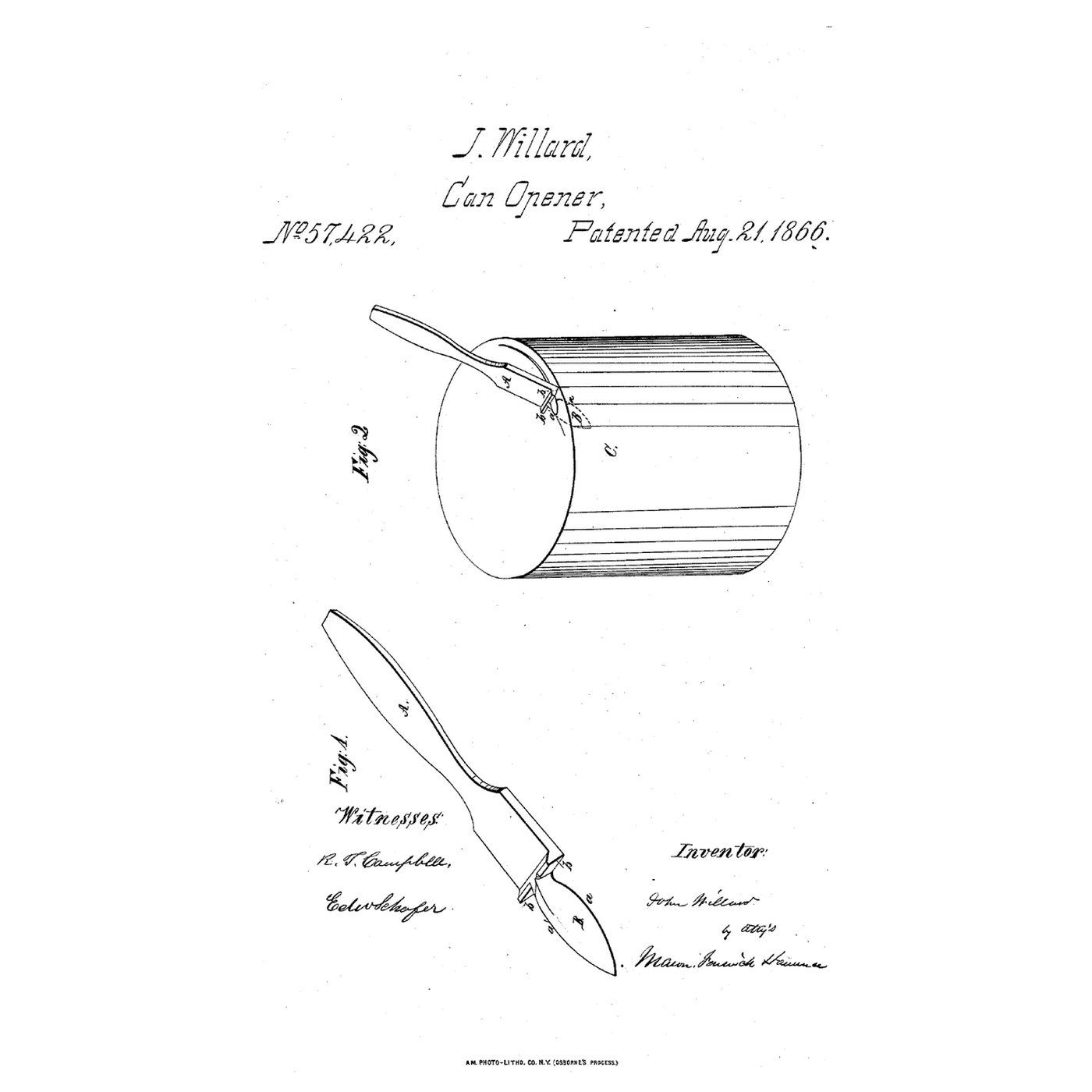


The Shouldered-Blade Can Opener: The Shoulders Are the Fulcrum
A hermetically sealed tin can was opened with a knife or a chisel, which slips and tears the metal.
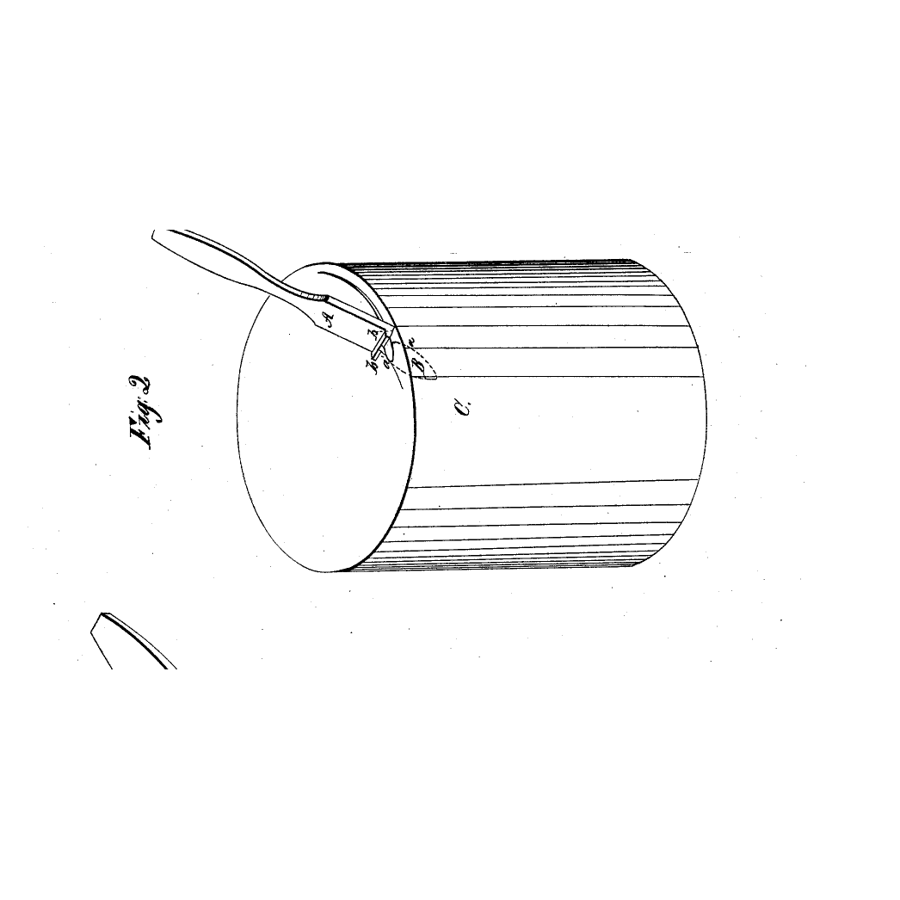
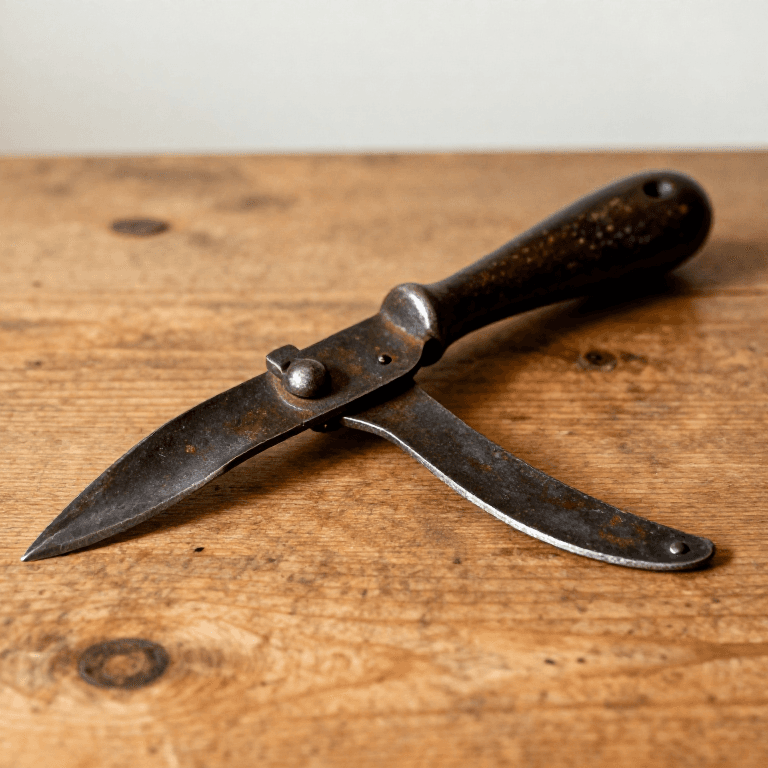
John Willard of Norwich, Connecticut, received US 57,422, dated 21 August 1866, for an instrument for opening tin cans made of one piece of metal: a pointed blade at right angles to the handle, ending in two right-angle shoulders that rest on the can top as the fulcrum and press the cut edges down as the blade advances.
This rung works out the force the lever saves, then forges the opener from flat bar and opens a can with it.
Fortgeschritten
About 3 hours
Anweisungen
1
1
Cutting force and hand force
Cutting force and hand force
Jupyter-Notebook wird geladen …
2
2
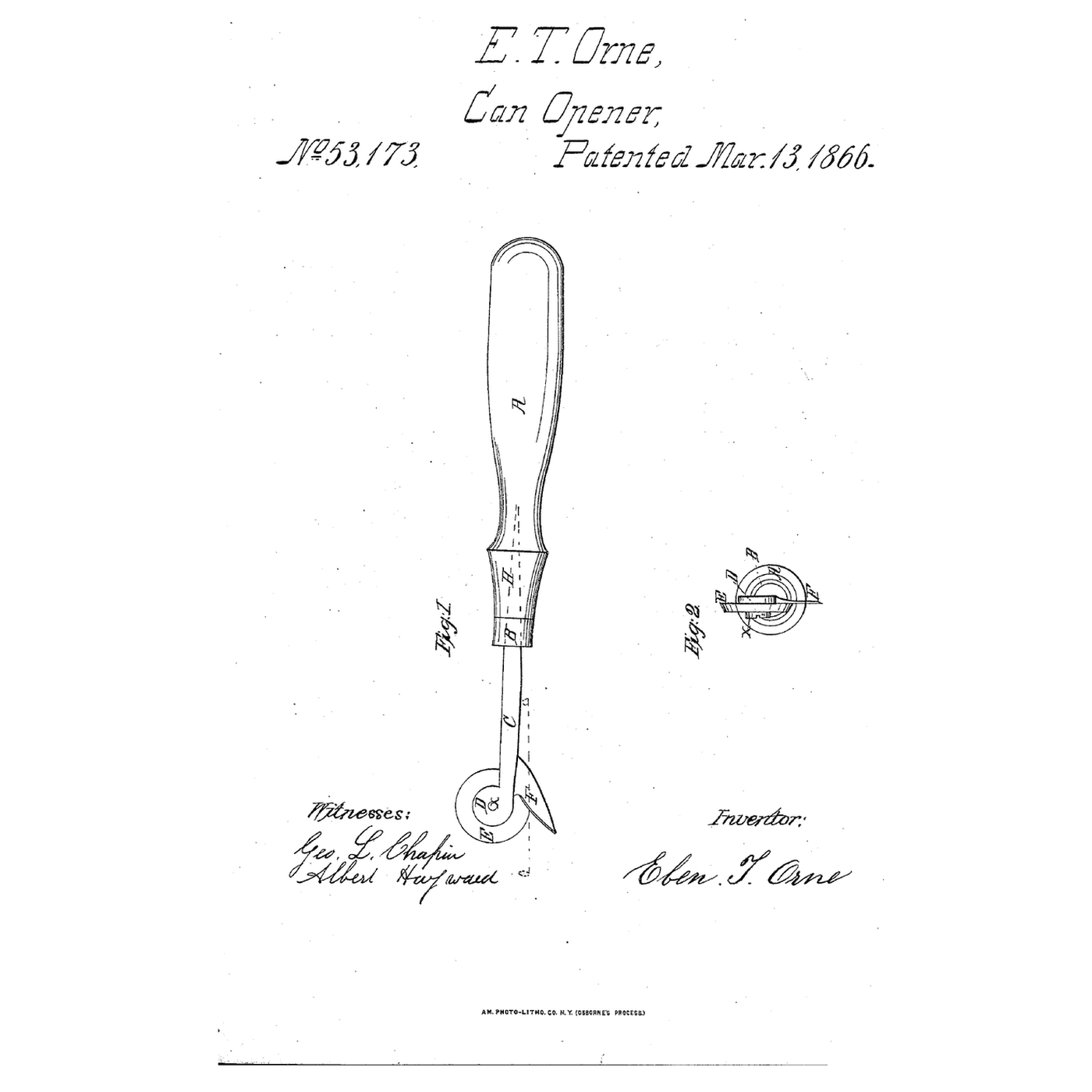
A lever-knife opener before it
A lever-knife opener before it
The embedded blueprint cuts a can with a lever and a guard. Willard makes blade, fulcrum and handle in one piece, the shoulders resting on the can.
3
3
Read US 57,422
Read US 57,422
"This will bring the shoulders b b upon the top surface of the can, so that these shoulders will serve as a fulcrum when the handle of the knife is depressed, and cause the cutting-edge a' of the blade B to make a slit through the can top."
"The shoulders b b not only serve as the support for the instrument upon the can, but these shoulders also press the edges of the metal down as the instrument is moved up to its work."
4
4
Mark and cut the blank
Mark and cut the blank
Cut 190 mm of 25 × 3 mm flat bar. At one end mark a 10 mm neck 12 mm long, then the 30 mm blade with its point; saw and file the neck, leaving the shoulders full width.
Materialien für diesen Schritt:
 Baustahl-Flachstahl1 Stück
Benötigte Werkzeuge:
 Bügelsäge (Metallsäge)
 Schraubstock
 Feilen (Handfeile)
 Lineal
 Permanentmarker
5
5
Twist the blade
Twist the blade
Grip the neck in the vice and twist the blade a quarter turn with the wrench, so it stands at right angles to the handle.
Benötigte Werkzeuge:
Schraubstock Rollgabelschlüssel
 Lederarbeitshandschuhe
6
6
Grind the edge and point
Grind the edge and point
File the blade's upper edge to a cutting bevel and its end to a sharp point. Finish on the whetstone.
Benötigte Werkzeuge:
Feilen (Handfeile) WetzsteinSchraubstock
 Klare Schutzbrille
7
7
The build in 3D
The build in 3D
FreeCAD model of this build, not of the patent: a 130 mm handle of 25 × 3 mm bar, the shoulders, the 10 mm neck, and the pointed 30 mm blade standing at right angles to the handle.
8
8
Open a can
Open a can
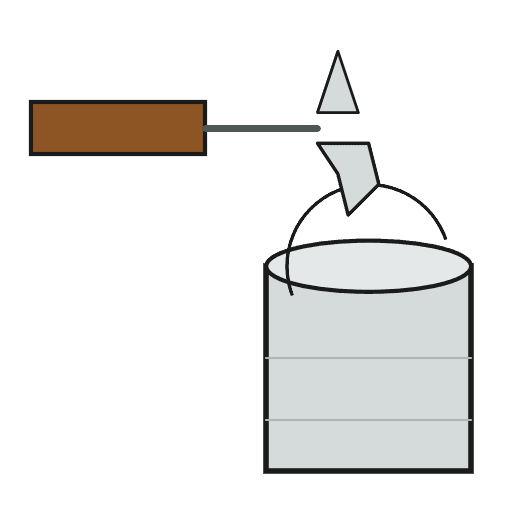
Stand a sealed can on the kitchen scale. Push the point through the top, rock the handle down on the shoulders and advance; read the peak load on the scale and time a full circle.
Materialien für diesen Schritt:
 Blechdose1 Stück
Benötigte Werkzeuge:
 Digitale Küchenwaage
 StoppuhrLederarbeitshandschuhe
9
9
A blade that tears, skids or will not pierce
A blade that tears, skids or will not pierce
Shouldered-blade can opener troubleshooting.
Flow
Loading...
10
10
History and honest limits
History and honest limits
**John Willard** of Norwich, Connecticut, received US 57,422, dated 21 August 1866. His handle may be of any length and width; the blade's lower edge may curve upward, and its cutting edge may project above the handle's flat surface so it meets the metal at a steep angle. His claim covers the one-piece opener with blade, shoulders and handle.
**Honest limits.** Mild flat bar does not hold an edge like hardened steel; the notebook's shear strength is an estimate. Your loads and times are the result.
Benötigte Werkzeuge
11- Platzhalter
- Platzhalter
- Platzhalter
- Platzhalter
- Platzhalter
- Platzhalter
- Platzhalter
- Platzhalter
- Platzhalter
- Platzhalter
- Platzhalter
Designdateien
1Dieser Bauplan stellt her
Verwandte Blueprints
Diese Blueprints teilen Wissen — Techniken, Materialien oder Prinzipien


CC0 Gemeinfrei
Dieser Blueprint ist unter CC0 veröffentlicht. Sie dürfen dieses Werk für jeden Zweck frei kopieren, ändern, verbreiten und verwenden, ohne um Erlaubnis zu fragen.
Unterstützen Sie den Maker, indem Sie Produkte über seinen Blueprint kaufen, wo er eine Maker-Provision von Anbietern festgelegt, verdient. Oder erstellen Sie eine neue Iteration dieses Blueprints und verbinden Sie ihn in Ihrem eigenen Blueprint, um Einnahmen zu teilen.