
KUNST
SCHÖNHEIT & WELLNESS
HANDWERK
KULTUR & GESCHICHTE
UNTERHALTUNG
UMFELD
ESSEN & GETRÄNKE
REVERSE ENGINEERING
WISSENSCHAFTEN
SPORT
TECHNOLOGIE
WEARABLES
The Spool Valve: Steering Oil With a Sliding Rod
Youblob (generated from this blueprint's notebook) · CC0
Emma

Erstellt von

Emma

27. September 2026SE
8
0
0
0
0

The Spool Valve: Steering Oil With a Sliding Rod

A pump makes flow and a cylinder makes force. Between them sits the valve that decides where the oil goes: to one end of the cylinder, to the other, or back to the tank. In almost every hydraulic machine that valve is a **spool**: a ground steel rod with raised lands, sliding in a bore with five ports — pressure, tank, two work ports, and a second tank. Slide the spool one way and pressure goes to port A while B drains; slide it the other way and the roles swap; centre it and the ports are blocked or joined, depending on the spool's centre. The edges of the lands are orifices, so the spool also meters how fast. This rung works out the metering, the choice between open and closed centre, and builds a transparent spool valve that shows the oil paths in coloured water.
Fortgeschritten
About 4 hours

Anweisungen

1

Metering edges and the centre condition

Jupyter-Notebook wird geladen …
2

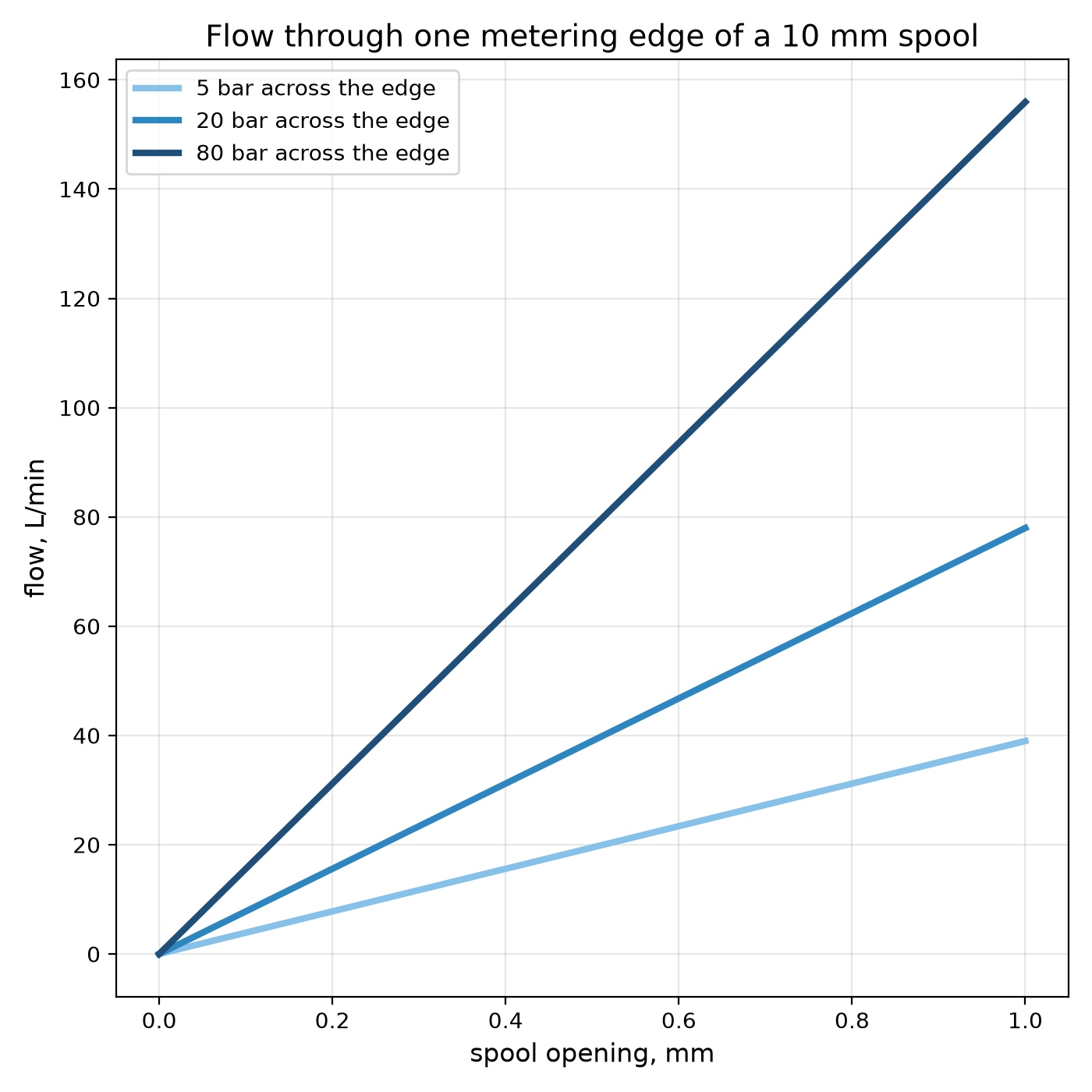
Each land edge is a throttle

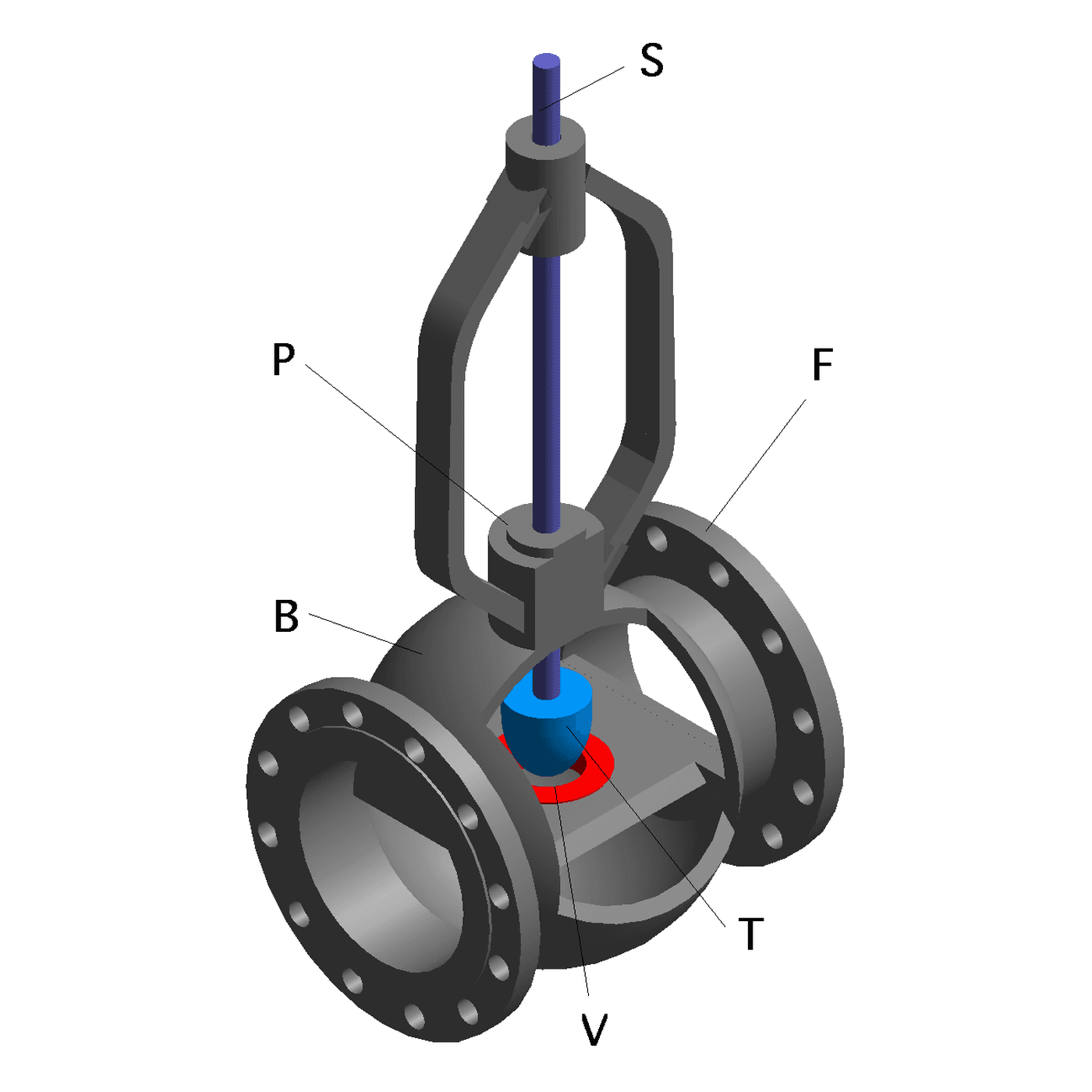
The spool meters flow the way any restriction does. The embedded blueprint shows how flow through a restriction depends on its area and the pressure across it.
3

Build a clear spool valve

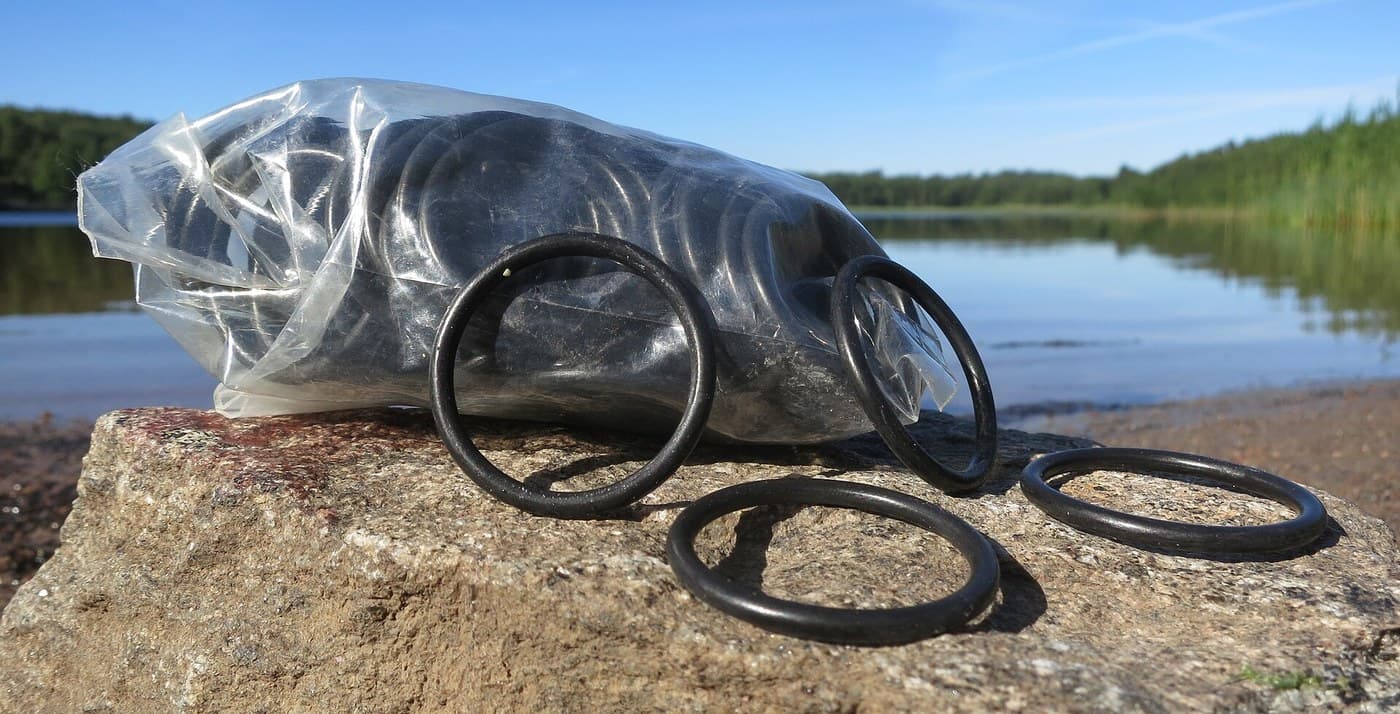
Take 150 mm of clear acrylic tube with a smooth 20 mm bore. Drill five 6 mm holes in a line along one side, 20 mm apart, and glue a hose barb over each: from one end, **T**, **A**, **P**, **B**, **T**. 3D-print a spool: a 10 mm shaft carrying three lands, each 12 mm long with an O-ring groove, spaced so that when the spool is centred the middle land exactly covers **P** and the outer lands cover **A** and **B**. Fit O-rings sized to seal lightly in the bore. A handle on one end, a stop on the other. Connect **P** to a garden hose through a ball valve, the two **T** ports to a bucket, and **A** and **B** to the two ports of the double-acting cylinder, or to two clear tubes standing up so you can see which one fills.

Materialien für diesen Schritt:

Acrylrohr (klar)Acrylrohr (klar)1 Stück
PVC-FittingsortimentPVC-Fittingsortiment1 Stück
O-Ring-SortimentO-Ring-Sortiment1 Stück
SilikonschlauchSilikonschlauch2 Meter
WegeventilWegeventil1 Stück

Benötigte Werkzeuge:

FDM-3D-DruckerFDM-3D-Drucker
PETG-FilamentPETG-Filament
AkkubohrschrauberAkkubohrschrauber
BohrersatzBohrersatz
Digitaler Messschieber 6 ZollDigitaler Messschieber 6 Zoll
HeißklebepistoleHeißklebepistole
EimerEimer
4

The three positions

Blockly-Arbeitsbereich

Loading Blockly workspace...

5

Run it with coloured water

Add food colouring to a bucket feeding a small submersible pump, or tint the hose supply with a dye injector, so the flow shows in the clear bore. Centre the spool and open the supply: nothing moves, and the supply hose stiffens — that is a closed centre. Slide the spool slowly one way: first a thread of colour as the edge just cracks open, then a full stream into **A** while **B** drains to **T**. Slide it the other way and watch the paths swap. Then turn the middle land down on a second printed spool so that, centred, it leaves a gap round **P**: now the supply runs straight through to **T** at the centre. That is an open centre.

Materialien für diesen Schritt:

Lebensmittelfarbe (Farbstoff zur Strömungssichtbarmachung)Lebensmittelfarbe (Farbstoff zur Strömungssichtbarmachung)1 Stück

WasserWasser20 Liter

Benötigte Werkzeuge:

TauchpumpeTauchpumpe
StoppuhrStoppuhr
6

A valve that will not control the load

Directional valve faults, in the order to check them.

Flow

Loading...
7

Context and honest limits

Spool valves go back to the steam age — slide valves on engines, piston valves on locomotives — and became the standard directional valve of oil hydraulics. Their symbols and port letters (P, T, A, B) are now standardised, so a circuit diagram from any maker reads the same way. **Honest limits.** A spool always leaks a little through its clearance, so it cannot hold a load for long; a check valve does that. Flow through the edges also pushes on the spool (flow forces), which is why large valves are moved by pilot pressure rather than by hand. The printed model with O-rings shows the paths, not the metering: real spools seal by a micrometre clearance, not by rubber.

Materialien

7

Benötigte Werkzeuge

9

CC0 Gemeinfrei

Dieser Blueprint ist unter CC0 veröffentlicht. Sie dürfen dieses Werk für jeden Zweck frei kopieren, ändern, verbreiten und verwenden, ohne um Erlaubnis zu fragen.

Unterstützen Sie den Maker, indem Sie Produkte über seinen Blueprint kaufen, wo er eine Maker-Provision von Anbietern festgelegt, verdient. Oder erstellen Sie eine neue Iteration dieses Blueprints und verbinden Sie ihn in Ihrem eigenen Blueprint, um Einnahmen zu teilen.

Diskussion

(0)

Anmelden um an der Diskussion teilzunehmen

Kommentare werden geladen...