
KUNST
SCHÖNHEIT & WELLNESS
HANDWERK
KULTUR & GESCHICHTE
UNTERHALTUNG
UMFELD
ESSEN & GETRÄNKE
REVERSE ENGINEERING
WISSENSCHAFTEN
SPORT
TECHNOLOGIE
WEARABLES
The Stevenson Screen
Emma

Erstellt von

Emma

23. September 2026SE
25
0
0
0
0

The Stevenson Screen

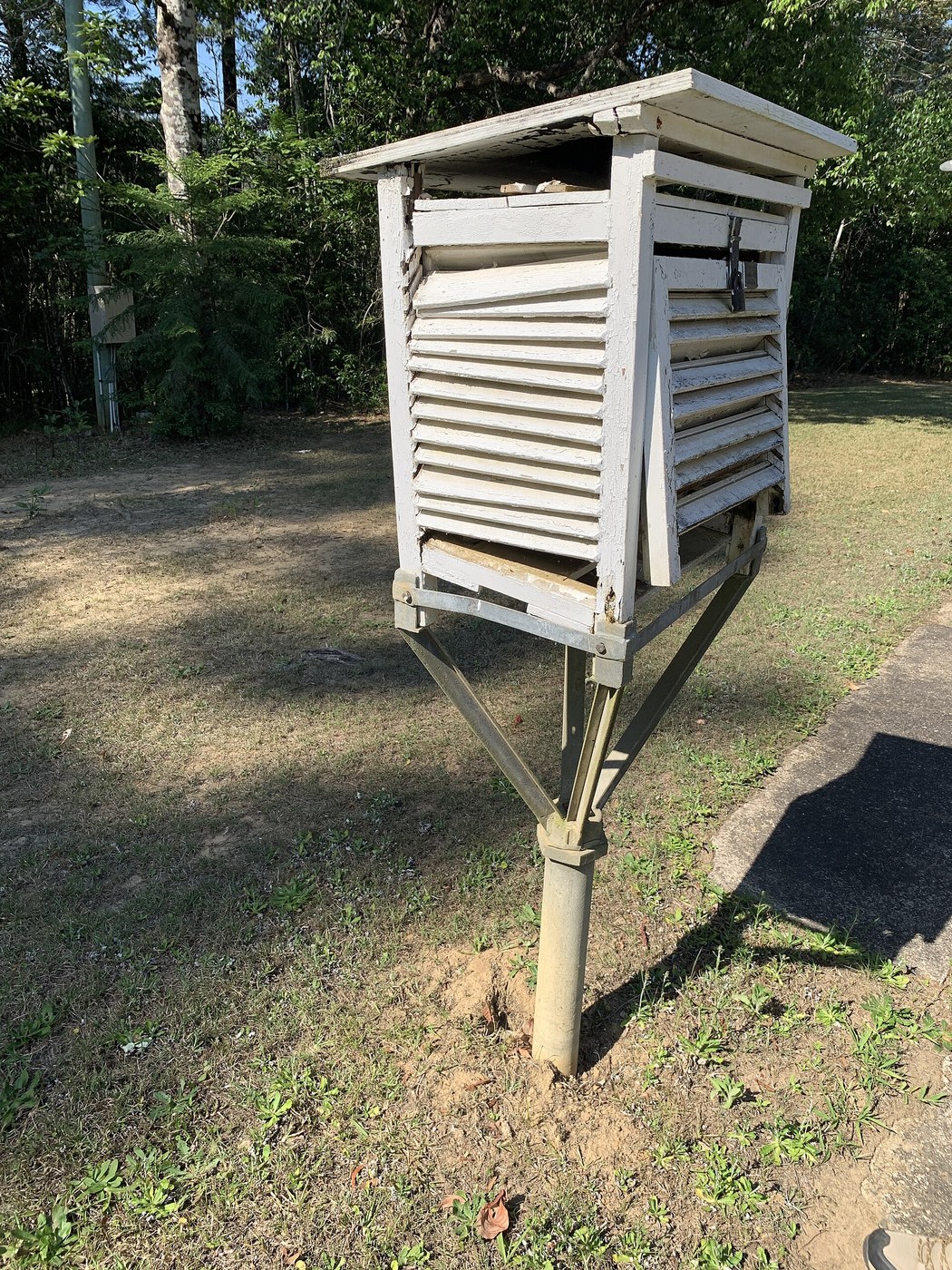
Thomas Stevenson — a lighthouse engineer, and Robert Louis Stevenson's father — designed this box in 1864 to solve a problem that had made a century of temperature records incomparable: every observer shielded their thermometer differently, so every station was measuring something slightly different. The screen is a white louvred box on legs. The double louvres let air through while blocking every direct and reflected ray; the white paint reflects what lands on it; the double roof stops the sun heating the ceiling; the open slatted floor stops heat rising off the ground. Each feature removes one specific way of measuring the wrong thing. It is the least glamorous object in this batch and the one that makes the rest of it trustworthy. A thermometer without a screen is a decoration; the same thermometer inside one produces a number another station can be compared against.
Fortgeschritten
2 days

Anweisungen

1

Build double louvres, sloping down and out

Make each wall from two staggered rows of angled slats so that no straight line passes from outside to the thermometer, while air moves through freely. Single louvres let low sun and ground-reflected light through at certain times of day, giving an error that appears and disappears with the sun and is therefore almost impossible to spot in the data. Slope them down and outward so rain and spray run off rather than in. This is the most work in the build and the reason the screen works.

Materialien für diesen Schritt:

SperrholzplatteSperrholzplatte2 Blätter
Galvanisierte NägelGalvanisierte Nägel100 Stück
HolzleimHolzleim1 Stück

Benötigte Werkzeuge:

HandsägeHandsäge
KlauenhammerKlauenhammer
LinealLineal
2

Paint it white, and keep repainting it

Paint every surface, inside and out, with white exterior paint, and repaint before it yellows or flakes. White is not tradition, it is the measurement: a weathered or dirty screen absorbs more sunlight, warms, and reads high on sunny calm days. Published comparisons put a poorly maintained screen up to a degree above a clean one. Use ordinary white paint rather than a modern low-emissivity coating, because the screen needs to radiate its heat away at night as readily as it reflects by day.

Materialien für diesen Schritt:

Weiße AußenfarbeWeiße Außenfarbe2 Liter

Benötigte Werkzeuge:

SchleifpapierSchleifpapier
3

Double roof, slatted floor, door to the pole

Fit two roof boards with an air gap between them, leave the floor as spaced slats with a solid baffle below, and hang the door so it faces the nearer pole — north in the northern hemisphere. The roof gap stops the sun-heated outer board radiating down onto your thermometers. The slatted floor lets cold air drain out. And the door faces away from the equator so that opening it at your reading time never lets the sun fall directly on the instruments — a real error, committed once a day, at the same time every day.

Materialien für diesen Schritt:

SperrholzplatteSperrholzplatte1 Blatt
Galvanisierte NägelGalvanisierte Nägel50 Stück

Benötigte Werkzeuge:

HandsägeHandsäge
KompassKompass
4

Set the thermometers at 1.25 metres over short grass

Mount the screen so the thermometer bulbs sit between 1.25 and 2 metres above the ground, over natural short grass, well away from buildings, paving and tarmac. These numbers are the WMO standard and they exist so that stations can be compared. Over tarmac a screen reads up to two degrees high on a sunny afternoon; beside a wall it reads the wall's stored heat all evening. If you cannot meet the standard, record precisely what you did instead — a documented non-standard site is usable, an undocumented one is not.

Materialien für diesen Schritt:

HolzdübelHolzdübel4 Stück

Benötigte Werkzeuge:

Bandmaß (Rollmeter)Bandmaß (Rollmeter)
KlauenhammerKlauenhammer
5

Prove the screen is doing something

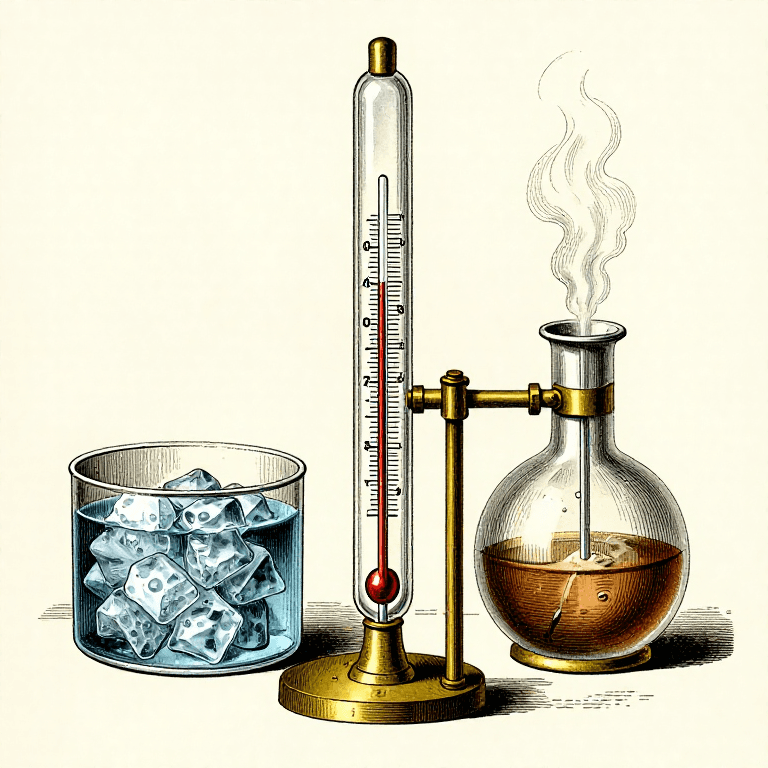
For a week, run a second thermometer outside the screen in the open and record both at the same moments. On a calm sunny afternoon the unscreened one will read several degrees higher; on a clear night it will read lower, because it radiates to the sky. Two rows of numbers you collected yourself are worth more than any assurance in this blueprint, and they tell you exactly how wrong your records were before you built the box.

Materialien für diesen Schritt:

ThermometerThermometer1 Stück
6

The errors the screen removes, in numbers

Jupyter-Notebook wird geladen …
7

Write the site description down once, properly

Record the latitude, longitude, altitude, screen height, ground surface, and the distance and height of everything within thirty metres. Photograph it in four directions. This is called metadata and it is what lets someone interpret your record in twenty years, including you. It also lets you explain a step in your own data: the year the hedge grew, or the neighbour laid a patio. Station history explains more apparent climate signals than climate does.

Benötigte Werkzeuge:

Bandmaß (Rollmeter)Bandmaß (Rollmeter)

Materialien

6

Benötigte Werkzeuge

6
  • Platzhalter
  • Platzhalter
  • Platzhalter
  • Platzhalter
  • Platzhalter
  • 1 vendor sell this, none ship to you yet
    Platzhalter

CC0 Gemeinfrei

Dieser Blueprint ist unter CC0 veröffentlicht. Sie dürfen dieses Werk für jeden Zweck frei kopieren, ändern, verbreiten und verwenden, ohne um Erlaubnis zu fragen.

Unterstützen Sie den Maker, indem Sie Produkte über seinen Blueprint kaufen, wo er eine Maker-Provision von Anbietern festgelegt, verdient. Oder erstellen Sie eine neue Iteration dieses Blueprints und verbinden Sie ihn in Ihrem eigenen Blueprint, um Einnahmen zu teilen.

Diskussion

(0)

Anmelden um an der Diskussion teilzunehmen

Kommentare werden geladen...