KUNST
SCHÖNHEIT & WELLNESS
HANDWERK
KULTUR & GESCHICHTE
UNTERHALTUNG
UMFELD
ESSEN & GETRÄNKE
REVERSE ENGINEERING
WISSENSCHAFTEN
SPORT
TECHNOLOGIE
WEARABLES
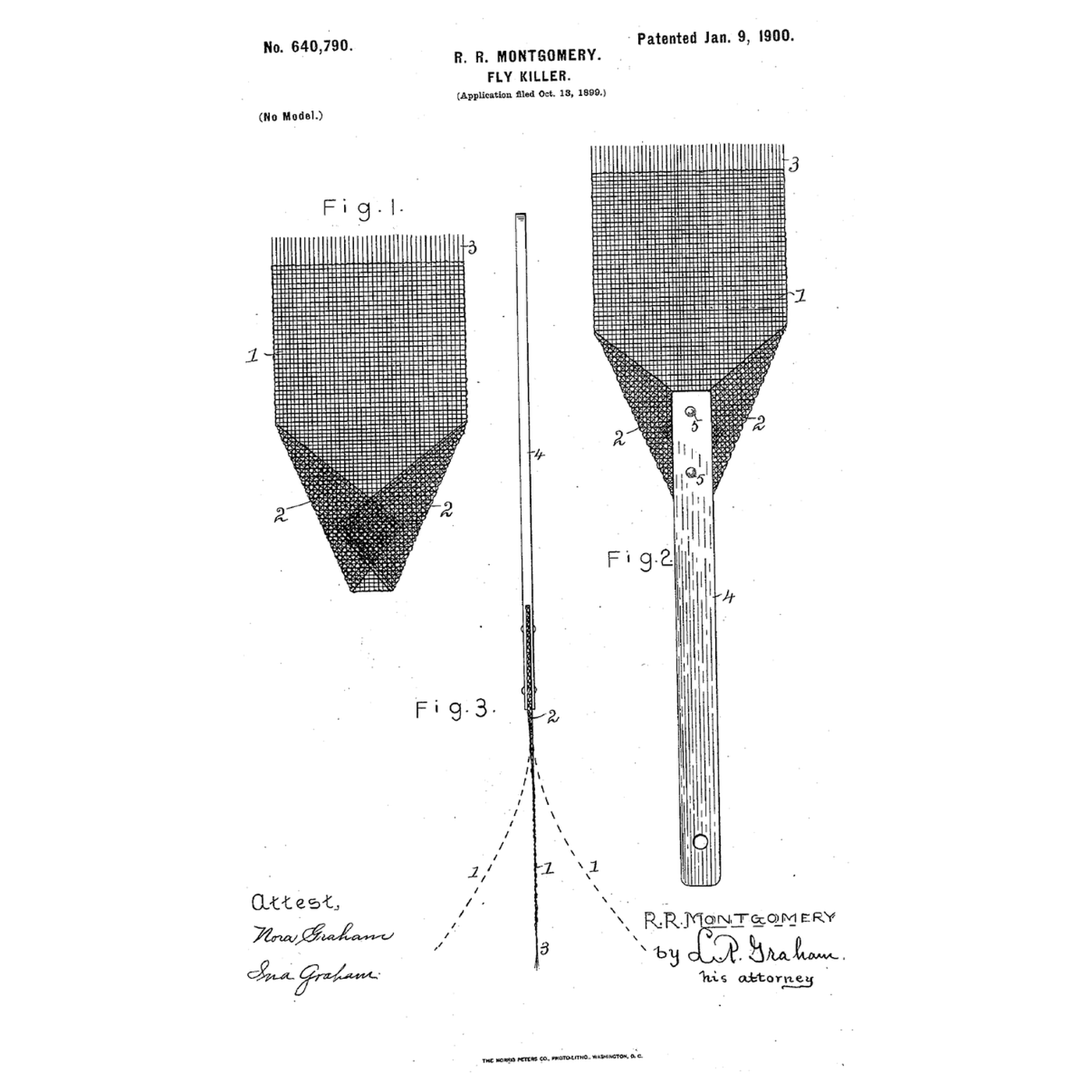


The Wire-Netting Fly-Killer: A Flap With Folded Corners
A solid paddle pushes air ahead of it. A flap of netting on a handle lets most of that air through.
Robert R. Montgomery of Decatur, Illinois, received US 640,790, dated 9 January 1900, for a fly-killer made of wire-netting: "a cheap device of unusual elasticity and durability". The corners at one end are folded over the body of the flap and the handle is fixed to the folds, so the netting is doubled where it must bend and trebled where it is held.
This rung works out how much air a netting flap lets through, then folds one from window screen and compares it with a solid card.
Anfänger
About 1 hour
Anweisungen
1
1
Air through the netting
Air through the netting
Jupyter-Notebook wird geladen …
2
2
Netting
Netting
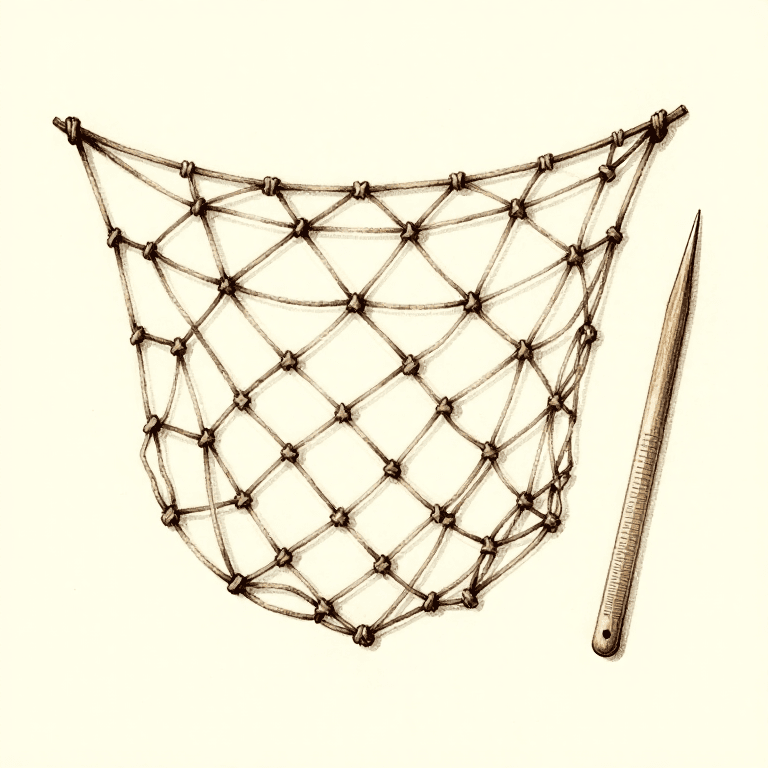
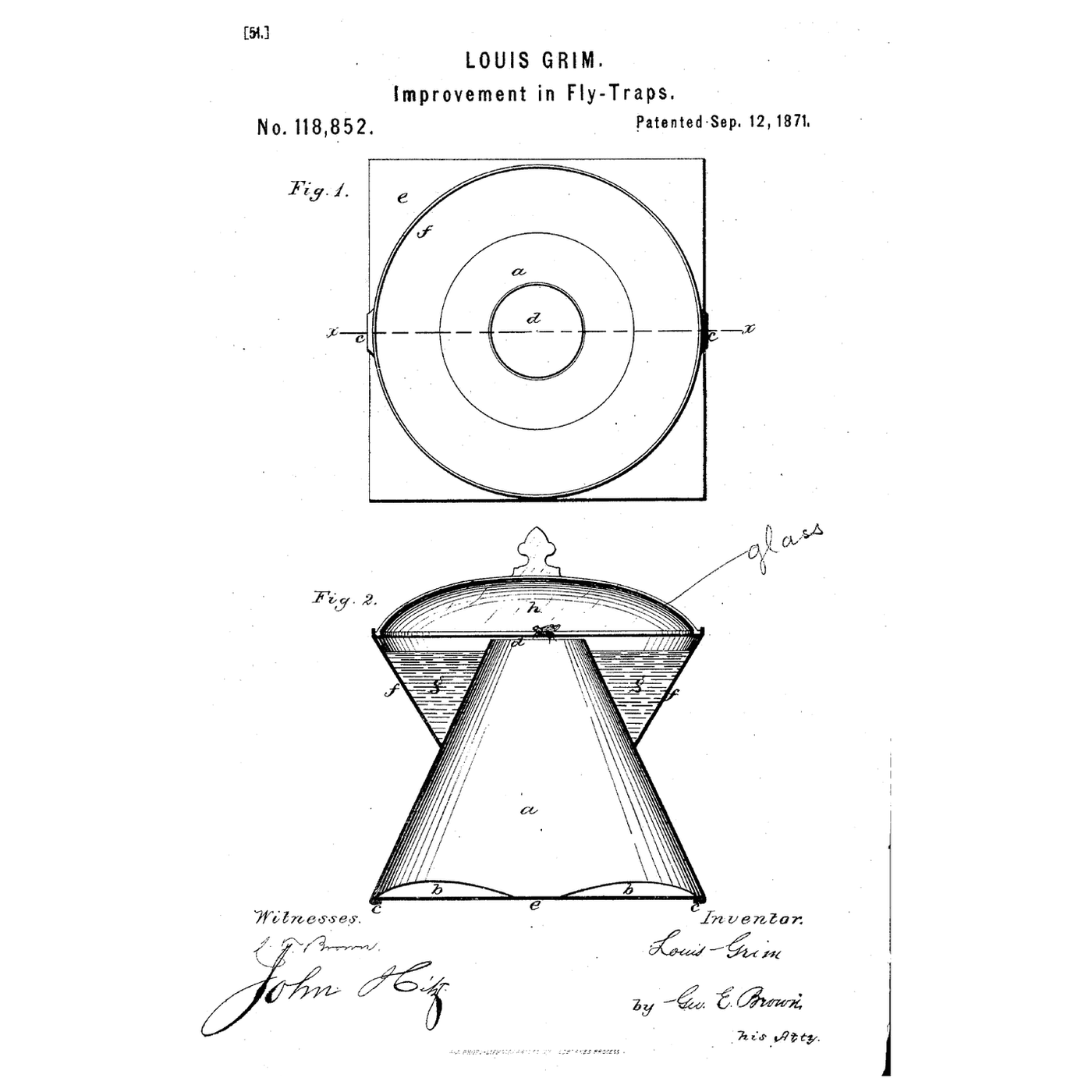
The embedded blueprint knots a net that lets water through and holds fish. Montgomery's netting lets air through and stops flies.
3
3
Read US 640,790
Read US 640,790
"This invention relates to fly-killers made of wire-netting. Its object is to provide a cheap device of unusual elasticity and durability".
"The fringe is useful in providing a softer end to the flap, whereby injury to articles subjected to sharp blows of the killer is reduced to a minimum; but it is not indispensable."
"The device is used to strike flies or other insects, and its utility is increased by its elasticity, while its strength and durability are augmented by doubling the thickness where elasticity is required and trebling it at the handle end."
4
4
Fold a fly-killer and test it against a card
Fold a fly-killer and test it against a card
Cut a rectangle of window screen about 12 cm by 22 cm. Fold the two corners of one short end over onto the body along slanting lines, so they cross each other and make a point, as in the patent drawing. Fold a narrow hem along the two long sides and tape it. At the other short end, pull out two or three cross threads so the long threads stick out as a fringe.
Saw a slot 5 cm deep into one end of the dowel. Slide it over the folded point and fix it with two tacks through the netting.
Hang a strip of tissue from a thread. Swing the fly-killer past it at a hand's width, then a card of the same size, and watch which one moves the tissue.
Materialien für diesen Schritt:
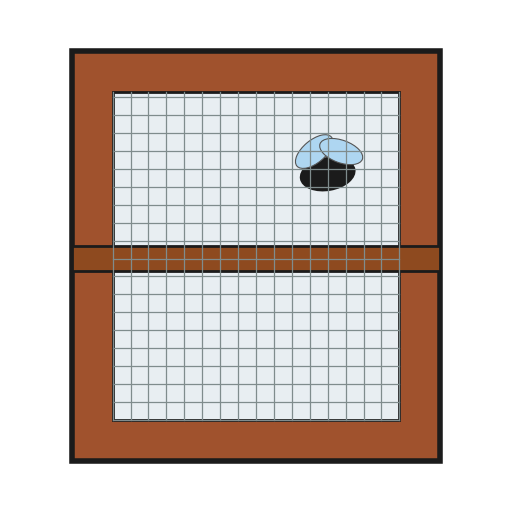 Fliegengitter1 Stück
 Holzdübel1 Stück
 Sortiment Polsternägel2 Stück
 Gewebeklebeband1 Stück
Benötigte Werkzeuge:
 Fliegenklatsche
 Schere
 Laubsäge (Schweifsäge)
 Hammer
 Lineal
5
5
A fly-killer that flops, splits or misses
A fly-killer that flops, splits or misses
Fly-killer troubleshooting.
Flow
Loading...
6
6
History and honest limits
History and honest limits
**Robert R. Montgomery** of Decatur, Illinois, filed US 640,790 on 13 October 1899; it is dated 9 January 1900. His claims cover the folded corners, the handle fixed to the folds, and the fringed striking end.
**Honest limits.** The notebook counts only the area of the holes; real air flow through netting also depends on speed and on the wire's shape. Mesh sizes are examples. Your tissue test is the measurement.
Materialien
4- 1 StückPlatzhalter
- 1 StückPlatzhalter
- 2 StückPlatzhalter
- 1 StückPlatzhalter
Verwandte Blueprints
Diese Blueprints teilen Wissen — Techniken, Materialien oder Prinzipien



CC0 Gemeinfrei
Dieser Blueprint ist unter CC0 veröffentlicht. Sie dürfen dieses Werk für jeden Zweck frei kopieren, ändern, verbreiten und verwenden, ohne um Erlaubnis zu fragen.
Unterstützen Sie den Maker, indem Sie Produkte über seinen Blueprint kaufen, wo er eine Maker-Provision von Anbietern festgelegt, verdient. Oder erstellen Sie eine neue Iteration dieses Blueprints und verbinden Sie ihn in Ihrem eigenen Blueprint, um Einnahmen zu teilen.