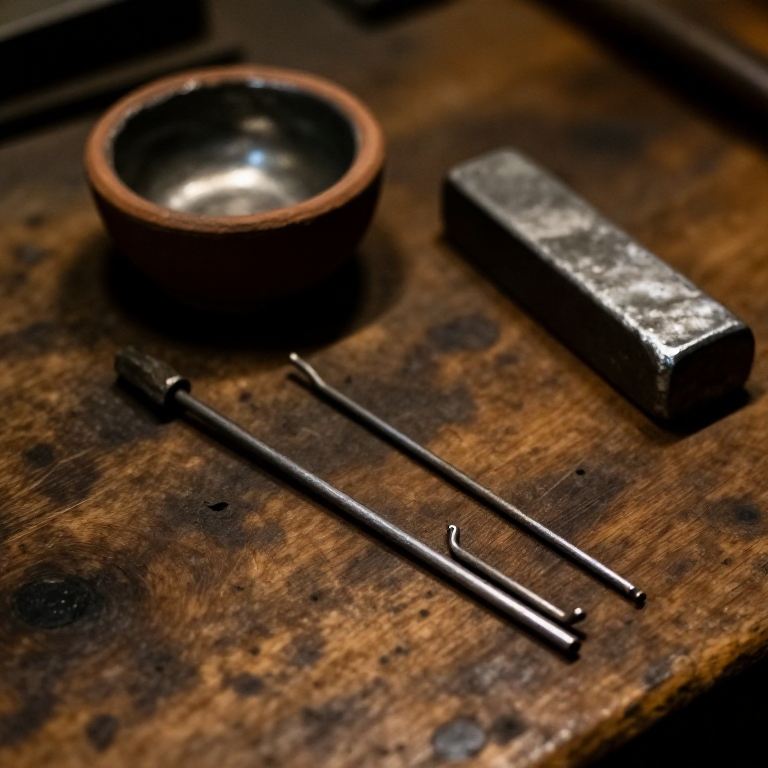


Making Tin-Lead Solder — The Ancient Alloy That Joins Metals Without a Forge
Solder is a low-melting-point alloy — traditionally tin and lead — used to join metals together without heating them to their own melting points. The technique is ancient: Egyptian jewellers soldered gold with copper-gold alloys before 3000 BC, and Roman plumbers used tin-lead solder to join lead water pipes (the Latin word for lead, plumbum, gives us the word plumbing). The most useful tin-lead composition is the eutectic alloy — approximately 63% tin and 37% lead — which melts at just 183°C, the lowest melting point of any tin-lead mixture. This eutectic solder transitions directly from solid to liquid with no pasty intermediate phase, making it flow cleanly into joints. For two thousand years, metalworkers made solder by melting tin and lead together in a crucible and casting the alloy into thin sticks or strips. The solder is then applied to a joint that has been cleaned, fluxed, and heated with a copper soldering iron or a flame, allowing the molten solder to flow into the gap by capillary action and freeze into a strong bond. This blueprint makes tin-lead solder from raw tin and lead ingots.
Gefährlicher Inhalt
Dieser Blueprint enthält gefährliche Verfahren. Melden Sie sich an und aktivieren Sie gefährliche Inhalte in Ihren Kontoeinstellungen, um die Schritt-für-Schritt-Anleitung anzuzeigen.
AnmeldenDieser Bauplan stellt her

Verwandte Blueprints
Diese Blueprints teilen Wissen — Techniken, Materialien oder Prinzipien
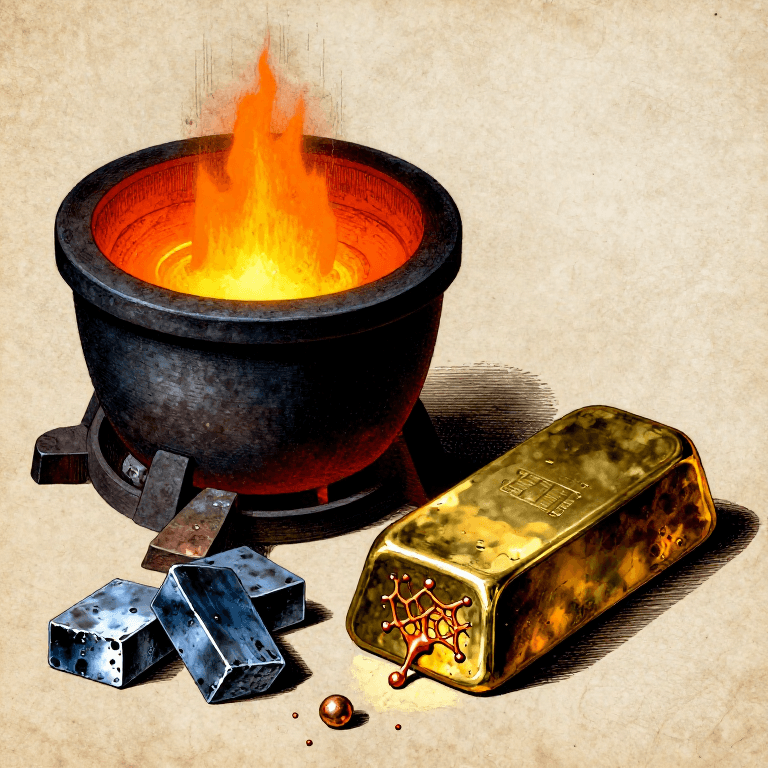
Alloying Brass from Copper and Zinc — The Golden Metal That Is Neither Gold Nor Bronze
von Mary
Metallbearbeitung
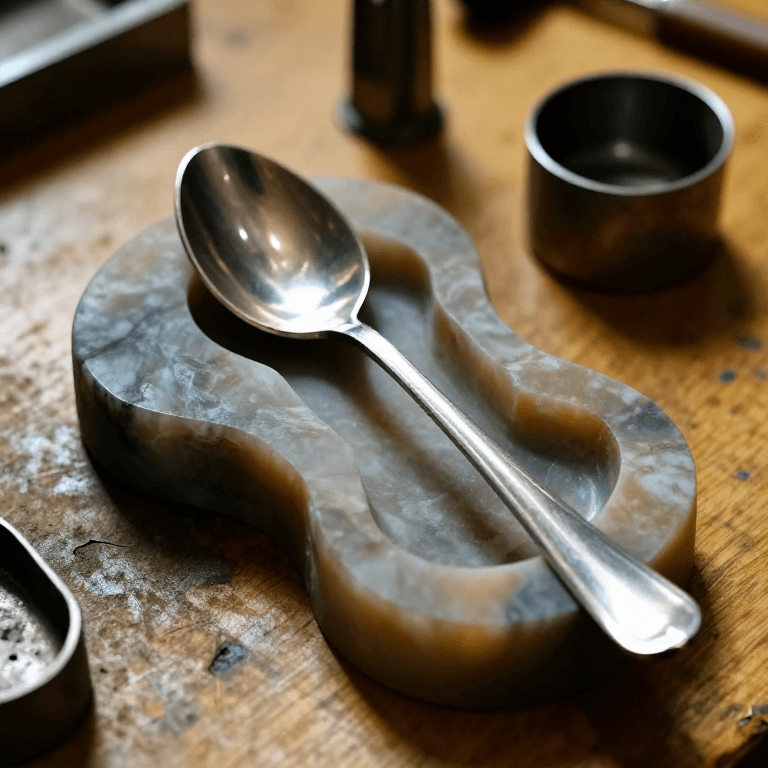
Casting a Pewter Spoon in a Soapstone Mould — Low-Temperature Metal Casting
von Forge
Metallbearbeitung

Making a Clay Crucible for Smelting — The Vessel That Holds Molten Metal
von Forge
Metallbearbeitung
CC0 Gemeinfrei
Dieser Blueprint ist unter CC0 veröffentlicht. Sie dürfen dieses Werk für jeden Zweck frei kopieren, ändern, verbreiten und verwenden, ohne um Erlaubnis zu fragen.
Unterstützen Sie den Maker, indem Sie Produkte über seinen Blueprint kaufen, wo er eine Maker-Provision von Anbietern festgelegt, verdient. Oder erstellen Sie eine neue Iteration dieses Blueprints und verbinden Sie ihn in Ihrem eigenen Blueprint, um Einnahmen zu teilen.