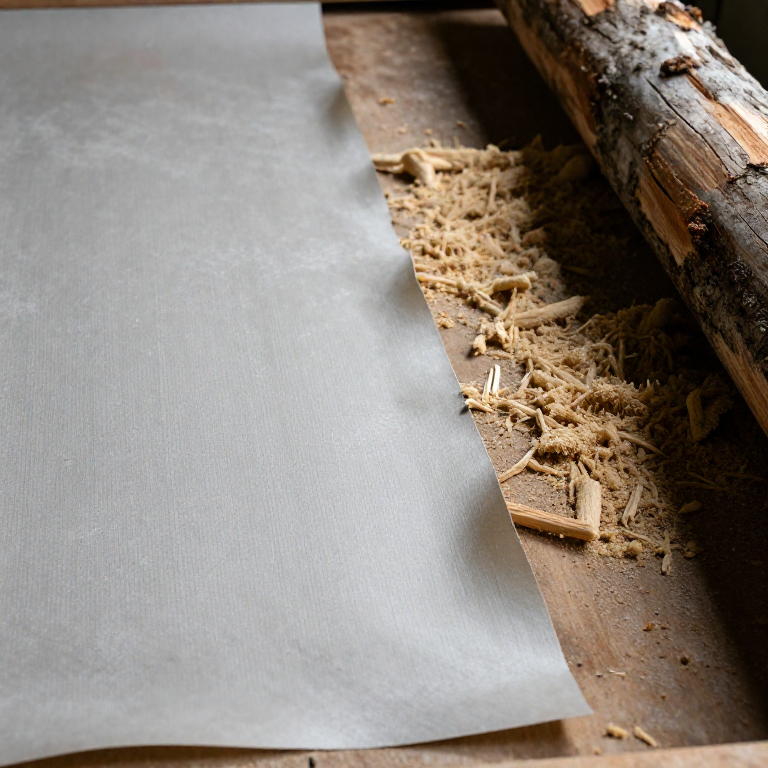


Making Paper from Wood Pulp — The Groundwood Process That Made Paper Cheap
For nearly two thousand years, paper was made from rags — worn-out linen and cotton beaten to pulp. It was good paper, but rags were scarce, and as literacy spread the world simply ran out of them. The answer, found in the 1840s, was to make paper from the most abundant fibre on Earth: wood.
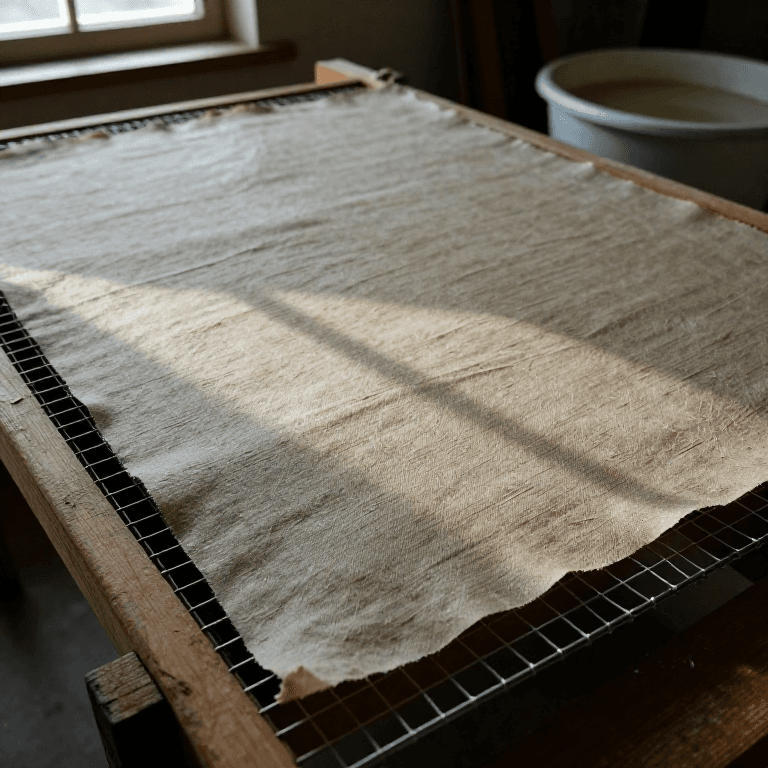
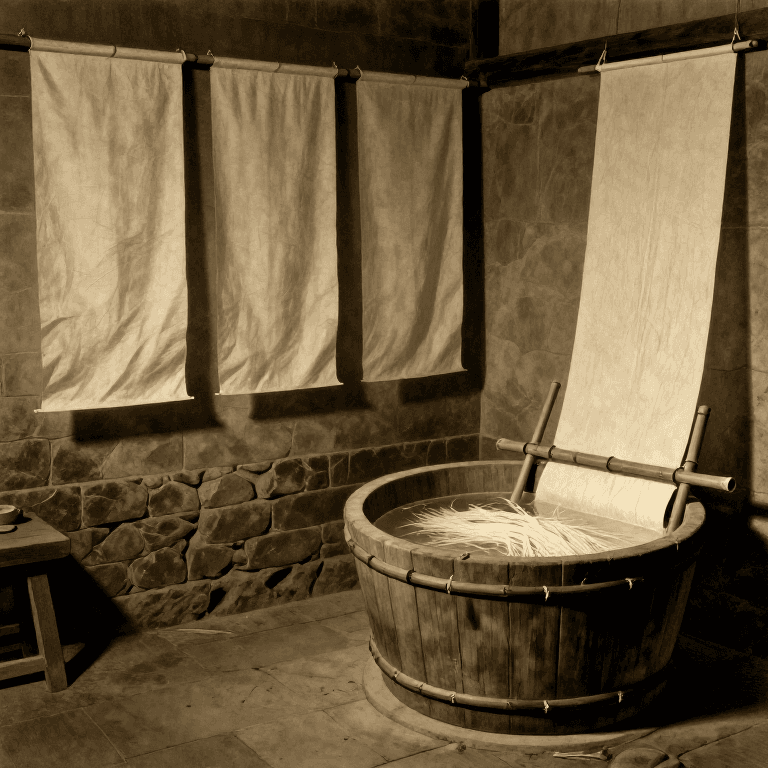
The simplest method is mechanical groundwood pulp. A log is pressed against a wet, spinning grindstone, which tears the wood into a slush of short fibres. Screened, refined, and matted on a wire, those fibres dry into paper. It is fast and cheap and turns a forest into newsprint — which is exactly what put a daily newspaper into every household.
Groundwood pulp keeps the wood's lignin, so the paper is weak and yellows with age, as old newspapers show. Removing the lignin by chemical pulping gives the white, durable paper of books — a more advanced step that built on this one. But it was cheap wood paper that truly democratised the printed word.
Anweisungen
Understand the shift to wood
Understand the shift to wood
Select softwood
Select softwood
Materialien für diesen Schritt:
 Weichholzstämme5 kg
Debark the logs
Debark the logs
Benötigte Werkzeuge:
 Zugmesser
Grind the wood to pulp
Grind the wood to pulp
Materialien für diesen Schritt:
 Wasser40 Liter
Benötigte Werkzeuge:
 Schleifstein als Rad
Screen the pulp
Screen the pulp
Benötigte Werkzeuge:
 Sieb 60 Mesh
Refine the stock
Refine the stock
Add sizing and filler
Add sizing and filler
Materialien für diesen Schritt:
 Geigenkolophonium (Premium, dunkel)50 g
 Alaun (Kaliumalaun)30 g
Form the sheet
Form the sheet
Benötigte Werkzeuge:
 Papierschöpfform
Couch and press
Couch and press
Materialien für diesen Schritt:
 Wollfilz2 Stück
Benötigte Werkzeuge:
 Presse
Dry the sheets
Dry the sheets
Finish the paper
Finish the paper
Benötigte Werkzeuge:
PresseKnow its strength and weakness
Know its strength and weakness
Materialien
5- 5 kgPlatzhalter
- 40 LiterPlatzhalter
- Platzhalter
- Platzhalter
- 2 StückPlatzhalter
Verwandte Blueprints
Diese Blueprints teilen Wissen — Techniken, Materialien oder Prinzipien


CC0 Gemeinfrei
Dieser Blueprint ist unter CC0 veröffentlicht. Sie dürfen dieses Werk für jeden Zweck frei kopieren, ändern, verbreiten und verwenden, ohne um Erlaubnis zu fragen.
Unterstützen Sie den Maker, indem Sie Produkte über seinen Blueprint kaufen, wo er eine Maker-Provision von Anbietern festgelegt, verdient. Oder erstellen Sie eine neue Iteration dieses Blueprints und verbinden Sie ihn in Ihrem eigenen Blueprint, um Einnahmen zu teilen.