KUNST
SCHÖNHEIT & WELLNESS
HANDWERK
KULTUR & GESCHICHTE
UNTERHALTUNG
UMFELD
ESSEN & GETRÄNKE
REVERSE ENGINEERING
WISSENSCHAFTEN
SPORT
TECHNOLOGIE
WEARABLES
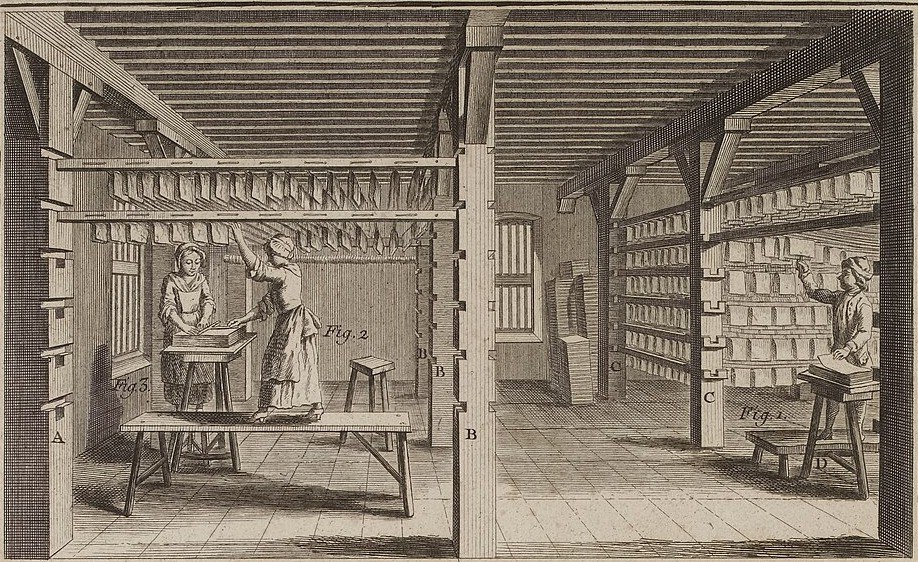


Writing Paper: Rag Sheets Sized and Hot-Pressed Smooth
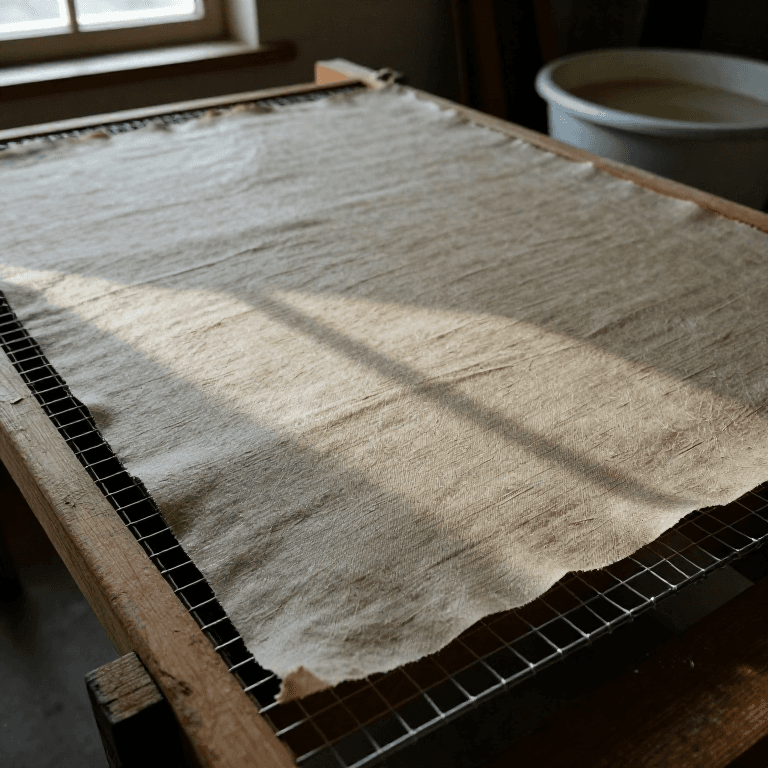
A pen needs paper that does not let ink spread: sized, so the ink stays on top, and smooth, so the nib does not catch. Andrew Ure (1839) gives both: hand-made rag sheets dipped in gelatine size, then hot-pressed between smooth pasteboards and heated iron plates, "which communicates a fine smooth surface to writing-paper".
The picture: the drying loft of an 18th-century paper mill, sheets hung on lines (Diderot's Encyclopédie).
Fortgeschritten
About a week with drying
Anweisungen
1
1
Size the sheets
Size the sheets
Melt hide glue in water with a little alum to a thin, warm size. Spread a few dry, unsized rag sheets in it at a time so each is wetted evenly.
Materialien für diesen Schritt:
 Papier50 Blätter
 Hautleim100 g
 Alaun (Kaliumalaun)10 g
 Wasser2 Liter
Benötigte Werkzeuge:
 Eisenkessel
 Bütte
2
2
Press and dry slowly
Press and dry slowly
Press out the spare size between felts, part the sheets, press again and hang them to dry slowly (Ure allowed three days).
Benötigte Werkzeuge:
 Wollfilzplatte
 Papierpresse (Buchform)
 Trockenleine
3
3
Hot-press
Hot-press
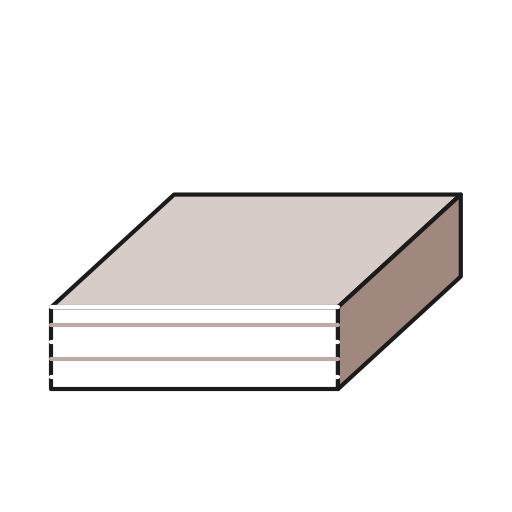
Stack the dry sheets, each between two smooth pasteboards, with a heated iron plate in the pile, and press it hard. The heat and pressure give the smooth writing surface.
Benötigte Werkzeuge:
 Kaschierte Pappe
 Eisenplatte
 HeizplattePapierpresse (Buchform)
Materialien
4- 50 BlätterPlatzhalter
- 100 gPlatzhalter
- Platzhalter
- 2 LiterPlatzhalter
Benötigte Werkzeuge
8- Platzhalter
- Platzhalter
- Platzhalter
- Platzhalter
- Platzhalter
- Platzhalter
- Platzhalter
- Platzhalter
Dieser Bauplan stellt her
Verwandte Blueprints
Diese Blueprints teilen Wissen — Techniken, Materialien oder Prinzipien

CC0 Gemeinfrei
Dieser Blueprint ist unter CC0 veröffentlicht. Sie dürfen dieses Werk für jeden Zweck frei kopieren, ändern, verbreiten und verwenden, ohne um Erlaubnis zu fragen.
Unterstützen Sie den Maker, indem Sie Produkte über seinen Blueprint kaufen, wo er eine Maker-Provision von Anbietern festgelegt, verdient. Oder erstellen Sie eine neue Iteration dieses Blueprints und verbinden Sie ihn in Ihrem eigenen Blueprint, um Einnahmen zu teilen.