Zusammenarbeit
KUNST
SCHÖNHEIT & WELLNESS
HANDWERK
KULTUR & GESCHICHTE
UNTERHALTUNG
UMFELD
ESSEN & GETRÄNKE
REVERSE ENGINEERING
WISSENSCHAFTEN
SPORT
TECHNOLOGIE
WEARABLES
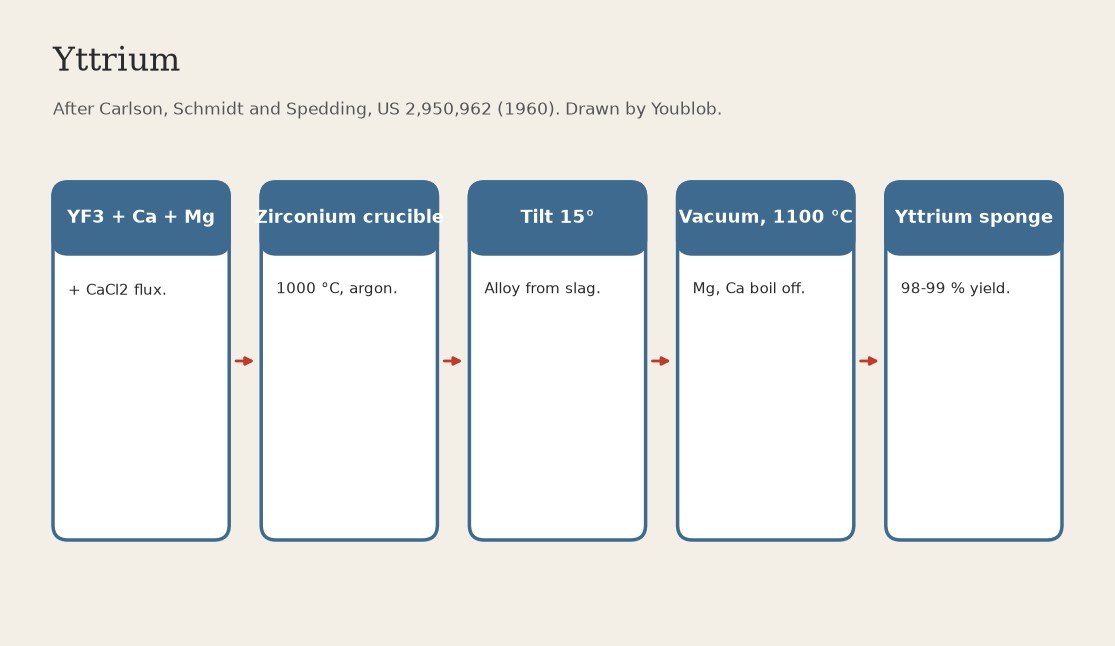


Yttrium: Fluoride Reduced with Calcium and Magnesium at 1000 °C, then Distilled to Sponge (Carlson, Schmidt and Spedding, US 2,950,962)
Calcium alone reduces yttrium fluoride only at 1500 °C. Adding magnesium makes a low-melting yttrium-magnesium alloy, and calcium chloride thins the slag, so the job runs at about 1000 °C. The magnesium and calcium are then boiled off in vacuum, leaving yttrium sponge.
Result: yttrium sponge (yield 98-99 % in the alloy step), usable as a getter or remelted to an ingot.
Source: O. N. Carlson, F. A. Schmidt and F. H. Spedding, US 2,950,962 (1960). Hot work under argon; calcium reacts with water. Picture drawn by Youblob.
Erfahren
2 days
Anweisungen
1
1
Weigh and mix the charge
Weigh and mix the charge
Dry the calcium chloride in vacuum at about 550 °C. Mix thoroughly 2600 g of pure, fine yttrium fluoride, 2090 g of calcium chloride, 1285 g of granular calcium (about 20 % excess) and 395 g of magnesium turnings, and pack it into a zirconium crucible with a lid carrying a pressure-release valve.
Materialien für diesen Schritt:
 Yttriumfluorid1 2600 g
Benötigte Werkzeuge:
 Calcium
 Magnesium
 Calciumchlorid
 Vakuumpumpe
 Zirconiumtiegel
2
2
Reduce at about 1000 °C
Reduce at about 1000 °C
Under argon (or helium) at about atmospheric pressure, set the crucible in a furnace already at 950-1050 °C and keep heating for about half an hour; the reaction gives off little heat. An yttrium-magnesium-calcium alloy forms under a calcium fluoride-calcium chloride slag.
Benötigte Werkzeuge:
Zirconiumtiegel Tiegelofen
 Argon
3
3
Separate alloy and slag
Separate alloy and slag
Take the retort out and tilt it about 15° from horizontal so the slag and alloy freeze in thin layers along the side wall, then break them apart. The alloy is brittle (typically 19 % magnesium, 7-8 % calcium). Crush it to pieces of about 1/2 in.
Benötigte Werkzeuge:
Zirconiumtiegel Mörser und Pistill
4
4
Boil off magnesium and calcium in vacuum
Boil off magnesium and calcium in vacuum
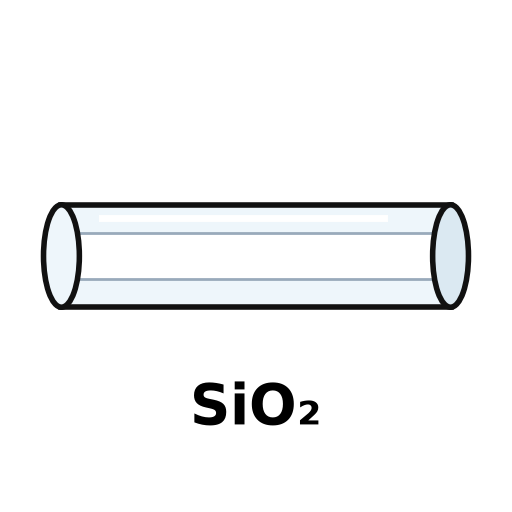
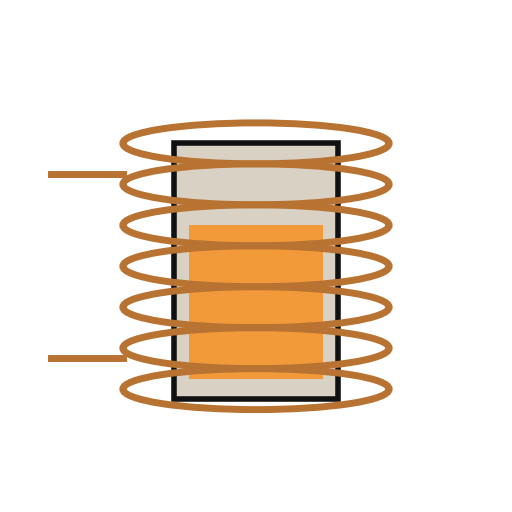
Pack the pieces in a crucible of the same metal set in a graphite heater inside a quartz tube. Pump down to about 1 micron or less and heat by induction to about 800 °C, then more slowly to 1100 °C (about three hours). The alloy does not melt; magnesium and calcium distil away (about 27 % weight loss), leaving porous yttrium sponge.
Benötigte Werkzeuge:
Zirconiumtiegel Graphittiegel
 QuarzglasrohrVakuumpumpe
 Induktionsofen
5
5
Remelt to an ingot (optional)
Remelt to an ingot (optional)
Use the sponge as it is (for example as a getter in vacuum tubes), or remelt it in a consumable arc furnace under helium or vacuum to get a solid ingot.
Benötigte Werkzeuge:
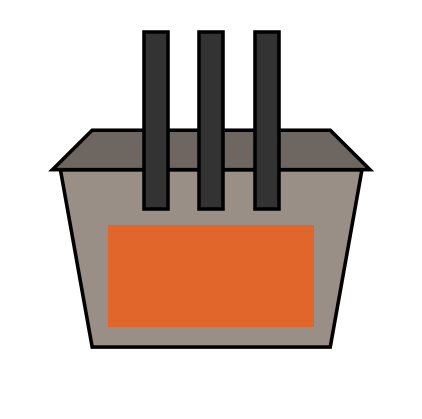 Lichtbogenofen
Materialien
1- 1 2600 gPlatzhalter
Benötigte Werkzeuge
12- Platzhalter
- Platzhalter
- Platzhalter
- 1 vendor sell this, none ship to you yetPlatzhalter
- Platzhalter
- Platzhalter
- Platzhalter
- Platzhalter
- Platzhalter
- Platzhalter
- Platzhalter
- Platzhalter
Dieser Bauplan stellt her

Verwandte Blueprints
Diese Blueprints teilen Wissen — Techniken, Materialien oder Prinzipien
CC0 Gemeinfrei
Dieser Blueprint ist unter CC0 veröffentlicht. Sie dürfen dieses Werk für jeden Zweck frei kopieren, ändern, verbreiten und verwenden, ohne um Erlaubnis zu fragen.
Unterstützen Sie den Maker, indem Sie Produkte über seinen Blueprint kaufen, wo er eine Maker-Provision von Anbietern festgelegt, verdient. Oder erstellen Sie eine neue Iteration dieses Blueprints und verbinden Sie ihn in Ihrem eigenen Blueprint, um Einnahmen zu teilen.