KUNST
SCHÖNHEIT & WELLNESS
HANDWERK
KULTUR & GESCHICHTE
UNTERHALTUNG
UMFELD
ESSEN & GETRÄNKE
REVERSE ENGINEERING
WISSENSCHAFTEN
SPORT
TECHNOLOGIE
WEARABLES
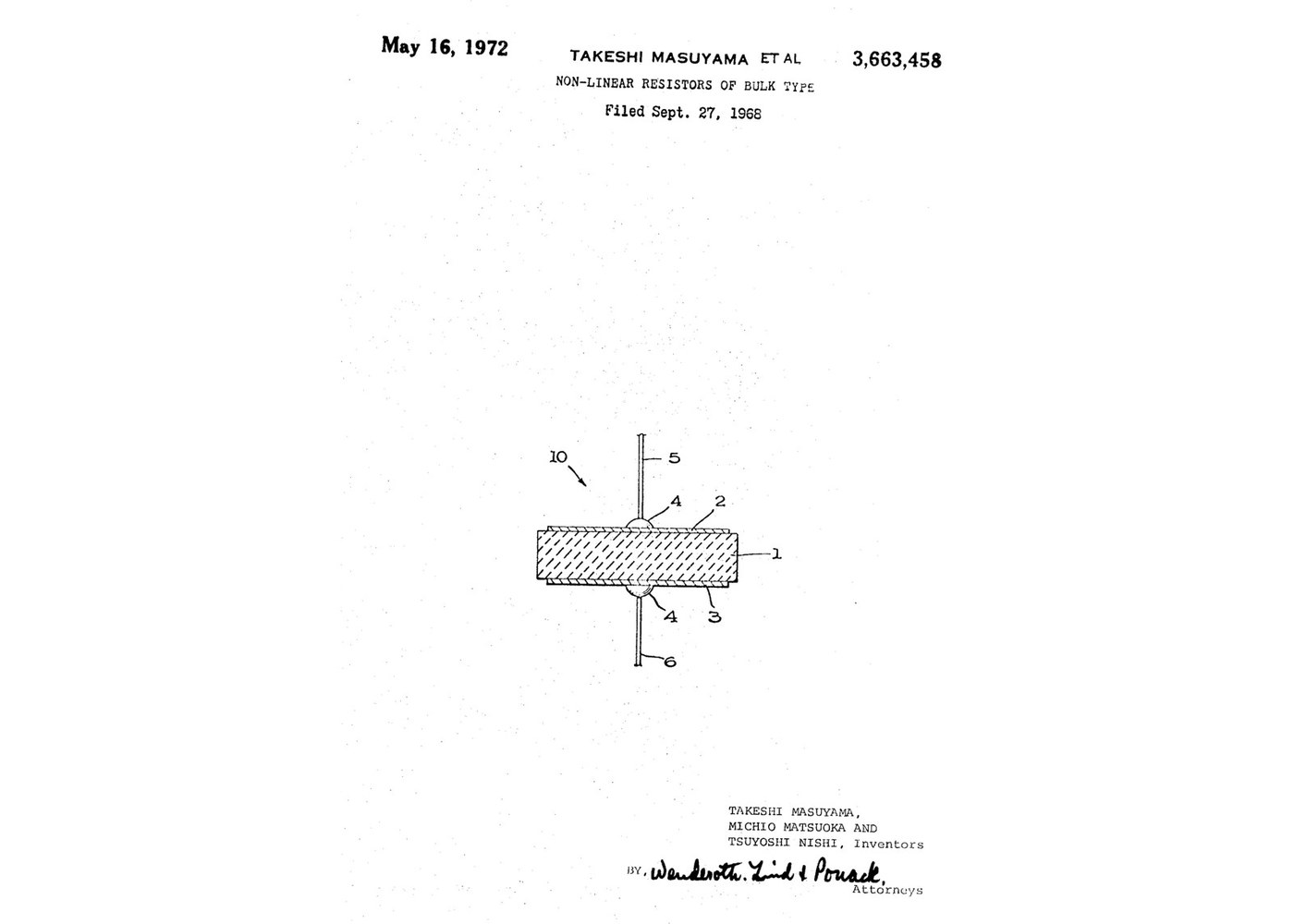


Metal Oxide Varistor: Zinc Oxide with 0.2 % Bismuth Oxide, 1300 °C, 1.0 mm (Masuyama 1972)
A non-linear resistor: the current through it rises far faster than the voltage across it. Masuyama, Matsuoka and Nishi made one from zinc oxide with a little bismuth oxide: pressed into a disc, sintered, lapped, and given metal electrodes. With 0.2 mole % bismuth oxide, sintered at 1300 °C and lapped to 1.0 mm, the disc measured a C-value of 0.3 at 1 mA and a nonlinearity exponent n of 1.1.
Source: T. Masuyama, M. Matsuoka and T. Nishi (Matsushita), US 3,663,458 (1972), Example 1. Unknown: what the silver paint is. The patent calls the spraying and the paint well known. The spraying is ours, after US Army Corps of Engineers EM 1110-2-3401 (1999). The 10 g batch is our arithmetic. Picture: the patent's drawing.
Erfahren
1 day
Anweisungen
1
1
Weigh 99.8 : 0.2 and wet-mill 5 hours
Weigh 99.8 : 0.2 and wet-mill 5 hours
Mix zinc oxide and bismuth oxide 99.8 : 0.2 by moles. Ours, for 10 g: 9.887 g zinc oxide, 0.113 g bismuth oxide (our arithmetic). Mill wet for 5 hours, then dry. Unknown: the milling liquid.
Materialien für diesen Schritt:
 Zinkoxidpulver9.887 g
 Bismutoxid0.113 g
Benötigte Werkzeuge:
 Balkenwaage
 Eisenkugelmühle
 Trockenofen
2
2
Press discs 13 mm by 2.5 mm
Press discs 13 mm by 2.5 mm
Press the powder in a mould into discs 13 mm across and 2.5 mm thick at 340 kg/cm².
Benötigte Werkzeuge:
 Hydraulische Presse
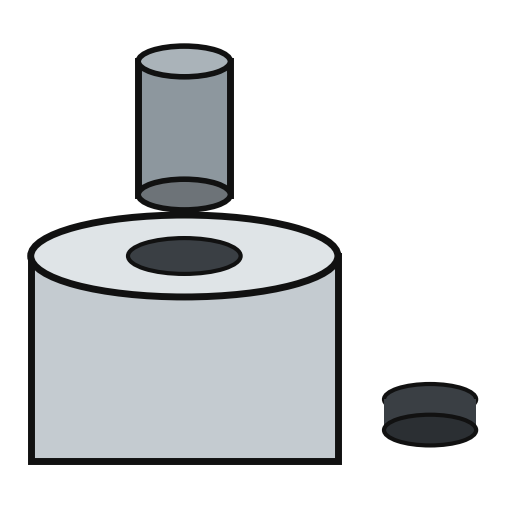 Scheiben-Pressform
 Messschieber
3
3
Sinter 1 hour at 1300 °C and furnace-cool
Sinter 1 hour at 1300 °C and furnace-cool
Sinter the discs in air for 1 hour at 1300 °C, then let them cool in the furnace to room temperature (about 15-30 °C). Masuyama gives 800 to 1200 °C as the best range for zinc oxide with bismuth oxide.
Benötigte Werkzeuge:
 Muffelofen
4
4
Lap both faces to 1.0 mm
Lap both faces to 1.0 mm
Lap both faces with 600-mesh silicon carbide until the disc is 1.0 mm thick.
Benötigte Werkzeuge:
 Siliciumcarbid-KörnungMessschieber
5
5
Spray aluminium electrodes and attach leads
Spray aluminium electrodes and attach leads
Spray a metallised film of aluminium on both faces. Attach a lead wire to each with conductive silver paint. Ours, after US Army Corps of Engineers EM 1110-2-3401 (1999): wire-arc spray the aluminium from two 3.2 mm wires melted by an 18-40 V DC arc and atomised by compressed air, 15-20 cm from the disc and never at less than 45°, in at least two coats at right angles of 50-75 µm each. Unknown: the paint.
Materialien für diesen Schritt:
 Aluminiumbarren1 as 3.2 mm spray wire
 Silberleitlack1 as required
 Kupferdraht2 Stück
Benötigte Werkzeuge:
Messschieber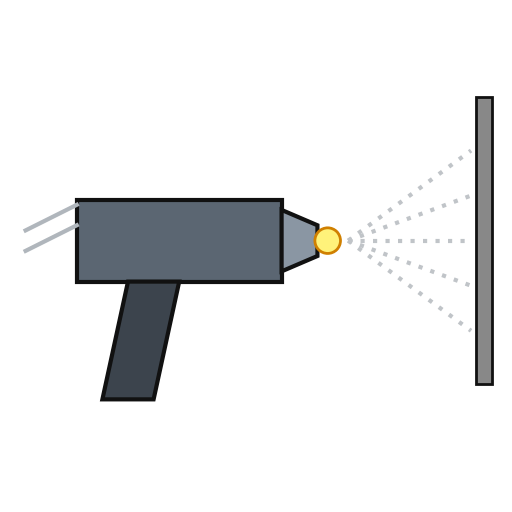 Lichtbogen-Drahtspritzpistole
 Industrie-Luftkompressor
Materialien
5- 9.887 gPlatzhalter
- 0.113 gPlatzhalter
- 1 as 3.2 mm spray wirePlatzhalter
- 1 as requiredPlatzhalter
- 2 StückPlatzhalter
Benötigte Werkzeuge
10- Platzhalter
- Platzhalter
- Platzhalter
- Platzhalter
- Platzhalter
- Platzhalter
- Platzhalter
- Platzhalter
- Platzhalter
- Platzhalter
Dieser Bauplan stellt her

Verwandte Blueprints
Diese Blueprints teilen Wissen — Techniken, Materialien oder Prinzipien

CC0 Gemeinfrei
Dieser Blueprint ist unter CC0 veröffentlicht. Sie dürfen dieses Werk für jeden Zweck frei kopieren, ändern, verbreiten und verwenden, ohne um Erlaubnis zu fragen.
Unterstützen Sie den Maker, indem Sie Produkte über seinen Blueprint kaufen, wo er eine Maker-Provision von Anbietern festgelegt, verdient. Oder erstellen Sie eine neue Iteration dieses Blueprints und verbinden Sie ihn in Ihrem eigenen Blueprint, um Einnahmen zu teilen.