ART
BEAUTY & WELLNESS
CRAFT
CULTURE & HISTORY
ENTERTAINMENT
ENVIRONMENT
FOOD & DRINKS
REVERSE ENGINEERING
SCIENCES
SPORTS
TECHNOLOGY
WEARABLES
Hazardous

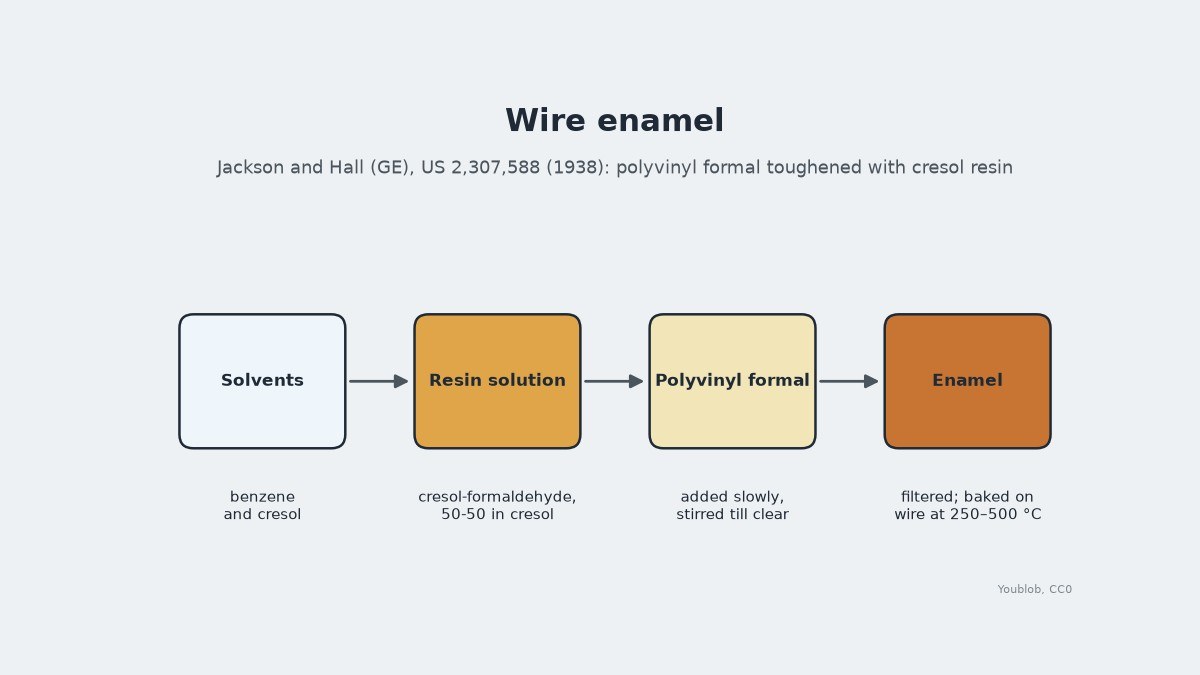
Wire Enamel: Polyvinyl Formal and Cresol Resin in Solvent, Jackson and Hall 1938
GE's 1938 magnet-wire enamel: 10.67 % polyvinyl formal and 5.33 % cresol-formaldehyde resin dissolved in cresol and a hydrocarbon solvent, stirred until clear and viscous, then filtered. Wire drawn through it and baked at 250–500 °C, several passes, gets a tough, flexible insulation. We use benzene, one of the solvents the patent allows.
The picture: our diagram of the mixing.
Advanced
A few hours
Hazardous content
This blueprint contains hazardous procedures. Log in and enable hazardous content in your account settings to view the step-by-step instructions.
Sign inThis blueprint makes

Related Blueprints
These blueprints share knowledge with this one — techniques, materials, or principles that connect them in the learning graph.
Hazardous
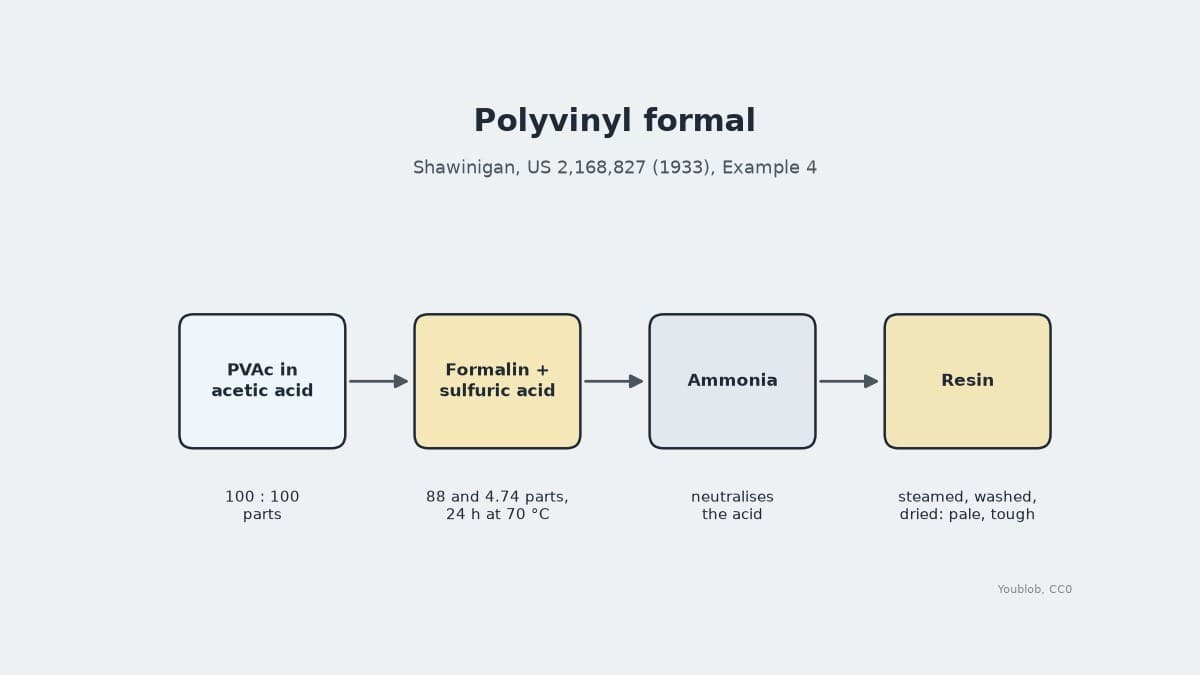
Polyvinyl Formal: Polyvinyl Acetate Acetalised with Formalin, Shawinigan 1933
by Charlie
Polymer
0
0
0
0
0
0
Hazardous
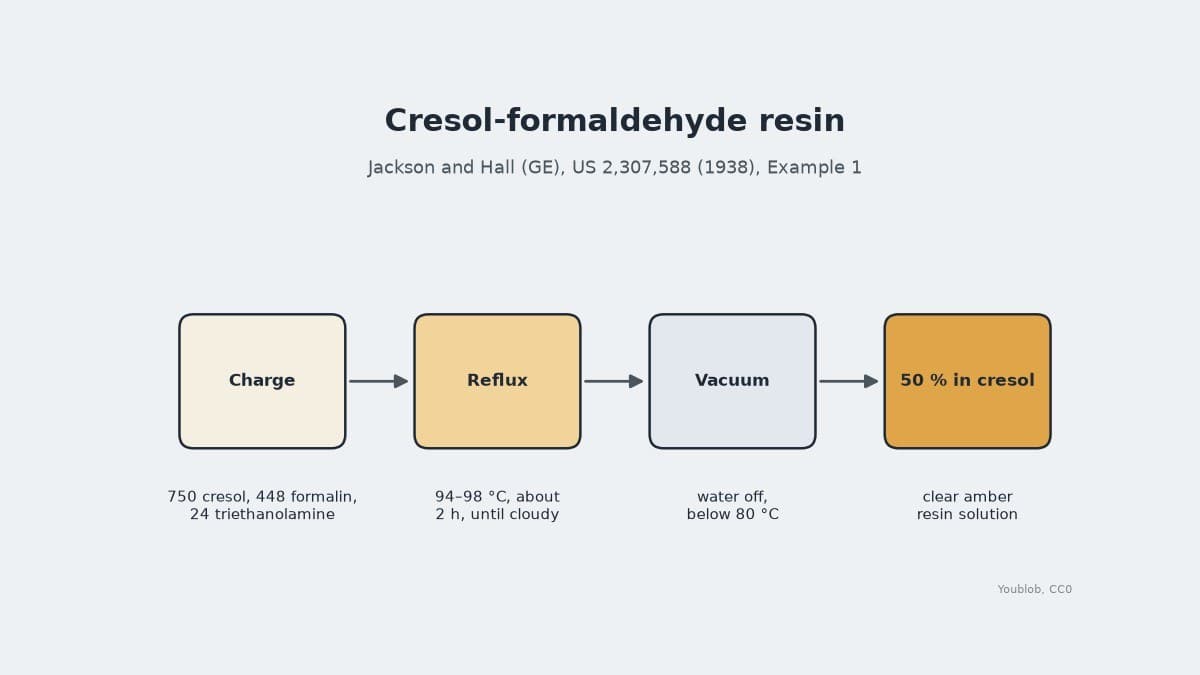
Cresol-Formaldehyde Resin for Wire Enamel, Jackson and Hall 1938
by Charlie
Polymer
0
0
0
0
0
0
Hazardous
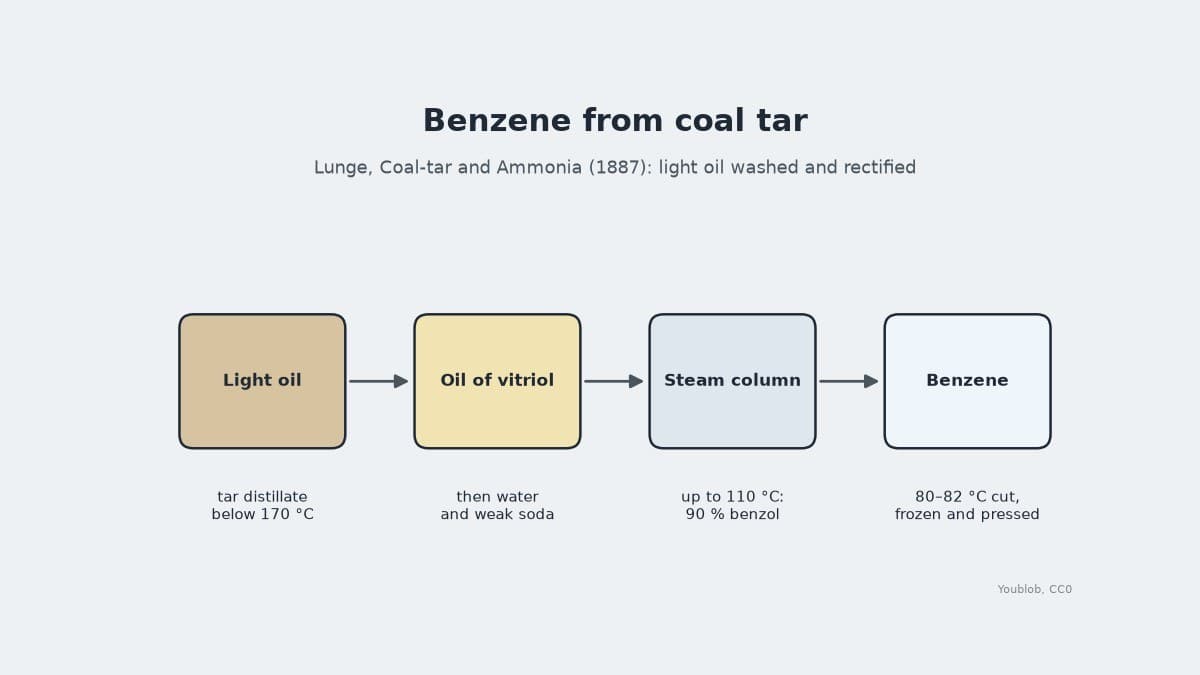
Benzene from Coal-Tar Light Oil: Washed and Rectified, Lunge 1887
by Charlie
Industrial
0
0
0
0
0
0
CC0 Public Domain
This blueprint is released under CC0. You are free to copy, modify, distribute, and use this work for any purpose, without asking permission.
Support the Maker by purchasing products through their Blueprint where they earn a Maker Commission set by Vendors, or create a new iteration of this Blueprint and include it as a connection in your own Blueprint to share revenue.