ART
BEAUTY & WELLNESS
CRAFT
CULTURE & HISTORY
ENTERTAINMENT
ENVIRONMENT
FOOD & DRINKS
REVERSE ENGINEERING
SCIENCES
SPORTS
TECHNOLOGY
WEARABLES
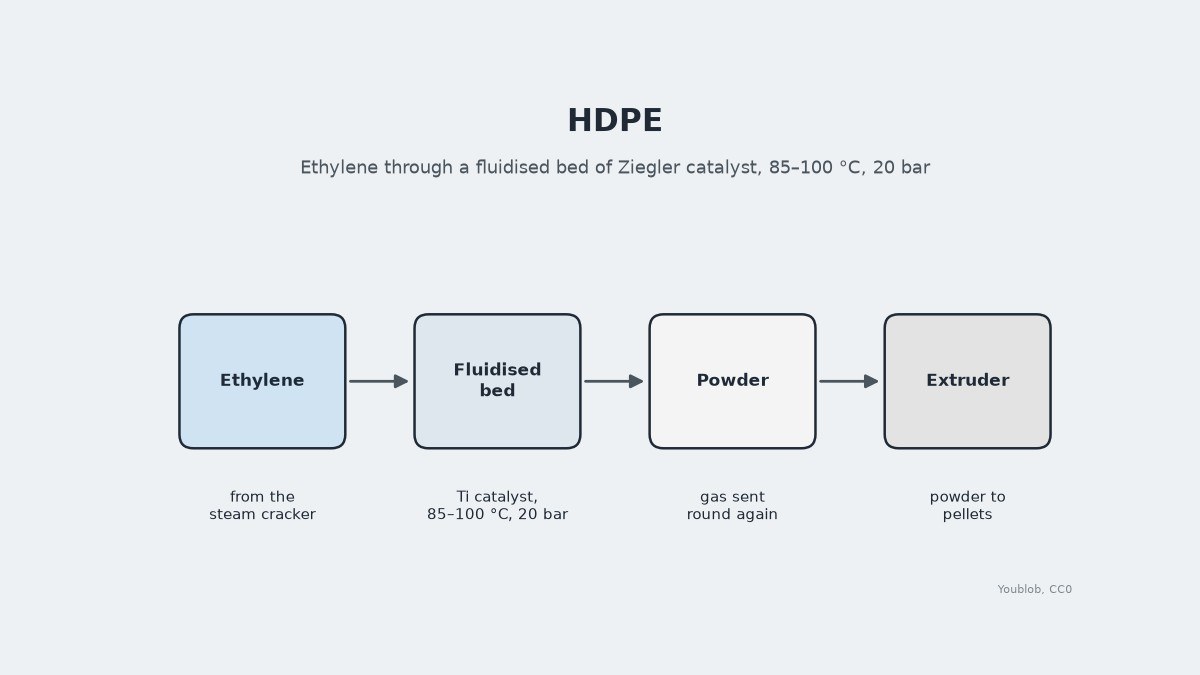


HDPE Pellets: Ethylene Polymerised in a Fluidised Bed
High-density polyethylene is made at low pressure on a Ziegler catalyst (a titanium halide with an aluminium compound). In the gas-phase process, ethylene flows up through a fluidised bed of fine catalyst at 85–100 °C and 20 bar and grows into polymer powder, which is melted and cut into pellets.
The picture: our diagram of the bed reactor and extruder.
Advanced
Continuous
Instructions
1
1
Polymerise in a fluidised bed
Polymerise in a fluidised bed
Feed fine catalyst into the bed reactor and blow ethylene up through it at 85–100 °C and 20 bar. The polymer grows on the catalyst grains.
Materials for this step:
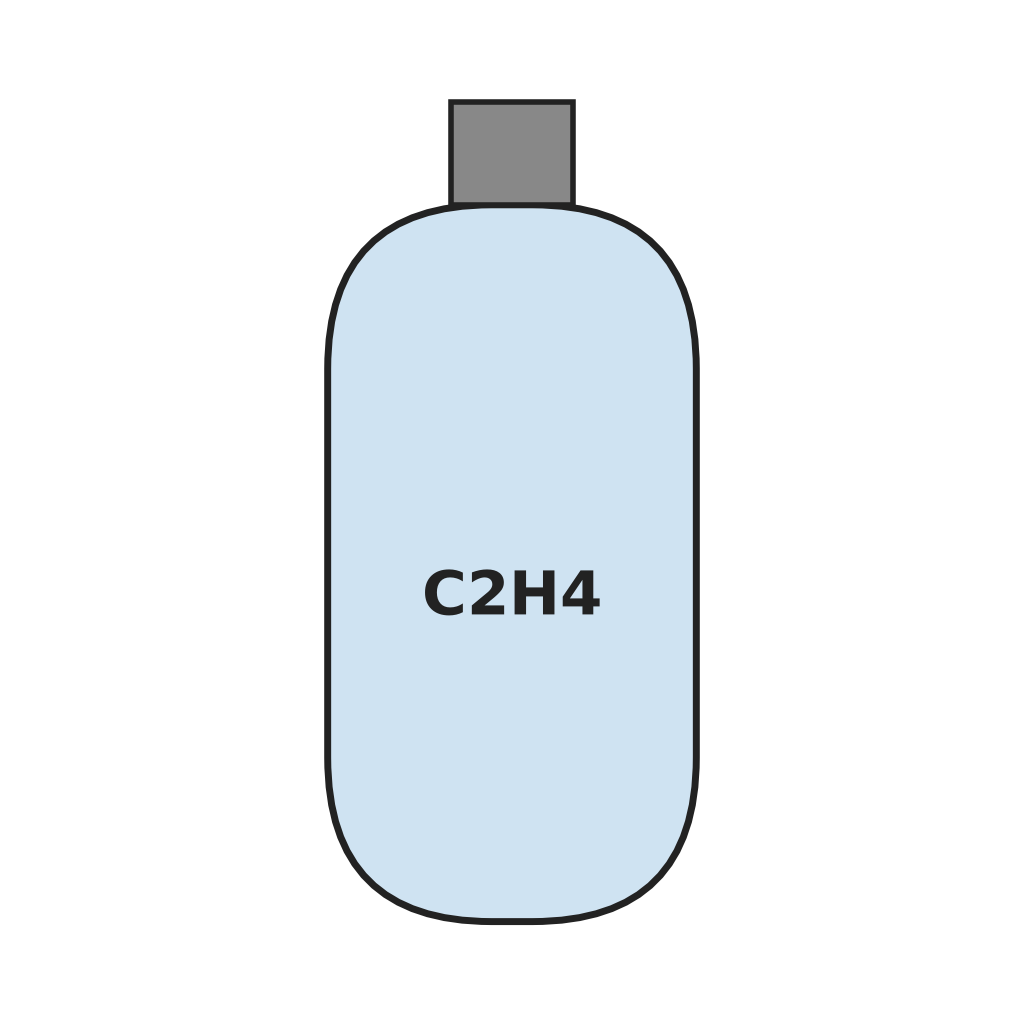 Ethylene1 t
Tools needed:
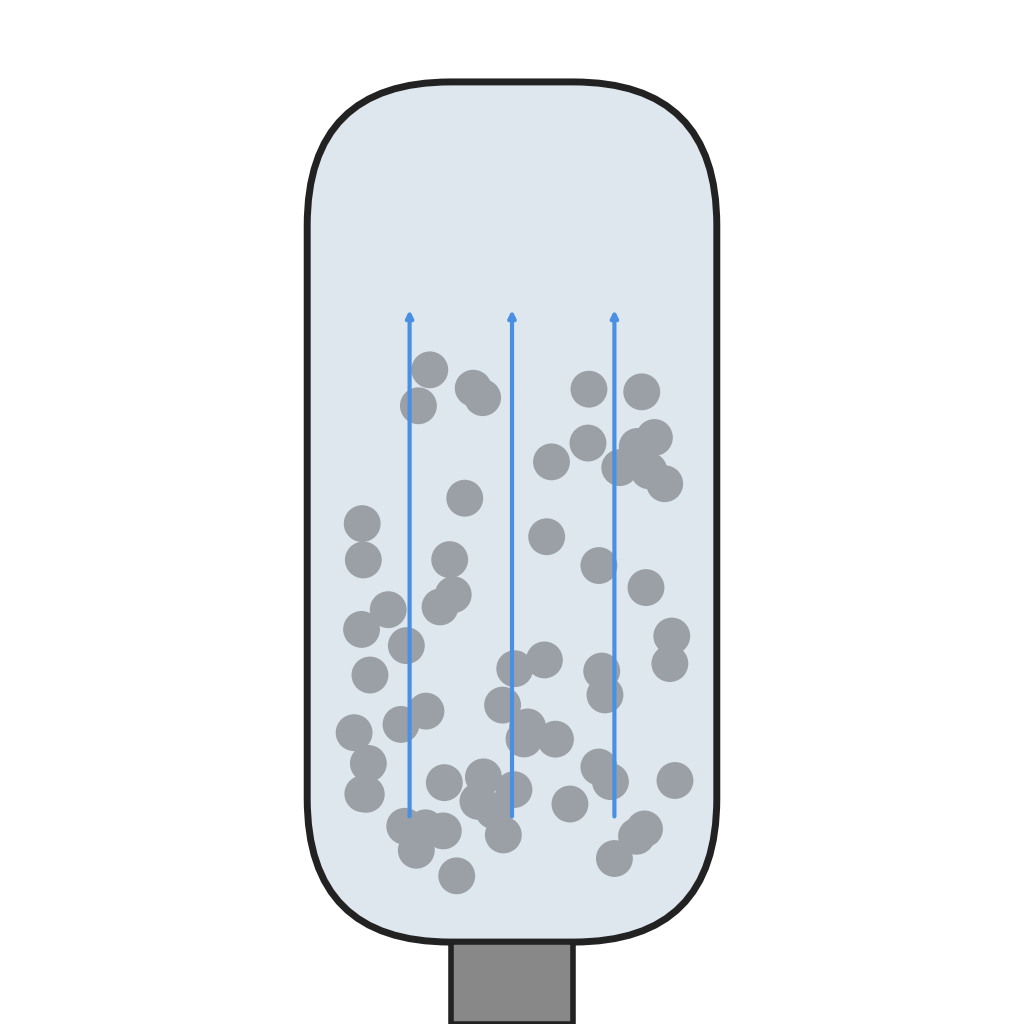 Fluidised-Bed Reactor
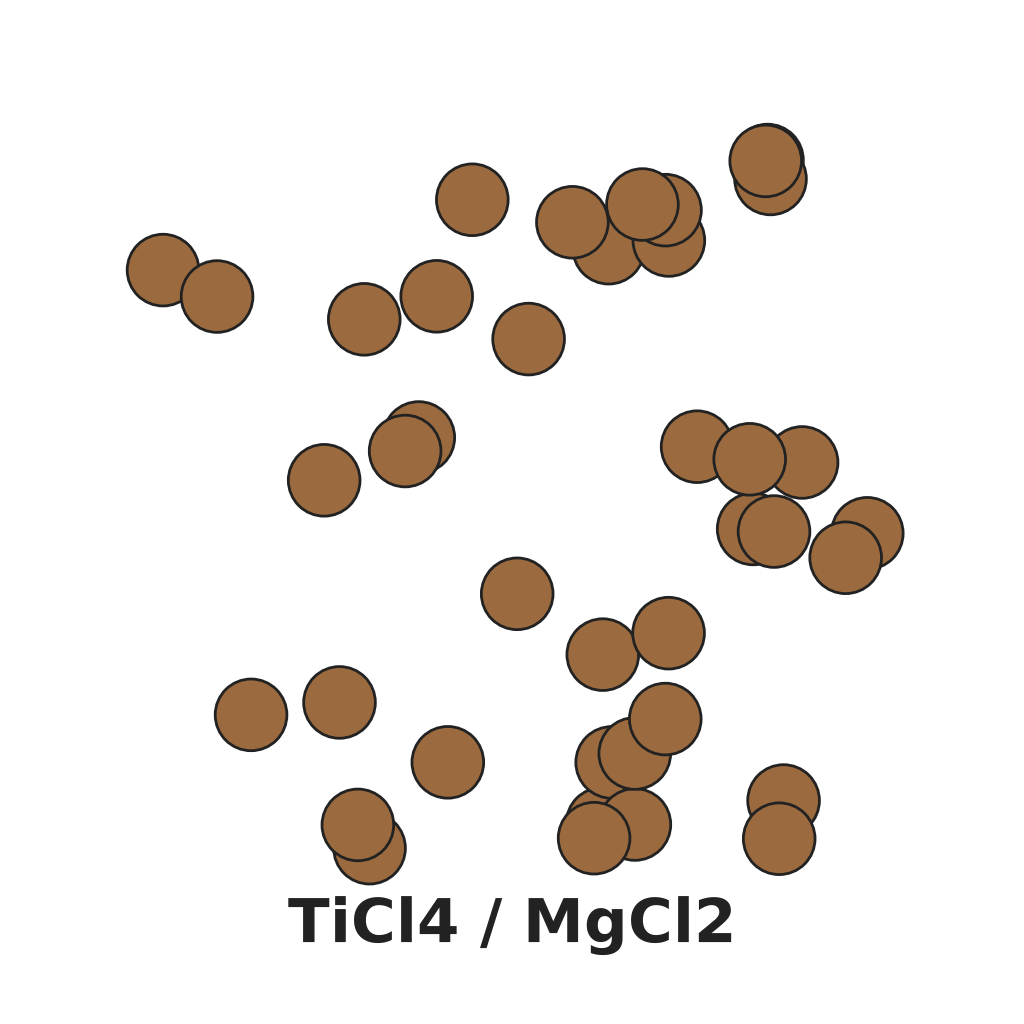 Ziegler-Natta Catalyst (TiCl4 on MgCl2)
 Gas Compressor
2
2
Take off the powder
Take off the powder
Draw the polyethylene powder off the bed; compress the unreacted ethylene and send it round again.
Tools needed:
Fluidised-Bed ReactorGas Compressor3
3
Pelletise
Pelletise
Melt the powder in the extruder and cut the strand into pellets.
Tools needed:
 Plastic Extruder
4
4
Ethylene gas per kilogram of polymer
Ethylene gas per kilogram of polymer
Loading Jupyter Notebook...
Tools Required
4- Placeholder
- Placeholder
- Placeholder
- Placeholder
This blueprint makes

Related Blueprints
These blueprints share knowledge with this one — techniques, materials, or principles that connect them in the learning graph.
CC0 Public Domain
This blueprint is released under CC0. You are free to copy, modify, distribute, and use this work for any purpose, without asking permission.
Support the Maker by purchasing products through their Blueprint where they earn a Maker Commission set by Vendors, or create a new iteration of this Blueprint and include it as a connection in your own Blueprint to share revenue.