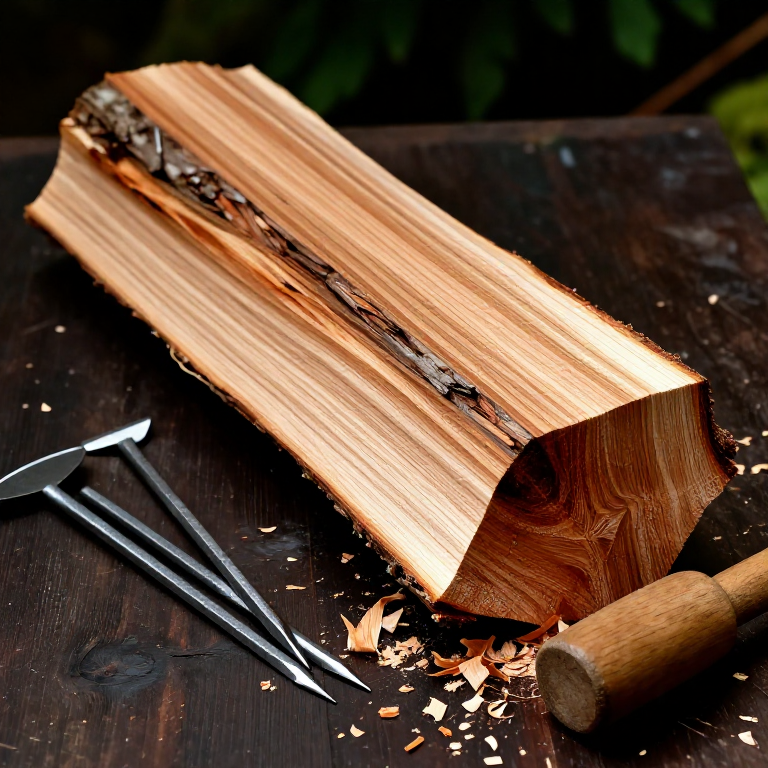


Riving Planks from a Log — Splitting Timber Along the Grain with Wedges
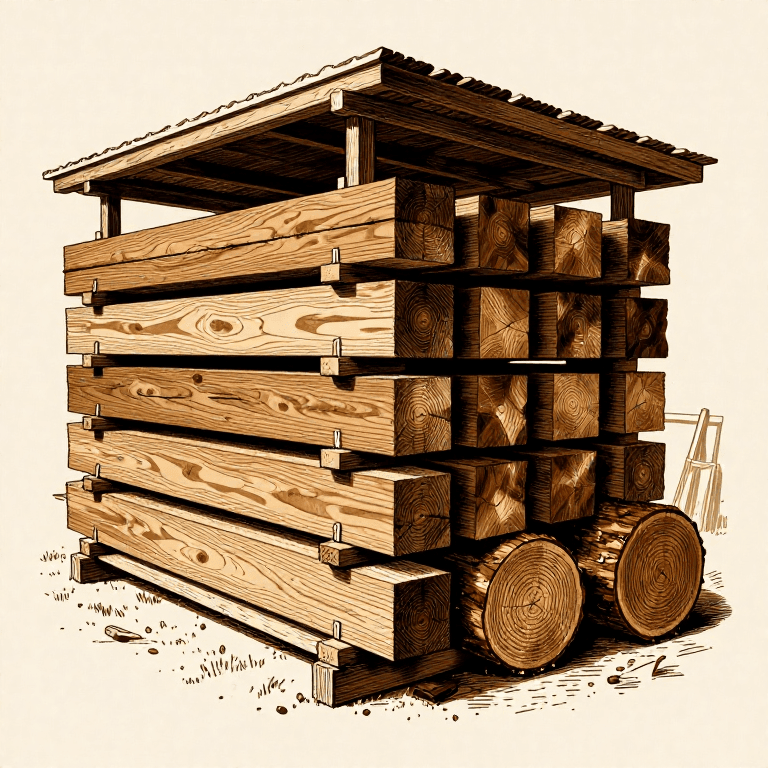
Before sawmills, every plank was riven — split from a log using wedges and mallets. Riving exploits the natural grain of the wood: a wedge driven into the end grain propagates a crack that follows the fibres, producing a plank that is stronger than any sawn board because no fibres are cut across. Every Viking longship, every medieval roof, and every Iron Age door was built from riven timber.
The technique is simple but requires reading the wood. A straight-grained log splits cleanly into halves, quarters, and eighths. Each successive split reduces the section until planks of the desired thickness are reached. Crooked grain, knots, or spiral growth cause the split to run off-line, ruining the plank. Selecting the right log is half the skill.
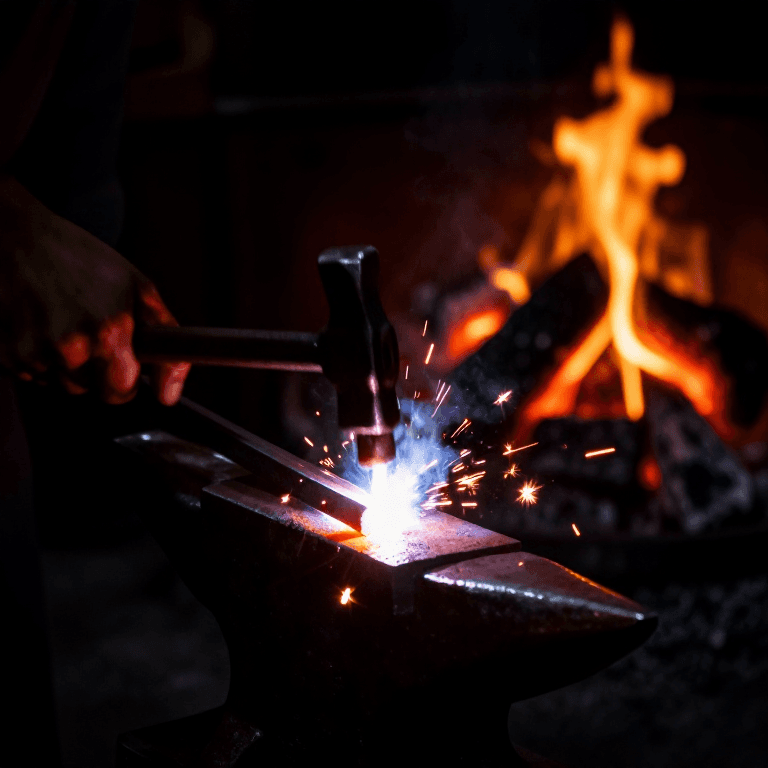
Iron wedges transformed riving from a slow stone-age process into an efficient production method. A smith's iron wedge driven by a wooden maul splits a log in minutes. Combined with an iron drawknife for smoothing, riving produces finished planks faster than pit-sawing and with superior strength.
Instructions
Select a straight-grained log
Select a straight-grained log
Materials for this step:
 Red Oak Lumber1 piece
Split the log in half
Split the log in half
Tools needed:
 Forge Hammer
 Steel Wedge Set
 Sledgehammer
Quarter each half
Quarter each half
Rive planks from the quarters
Rive planks from the quarters
Tools needed:
 Froe
Froe Wooden Mallet
Correct wandering splits
Correct wandering splits
Smooth the riven surface
Smooth the riven surface
Tools needed:
 Drawknife
 Shaving Horse
 Adze
AdzeMaterials
1- 1 piecePlaceholder
Tools Required
8- Placeholder
- Placeholder
- Placeholder
- Placeholder
- Placeholder
- Placeholder
- Placeholder
- Placeholder
Connected Blueprint Materials
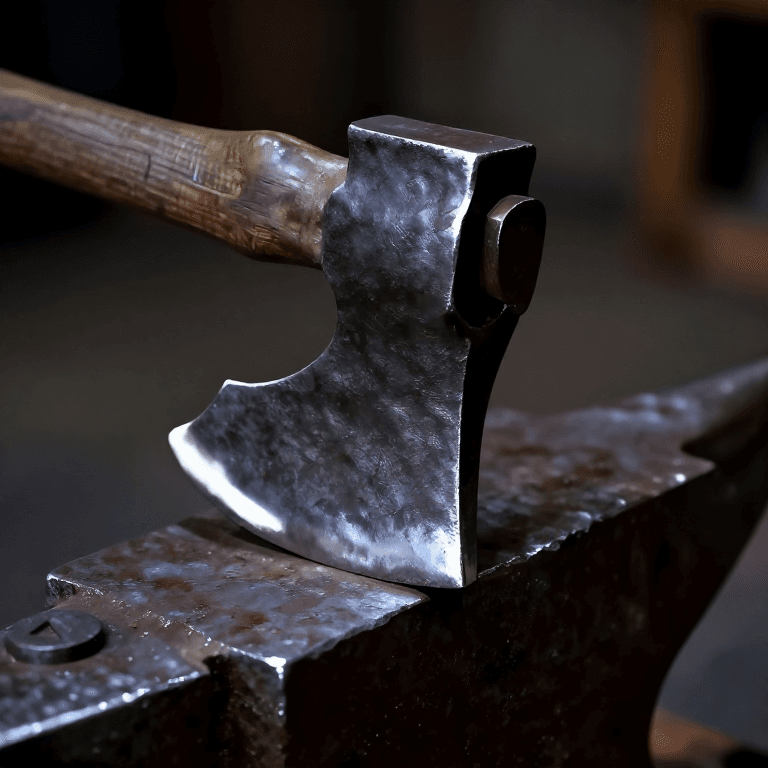
This blueprint makes

Related Blueprints
These blueprints share knowledge with this one — techniques, materials, or principles that connect them in the learning graph.
CC0 Public Domain
This blueprint is released under CC0. You are free to copy, modify, distribute, and use this work for any purpose, without asking permission.
Support the Maker by purchasing products through their Blueprint where they earn a Maker Commission set by Vendors, or create a new iteration of this Blueprint and include it as a connection in your own Blueprint to share revenue.