
Preparing Ochre Pigment for Cave Painting — Mineral Processing
Instructions
Source and Select Ochre
Source and Select Ochre
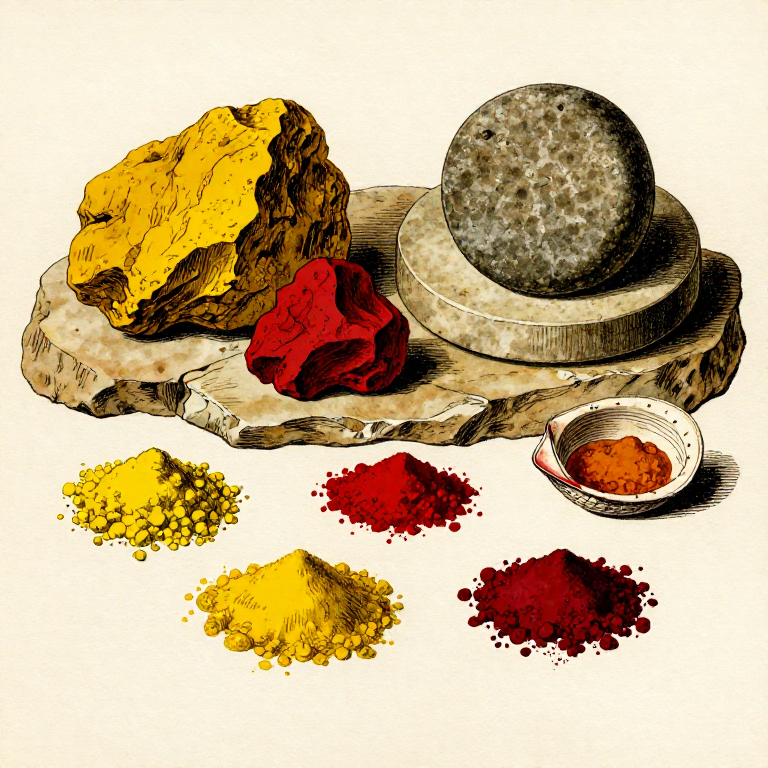
Ochre is iron oxide-rich earth found in exposed clay banks, riverbed deposits, and rocky outcrops worldwide. Yellow ochre contains goethite (hydrated iron oxide, FeOOH) and produces warm yellow to brown tones. Red ochre contains hematite (anhydrous iron oxide, Fe2O3) and produces deep red to maroon. Select pieces that leave a strong colour streak when rubbed on stone — the more intensely coloured the streak, the higher the pigment concentration. Avoid pieces with excessive sand or gravel inclusions, as these dilute the colour.
Materials for this step:
 Raw ochre (yellow or red earth)several lumps, fist-sized piece
 Watersmall amount for mixing piece
 Animal Fat (Tallow)small amount piece
 Shell or hollow stone (as paint container)1-2 piece
Tools needed:
 Casting Stone (Flat, Smooth)
 Round handstone (mano)
Heat-Treat for Colour Conversion (Optional)
Heat-Treat for Colour Conversion (Optional)
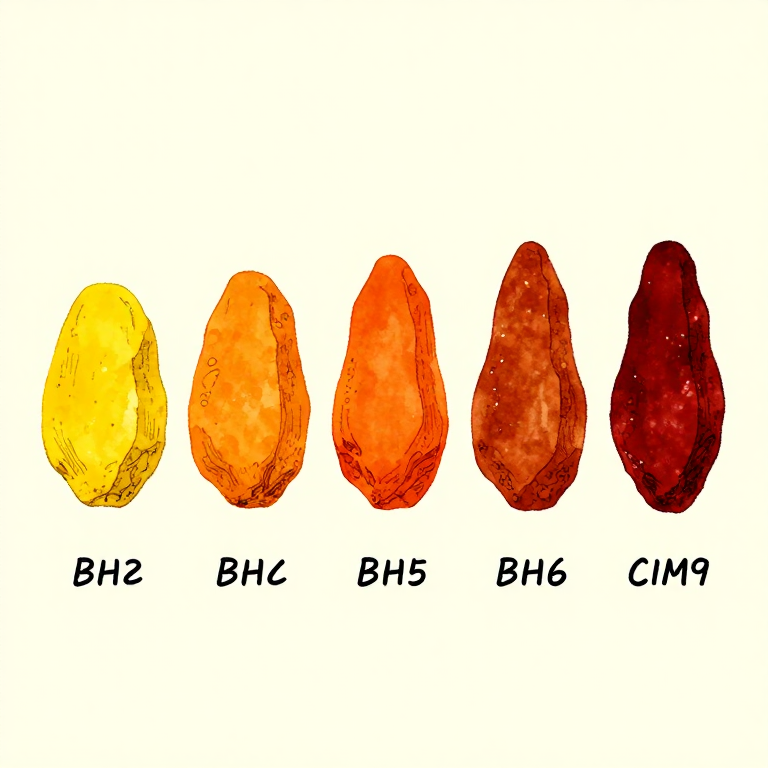
To convert yellow ochre to red, heat the raw lumps in a fire. At approximately 250-300 degrees C, goethite (yellow) loses its chemically bound water and transforms into hematite (red). Place ochre lumps at the edge of a campfire and gradually move them closer over 30-60 minutes. The colour shift is visible — watch for the yellow to deepen through orange to red. Do not overheat past 900 degrees C or the iron oxide converts to magnetite (black) and loses its red brilliance. This thermal conversion was practiced at Blombos Cave in South Africa at least 75,000 years ago.
Grind to Fine Powder
Grind to Fine Powder
Break the ochre into small chunks and place them on a flat sandstone grinding slab. Using a round handstone (mano), crush and grind the ochre in a circular motion with steady downward pressure. Continue grinding until the powder is fine and smooth with no gritty particles — coarse particles produce a streaky, uneven paint. The finer the grind, the more vivid and uniform the colour. Archaeological grinding stones show deep concave wear from repeated pigment processing. A single grinding session produces enough pigment for extensive painting.
Mix the Paint
Mix the Paint
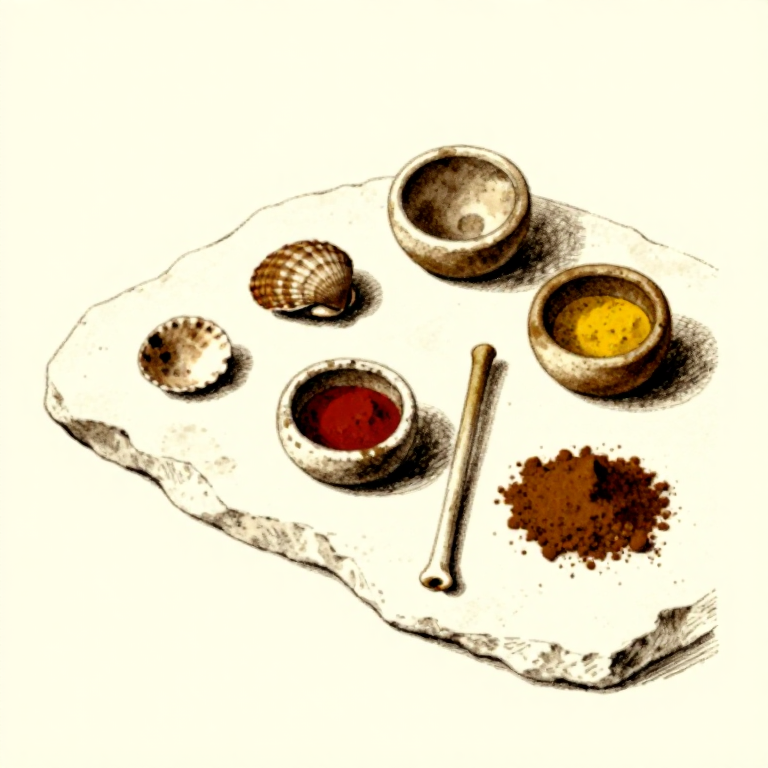
Transfer the ground pigment to a shell or hollow stone. Add water gradually, mixing with a stick or finger-sized bone tool until the pigment reaches the desired consistency — thin and fluid for spraying techniques, thick and paste-like for direct application. For greater adhesion and durability, mix in a binder: animal fat, bone marrow, egg white, blood, or plant sap. Cave paintings at Lascaux used a mixture of ochre pigment with animal fat and calcium-rich cave water. The binder helps the pigment adhere to rough stone surfaces and resist flaking once dry.
Application Techniques
Application Techniques
Apply pigment to stone surfaces using several methods documented in prehistoric cave art. Direct application uses a fingertip, a chewed twig brush, or a pad of moss or animal fur. Spraying involves placing pigment in the mouth and blowing it over a stencil (such as a hand placed against the wall) to create negative-space images. Crayons can be made by mixing ochre with melted animal fat and allowing it to harden into solid sticks. On clean, dry limestone surfaces, ochre pigment bonds durably — the cave paintings at Chauvet in France have survived over 36,000 years, demonstrating the extraordinary longevity of mineral pigments on stone.
Materials
4- small amount for mixing piecePlaceholder
- small amount piecePlaceholder
- several lumps, fist-sized piecePlaceholder
- 1-2 piecePlaceholder
Tools Required
4- Placeholder
- Placeholder
- Placeholder
- Placeholder
Connected Blueprint Materials
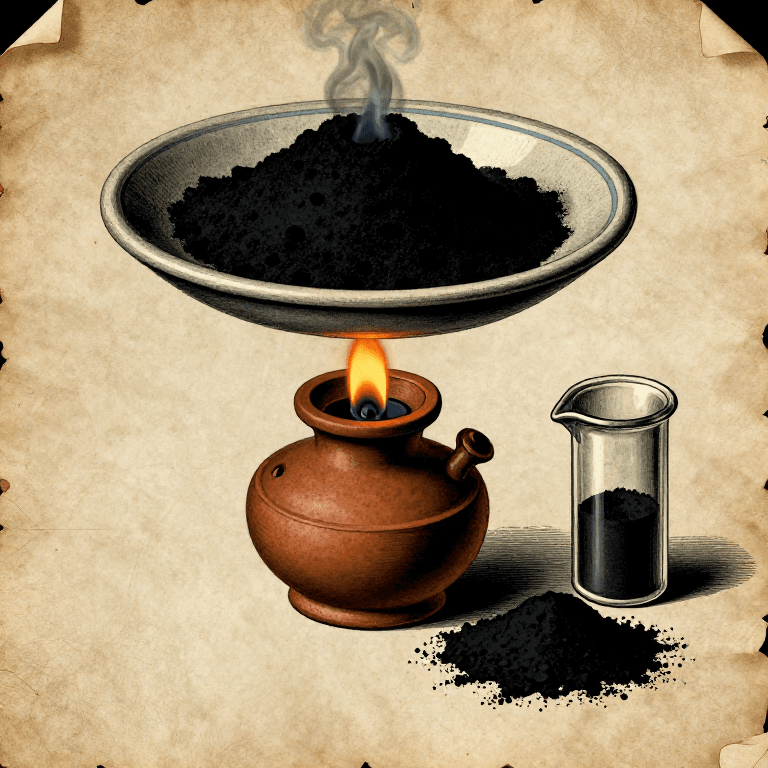
Making Lampblack Pigment — Collecting Carbon Soot from a Burning Flame
by Charlie
ART
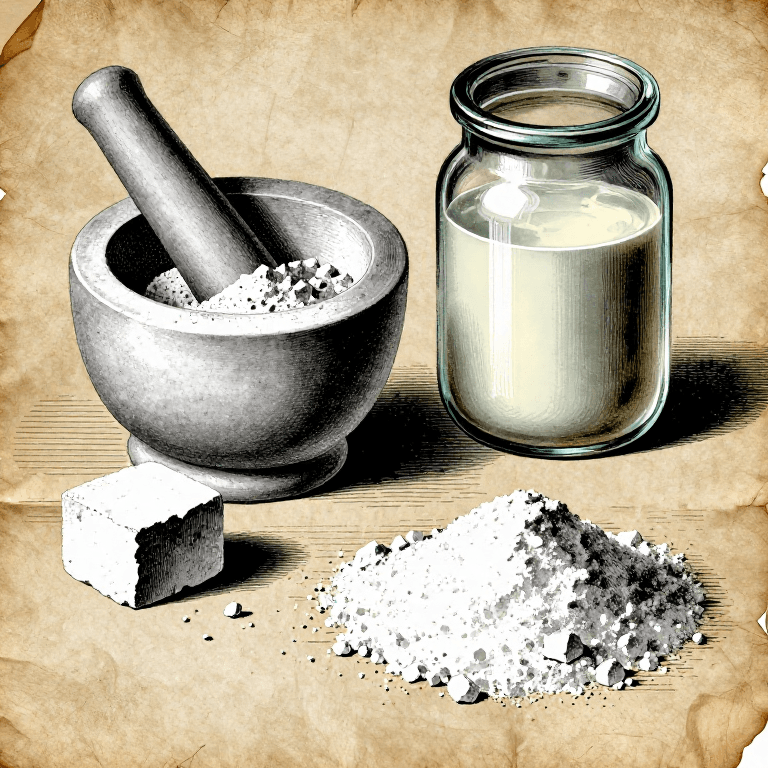
Making Chalk White Pigment (Whiting) — Grinding and Levigating Natural Chalk
by Charlie
ART
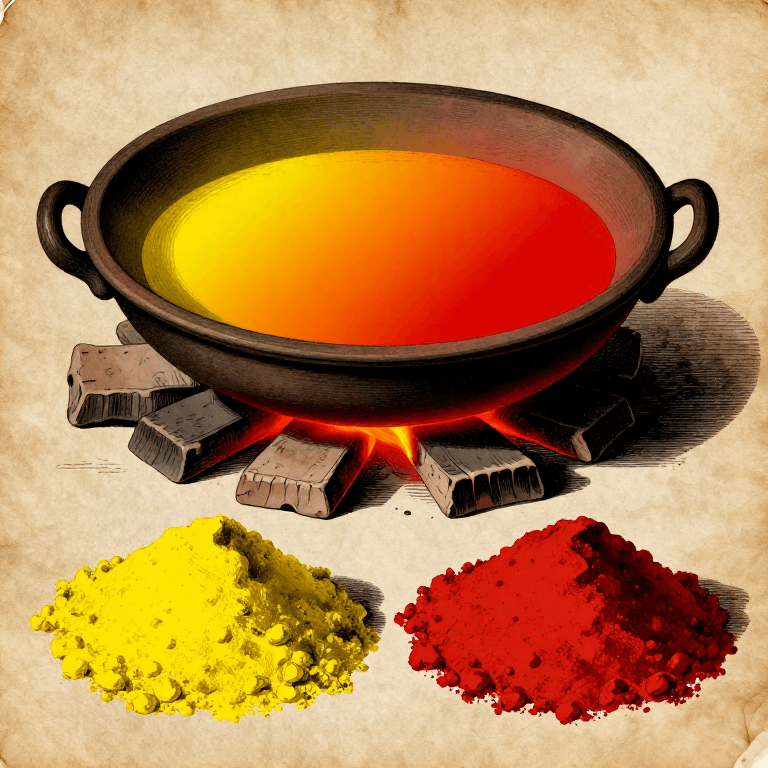
Making Red Ochre by Calcining Yellow Ochre — The Oldest Deliberate Pigment Transformation
by Charlie
ART
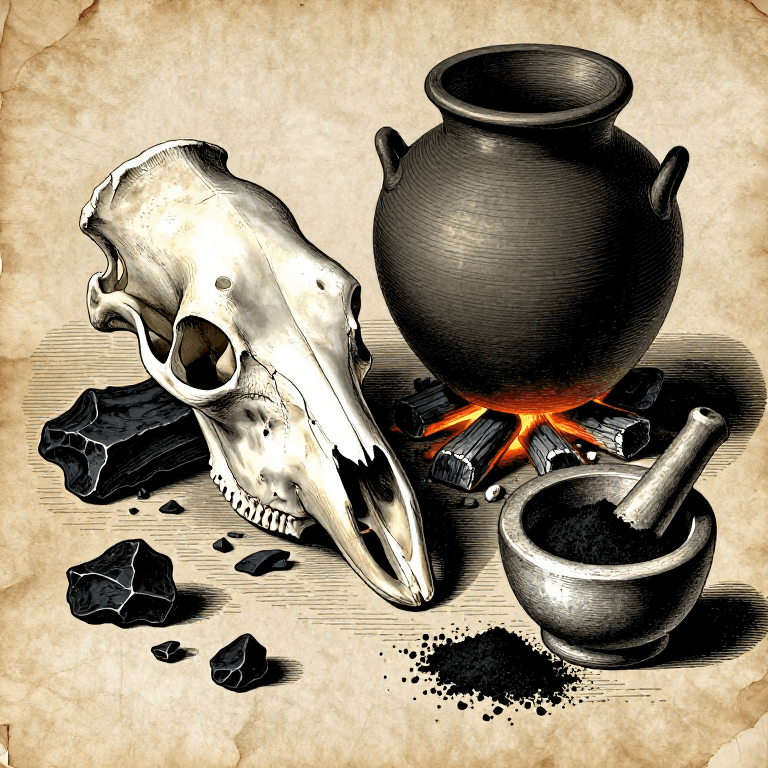
Making Bone Black Pigment — Calcining Animal Bones into the Warm Black of Old Master Painters
by Charlie
ART
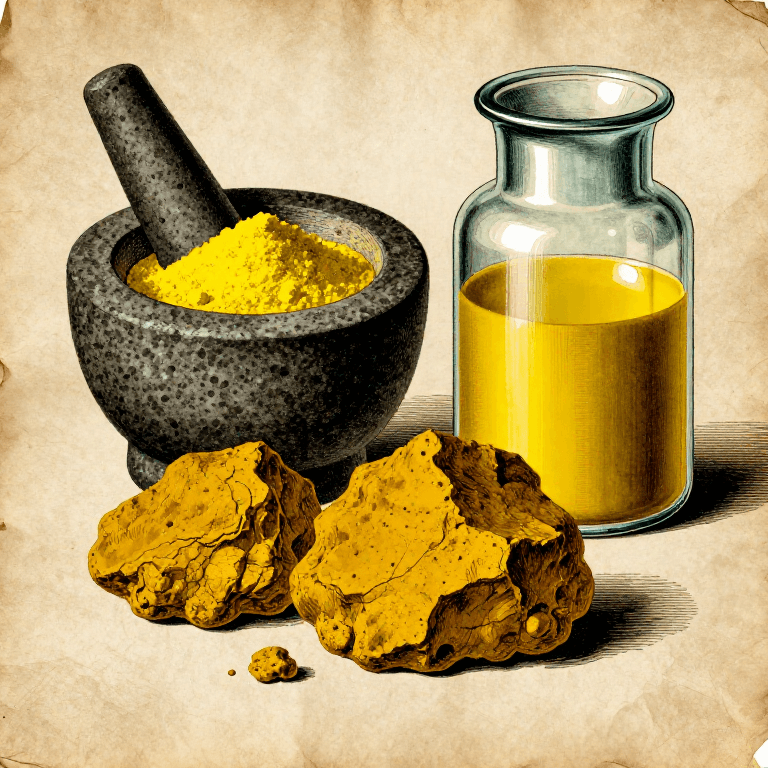
Making Yellow Ochre Pigment — Grinding and Levigating Goethite into the Oldest Painter's Yellow
by Charlie
ART
This blueprint makes
Related Blueprints
These blueprints share knowledge with this one — techniques, materials, or principles that connect them in the learning graph.
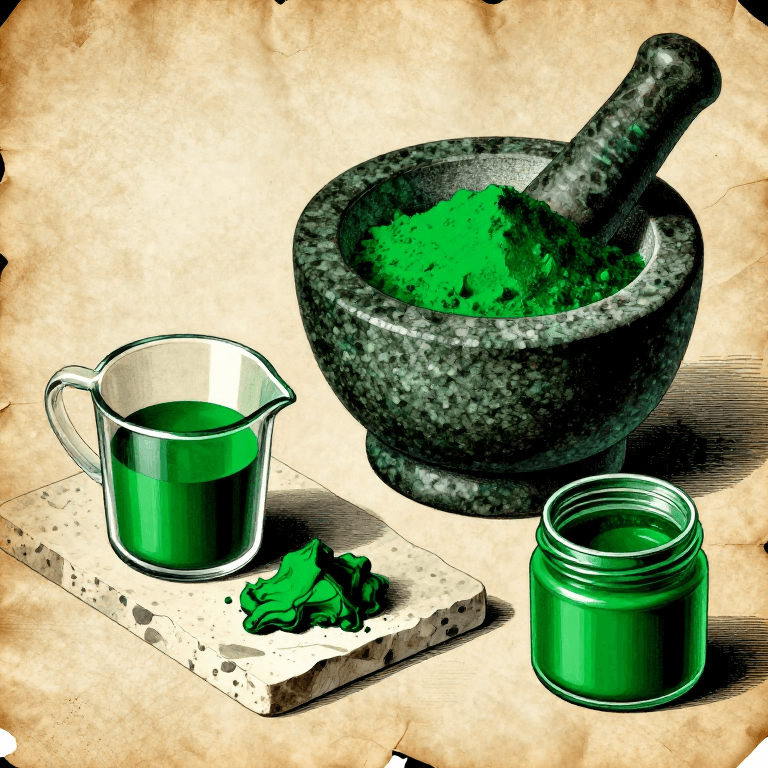
Making Malachite Green Pigment — Grinding the Copper Mineral into Painter's Green
by Charlie
ART
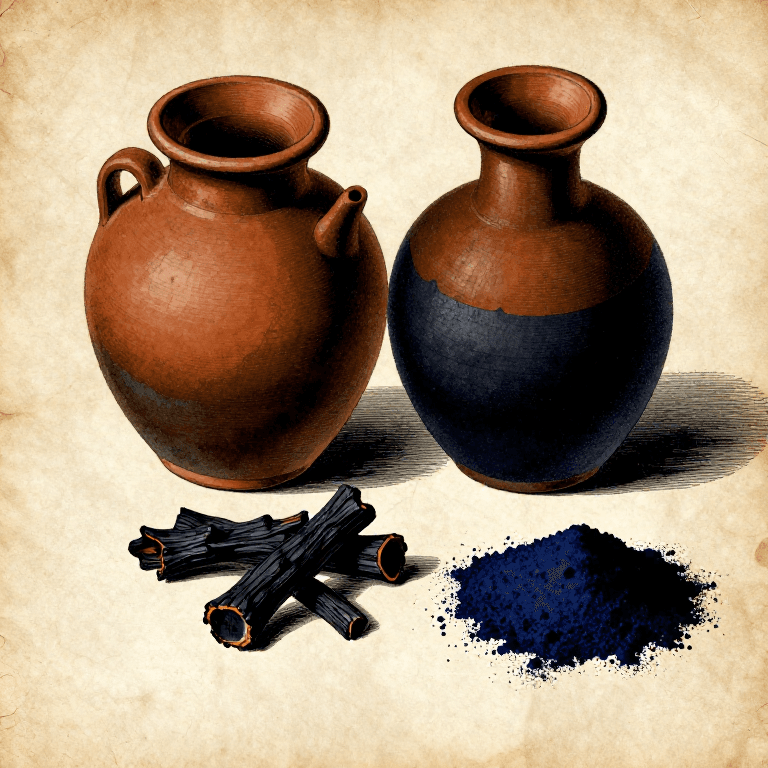
Making Vine Black Pigment — Charring Grape Vines into the Cool Blue-Black of Classical Painters
by Charlie
ART
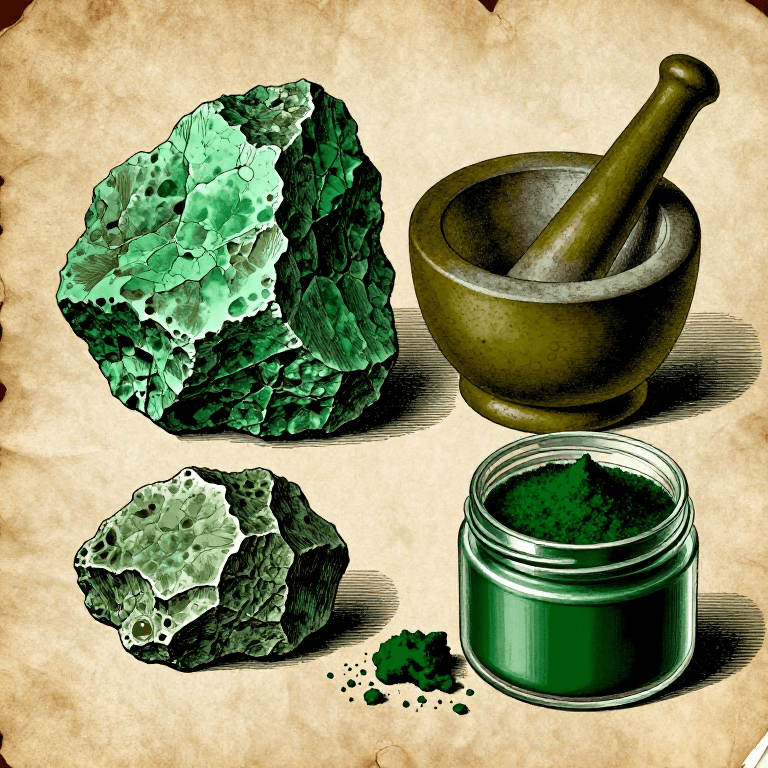
Making Green Earth Pigment (Terra Verte) — The Soft Green of Celadonite and Glauconite
by Charlie
ART
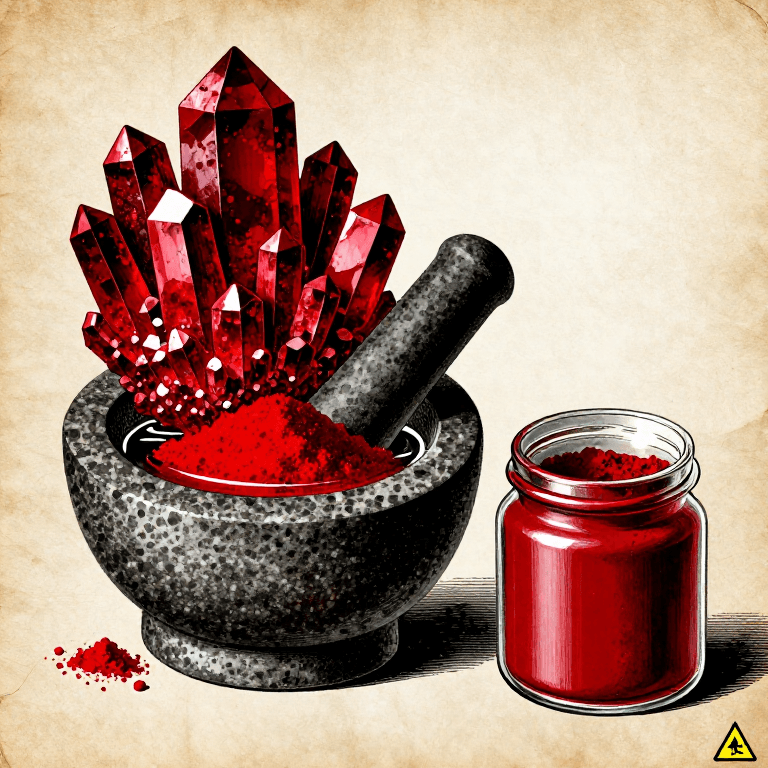
Making Cinnabar Red Pigment — Grinding Mercury Sulfide into the Most Vivid Red of the Ancient World
by Charlie
ART
CC0 Public Domain
This blueprint is released under CC0. You are free to copy, modify, distribute, and use this work for any purpose, without asking permission.
Support the Maker by purchasing products through their Blueprint where they earn a Maker Commission set by Vendors, or create a new iteration of this Blueprint and include it as a connection in your own Blueprint to share revenue.