ART
BEAUTY & WELLNESS
CRAFT
CULTURE & HISTORY
ENTERTAINMENT
ENVIRONMENT
FOOD & DRINKS
REVERSE ENGINEERING
SCIENCES
SPORTS
TECHNOLOGY
WEARABLES
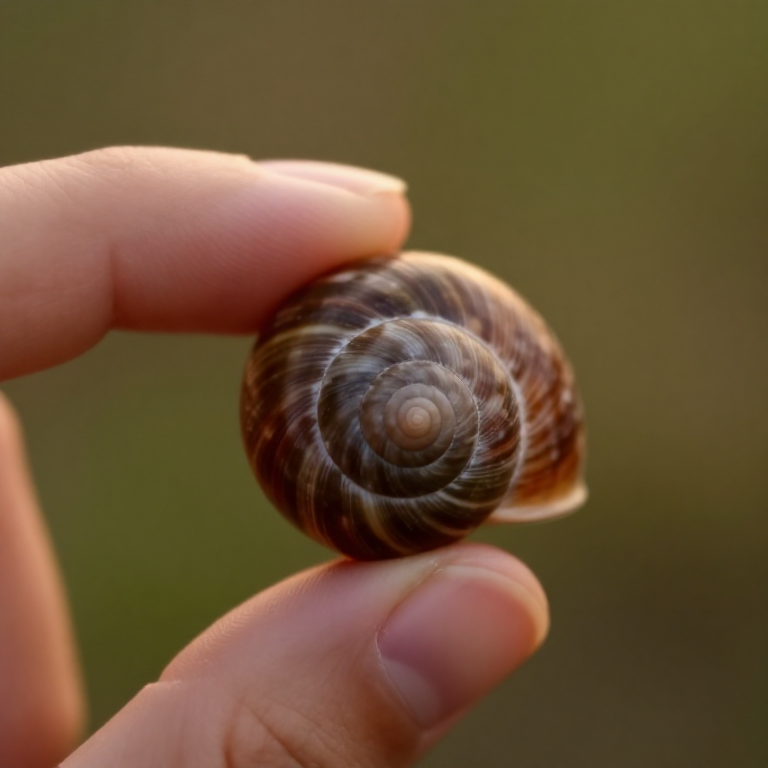


The Number e — Grow Money and Meet the Constant of Change
A hands-on maths project: 'grow' a pile of counters as interest is added more and more often, and watch the total settle on the mysterious number e = 2.71828, the constant behind all continuous growth. A Python cell reaches e two ways, and a compendium connects it to populations, cooling and calculus.
Beginner
30 minutes
Instructions
1
1
A very special number
A very special number
Alongside pi there is a second great constant, e = 2.71828..., first glimpsed by Jacob Bernoulli in 1683 studying compound interest. It is the number of continuous growth. You will grow it with counters.
2
2
Grow one coin
Grow one coin
Start with 1 counter -- one coin earning 100% interest in a year. Paid ONCE at the year's end it becomes 2 (double). Now pay it as 50% TWICE: after the first half-year you have 1.5, and 50% of that added gives 2.25 -- more! Lay out the counters and work it through.
Materials for this step:
 Glass Beads1 piece
 Paper1 sheet
Tools needed:
 Calculator
3
3
Pay more and more often
Pay more and more often
Pay the interest monthly (12 small additions) and you reach about 2.61; daily gives 2.714; every second, almost 2.71828. The total does NOT run away to infinity -- it settles onto e = 2.71828. That settling point is what 'continuous growth' means. Record each result and watch it close in.
4
4
Reach e two ways
Reach e two ways
Loading Jupyter Notebook...
Tools needed:
 Desktop ComputerCalculator
5
5
Compendium: the number behind change
Compendium: the number behind change
What your growing pile teaches. (1) Splitting growth into ever-smaller steps does not give ever-more money; it converges on e. (2) A far faster route to e is the endless sum 1 + 1/1! + 1/2! + 1/3! + ..., which nails it in a handful of terms. (3) e appears wherever things grow or fade smoothly: populations, radioactive decay, a cooling cup of coffee, charging batteries, continuously compounded money. (4) Its function e-to-the-x is the one curve that is its own rate of change, which makes it the natural language of calculus -- and in Euler's identity it binds e, pi, i, 1 and 0 in a single line often called the most beautiful in mathematics.
Tools Required
3- Placeholder
- Placeholder
- Placeholder
Related Blueprints
These blueprints share knowledge with this one — techniques, materials, or principles that connect them in the learning graph.

CC0 Public Domain
This blueprint is released under CC0. You are free to copy, modify, distribute, and use this work for any purpose, without asking permission.
Support the Maker by purchasing products through their Blueprint where they earn a Maker Commission set by Vendors, or create a new iteration of this Blueprint and include it as a connection in your own Blueprint to share revenue.