ART
BEAUTY & WELLNESS
CRAFT
CULTURE & HISTORY
ENTERTAINMENT
ENVIRONMENT
FOOD & DRINKS
REVERSE ENGINEERING
SCIENCES
SPORTS
TECHNOLOGY
WEARABLES



The Travelling Pin Cushion: Felt Between Veneers, Wax in the Lid
A pin cushion keeps pins and needles where they can be found and taken one at a time. For travelling, it has to be flat and hold everything else too.
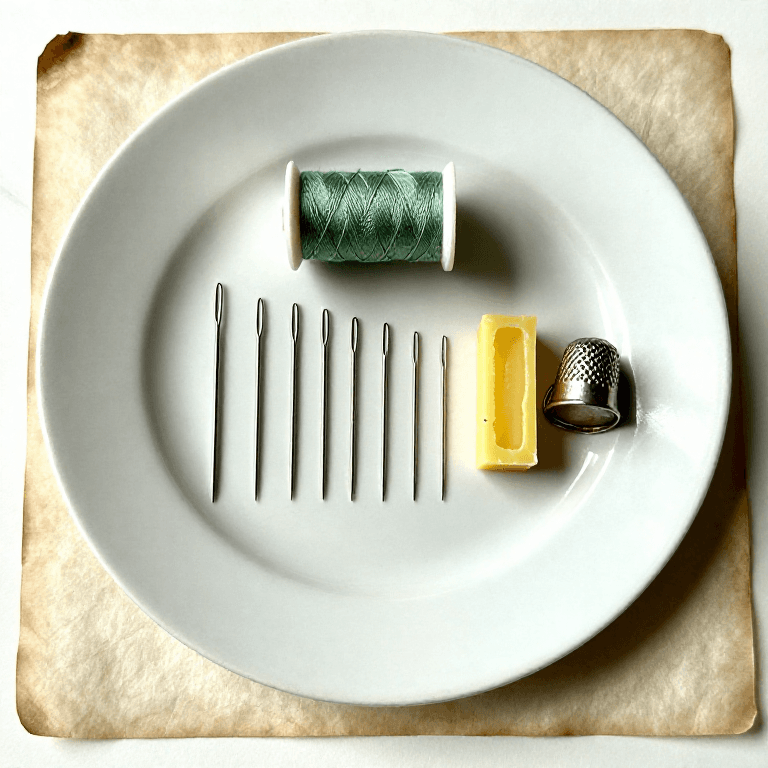
Scotto C. Nash of Harrisburg, Pennsylvania, received US 234,922, dated 30 November 1880 (filed 19 August 1880), for a thread and pin holder he called a "traveler's vade mecum": a box for buttons and a thimble, flat wings that hold thread and are pin-cushions, "a layer of felt" between two pieces of veneer, a double-ended cushion in one cover and a cup of beeswax in the other.
This rung estimates how felt holds a pin, then makes a flat felt cushion and measures the pull to draw a pin out.
Beginner
About 2 hours
Instructions
1
1
How felt holds a pin
How felt holds a pin
Loading Jupyter Notebook...
2
2
The wax in the lid
The wax in the lid
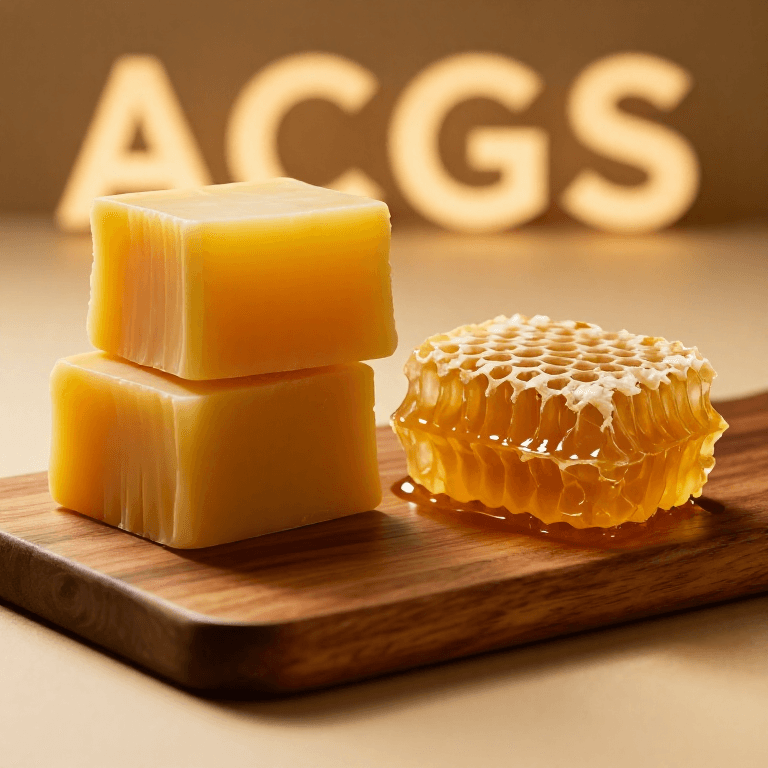
The embedded blueprint renders beeswax from comb; drawn over sewing thread it smooths and strengthens it, which is why Nash's case carries a cup of it.
3
3
Read US 234,922
Read US 234,922
"This device, which I term a 'traveler's vade mecum,' is made with a box for receiving buttons and similar articles, and with wings of peculiar construction at each side of the box for holding thread and forming pin-cushions, and the removable cover at one end has a receptacle for beeswax on the inside, so as to keep the wax from becoming soiled, or from soiling the fingers".
In the other cover is "a double-ended pincushion", "adapted to receive long pins or needles at the inner end, that are left projecting and pass into the thimble", and "ordinary pins can be inserted into the outer end of the cushion."
"There is a layer of felt" between "two pieces of veneer", "the parts being glued together". "The pins are easily stuck into this felt."
4
4
Make a flat cushion and test it
Make a flat cushion and test it
Cut two pieces of thin card or veneer and a piece of wool felt the same size, and glue the felt between them, leaving the felt edge exposed all round. Wind thread round it; the pins go into the felt edge.
Push a pin into the felt edge to 5, 10 and 20 mm. Tie thread to its head and pull it straight out with the force meter, reading the peak. Repeat each depth three times, and compare the trend with the notebook. Draw a length of thread through the beeswax and feel the difference when sewing.
Materials for this step:
 Wool Felt Sheet1 piece
 Beeswax1 piece
 Sewing Thread1 piece
 Cardboard Template Sheets1 piece
Tools needed:
 Pin Cushion
 Force Meter (Spring Scale)
 Steel Ruler
 Fabric Scissors
 Dressmaker's Pins
5
5
A cushion that drops pins or blunts them
A cushion that drops pins or blunts them
Pin cushion troubleshooting.
Flow
Loading...
6
6
History and honest limits
History and honest limits
**Scotto C. Nash** of Harrisburg, Pennsylvania, filed US 234,922 on 19 August 1880; it is dated 30 November 1880. His claims include the flat cushion of two veneers with felt between them and wood strips at the edges.
**Honest limits.** The notebook treats the felt's squeeze as an even pressure; real felt varies with density and wear. Pressure, friction and sizes are examples. Your force-meter readings are the measurement.
Materials
4- 1 piecePlaceholder
- 1 piecePlaceholder
- 1 piecePlaceholder
- 1 piecePlaceholder
Tools Required
5- Placeholder
- Placeholder
- Placeholder
- Placeholder
- Placeholder
This blueprint makes

Related Blueprints
These blueprints share knowledge with this one — techniques, materials, or principles that connect them in the learning graph.



CC0 Public Domain
This blueprint is released under CC0. You are free to copy, modify, distribute, and use this work for any purpose, without asking permission.
Support the Maker by purchasing products through their Blueprint where they earn a Maker Commission set by Vendors, or create a new iteration of this Blueprint and include it as a connection in your own Blueprint to share revenue.