ART
BEAUTY & WELLNESS
CRAFT
CULTURE & HISTORY
ENTERTAINMENT
ENVIRONMENT
FOOD & DRINKS
REVERSE ENGINEERING
SCIENCES
SPORTS
TECHNOLOGY
WEARABLES



The Two-Chamber Flower Pot: A Reservoir Below a Perforated Floor
A pot plant dies of drought when it is forgotten and of drowning when it is overwatered. A pot with a reservoir underneath tries to handle both.
William H. Pugh of Chicago received US 132,178, dated 15 October 1872, for a flower-pot of "two chambers, one above the other, separated by a perforated plate", with a glazed water chamber below that feeds the roots, a tube carrying moisture up among the leaves, and orifices so that in heavy rain the soil drains into the lower chamber, "thus preventing the plant drowning out."
This rung checks Pugh's stated mechanism, water rising as vapour, against what a plant uses, and then compares a vapour-only reservoir pot with a wicked one.
Beginner
About 1 hour, then two weeks
Instructions
1
1
Vapour against the plant's thirst
Vapour against the plant's thirst
Loading Jupyter Notebook...
2
2
Why the lower chamber is glazed
Why the lower chamber is glazed
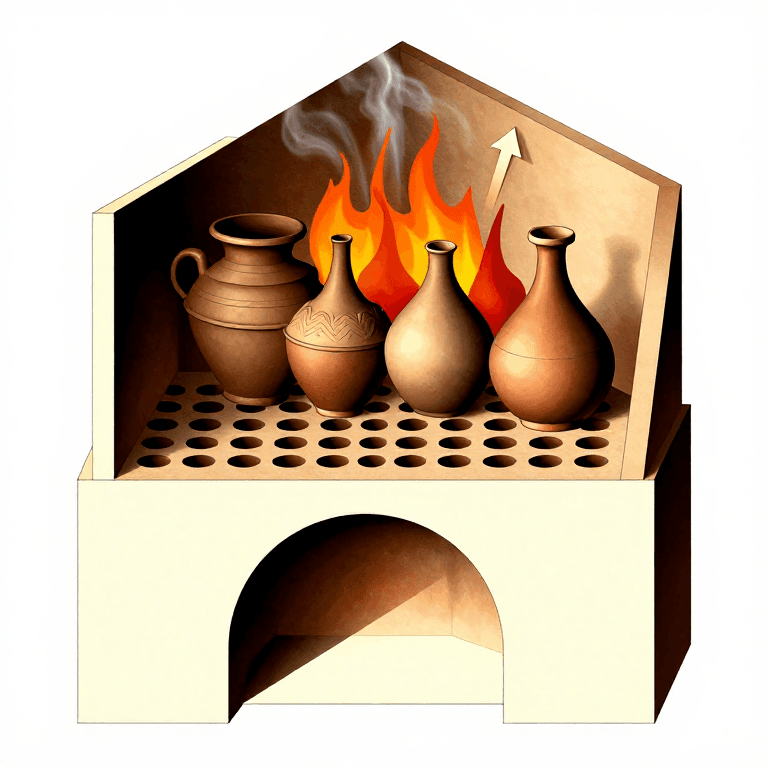
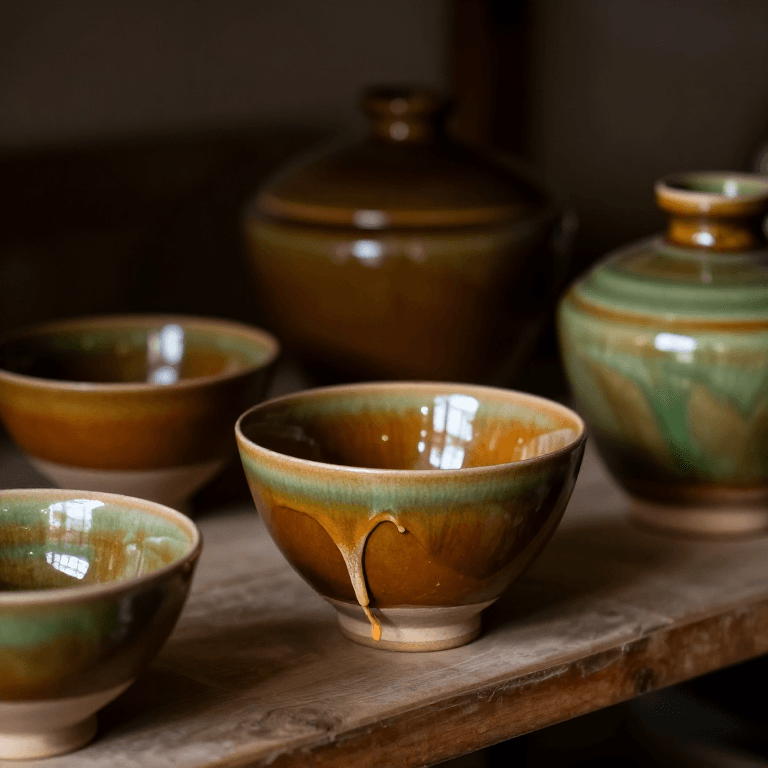
The embedded blueprint glazes pottery so it holds water; Pugh's lower chamber must be glazed so the reservoir does not seep away through the clay.
3
3
Read US 132,178
Read US 132,178
"This invention consists of a vessel or other arrangement having two chambers, one above the other, separated by a perforated plate, through which passes a tube or tubes perforated below the plate."
"The plant being placed in the earth in the chamber A and the water or other fluid being placed in the chamber B, the sides of both chambers A and B and the bottom of B being glazed and impervious to water or other fluid, the water or fluid evaporating passes up through the perforated plate C by evaporation, and supplies the roots of the plant in the chamber A with water or fertilized fluid".
"The orifices F and G are kept tightly corked up in dry weather and left open in very rainy weather, so that when too much rain falls into the chamber A it drains through the perforated plate C into the chamber B, and out of chamber B at the opening G, thus preventing the plant drowning out."
4
4
Vapour pot against wick pot
Vapour pot against wick pot
Make two reservoir pots from pairs of nested flower pots: the inner one with holes in its floor held a couple of centimetres above water in the outer one. In the first, leave the gap. In the second, thread a cotton cord from the water up through a hole into the soil as a wick.
Fill both with the same moist potting soil and the same seedlings. Weigh each pot on the kitchen scale every day at the same time and note the water lost from the reservoir and how the seedlings look. After two weeks compare the two with the notebook.
Materials for this step:
 Potting Soil4 L
 Lettuce Seeds1 piece
 Cord1 piece
 Water1 piece
Tools needed:
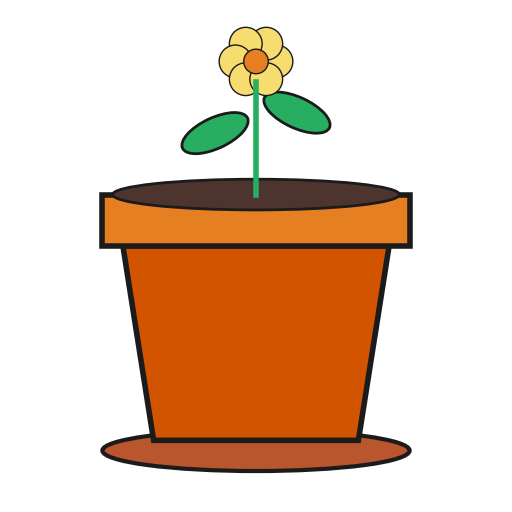 Flower Pot
 Digital Kitchen Scale
 Cordless Drill
5
5
A reservoir pot that dries, drowns or smells
A reservoir pot that dries, drowns or smells
Reservoir pot troubleshooting.
Flow
Loading...
6
6
History and honest limits
History and honest limits
**William H. Pugh** of Chicago received US 132,178, dated 15 October 1872. He notes the idea can be applied to "large boxes, hot-beds, and gardens".
**Honest limits.** In the notebook, vapour brings only a few percent of a plant's daily water while the soil air is moist; the flow grows only as the soil dries out, when the plant is already short. Liquid water carried up by a wick, or by soil touching the reservoir, is not modelled; the experiment compares it. Gap, area, humidity and plant use are examples. Your daily weights are the measurement.
Materials
4- 4 LPlaceholder
- 1 piecePlaceholder
- 1 piecePlaceholder
- 1 piecePlaceholder
Tools Required
3- Placeholder
- Placeholder
- Cordless Drill3% commissionMagento Legacy Storeships internationallyPlaceholder
Related Blueprints
These blueprints share knowledge with this one — techniques, materials, or principles that connect them in the learning graph.


CC0 Public Domain
This blueprint is released under CC0. You are free to copy, modify, distribute, and use this work for any purpose, without asking permission.
Support the Maker by purchasing products through their Blueprint where they earn a Maker Commission set by Vendors, or create a new iteration of this Blueprint and include it as a connection in your own Blueprint to share revenue.