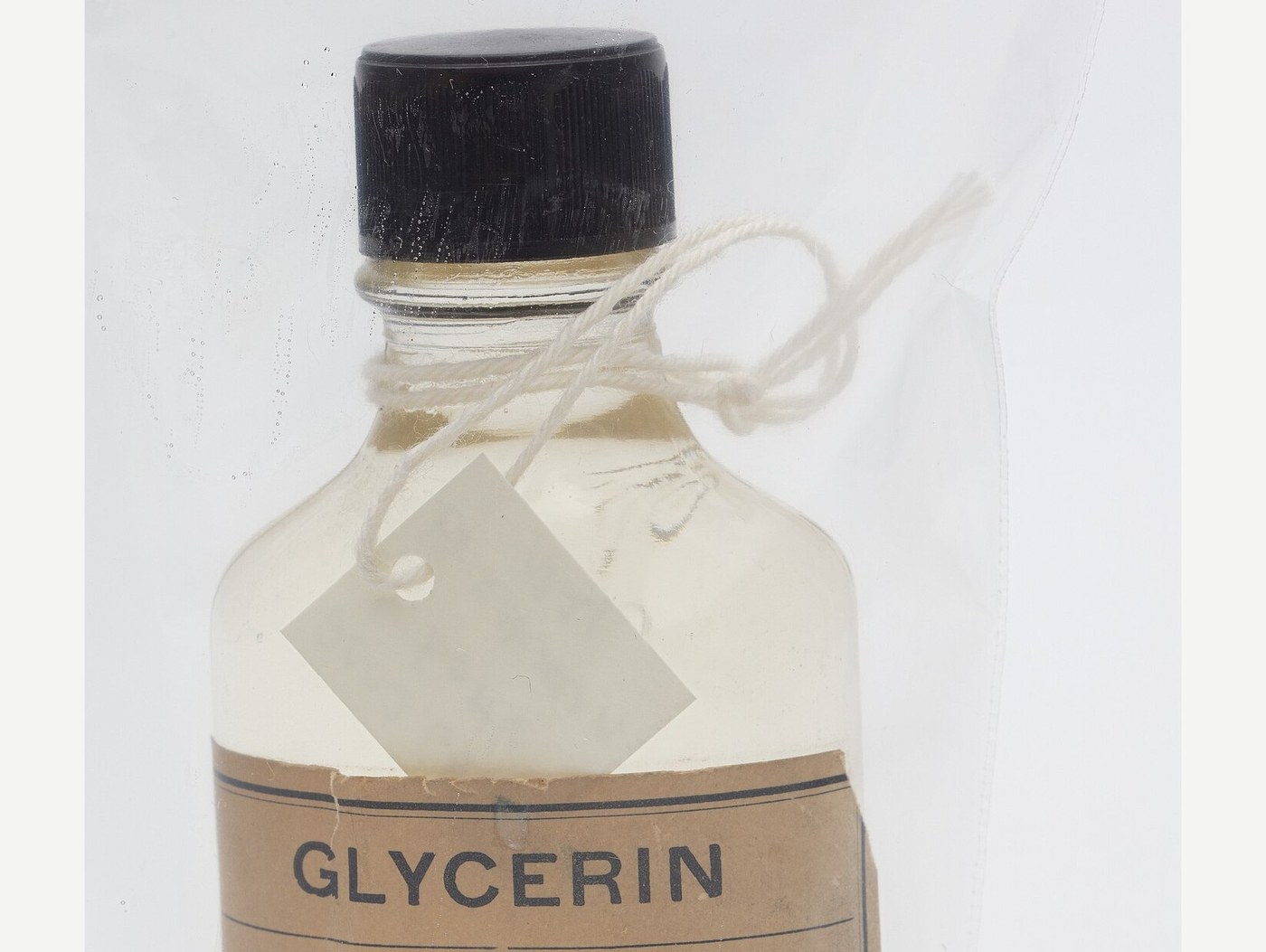


Glycerin from Candle-Works Sweet Water: Cap's Process
Instrucciones
Boil down the sweet water
Boil down the sweet water
Materiales para este paso:
 Aguas glicerinosas1 as required
 Carbón bituminoso1 as required
Herramientas necesarias:
 Paila de evaporación
 Horno de ladrillo
Find how much lime it holds
Find how much lime it holds
Herramientas necesarias:
 Oxalato de amonio
 Papel de filtro
 Crisol de arcilla refractaria
 Balanza de platillos
Throw the lime down with sulfuric acid
Throw the lime down with sulfuric acid
Materiales para este paso:
 Ácido sulfúrico1 as required
Herramientas necesarias:
 Cuba
 Gafas de protección química
 Guantes de goma
Boil it out of contact with air, to 14° Twaddell
Boil it out of contact with air, to 14° Twaddell
Materiales para este paso:
Carbón bituminoso1 as requiredHerramientas necesarias:
Cuba Pala de maderaHorno de ladrillo
 Hidrómetro
Neutralise any excess acid with chalk
Neutralise any excess acid with chalk
Materiales para este paso:
 Carbonato de calcio - caliza triturada1 as required
Herramientas necesarias:
 Papel de tornasolPala de madera
Boil on to 37.5° and filter
Boil on to 37.5° and filter
Materiales para este paso:
Carbón bituminoso1 as requiredHerramientas necesarias:
CubaPala de maderaHorno de ladrilloHidrómetro Colador
Reduce to 49°, filtering again if needed
Reduce to 49°, filtering again if needed
Materiales para este paso:
Carbón bituminoso1 as requiredHerramientas necesarias:
Paila de evaporaciónHorno de ladrilloHidrómetroColadorClear it through bone black
Clear it through bone black
Herramientas necesarias:
 Negro de huesoColador
Concentrate to 51° Twaddell
Concentrate to 51° Twaddell
Materiales para este paso:
Carbón bituminoso1 as requiredHerramientas necesarias:
Paila de evaporaciónHorno de ladrilloHidrómetroCap's readings as specific gravity
Cap's readings as specific gravity
Troubleshooting
Troubleshooting
Flow
History and honest limits
History and honest limits
Materiales
4- 1 as requiredMarcador de posición
- 1 as requiredMarcador de posición
- 1 as requiredMarcador de posición
- 1 as requiredMarcador de posición
Herramientas requeridas
14- Marcador de posición
- Marcador de posición
- Marcador de posición
- Marcador de posición
- Marcador de posición
- Marcador de posición
- Marcador de posición
- Marcador de posición
- Marcador de posición
- Marcador de posición
- Marcador de posición
- Marcador de posición
- Marcador de posición
- Marcador de posición
Este plano hace
Blueprints relacionados
Estos blueprints comparten conocimiento — técnicas, materiales o principios
CC0 Dominio público
Este Blueprint se publica bajo CC0. Eres libre de copiar, modificar, distribuir y usar este trabajo para cualquier propósito, sin pedir permiso.
Apoya al Maker comprando productos a través de su Blueprint, donde gana una Comisión del Maker establecida por los vendedores, o crea una nueva iteración de este Blueprint e inclúyela como conexión en tu propio Blueprint para compartir ingresos.