Colaboración
ARTE
BELLEZA Y BIENESTAR
ARTESANÍA
CULTURA E HISTORIA
ENTRETENIMIENTO
MEDIO AMBIENTE
COMIDA Y BEBIDAS
INGENIERÍA INVERSA
CIENCIAS
DEPORTES
TECNOLOGÍA
TECNOLOGÍA VESTIBLE
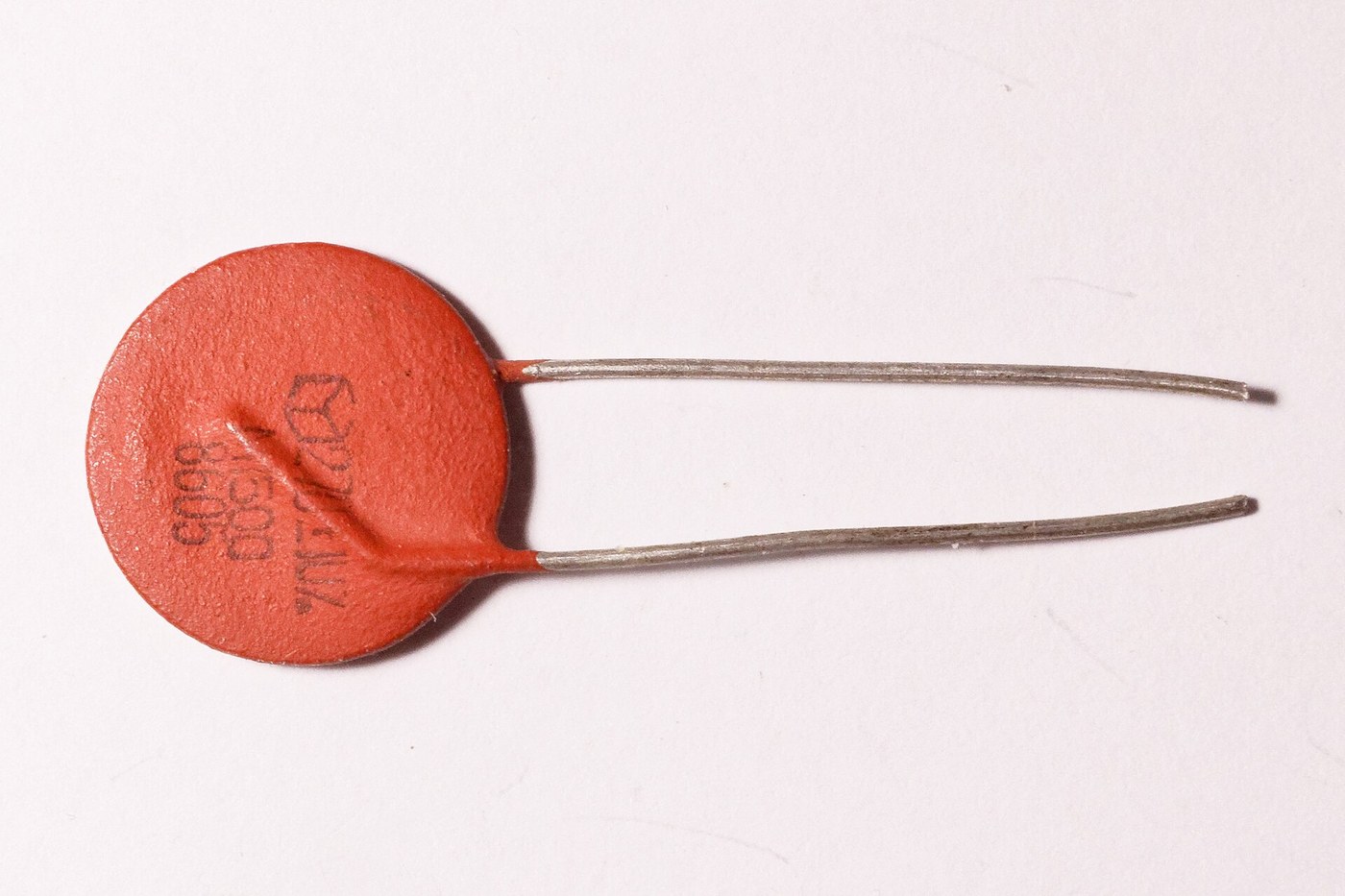


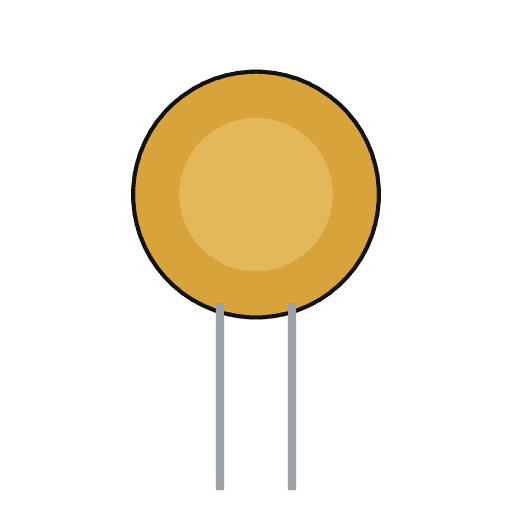
Ceramic Disc Capacitors: Barium Titanate with Nickel Stannate, Pressed, Fired and Silvered (Coffeen, US 2,789,061)
Barium titanate with 3 mole % nickel stannate is calcined, pressed into small discs and fired hard. Silver is fired onto both faces and a lead soldered to each, giving ceramic disc capacitors of high capacity for their size.
Result: discs 3/8 inch across and about 1/10 inch thick with a dielectric constant averaging 2380 and a dissipation factor of 0.58 %. Between 25 and 85 °C the dielectric constant rose at most 17 % and fell at most 7 %.
Source: W. W. Coffeen (Metal & Thermit Corp.), US 2,789,061 (1957). Unknown: how the barium titanate, the nickel stannate and the tinned lead wire are made; the patent uses them ready-made. Picture: Wikimedia Commons.
Avanzado
10 days
Instrucciones
1
1
Weigh and slurry
Weigh and slurry
Weigh 19.32 g of barium titanate and 0.68 g of hydrated nickel stannate (about NiSnO3·2H2O), which is 97 mole % BaTiO3 and 3 mole % NiSnO3. Slurry them with 50 cc of distilled water. The patent prefers 2 to 4 mole % nickel stannate; 1 to 15 % works.
Materiales para este paso:
 Titanato de bario19.32 g
 Estannato de níquel0.68 g
Herramientas necesarias:
 Agua destilada
 Báscula digital de precisión
 Cápsula de evaporación
2
2
Dry, sieve and calcine
Dry, sieve and calcine
Dry the slurry, crush it to pass a 50 mesh screen, moisten it with 5 % of a 2 1/2 % starch solution and press it into one slug. Calcine the slug for one hour at 1600 °F (871 °C). Ours: potato starch, a drying oven, mortar and pestle.
Herramientas necesarias:
 Fécula de patata
 Horno de secado
 Mortero y mano de mortero
 Criba
 Prensa hidráulica
 Horno de alta temperatura
3
3
Press the discs
Press the discs
Grind the calcine to pass a 325 mesh screen, moisten it again with starch solution, and press small discs 3/8 inch in diameter and about 1/10 inch thick at 20,000 pounds per square inch.
Herramientas necesarias:
Mortero y mano de mortero Tamiz de malla finaFécula de patataPrensa hidráulica
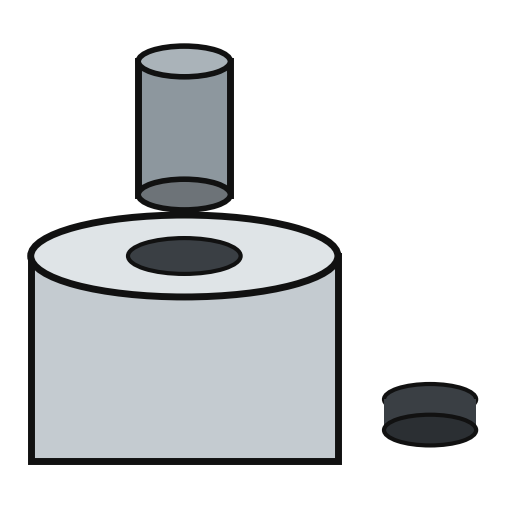 Matriz de prensado de discos
4
4
Fire on platinum
Fire on platinum
Fire the discs on platinum foil at 2400 °F (1316 °C) for one hour. They come out with zero absorption.
Herramientas necesarias:
Horno de alta temperatura Platino
5
5
Silver and lead
Silver and lead
Paint silver paint on both faces and fire the discs at 1350 °F (732 °C) for one hour. Solder tinned copper lead wires directly to the silver electrodes. Age at least a week before measuring. Ours: a fine brush and a soldering iron.
Materiales para este paso:
 Pintura de plata para cocción1 both faces
 Hilo de cobre estañado2 leads per disc
 Alambre de soldadura1 a little
Herramientas necesarias:
 Pinceles de punta finaHorno de alta temperatura
 Soldador de estaño
Materiales
5- 19.32 gMarcador de posición
- 0.68 gMarcador de posición
- 1 both facesMarcador de posición
- 2 leads per discMarcador de posición
- 1 a littleMarcador de posición
Herramientas requeridas
14- Marcador de posición
- Marcador de posición
- Marcador de posición
- Marcador de posición
- Marcador de posición
- Marcador de posición
- Marcador de posición
- Marcador de posición
- Marcador de posición
- Marcador de posición
- Marcador de posición
- Marcador de posición
- Marcador de posición
- 2 vendors sell this, none ship to you yetMarcador de posición
Este plano hace
CC0 Dominio público
Este Blueprint se publica bajo CC0. Eres libre de copiar, modificar, distribuir y usar este trabajo para cualquier propósito, sin pedir permiso.
Apoya al Maker comprando productos a través de su Blueprint, donde gana una Comisión del Maker establecida por los vendedores, o crea una nueva iteración de este Blueprint e inclúyela como conexión en tu propio Blueprint para compartir ingresos.