Colaboración
ARTE
BELLEZA Y BIENESTAR
ARTESANÍA
CULTURA E HISTORIA
ENTRETENIMIENTO
MEDIO AMBIENTE
COMIDA Y BEBIDAS
INGENIERÍA INVERSA
CIENCIAS
DEPORTES
TECNOLOGÍA
TECNOLOGÍA VESTIBLE
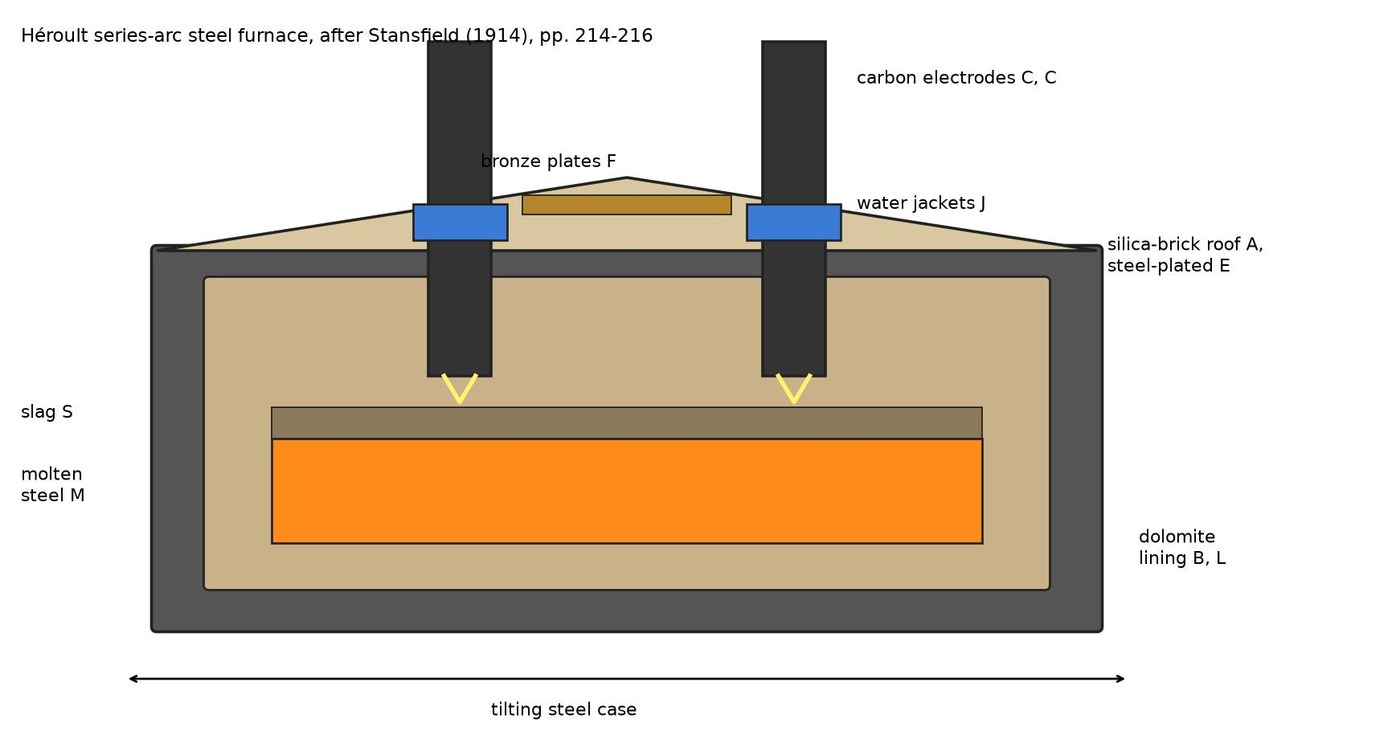

Electric Arc Furnace: the Héroult Series-Arc Steel Furnace (Stansfield, 1914)
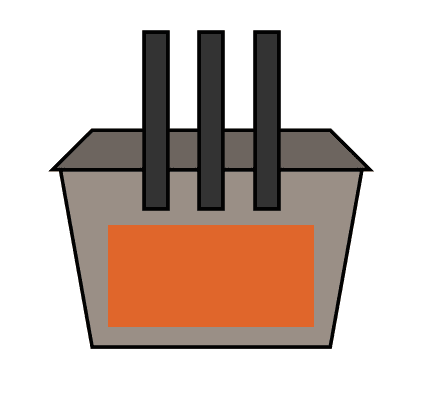
Héroult's steel furnace: a tilting hearth like an open-hearth furnace, lined with dolomite, with two carbon electrodes coming down through the roof. The current goes down one electrode, arcs into the slag, passes through the molten steel and arcs back up the other, so the heat goes straight into the metal.
Result: an electric steel furnace about 7 x 4 ft inside for a 3 ton charge, run at about 350 kW and 110 V.
Source: A. Stansfield, The Electric Furnace, 2nd ed. (1914), pp. 115-116, 214-216. Unknown: case and tilting gear details, electrode size. Picture: a drawn diagram (Fig. 93 is blank in the scan).
Experto
Unknown
Instrucciones
1
1
Build the case and lining
Build the case and lining
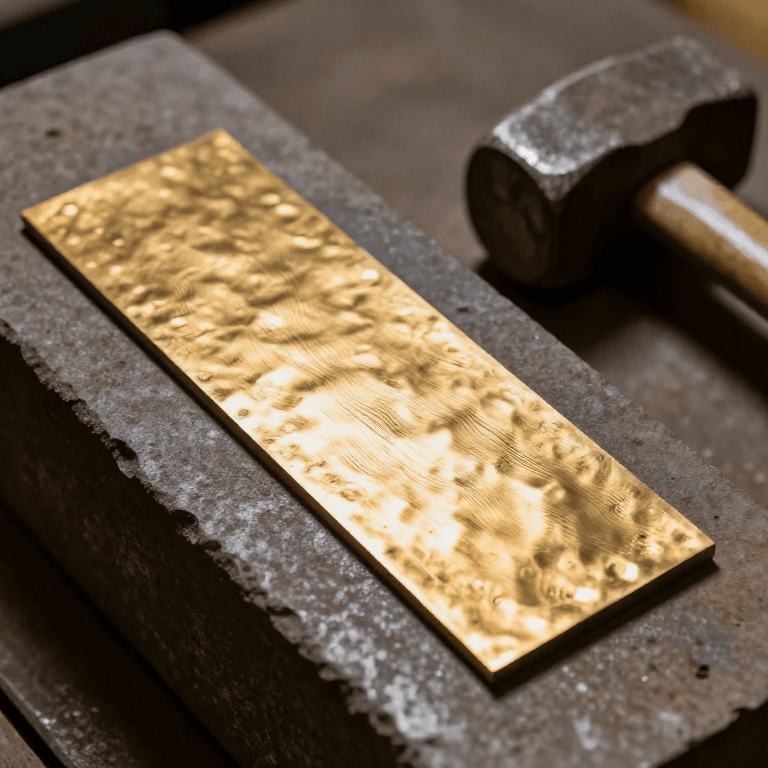
Build the furnace in a steel case on a tilting mounting, about 7 x 4 ft inside, with charging doors at the ends. Line it with dolomite bricks and crushed dolomite; dolomite or magnesite on the hearth, which allows strongly basic slags. Ours: mild steel plate. Not given: the case and tilting gear, the bricks' making.
Materiales para este paso:
 Placa de acero dulce1 case
 Dolomita (caliza magnesiana)1 lining and crushed dolomite
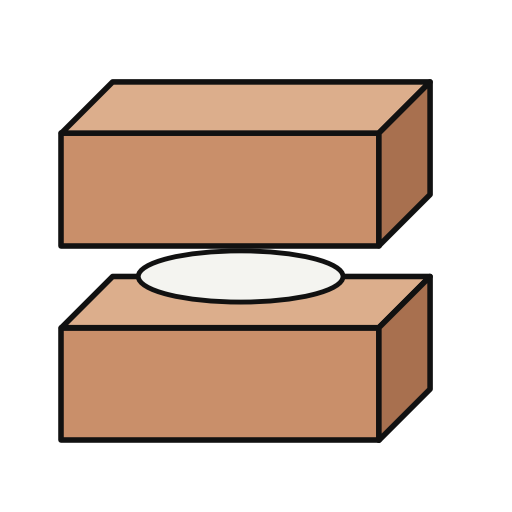 Bloques de magnesita1 hearth, if magnesite
Herramientas necesarias:
 Soldadora de arco
 Paleta de albañil
 Dimensiones desconocidas
2
2
Make the removable roof
Make the removable roof
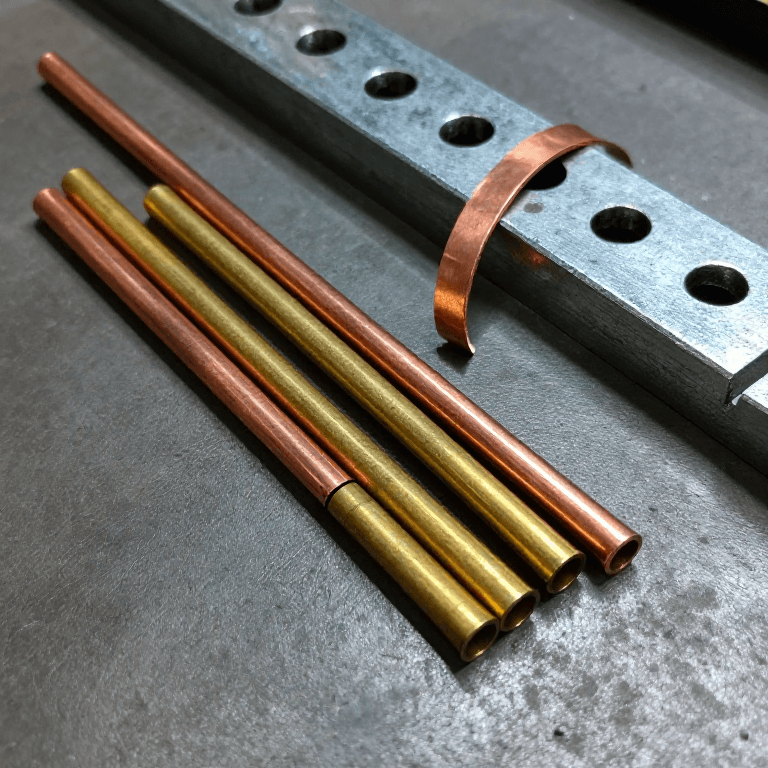
Make the roof of silica brick, covered with steel plates and given eyes so it can be lifted off. Between the two electrode holes use bronze plates instead of steel, because steel there would raise the inductance of the AC circuit. Fit water jackets round each electrode hole for a close fit, so less heat escapes and the electrodes do not burn in the air. Ours: copper tube for the water jackets. Silica brick has no head here.
Materiales para este paso:
 Material desconocido1 silica brickPlaca de acero dulce1 roof plates
 Chapa de bronce1 plates between electrodes
 Tubo de cobre1 water jackets
Herramientas necesarias:
Soldadora de arco Taladro de columna
 Agua
3
3
Hang the electrodes
Hang the electrodes
Use two vertical carbon electrodes, square in section. Carry each in a holder on an arm supported by the furnace itself, so its height does not change when the furnace tilts: four contact pieces round the electrode, drawn tight by a steel strap and a screw in the arm, with the cable bolted to them. Raise and lower each electrode separately, by a regulator controlled by the voltage between it and the metal. Not given: electrode size, the regulator's build.
Materiales para este paso:
 Electrodo de carbón2 electrodes
 Metal desconocido1 holders, arms, contact pieces
Herramientas necesarias:
Taladro de columna4
4
Melt and refine a charge
Melt and refine a charge
Charge steel scrap with some iron ore and lime. Keep each electrode a little above the slag, leaving room for its arc. Regulate the current by hand while the scrap melts, then switch to automatic; full power only after about an hour. Pour off the slag and make a second, then a third, with lime and a little sand and fluorspar, before the final additions. At La Praz this took about 350 kW at 110 V: 5 hours for 1.25 tons of low-carbon steel, 8 hours for 2.33 tons of high-carbon steel. Not given: the electric supply.
Herramientas necesarias:
AguaMateriales
8- 1 roof platesMarcador de posición
- 1 lining and crushed dolomiteMarcador de posición
- 1 hearth, if magnesiteMarcador de posición
- 1 silica brickMarcador de posición
- 1 plates between electrodesMarcador de posición
- 1 water jacketsMarcador de posición
- 2 electrodesMarcador de posición
- 1 holders, arms, contact piecesMarcador de posición
Materiales de Blueprints conectados

Este plano hace
CC0 Dominio público
Este Blueprint se publica bajo CC0. Eres libre de copiar, modificar, distribuir y usar este trabajo para cualquier propósito, sin pedir permiso.
Apoya al Maker comprando productos a través de su Blueprint, donde gana una Comisión del Maker establecida por los vendedores, o crea una nueva iteración de este Blueprint e inclúyela como conexión en tu propio Blueprint para compartir ingresos.