ARTE
BELLEZA Y BIENESTAR
ARTESANÍA
CULTURA E HISTORIA
ENTRETENIMIENTO
MEDIO AMBIENTE
COMIDA Y BEBIDAS
INGENIERÍA INVERSA
CIENCIAS
DEPORTES
TECNOLOGÍA
TECNOLOGÍA VESTIBLE
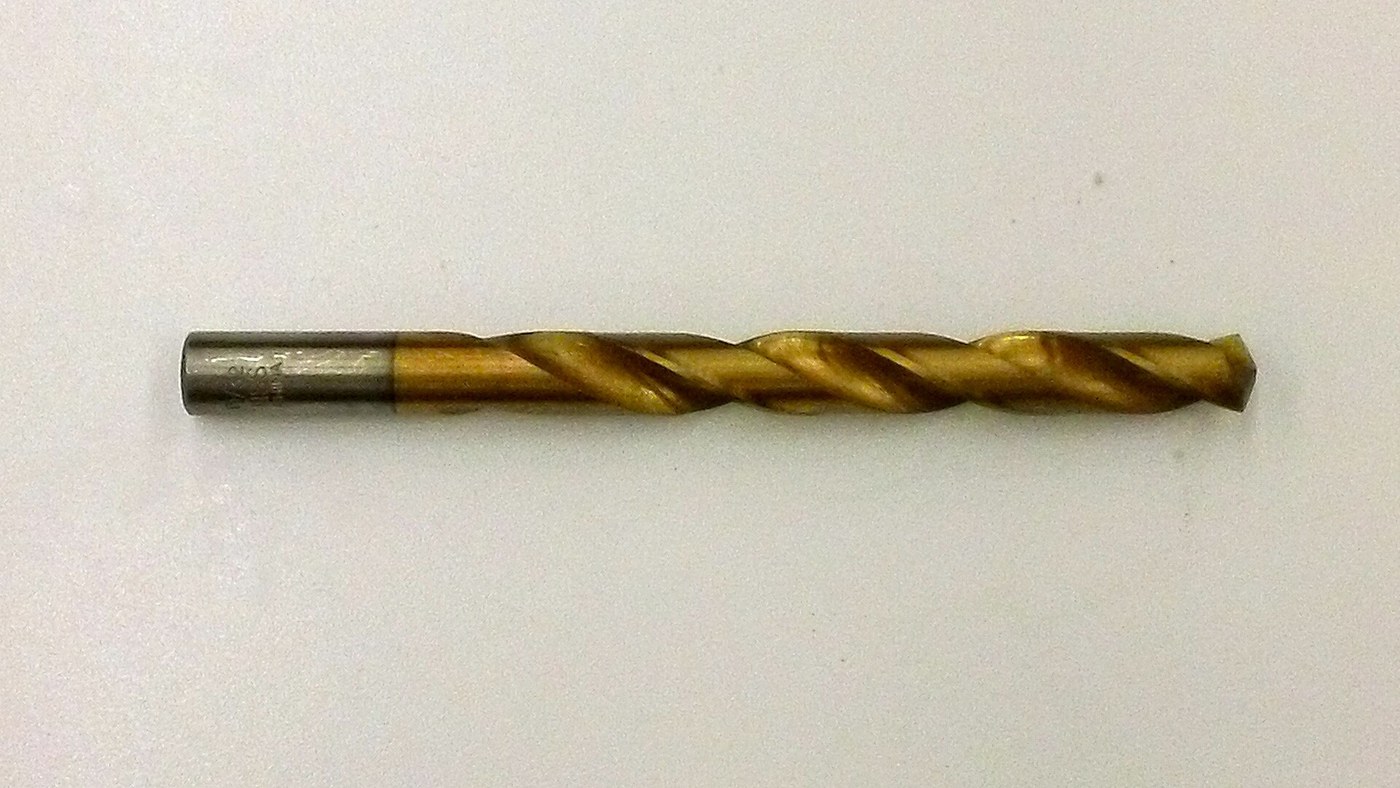


Twist Drill Bits: Flutes, Point and Coating
A twist drill is named after how it was first made: two grooves were cut in opposite sides of a round bar and the bar was twisted to make helical flutes. Today the flutes are usually ground: the bar turns while it moves past a grinding wheel, the way helical gears are cut. Drills have also been forged with their flutes, from blanks heated by induction. The common hardware-store drill has a 118° point, which works in wood, metal and plastic. A black oxide finish, made in a hot bath of sodium hydroxide with nitrates at about 141 °C that turns the surface to magnetite, adds heat and rust resistance; a titanium nitride coat, a few micrometres thick, can make a high-speed steel bit last three or more times longer.
Avanzado
Factory process
Instrucciones
1
1
Cut the blanks
Cut the blanks
Cut high-speed steel round bar into blanks the length of the drill.
Materiales para este paso:
 Barra redonda de acero rápido1 kg
2
2
Grind the flutes
Grind the flutes
Turn each blank while moving it past a grinding wheel to cut the two helical flutes.
Herramientas necesarias:
 Rectificadora de canales de brocas
3
3
Grind the point
Grind the point
Grind the cutting point; 118° is the general-purpose angle.
Herramientas necesarias:
 Afiladora de brocas
4
4
Finish
Finish
Give the drills a black oxide finish in a hot caustic nitrate bath, or a titanium nitride coat by vapour deposition.
Herramientas necesarias:
 Baño de pavonado negro
 Solución de hidróxido de sodio
Materiales
1- Marcador de posición
Herramientas requeridas
4- Marcador de posición
- Marcador de posición
- Marcador de posición
- Marcador de posición
Este plano hace
Blueprints relacionados
Estos blueprints comparten conocimiento — técnicas, materiales o principios

CC0 Dominio público
Este Blueprint se publica bajo CC0. Eres libre de copiar, modificar, distribuir y usar este trabajo para cualquier propósito, sin pedir permiso.
Apoya al Maker comprando productos a través de su Blueprint, donde gana una Comisión del Maker establecida por los vendedores, o crea una nueva iteración de este Blueprint e inclúyela como conexión en tu propio Blueprint para compartir ingresos.