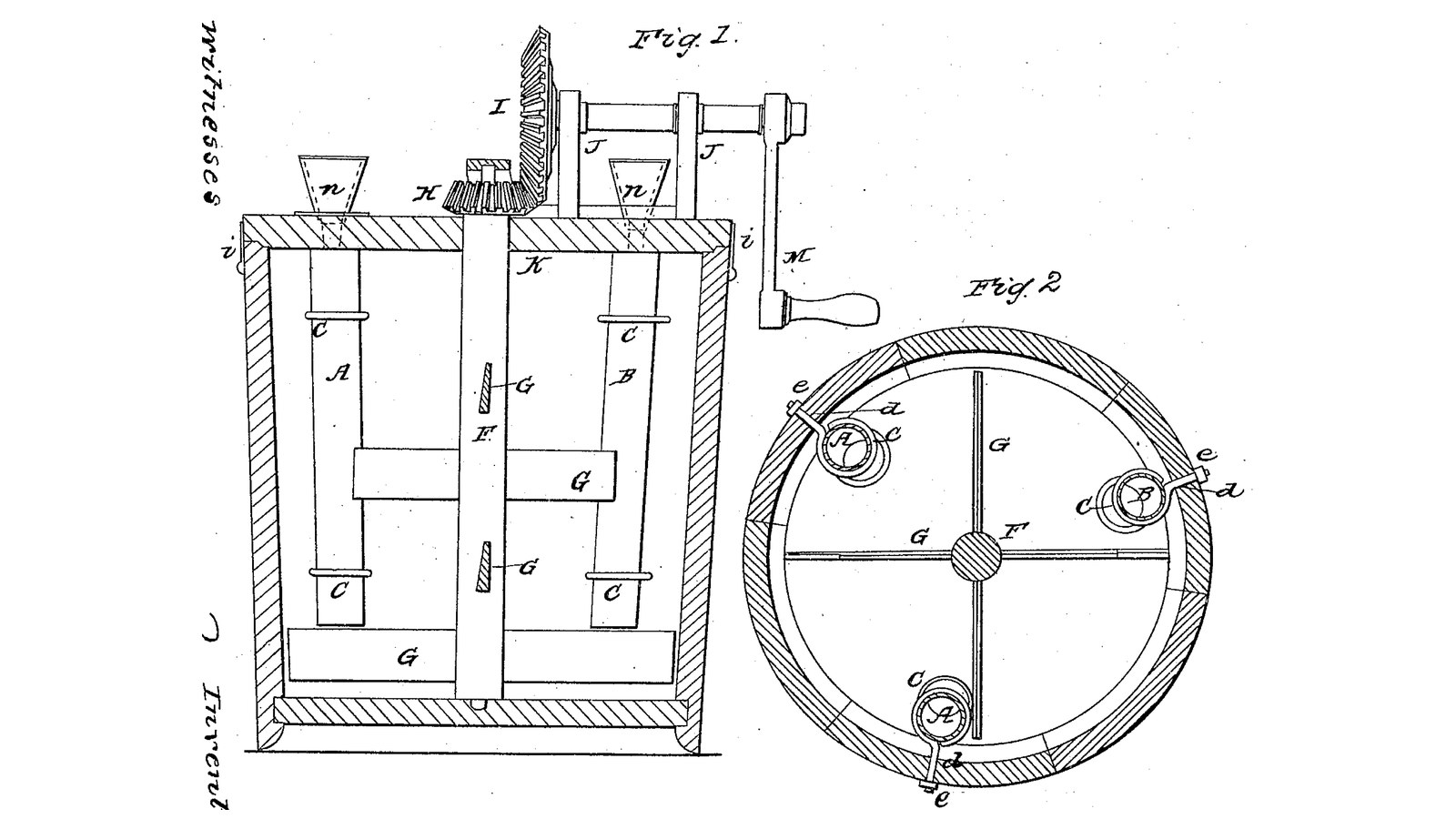

Water-and-Air Tube Churn: Two Tubes of Warm or Cold Water and an Open Air Tube Stand by the Wall, Blades Sweep Under and Between
Instrucciones
Tempering the cream from inside
Tempering the cream from inside
Jebb's earlier churn, a year and a half before
Jebb's earlier churn, a year and a half before
Read US 32,697
Read US 32,697
Print the tube plugs (two)
Print the tube plugs (two)
Print the rings C (six)
Print the rings C (six)
Tubes A, A and B, rings C, shanks d and nuts e
Tubes A, A and B, rings C, shanks d and nuts e
Materiales para este paso:
 Cubo de 20 litros1 pieza
 Tubo de acero inoxidable1 pieza
 Filamento PETG1 pieza
 Sellador de silicona1 pieza
 Varilla roscada1 pieza
 Tuerca hexagonal12 piezas
 Arandela plana12 piezas
Herramientas necesarias:
 Impresora 3D de filamento (FDM)
 Sierra para metales
 Limas (lima de mano)
 Taladro inalámbrico
 Juego de brocas
 Llave inglesa ajustable
 Cinta métrica
Print the step
Print the step
Shaft F and dash blades G
Shaft F and dash blades G
Materiales para este paso:
 Varilla de acero inoxidable1 pieza
 Tabla de madera dura1 pieza
 Espigas de madera dura1 pieza
 Cola de carpintero1 pieza
Herramientas necesarias:
 Sierra de mesa
 Juego de formones para maderaTaladro inalámbricoJuego de brocasSierra para metales
Print the pinion H
Print the pinion H
Print the wheel I
Print the wheel I
Cover K, tunnels n, frame J, wheels H and I, winch M, hooks l
Cover K, tunnels n, frame J, wheels H and I, winch M, hooks l
Materiales para este paso:
 Plancha de HDPE1 pieza
 Embudo de cocina3 piezasTabla de madera dura1 piezaVarilla de acero inoxidable1 pieza
 Shaft Collar1 pieza
 Pasador de aletas3 piezas
 Pletina de acero dulce1 piezaEspigas de madera dura1 pieza
 Tornillos para madera6 piezas
 Corchete (macho y hembra)2 piezasFilamento PETG1 pieza
Herramientas necesarias:
Impresora 3D de filamento (FDM) Brújula
 Sierra de calar
 Juego de brocas de palaTaladro inalámbricoJuego de brocasSierra para metalesLimas (lima de mano)
 Tornillo de banco
 Juego de destornilladores
The build in 3D
The build in 3D
Temper and churn
Temper and churn
Materiales para este paso:
 Crema de leche espesa10 l
 Agua1 pieza
 Sal marina gruesa1 pieza
Herramientas necesarias:
 Termómetro de sonda permanente
 Cronómetro
 Báscula digital de cocina
 Bol grande de acero inoxidable
Troubleshooting
Troubleshooting
Flow
History and honest limits
History and honest limits
Materiales
21- 1 piezaMarcador de posición
- 1 piezaMarcador de posición
- 2 piezasMarcador de posición
- 1 piezaMarcador de posición
- 1 piezaMarcador de posición
- 12 piezasMarcador de posición
- 12 piezasMarcador de posición
- 1 piezaMarcador de posición
- 1 piezaMarcador de posición
- 1 piezaMarcador de posición
- 1 piezaMarcador de posición
- 1 piezaMarcador de posición
- 3 piezasMarcador de posición
- 1 piezaMarcador de posición
- 3 piezasMarcador de posición
- 1 piezaMarcador de posición
- 6 piezasMarcador de posición
- 2 piezasMarcador de posición
- Marcador de posición
- 1 piezaMarcador de posición
- 1 piezaMarcador de posición
Herramientas requeridas
18- Marcador de posición
- Marcador de posición
- Marcador de posición
- 1 vendor sell this, none ship to you yetMarcador de posición
- Marcador de posición
- Marcador de posición
- 1 vendor sell this, none ship to you yetMarcador de posición
- 1 vendor sell this, none ship to you yetMarcador de posición
- Marcador de posición
- Marcador de posición
- 1 vendor sell this, none ship to you yetMarcador de posición
- Marcador de posición
- Marcador de posición
- Marcador de posición
- Marcador de posición
- Marcador de posición
- Marcador de posición
- Marcador de posición
Archivos de diseño
6

Blueprints relacionados
Estos blueprints comparten conocimiento — técnicas, materiales o principios
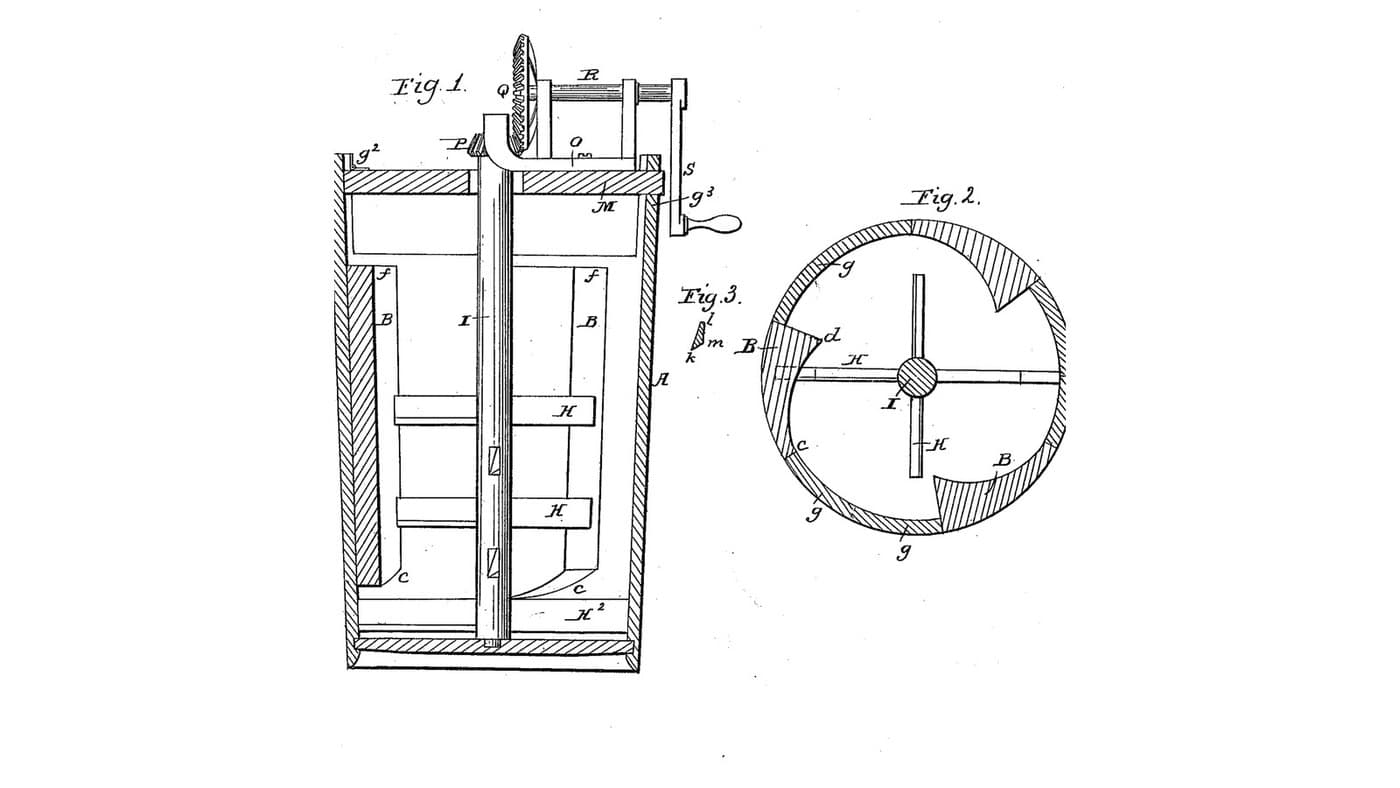
Segmental-Stave Churn: Thick Curved Staves Split the Cream's Current, a Long Blade Sweeps Beneath Them
por Buttercup
Carpintería
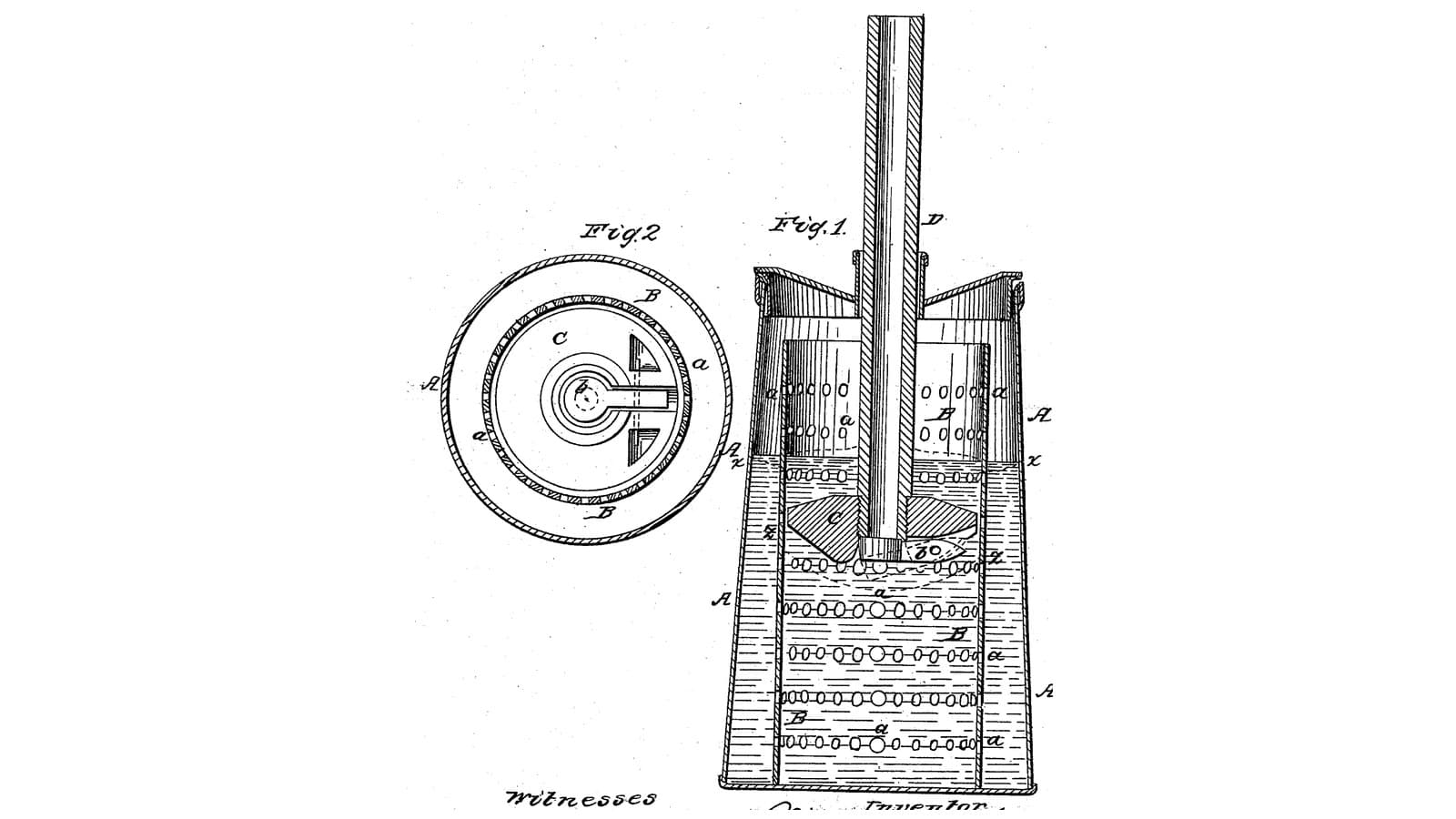
Hollow-Staff Plunger Churn: A Plunger in a Perforated Inner Cylinder Draws Air Down Its Staff on the Up Stroke
por Buttercup
Carpintería
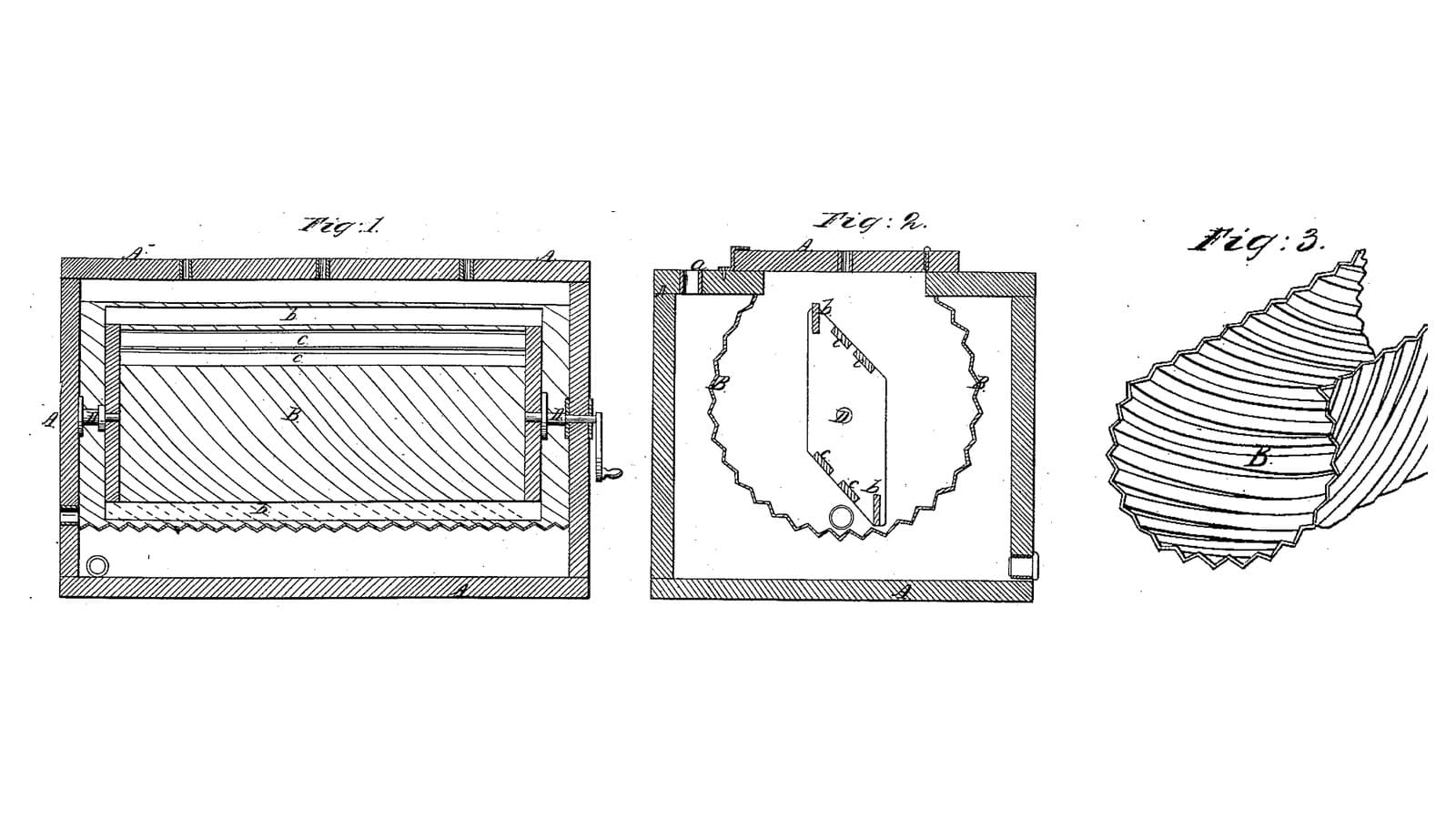
Spiral-Corrugated Water-Jacket Churn: A Bevelled Strip Dasher Throws Cream Against Diagonal Corrugations in a Warmed or Cooled Chamber
por Buttercup
Carpintería

Churning Butter from Cream — The 5,000-Year-Old Fat Separation
por TheChef
ARTESANÍA
CC0 Dominio público
Este Blueprint se publica bajo CC0. Eres libre de copiar, modificar, distribuir y usar este trabajo para cualquier propósito, sin pedir permiso.
Apoya al Maker comprando productos a través de su Blueprint, donde gana una Comisión del Maker establecida por los vendedores, o crea una nueva iteración de este Blueprint e inclúyela como conexión en tu propio Blueprint para compartir ingresos.