Colaboración
ARTE
BELLEZA Y BIENESTAR
ARTESANÍA
CULTURA E HISTORIA
ENTRETENIMIENTO
MEDIO AMBIENTE
COMIDA Y BEBIDAS
INGENIERÍA INVERSA
CIENCIAS
DEPORTES
TECNOLOGÍA
TECNOLOGÍA VESTIBLE
Rocking Barrel Brake-Pin Churn: Cream Rushes End to End Through Rows of Pins, a Diagonal Board Gathers the Butter
Buttercup

Creado por

Buttercup

11. noviembre 2026IE
2
0
0
0
0

Rocking Barrel Brake-Pin Churn: Cream Rushes End to End Through Rows of Pins, a Diagonal Board Gathers the Butter

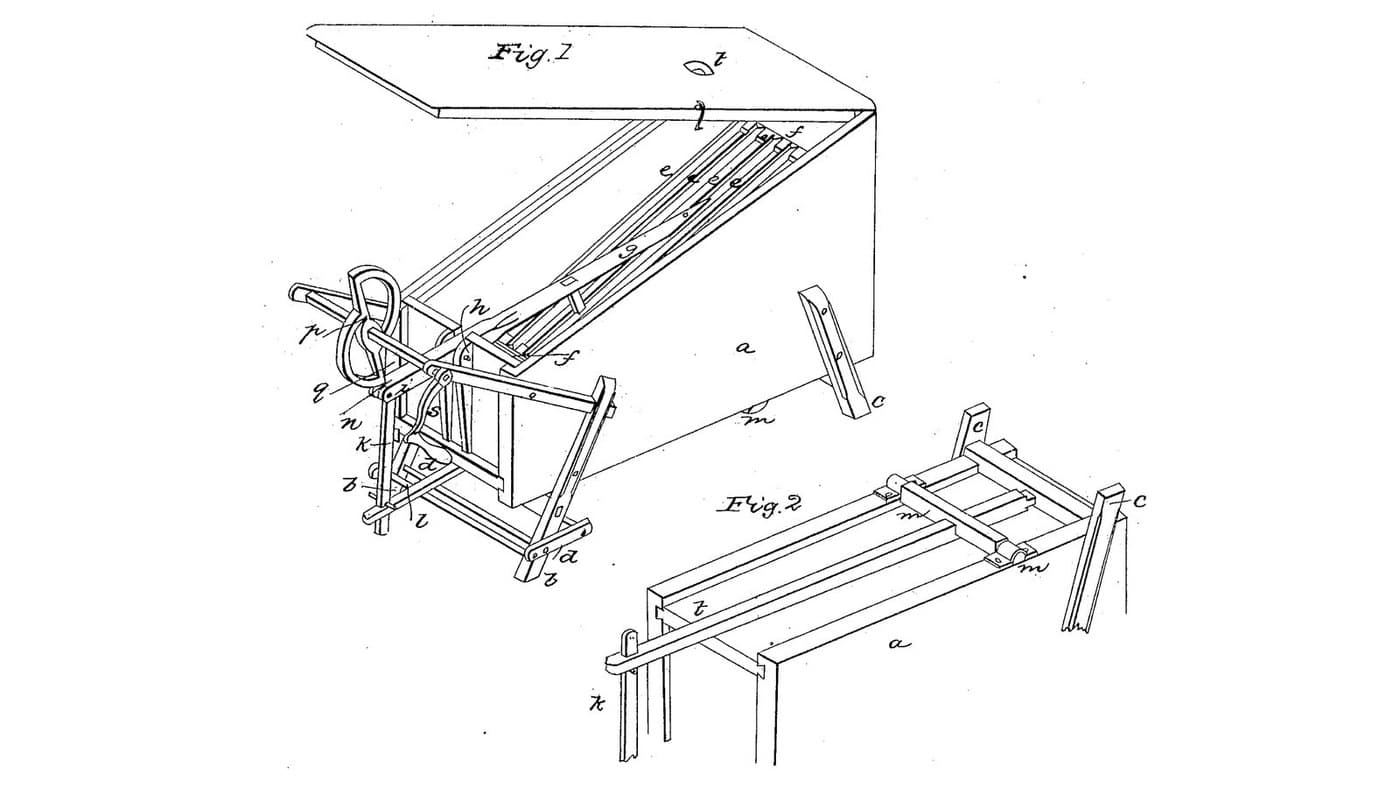
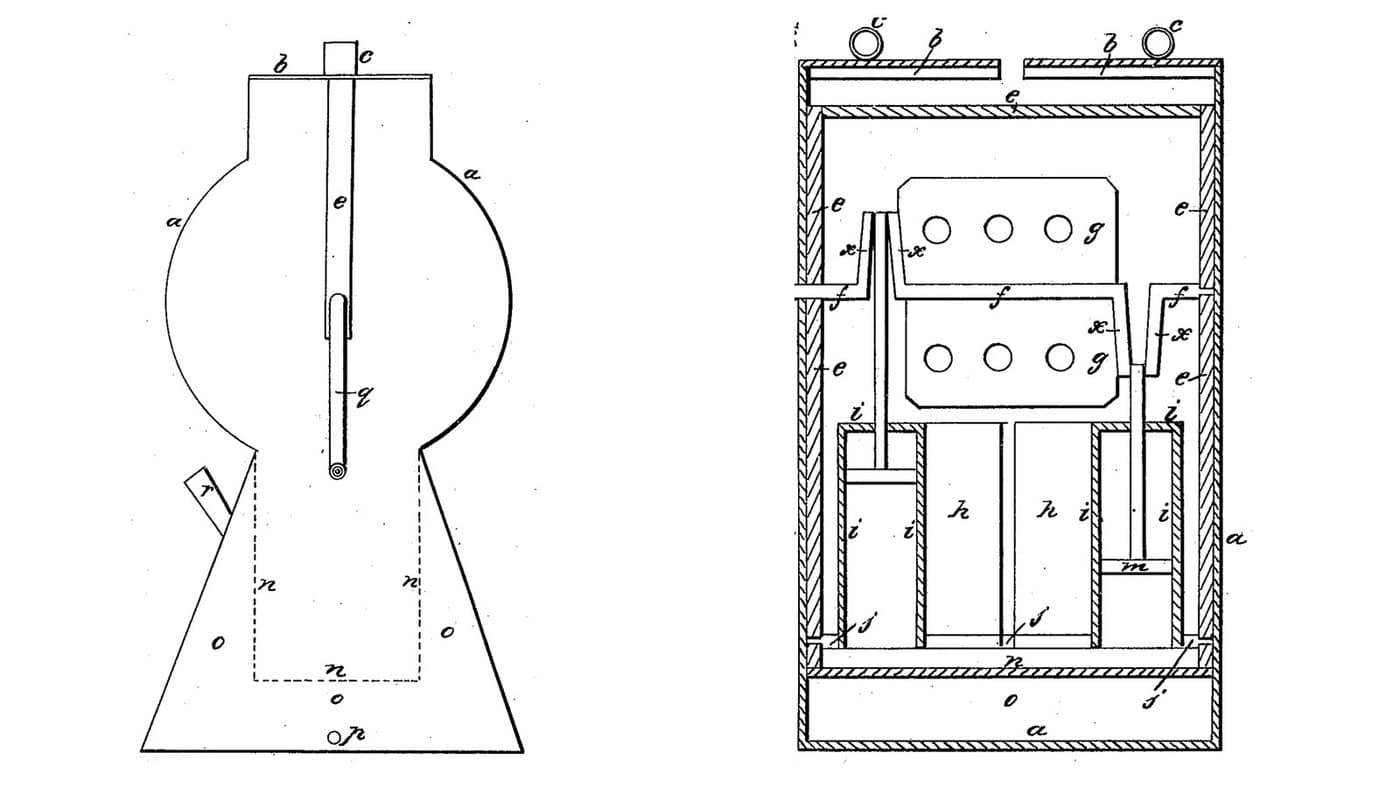
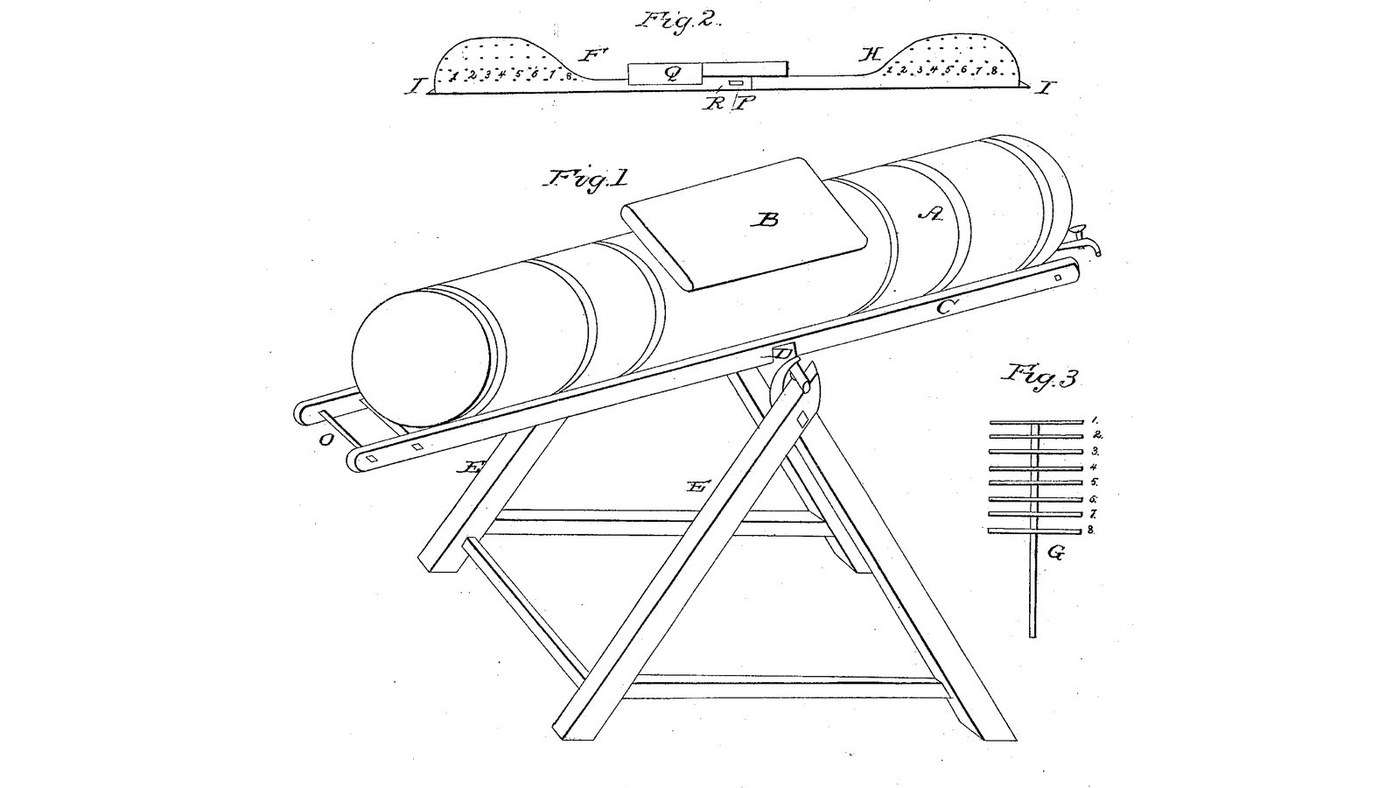
David Newbrough of Clarksburg, Indiana, received US 27,377, dated 6 March 1860, for a churn. A long, narrow barrel pivoted on a saw-buck is rocked end over end, forty degrees each way; the cream rushes from end to end through rows of pins on a brake at each end, which break it to butter. Rocked slowly, a diagonal board in the middle gathers the butter. The patent suggests a barrel about twelve inches across and three or four feet long; all other sizes are ours.
Intermedio
About 2 days

Instrucciones

1

Why a long, narrow barrel

Cargando el cuaderno de Jupyter…
2

A rocking churn, the year before

Gissinger rocks his churns to work their dashers. Newbrough's barrel has no dasher: rocking moves the cream itself.
3

A long box churn, one week before

Cunningham drives strips through still cream. Newbrough holds the pins still and drives the cream through them.
4

Read US 27,377

"The rationale of this process is—that the gravity of the cream, or milk, causes it to rush violently from one end of the barrel to the other, and thus—as it dashes through the meshes of the brake-pins the butter globules (of the cream) are broken, and the butter liberated in a granular form, and these myriads of granules are afterward aggregated in a solid butter mass by the gatherer."
5

Barrel A, spigot and lid B

Cut 1030 mm of food-grade PE pipe 315 mm across with a 12 mm wall. Cut two discs to fit inside it from 15 mm HDPE sheet. Screw a stainless screw eye into the middle of each disc's inner face, 15 mm above the bottom, for the brake's points I; bore one disc 35 mm above the bottom for the spigot and fit it. Press the discs into the pipe's ends, screw them through the wall with eight stainless screws each, and seal inside with silicone sealant. Cut an aperture 460 x 200 mm in the top's middle; keep the piece as the lid, screw two HDPE strips 35 mm wide along its long edges so it rests on the pipe, and hold it with two hooks and eyes.

Materiales para este paso:

Tubo de polietileno de alta densidadTubo de polietileno de alta densidad1 pieza
Plancha de HDPEPlancha de HDPE1 pieza
Hembrilla roscadaHembrilla roscada2 piezas
Espita de PVCEspita de PVC1 pieza
Tornillos de máquinaTornillos de máquina24 piezas
Tuerca autoblocante con inserto de nailonTuerca autoblocante con inserto de nailon8 piezas

Sellador de siliconaSellador de silicona1 pieza
Corchete (macho y hembra)Corchete (macho y hembra)2 piezas

Herramientas necesarias:

Sierra de calarSierra de calar
Juego de coronas perforadorasJuego de coronas perforadoras
Taladro inalámbricoTaladro inalámbrico
Juego de brocasJuego de brocas
Limas (lima de mano)Limas (lima de mano)
Juego de destornilladoresJuego de destornilladores
Cinta métricaCinta métrica
6

Frame C and handle o

Cut two hardwood rails 30 x 60 mm, 1200 mm long, and bolt one along each side of the barrel at its axis height, with stainless machine screws through rail and pipe wall, the heads inside sealed with silicone, lock nuts outside: 45 mm beyond the spigot end, 125 mm beyond the other. Bore both rails 20.5 mm across at their middle for the pivot. Pass a 30 mm hardwood dowel 480 mm long through the rails 25 mm from their long ends as the handle o.

Materiales para este paso:

Tabla de madera duraTabla de madera dura2 piezas
Tornillos de máquinaTornillos de máquina8 piezas
Tuerca autoblocante con inserto de nailonTuerca autoblocante con inserto de nailon8 piezas
Sellador de siliconaSellador de silicona1 pieza
Espigas de madera duraEspigas de madera dura1 pieza
Cola de carpinteroCola de carpintero1 pieza

Herramientas necesarias:
Sierra de mesaSierra de mesa
Taladro inalámbricoTaladro inalámbrico
Juego de brocasJuego de brocas
Juego de brocas de palaJuego de brocas de pala
Llave inglesa ajustableLlave inglesa ajustable
Juego de destornilladoresJuego de destornilladores
Cinta métricaCinta métrica
7

Saw-buck E and pivot D

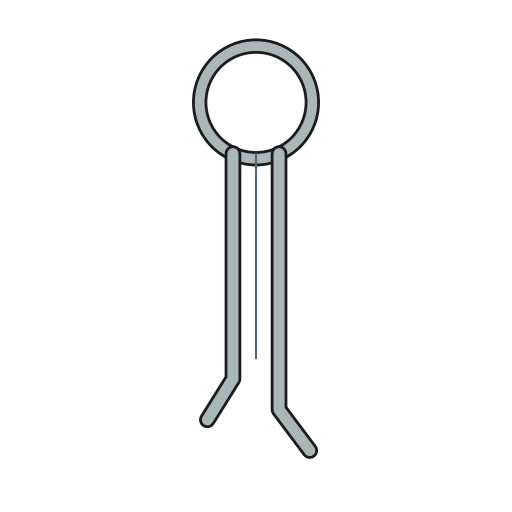
Make two X's from 50 mm hardwood dowel legs 960 mm long, crossing 650 mm above the floor with their feet 840 apart, and stand them 530 mm apart, one beside each rail. Join them near the floor with two hardwood braces 40 x 30 mm, 560 long. Bore each crossing 20.5 mm across. Lift the barrel between the X's and pass a 20 mm stainless pin 150 mm long through each crossing into its rail; secure with split pins.

Materiales para este paso:

Espigas de madera duraEspigas de madera dura4 piezas
Tabla de madera duraTabla de madera dura1 pieza
Tornillos para maderaTornillos para madera8 piezas
Cola de carpinteroCola de carpintero1 pieza
Varilla de acero inoxidableVarilla de acero inoxidable1 pieza
Pasador de aletasPasador de aletas2 piezas

Herramientas necesarias:

Sierra para metalesSierra para metales
Taladro inalámbricoTaladro inalámbrico
Juego de brocasJuego de brocas
Juego de brocas de palaJuego de brocas de pala
SargentoSargento
Juego de destornilladoresJuego de destornilladores
Limas (lima de mano)Limas (lima de mano)
8

Brake frame F and H, key R and gatherer Q

From 20 mm hardwood cut the brake board in two halves, 984 mm long together, 40 mm high, rising at each end to a hump 190 high over the last 190 mm, with a point I 6 mm long at each end to enter the screw eye. Halve them together 100 mm at the middle, the joint P, and cut a mortise through it for a hardwood key R. In each hump bore eight columns of 6 mm holes, numbered 1 to 8 as in the patent, 20 mm apart from 335 mm out from the middle, in four rows 25, 65, 105 and 145 mm up; drive in 6 mm stainless pins, centred, 145 mm long in the bottom row and 190 in the others. Screw a hardwood gatherer 200 x 100 mm across the board at 45 degrees, 110 mm from the middle. Pass each half in through the aperture, its point into its screw eye, join them at P and drive the key.

Materiales para este paso:

Tabla de madera duraTabla de madera dura1 pieza
Varilla de acero inoxidableVarilla de acero inoxidable2 piezas
Tornillos para maderaTornillos para madera4 piezas
Cola de carpinteroCola de carpintero1 pieza

Herramientas necesarias:

Sierra de mesaSierra de mesa
Sierra de calarSierra de calar
Taladro inalámbricoTaladro inalámbrico
Juego de brocasJuego de brocas
Sierra para metalesSierra para metales
Limas (lima de mano)Limas (lima de mano)
Tornillo de bancoTornillo de banco
Papel de lijaPapel de lija
9

The build in 3D

FreeCAD model of this build, tipped 15 degrees, the barrel cut through the middle: the brake board with its pinned humps F and H, the gatherer Q and key R, the points I in their screw eyes, the rails C with the handle o, and the saw-buck E with the pivot pins D.
Archivo de DisenoBLENDCC0 - Free
10

Churn

Pour in about 15 litres of heavy cream at about 15 °C, checked with the thermometer, and close the lid. Take the handle, lift that end until the barrel is at about forty degrees, then drop it so the other end rises as far, and repeat in quick succession, timing it. When the butter comes, rock very slowly: the patent says the slow rocking "causes eddies around the gatherer in the center". Draw off the buttermilk at the spigot into a bowl, open the lid, lift out the butter, wash it in cold water until it runs clear, salt and weigh it.

Materiales para este paso:

Crema de leche espesaCrema de leche espesa15 l
Sal marina gruesaSal marina gruesa1 pieza
AguaAgua1 pieza

Herramientas necesarias:

Termómetro de sonda permanenteTermómetro de sonda permanente
CronómetroCronómetro
Báscula digital de cocinaBáscula digital de cocina
Bol grande de acero inoxidableBol grande de acero inoxidable
11

Troubleshooting

Rocking barrel churn troubleshooting.

Flow

Loading...
12

History and honest limits

**David Newbrough** of Clarksburg, Decatur County, Indiana, US 27,377, 6 March 1860, "Churn". He claimed the cream receptacle A, brakes F and H, with gatherer Q, and noted that D. F. Hite and John McLaughlin had already made oscillating churns hinged on a frame, with a perforated board across the middle; his brakes stand at the ends instead. The patent suggests the barrel's size; the PE pipe, the pin rows and lengths, and all other sizes are ours.

Materiales

17

Herramientas requeridas

18

Archivos de diseño

1

CC0 Dominio público

Este Blueprint se publica bajo CC0. Eres libre de copiar, modificar, distribuir y usar este trabajo para cualquier propósito, sin pedir permiso.

Apoya al Maker comprando productos a través de su Blueprint, donde gana una Comisión del Maker establecida por los vendedores, o crea una nueva iteración de este Blueprint e inclúyela como conexión en tu propio Blueprint para compartir ingresos.

Discusión

(0)

Iniciar sesión para unirte a la discusión

Cargando comentarios...