Colaboración
ARTE
BELLEZA Y BIENESTAR
ARTESANÍA
CULTURA E HISTORIA
ENTRETENIMIENTO
MEDIO AMBIENTE
COMIDA Y BEBIDAS
INGENIERÍA INVERSA
CIENCIAS
DEPORTES
TECNOLOGÍA
TECNOLOGÍA VESTIBLE
Adjustable-Dish Churn: Cream Is Poured Between a Fixed Ribbed Dish and a Turning One, Then Beaten by Wings and Dashers
Buttercup

Creado por

Buttercup

11. noviembre 2026IE
1
0
0
0
0

Adjustable-Dish Churn: Cream Is Poured Between a Fixed Ribbed Dish and a Turning One, Then Beaten by Wings and Dashers

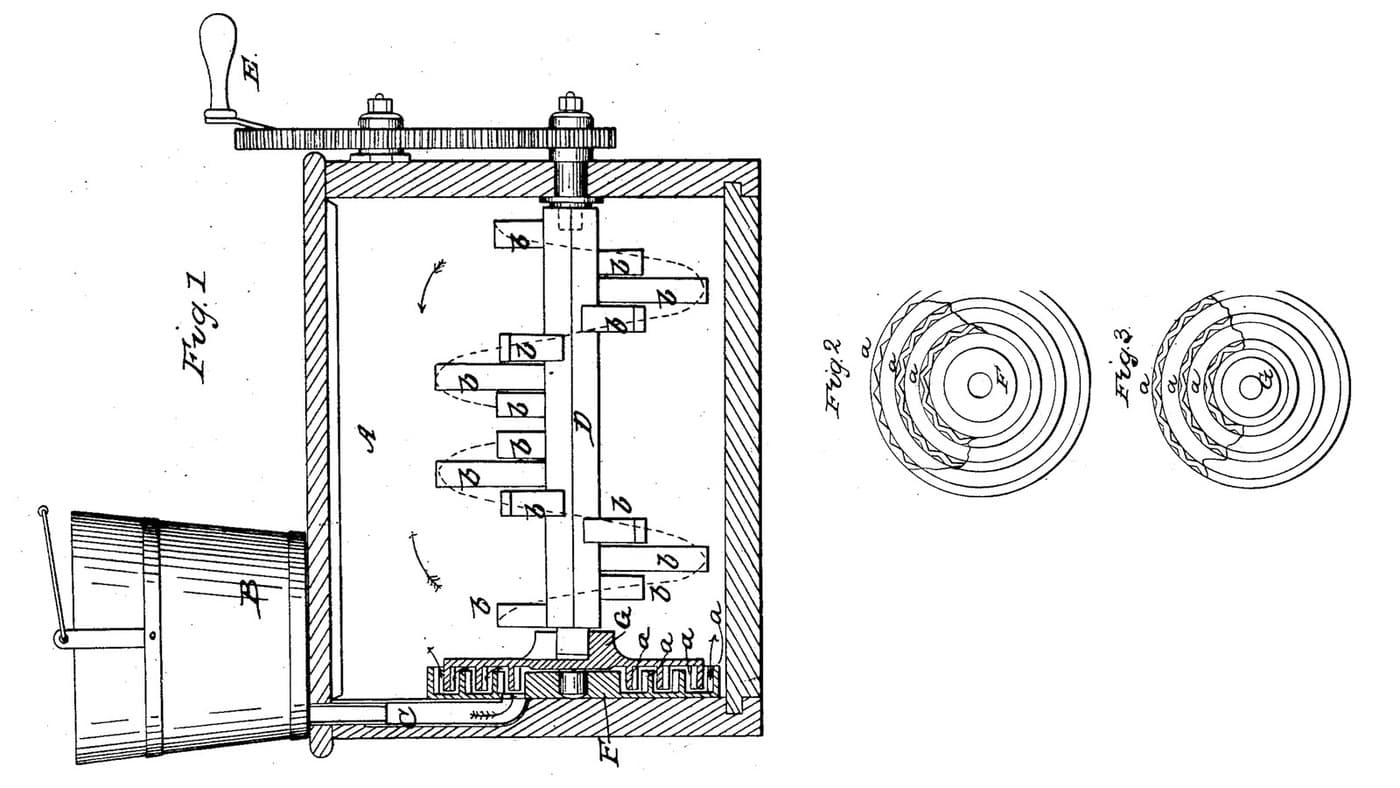
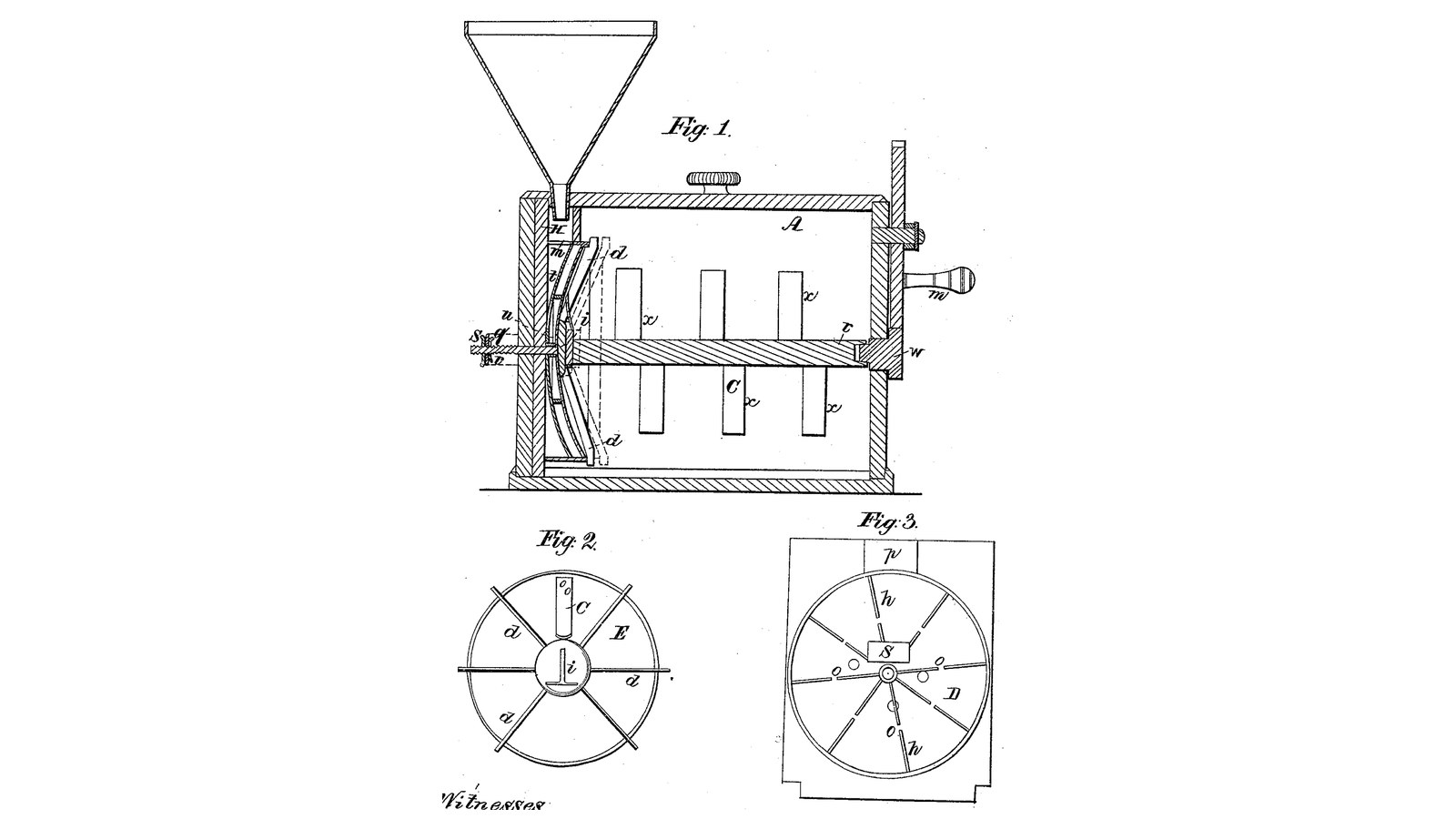
John Pike of Syracuse, New York, received US 30,930, dated 18 December 1860, for a box churn with a cranked shaft of dashers. At its far end a fixed concave dish with broken radial ribs faces a turning dish with ribs and a ring that runs through the breaks. Cream poured into a pan on top runs down a passage and through a slot between the two dishes, where it is beaten and partly ground, then flung out to wings and dashers in the box. Two thumb screws set the turning dish farther off for cream or closer for milk. The fixed dish is the patent's eight inches across; every other size here is ours.
Avanzado
About 3 days

Instrucciones

1

Setting the gap between the dishes

Cargando el cuaderno de Jupyter…
2

Cream worked between a fixed and a turning face, two years before

Brown forces cream out between corrugated rings. Pike pours it between a fixed and a turning ribbed dish whose gap he can set.
3

Read US 30,930

"By this arrangement the concavo-convex dish E can be adjusted to a greater or less distance from the concave dish D; fixing the two dishes farther apart when churning cream, shown by the red lines in Fig. 1, and close together when churning milk."
4

Box A, lid and conduit p

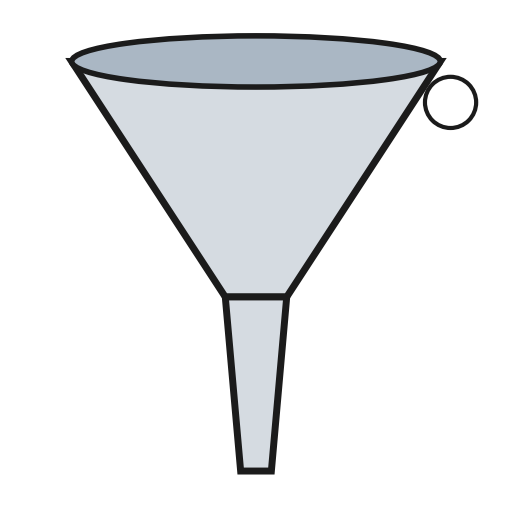
Glue up hardwood for a box A 400 mm long, 260 wide and 280 high inside: a fixed end 40 mm thick and 322 tall, a crank end 22 thick, sides and floor 22 thick, joints sealed with silicone sealant, and a loose lid with a knob covering all but the fixed end. Bore the fixed end 16 mm straight down from its top, 20 mm in from its outside face, to 82 mm above the shaft's centre (which is 140 mm above the floor), and bore 16 mm in from its inside face to meet it: the conduit p. Set a kitchen funnel in the top of it as the pan B. Bore the fixed end 12.8 mm at the shaft's centre for the rod u and the crank end 16.6 mm.

Materiales para este paso:

Tabla de madera duraTabla de madera dura4 piezas
Cola de carpinteroCola de carpintero1 pieza
Sellador de siliconaSellador de silicona1 pieza
Tornillos para maderaTornillos para madera30 piezas
Embudo de cocinaEmbudo de cocina1 pieza

Herramientas necesarias:
Sierra de mesaSierra de mesa
Fresadora de manoFresadora de mano
Taladro inalámbricoTaladro inalámbrico
Juego de brocasJuego de brocas
Juego de brocas de palaJuego de brocas de pala
SargentoSargento
Juego de destornilladoresJuego de destornilladores
Cinta métricaCinta métrica
5

Print the fixed dish D

The fixed dish D: 203 mm across (the patent's eight inches), its face dished at 12 degrees, eight radial ribs h 6 mm high broken from 46 to 64 mm out, a rim flange m, a 12.8 mm centre opening e and a 20 x 25 mm slot f at the top. Needs a 220 mm bed. PETG, 0.2 mm layers, 30 % infill, 4 walls, printed on its back with supports.
Archivo de DisenoSTLCC0 - Free
6

Print the turning dish E

The turning dish E: 180 mm across, 5 mm thick, dished at 12 degrees, six ribs 6 mm high on its convex face, a ring t 52 to 58 mm out standing 12 mm, a boss for the rod u, and the sawcalf tab i on its concave face. PETG, 0.2 mm layers, 30 % infill, 4 walls, printed on its back with supports.
Archivo de DisenoSTLCC0 - Free
7

Dishes D and E, wings d, rod u and thumb screws

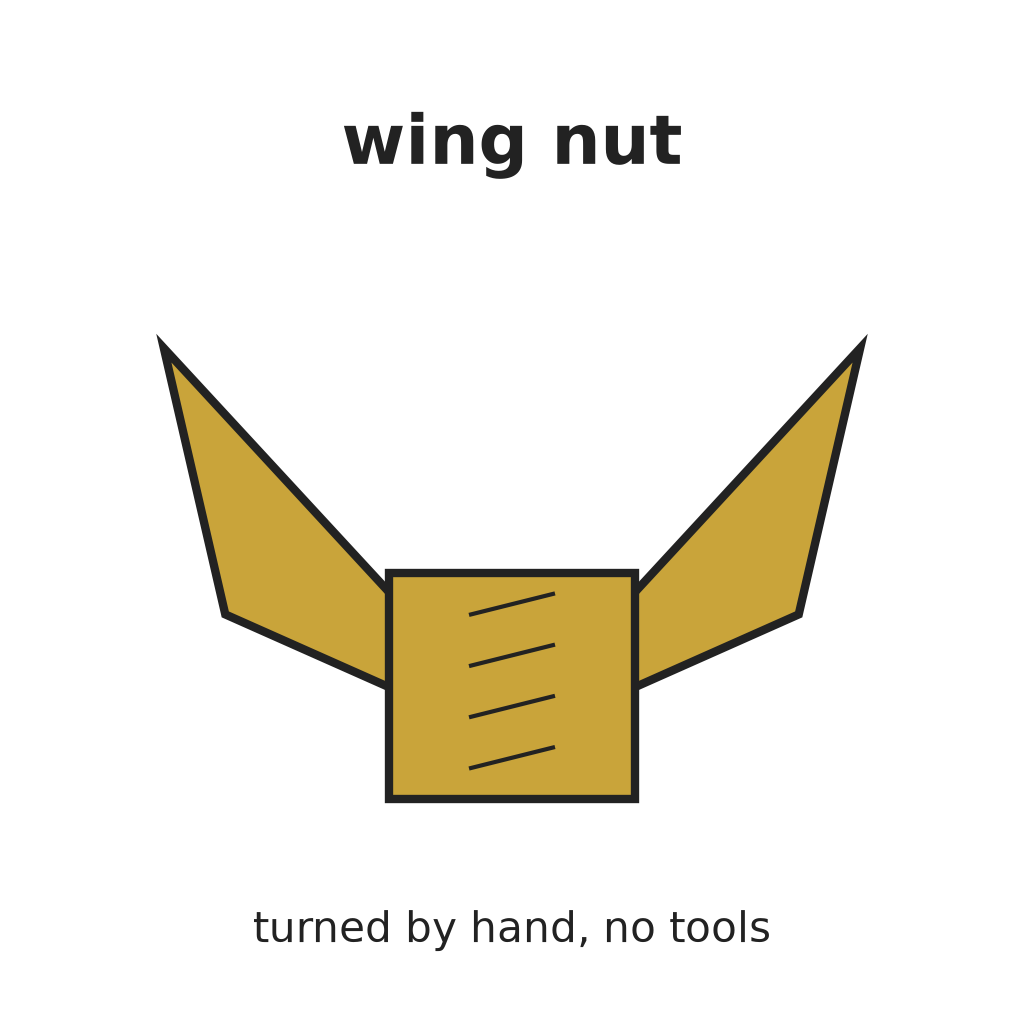
Screw the dish D to the inside of the fixed end, its slot f over the conduit p, sealing round it. Cut six hardwood wings d 34 x 94 x 4 mm and screw them radially to the concave face of E so they reach 120 mm from the centre. Thread a 12 mm stainless rod u 120 mm long at one end for 70 mm and fix its plain end into E's boss with sealant and a cross pin. Pass it through D and the fixed end. Screw a mild steel flat bar plate q outside, bored 12.8 mm, and run a wing nut and washer on the thread either side of it: the thumb screws s and v.

Materiales para este paso:

Filamento PETGFilamento PETG1 pieza
Sellador de siliconaSellador de silicona1 pieza
Tornillos para maderaTornillos para madera18 piezas
Tabla de madera duraTabla de madera dura1 pieza
Varilla de acero inoxidableVarilla de acero inoxidable1 pieza
Pletina de acero dulcePletina de acero dulce1 pieza
Tuerca mariposaTuerca mariposa2 piezas
Arandela planaArandela plana2 piezas

Herramientas necesarias:

Impresora 3D de filamento (FDM)Impresora 3D de filamento (FDM)
Sierra para metalesSierra para metales
Limas (lima de mano)Limas (lima de mano)
Tornillo de bancoTornillo de banco
Taladro inalámbricoTaladro inalámbrico
Juego de brocasJuego de brocas
Llave inglesa ajustableLlave inglesa ajustable
Juego de destornilladoresJuego de destornilladores
8

Shaft C, dashers x, cog shaft w and crank m

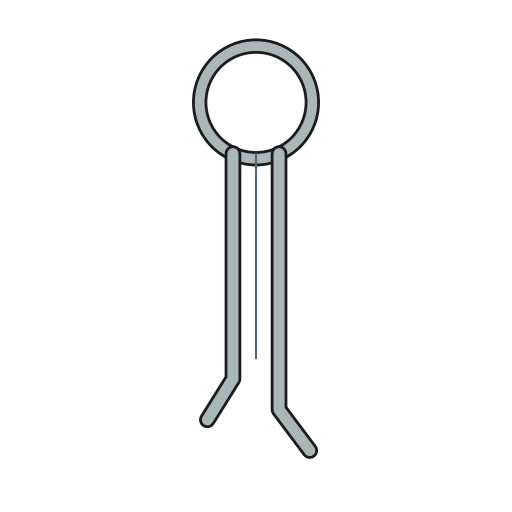
Cut a hardwood shaft C 32 mm square and 340 mm long. Saw a slot 7 x 22 mm, 15 deep, across one end to take the sawcalf tab, and chisel a 16.4 mm square socket 50 deep in the other, so C can slide 15 mm as E is set. Mortise six hardwood paddles x 25 x 6 mm through it, 40 mm apart, alternately up and down, reaching 110 mm from its centre. File the end of a 16 mm stainless cog shaft w 110 mm long square for 34 mm; pass it through a hardwood bearing block on the crank end into the socket and pin a crank m of mild steel flat bar, 120 mm throw, with a hardwood handle, on its outer end. Set C's slot over the tab and hold it with a split pin through both.

Materiales para este paso:

Tabla de madera duraTabla de madera dura1 pieza
Cola de carpinteroCola de carpintero1 pieza
Varilla de acero inoxidableVarilla de acero inoxidable1 pieza
Pletina de acero dulcePletina de acero dulce1 pieza
Espigas de madera duraEspigas de madera dura1 pieza
Pasador de aletasPasador de aletas2 piezas
Tornillos para maderaTornillos para madera4 piezas

Herramientas necesarias:

Sierra de mesaSierra de mesa
Juego de formones para maderaJuego de formones para madera
Taladro inalámbricoTaladro inalámbrico
Juego de brocasJuego de brocas
Sierra para metalesSierra para metales
Limas (lima de mano)Limas (lima de mano)
Tornillo de bancoTornillo de banco
9

The build in 3D

FreeCAD model of this build, the near side cut away: the box with its bored fixed end and funnel, the fixed ribbed dish, the turning dish with its ring and wings, the rod with its thumb screws on the plate, the shaft with six paddles, and the cog shaft and crank.
Archivo de DisenoBLENDCC0 - Free
10

Set the gap and churn

For cream, set the turning dish's face 30 mm from the fixed dish's face with the thumb screws (closer, 15 mm, is Pike's setting for milk). Turn the crank briskly and, while it turns, pour about 8 litres of heavy cream at about 15 °C, checked with the thermometer, into the funnel, timing it. When the butter comes, lift the lid, pull the split pin and lift out the shaft C, take out the butter, drain the buttermilk into a bowl, wash the butter in cold water until it runs clear, salt and weigh it.

Materiales para este paso:

Crema de leche espesaCrema de leche espesa8 l
Sal marina gruesaSal marina gruesa1 pieza
AguaAgua1 pieza

Herramientas necesarias:

Termómetro de sonda permanenteTermómetro de sonda permanente
CronómetroCronómetro
Báscula digital de cocinaBáscula digital de cocina
Bol grande de acero inoxidableBol grande de acero inoxidable
Llave inglesa ajustableLlave inglesa ajustable
11

Troubleshooting

Adjustable-dish churn troubleshooting.

Flow

Loading...
12

History and honest limits

**John Pike** of Syracuse, Onondaga County, New York, US 30,930, 18 December 1860, "Churn". He claimed "the combination and arrangement of the adjustable convex dish D, concavo convex dish E, with the radial beaters on each as described, together with the wings d, d, shaft C, and dashers x, x". He wrote that the butter comes "ordinarily inside of two minutes with sweet milk and one minute with cream"; we have not tested that. His pan B was metal, his dish D adjustable on a slide H and his shaft held to E by a spring c; ours is a kitchen funnel, a dish screwed fast and a split pin. Neither the text nor the drawing gives the gearing's form; ours is a plain crank. His D is "say eight inches in diameter", which we use; every other size here is ours.

Materiales

15

Herramientas requeridas

18

Archivos de diseño

3

CC0 Dominio público

Este Blueprint se publica bajo CC0. Eres libre de copiar, modificar, distribuir y usar este trabajo para cualquier propósito, sin pedir permiso.

Apoya al Maker comprando productos a través de su Blueprint, donde gana una Comisión del Maker establecida por los vendedores, o crea una nueva iteración de este Blueprint e inclúyela como conexión en tu propio Blueprint para compartir ingresos.

Discusión

(0)

Iniciar sesión para unirte a la discusión

Cargando comentarios...