Colaboración
ARTE
BELLEZA Y BIENESTAR
ARTESANÍA
CULTURA E HISTORIA
ENTRETENIMIENTO
MEDIO AMBIENTE
COMIDA Y BEBIDAS
INGENIERÍA INVERSA
CIENCIAS
DEPORTES
TECNOLOGÍA
TECNOLOGÍA VESTIBLE
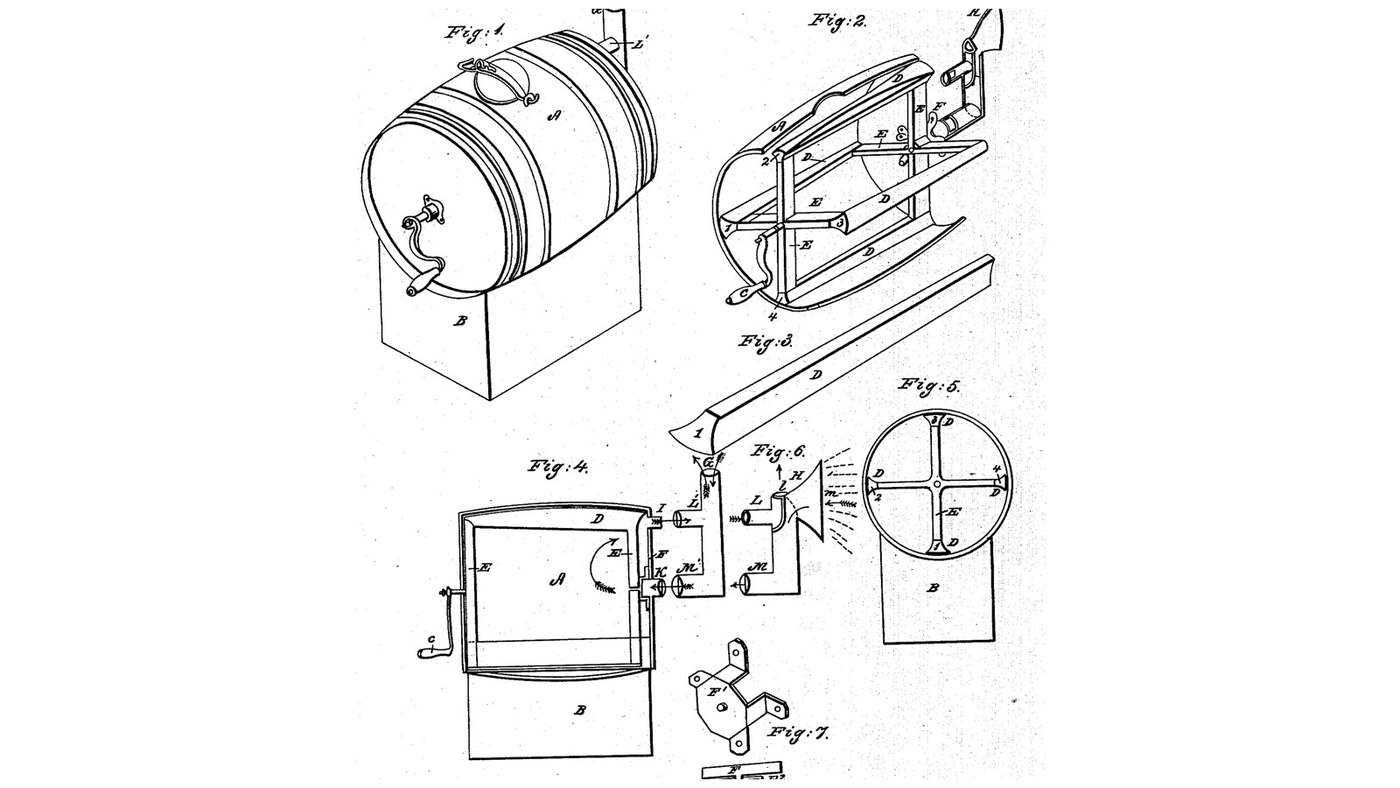

Atmospheric Barrel Churn: Reversed Concave Dashers Close to the Staves, Fresh or Warmed Air Piped to the Middle
Henry Rohrer of Strasburg township, Pennsylvania, received US 26,377, dated 6 December 1859, for improvements to the common barrel churn, which he named the "Champion atmospheric churn". Four concave, tapering dashers run close to the staves with their wide and narrow ends alternating, so they rub as well as beat. Two tubes through the rear head let fresh air into the middle and steam and musty air out; in winter a funnel-mouthed pipe set near a hot stove brings warm air instead.
The patent gives no sizes; every size here is ours.
Intermedio
About 2 days, plus printing
Instrucciones
1
1
Rohrer's temperatures, and the dashers' sweep
Rohrer's temperatures, and the dashers' sweep
Cargando el cuaderno de Jupyter…
2
2
Air into the cream, three weeks before
Air into the cream, three weeks before
Clow pumped air in at the bottom. Rohrer lets it in by pipes alone, warmed from the stove when needed.
3
3
Read US 26,377
Read US 26,377
"The concaved, tapering sides of the dashers with the wide end of the one followed by the narrow end of the other in its revolutions, produces side eddies as well as being beaten and partially retained by the concaved side; thus a thorough mixing is produced, while a constant supply of fresh air is admitted through the pipe G to the center of the churn"
4
4
Print the step F
Print the step F
A raised open step 80 x 80 mm and 55 mm deep, open at the sides, with a 17 mm socket for the rear pivot. PETG, 0.2 mm layers, 40 % infill, 4 walls.
5
5
Barrel A, base B and hatch
Barrel A, base B and hatch
Use a wooden barrel about 450 mm long inside, 320 mm across at the heads. Cut a 120 mm hatch in the bilge with a hardwood lid. Bore the front head 17 mm in its centre for the shaft. Bore the rear head 21 mm in its centre for tube K and 21 mm 120 mm above it for tube I. Make a cradle of two shaped hardwood saddles on a base board so the barrel lies level. Fill the barrel with water overnight so it swells tight, then empty it.
Materiales para este paso:
 Barril de madera1 pieza
 Tabla de madera dura2 piezas
 Cola de carpintero1 pieza
 Tornillos para madera12 piezas
Herramientas necesarias:
 Sierra de calar
 Brújula
 Taladro inalámbrico
 Juego de brocas de pala
 Sierra de mesa
 Sargento
 Cinta métrica
 Agua
6
6
Dashers D and crosses E
Dashers D and crosses E
Shave four hardwood dashers 400 mm long, tapering from 70 to 35 mm wide, with a 20 mm deep concave face on the inner side and the outer edge left straight. Make two crosses of hardwood 15 x 24 mm, 290 mm across, and screw the dashers to their ends, outer edges 150 mm from the centre, the wide ends alternately at the front and the rear. Fix the front cross on a 16 mm stainless shaft through the front head with a crank C outside, and a 16 mm pivot on the rear cross's centre.
Materiales para este paso:
Tabla de madera dura2 piezasTornillos para madera16 piezas Varilla de acero inoxidable1 pieza
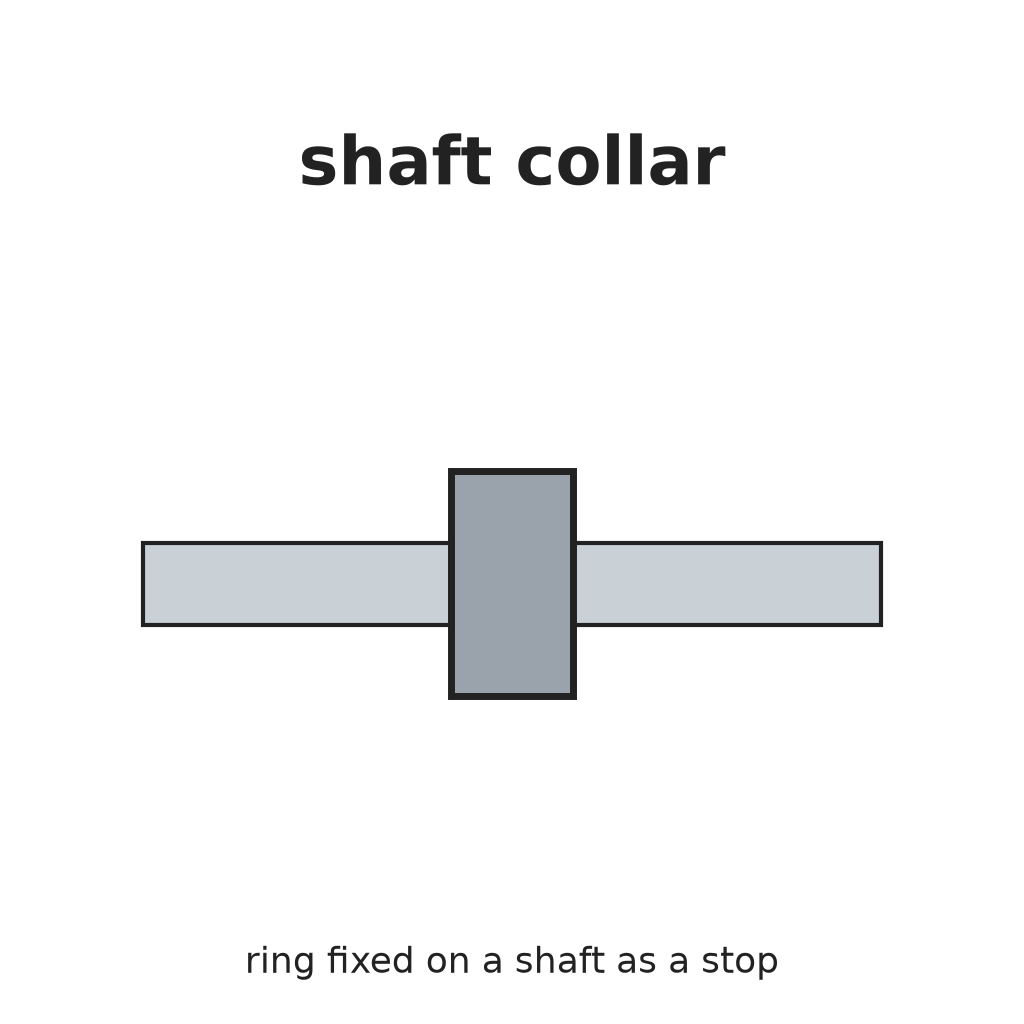 Shaft Collar2 piezas
 Espigas de madera dura1 piezaCola de carpintero1 pieza
Herramientas necesarias:
 Cuchilla de dos manosSierra de mesaTaladro inalámbrico
 Juego de brocas
 Sierra para metales
 Limas (lima de mano)
 Juego de destornilladores
 Papel de lijaCinta métrica
7
7
Step F, tubes I and K, pipes G and H
Step F, tubes I and K, pipes G and H
Screw the printed step over the rear head's centre hole, its socket on the axis. Seal two 20 mm stainless tubes, 70 mm long, through the rear head: K in the centre under the step, I above it. Make the atmospheric pipe G: an upright stainless tube open at its top, joined to I and K by short tubes and elbows. For winter make pipe H: a stainless funnel, mouth m, on a tube to K, with a tee on the tube from I open as the vent l; set the funnel near a warm stove, never on it, and use silicone tube for the joints.
Materiales para este paso:
 Tubo de acero inoxidable2 piezas
 Tubo de silicona1 pieza
 Embudo de acero inoxidable1 pieza
 Sellador de silicona1 piezaTornillos para madera4 piezas
 Filamento PETG1 pieza
Herramientas necesarias:
 Impresora 3D de filamento (FDM)Sierra para metalesLimas (lima de mano)
 Soplete de propano
 Tornillo de banco
 Guantes resistentes al calorJuego de destornilladores
8
8
The build in 3D
The build in 3D
FreeCAD model of this build, the barrel, heads and cradle cut through the middle: the four alternately reversed dashers on their two crosses, the shaft and crank, the step F on the rear head over tube K, tube I, and the atmospheric pipe G outside. The frame was turned through a quarter turn.
9
9
Churn
Churn
Fill the barrel about half full with heavy cream, about 15 litres. Bring it to 15-18 °C, checked with the thermometer; in winter put pipe H on with its funnel near the warm stove, otherwise pipe G. Close the hatch and turn the crank steadily, timing it. When the butter comes, open the hatch, take out the butter, drain the buttermilk, wash the butter in cold water until it runs clear, salt and weigh it.
Materiales para este paso:
 Crema de leche espesa15 l
 Sal marina gruesa1 piezaAgua1 pieza
Herramientas necesarias:
 Termómetro de sonda permanente
 Cronómetro
 Báscula digital de cocina
 Bol grande de acero inoxidable
10
10
Troubleshooting
Troubleshooting
Atmospheric barrel churn troubleshooting.
Flow
Loading...
11
11
History and honest limits
History and honest limits
**Henry Rohrer** of Strasburg township, Lancaster County, Pennsylvania, US 26,377, 6 December 1859, "Churn". He knew of other ways of bringing air to cream, and claimed the tubes I, K in the rear head with the pipes G and H, mouth m, partition l and tubes L, M, with the dashers D on an open step F. He says he "tested in my own buttery to my entire satisfaction". The patent gives no sizes; every size here is ours. His temperatures, 60 to 65 °F, are 15.6 to 18.3 °C.
Materiales
15- 1 piezaMarcador de posición
- 2 piezasMarcador de posición
- 2 piezasMarcador de posición
- 32 piezasMarcador de posición
- 1 piezaMarcador de posición
- 2 piezasMarcador de posición
- 1 piezaMarcador de posición
- 2 piezasMarcador de posición
- 1 piezaMarcador de posición
- 1 piezaMarcador de posición
- 1 piezaMarcador de posición
- 1 piezaMarcador de posición
- Marcador de posición
- 1 piezaMarcador de posición
- 1 piezaMarcador de posición
Herramientas requeridas
22- 1 vendor sell this, none ship to you yetMarcador de posición
- Marcador de posición
- 1 vendor sell this, none ship to you yetMarcador de posición
- Marcador de posición
- 1 vendor sell this, none ship to you yetMarcador de posición
- Marcador de posición
- 1 vendor sell this, none ship to you yetMarcador de posición
- Marcador de posición
- Marcador de posición
- Marcador de posición
- Marcador de posición
- Marcador de posición
- Marcador de posición
- Marcador de posición
- Marcador de posición
- Marcador de posición
- Marcador de posición
- Marcador de posición
- Marcador de posición
- Marcador de posición
- Marcador de posición
- Marcador de posición
Archivos de diseño
2

Blueprints relacionados
Estos blueprints comparten conocimiento — técnicas, materiales o principios
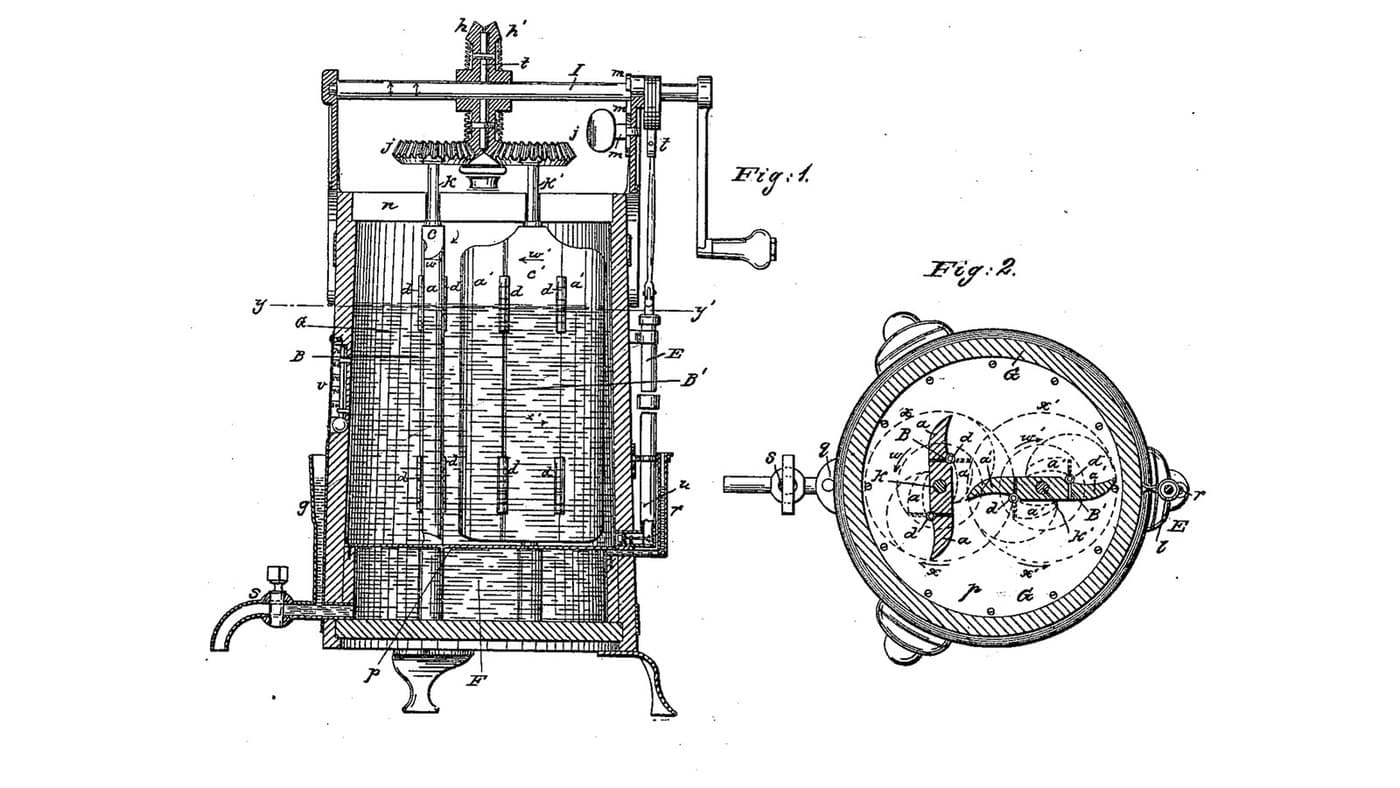
Contrary Hinged-Dasher Air-Pump Churn: Two Crossing Dashers Fold to Gather, a Pump Blows Air Through the Cream
por Buttercup
COMIDA Y BEBIDAS
0
0
0
0
0
0
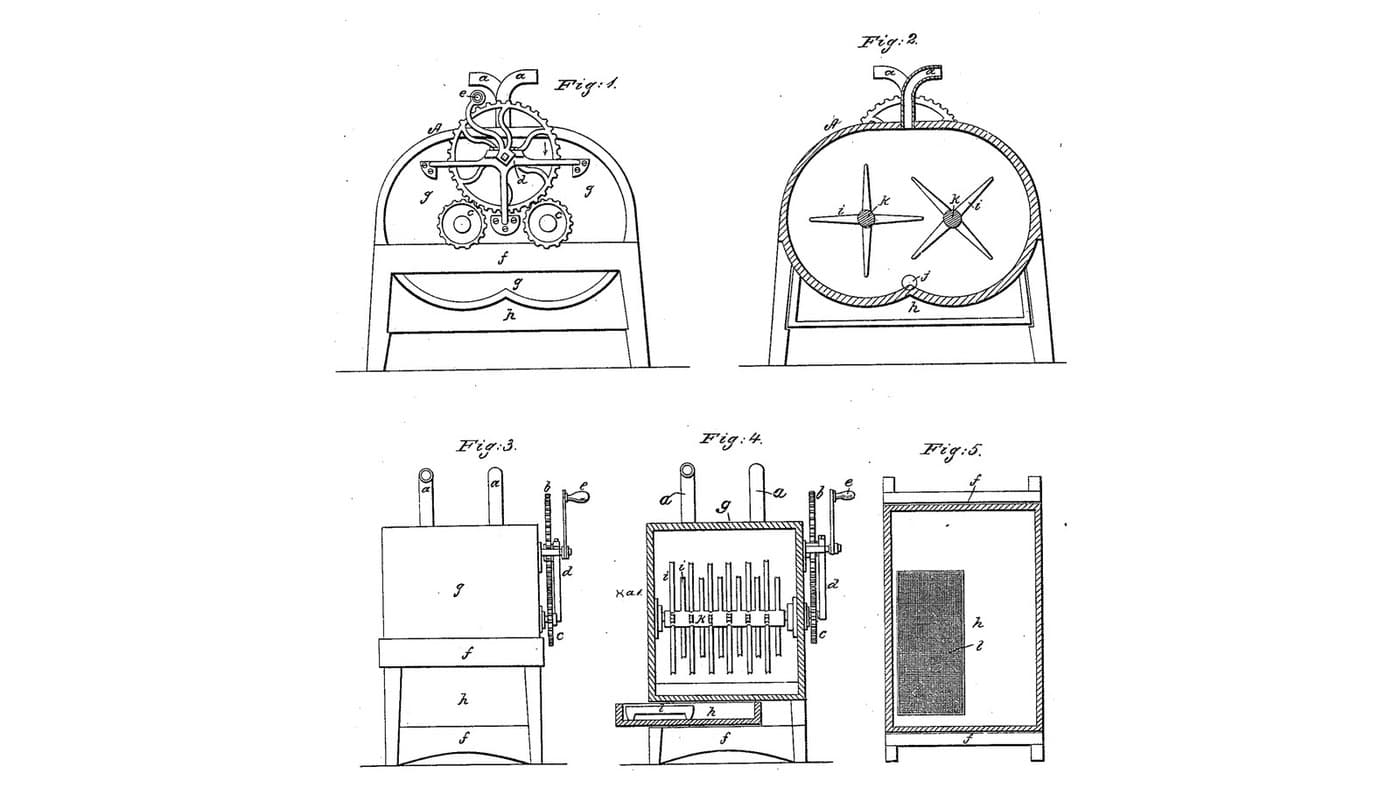
Double Rotary Crag Churn: Two Shafts of Four-Edged Arms Turn Through Each Other in Twin Half-Cylinders
por Buttercup
Carpintería
3
0
0
0
0
0

Churning Butter from Cream — The 5,000-Year-Old Fat Separation
por TheChef
ARTESANÍA
60
0
0
0
0
0
CC0 Dominio público
Este Blueprint se publica bajo CC0. Eres libre de copiar, modificar, distribuir y usar este trabajo para cualquier propósito, sin pedir permiso.
Apoya al Maker comprando productos a través de su Blueprint, donde gana una Comisión del Maker establecida por los vendedores, o crea una nueva iteración de este Blueprint e inclúyela como conexión en tu propio Blueprint para compartir ingresos.