Colaboración
ARTE
BELLEZA Y BIENESTAR
ARTESANÍA
CULTURA E HISTORIA
ENTRETENIMIENTO
MEDIO AMBIENTE
COMIDA Y BEBIDAS
INGENIERÍA INVERSA
CIENCIAS
DEPORTES
TECNOLOGÍA
TECNOLOGÍA VESTIBLE
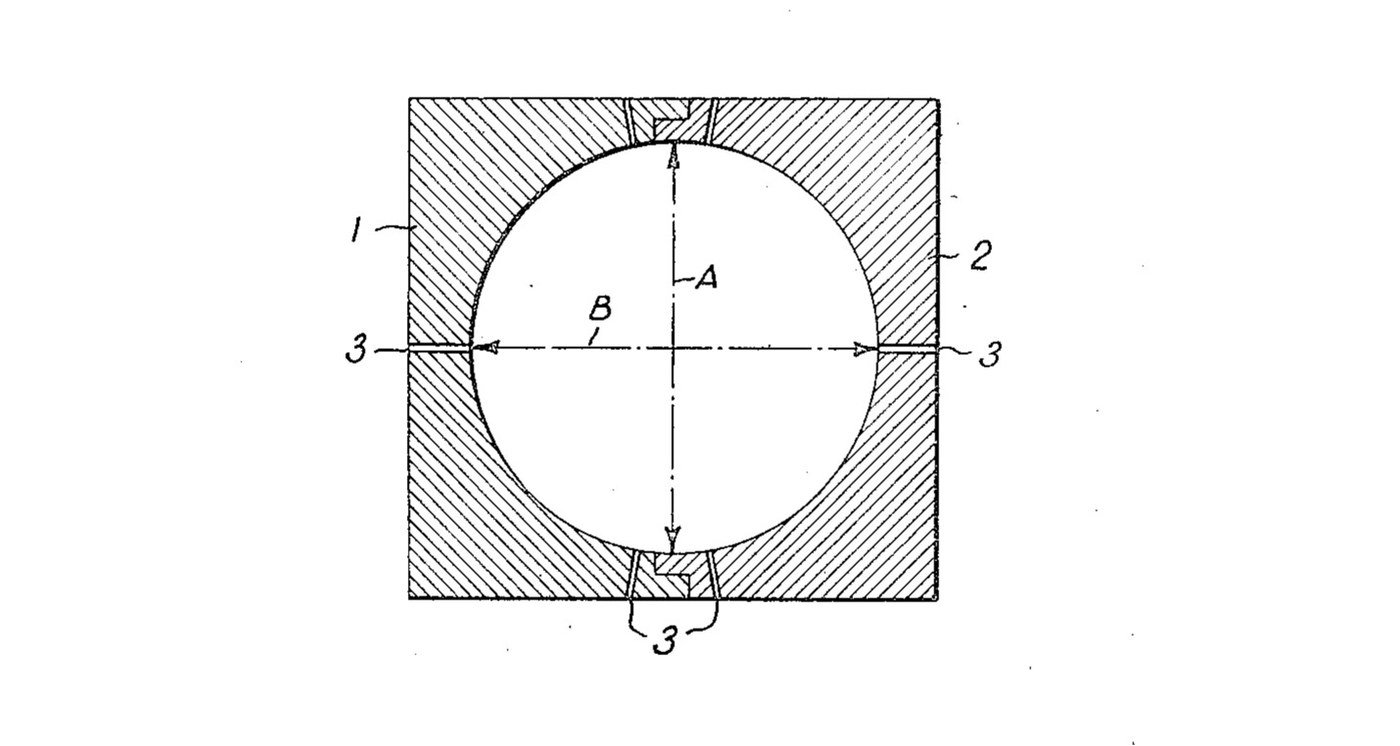
J. M. Jaques · Public domain (US patent)


Table Tennis Balls: Celluloid Halves Blown in an Out-of-Round Mould (Jaques 1935)
A celluloid table tennis ball is two stamped halves sealed with acetone, then blown out round by its own air in a hot mould. The overlapped seam shrinks a little as it cools, so the ball ends slightly narrower across the seam. John Jaques made the mould wider across the seam by just that amount, so the ball cools truly round.
Source: J. M. Jaques, US 2,025,455 (1935). The patent gives no sheet thickness, ball size or temperatures. The press, pot and micrometer are ours. Picture: the patent drawing.
Intermedio
1 day
Instrucciones
1
1
Stamp two halves from hot sheet
Stamp two halves from hot sheet
Stamp two half-balls out of celluloid sheet while it is hot. The patent gives no temperature.
Materiales para este paso:
 Celuloide1 hoja
Herramientas necesarias:
 Troquel de embutir semiesferas
 Prensa de estampación
2
2
Seal the halves with acetone
Seal the halves with acetone
Wet the edges of both halves with acetone, fit them together with the edges overlapping and let them seal. You now have a closed rough ball with a seam round its middle.
Herramientas necesarias:
 Acetona
3
3
Measure the seam shrinkage
Measure the seam shrinkage
Blown balls come out narrower across the seam than across the poles: about one to two ten-thousandths of an inch on the celluloid balls Jaques measured. For your own celluloid, measure it on a test ball.
Herramientas necesarias:
 Micrómetro
4
4
Use a mould wider at the seam
Use a mould wider at the seam
The split mould is not a true sphere. Measured in the plane where its two halves meet (diameter A), it is wider than at right angles to that plane (diameter B) by the amount the seam shrinks, and it has small vents to let air out.
Herramientas necesarias:
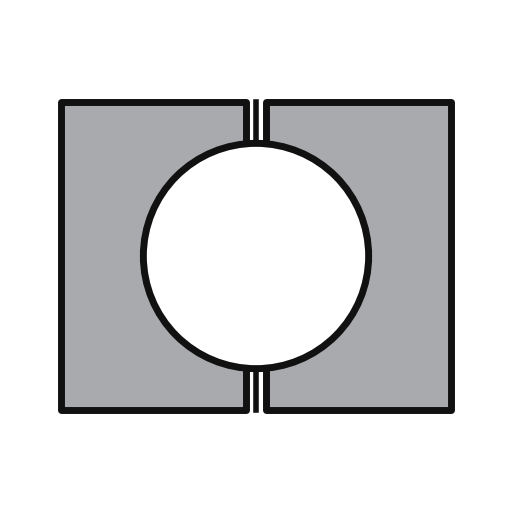 Molde partido para bolasMicrómetro
5
5
Set the ball seam to joint
Set the ball seam to joint
Lay the rough ball in the mould with its seam exactly on the mould joint, and hold it there with a little petroleum jelly so it cannot move.
Herramientas necesarias:
Molde partido para bolas Vaselina
6
6
Blow it out in hot water
Blow it out in hot water
Close the mould and put it in hot water. The air inside the ball expands and blows the ball out to fill the mould.
Herramientas necesarias:
Molde partido para bolas Olla grande
 Agua
7
7
Cool and take out
Cool and take out
Let the mould cool, then open it and take the ball out. As the seam shrinks it comes back to the same diameter as the rest, so the ball is as near round as it can be.
Herramientas necesarias:
Molde partido para bolasHerramientas requeridas
8- Marcador de posición
- Marcador de posición
- Marcador de posición
- Marcador de posición
- Marcador de posición
- Marcador de posición
- Marcador de posición
- Marcador de posición
Este plano hace
CC0 Dominio público
Este Blueprint se publica bajo CC0. Eres libre de copiar, modificar, distribuir y usar este trabajo para cualquier propósito, sin pedir permiso.
Apoya al Maker comprando productos a través de su Blueprint, donde gana una Comisión del Maker establecida por los vendedores, o crea una nueva iteración de este Blueprint e inclúyela como conexión en tu propio Blueprint para compartir ingresos.