ARTE
BELLEZA Y BIENESTAR
ARTESANÍA
CULTURA E HISTORIA
ENTRETENIMIENTO
MEDIO AMBIENTE
COMIDA Y BEBIDAS
INGENIERÍA INVERSA
CIENCIAS
DEPORTES
TECNOLOGÍA
TECNOLOGÍA VESTIBLE
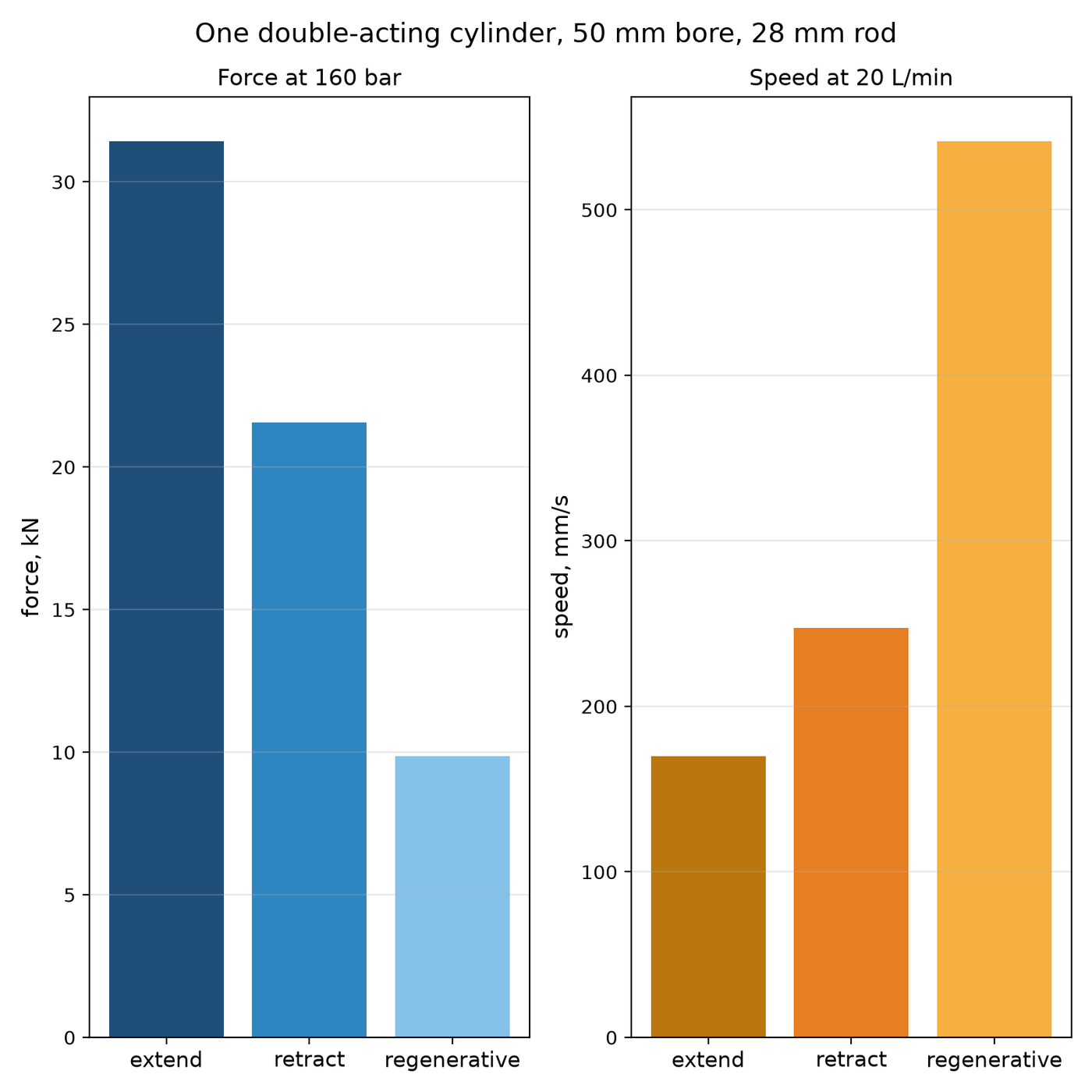
Youblob (generated from this blueprint's notebook) · CC0


The Double-Acting Cylinder: Push With the Bore, Pull With the Ring
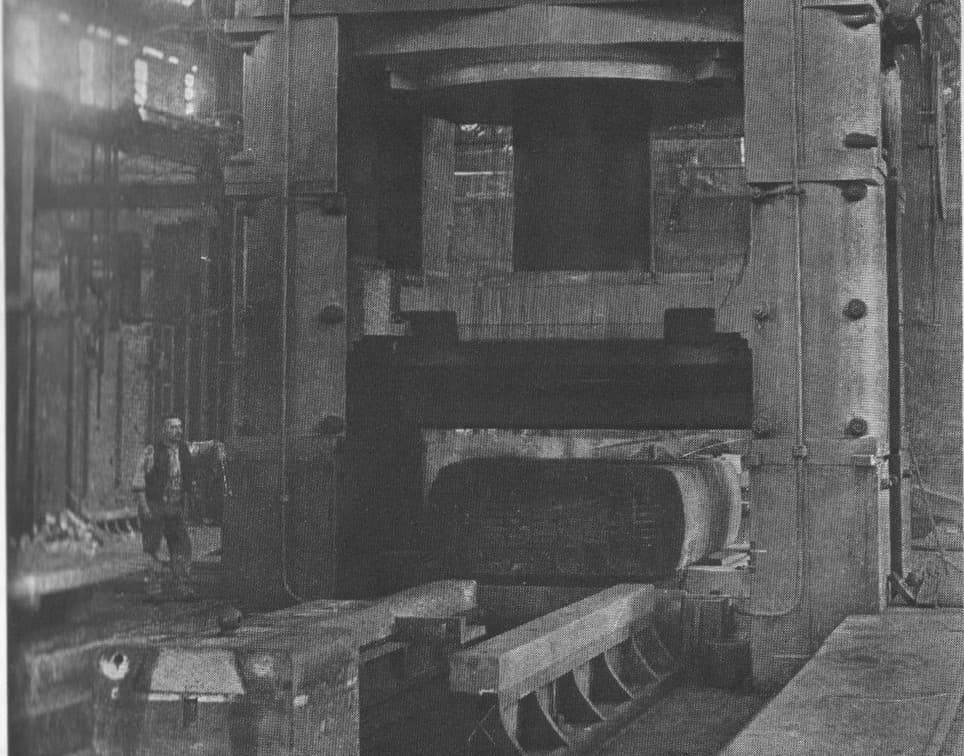
Bramah's press and the hydraulic jack push one way and let the load fall back. Most machines need power in both directions: a digger's arm, a tractor's lift, a press that must open as well as close. The double-acting cylinder has a port at each end, so oil drives the piston out and oil drives it back.
The rod makes the two directions unequal. Pushing uses the whole bore; pulling uses only the ring round the rod. That one fact decides a cylinder's forces and speeds, hides a pressure trap that can burst a hose, and — with a long stroke — lets the rod buckle long before the oil runs out of pressure.
This rung works all three out and builds a double-acting cylinder from a syringe to measure the difference.
Principiante
About 3 hours
Instrucciones
1
1
Force, speed, intensification and buckling
Force, speed, intensification and buckling
Cargando el cuaderno de Jupyter…
2
2
Start from Pascal's principle
Start from Pascal's principle
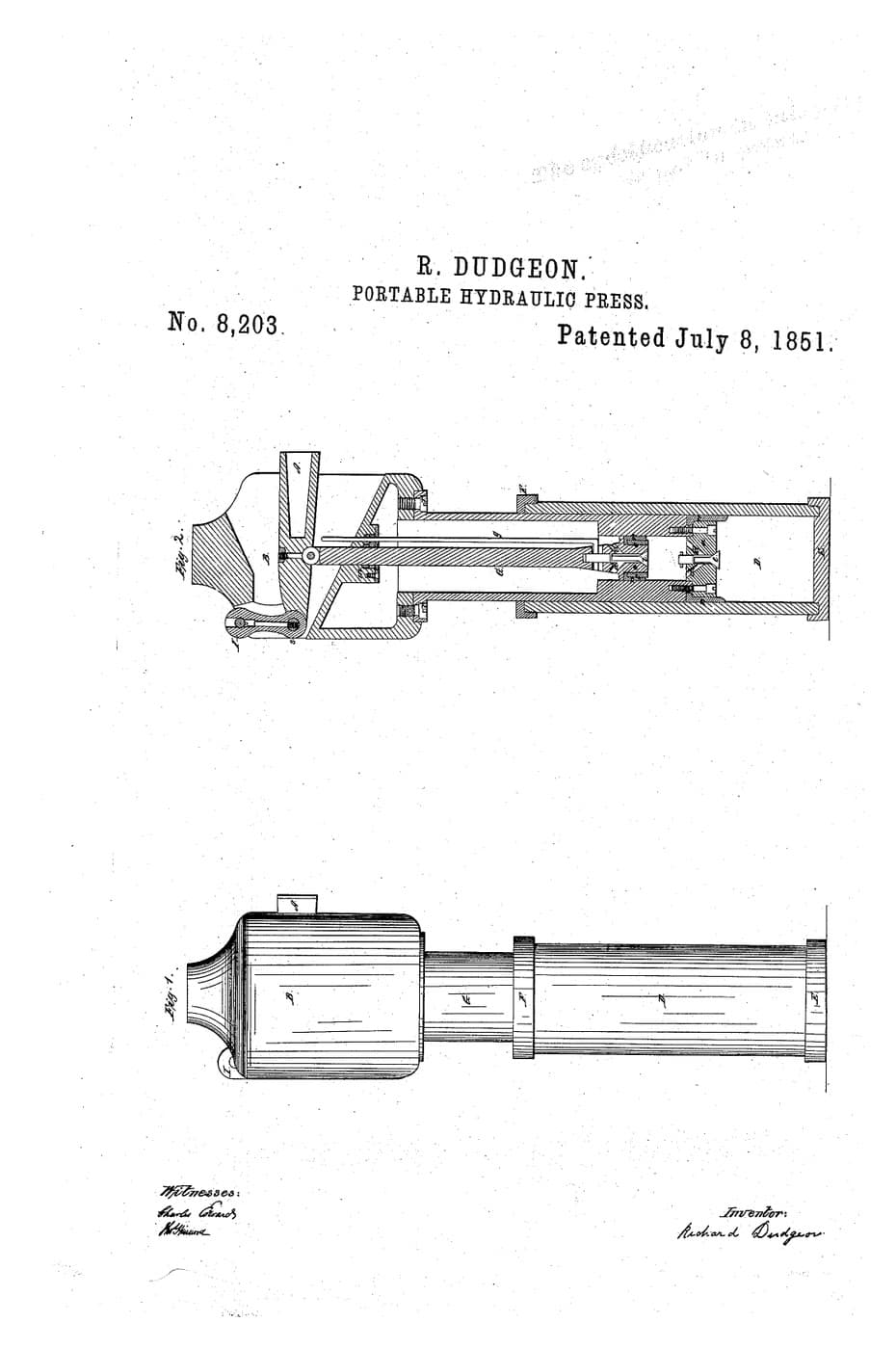
Every cylinder turns pressure into force by area. The embedded blueprint shows it in its first working form, Bramah's single-acting press.
3
3
Make a syringe double-acting
Make a syringe double-acting
A syringe is single-acting: it has one sealed chamber. Make it double-acting by closing its open end.
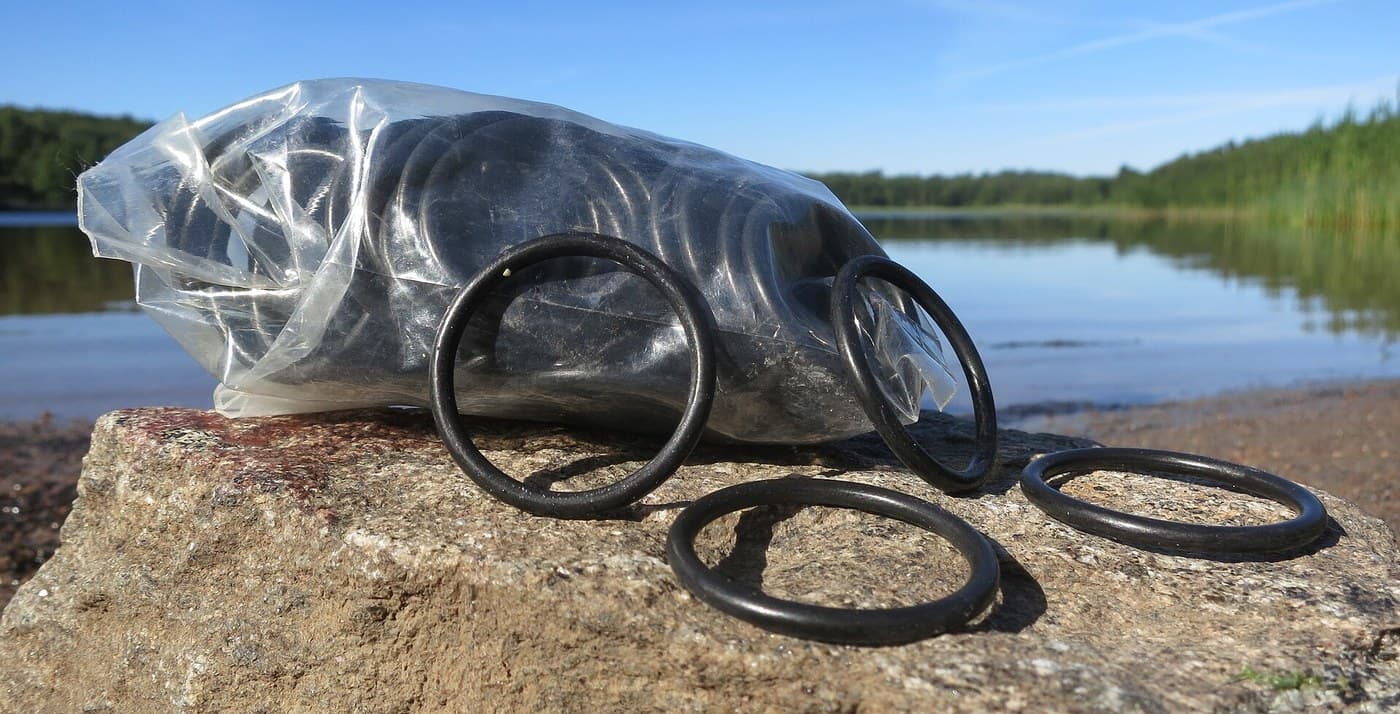
Measure the barrel bore and the plunger rod with a caliper. 3D-print an end cap that slides over the barrel's open end, with a central hole for the rod carrying an O-ring in a groove (the gland), and a side port with a hose barb. Seal the cap to the barrel with silicone sealant. Cut the plunger's cross-shaped rod down to a round pushrod: glue a steel dowel pin into it so the O-ring seals on a smooth round rod.
Fill both chambers and two hand syringes with coloured water, bleeding out every bubble. Connect one hand syringe to the tip (cap side) and one to the new side port (rod side).
Materiales para este paso:
 Juego de jeringas1 pieza
 Pasador de acero1 pieza
 Surtido de juntas tóricas1 pieza
 Tubo de silicona1 metro
 Sellador de silicona1 pieza
 Agua1 litro
 Colorante alimentario (tinte para visualizar el flujo)1 pieza
Herramientas necesarias:
 Impresora 3D de filamento (FDM)
 Filamento PETG
 Calibre digital de 6 pulgadas
 Pistola de cola caliente
4
4
Measure the two directions
Measure the two directions
From your measured bore $D$ and rod $d$, work out the travel that 2 mL should give each way: $2000 / A_{cap}$ mm going out, $2000 / A_{ann}$ mm coming back (areas in mm²).
Push 2 mL into the cap side, with the rod-side hand syringe free to fill, and measure the rod's travel with the caliper. Then push 2 mL into the rod side and measure the travel back. Repeat three times each way. The return stroke is longer for the same volume — exactly the ratio $A_{cap}/A_{ann}$ in the notebook.
Now hold the rod-side hand syringe's plunger firmly and push gently on the cap side: you feel the rod-side plunger pushed back hard. That is intensification. Do not push hard — a syringe is not rated for it.
Herramientas necesarias:
Calibre digital de 6 pulgadas Regla
 Gafas de seguridad transparentes
5
5
A cylinder that misbehaves
A cylinder that misbehaves
Cylinder faults show up as a handful of symptoms.
Flow
Loading...
6
6
Context and honest limits
Context and honest limits
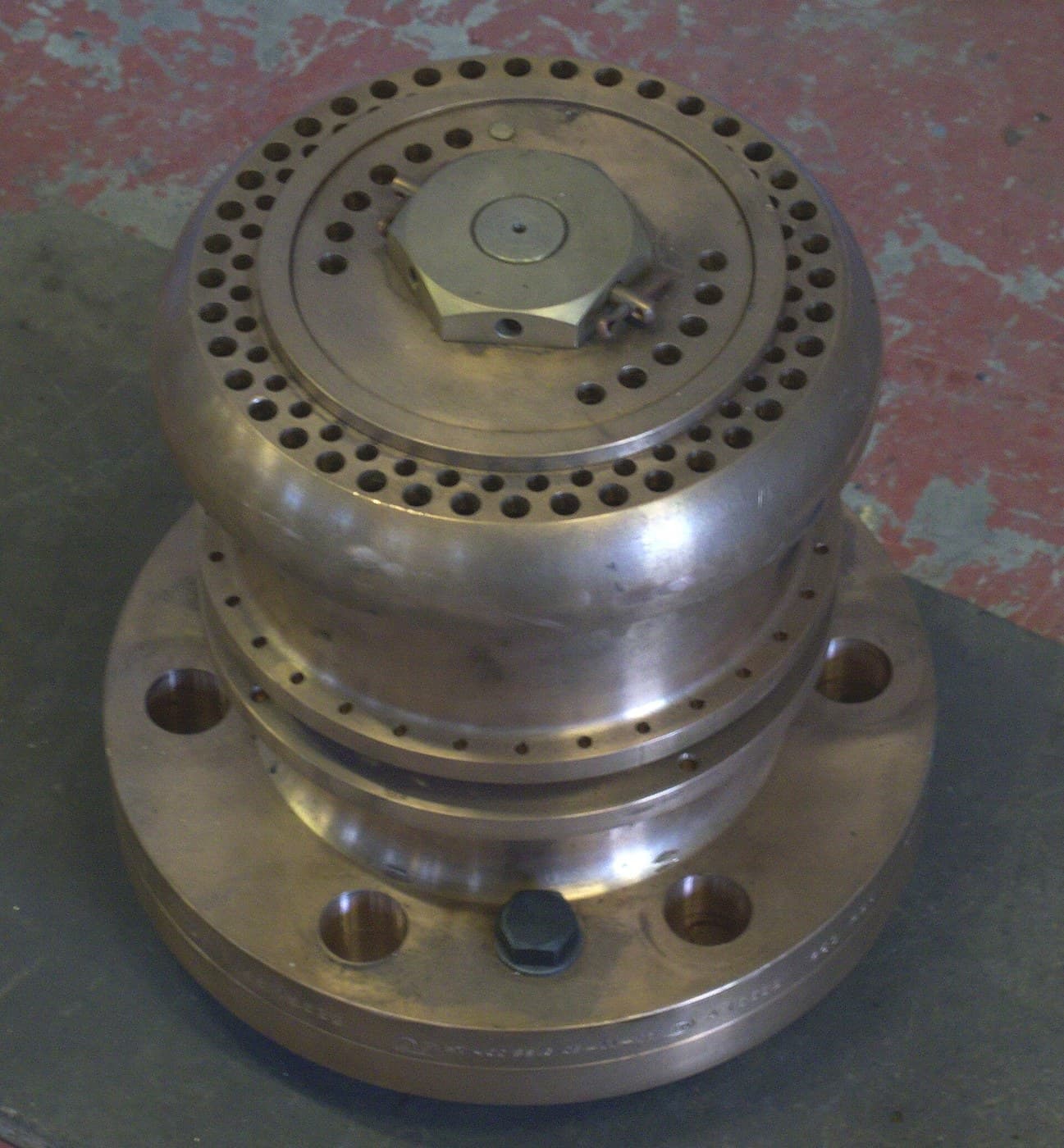
The double-acting cylinder is not one invention but the working form every hydraulic machine settled on: a honed tube, a piston with seals, a chromed rod through a gland with a wiper, and a port at each end. Its sizes are standardised, so a cylinder of one make fits the mountings of another.
**Honest limits.** A cylinder only turns pressure into force; the valve decides where it goes and the pump how fast. Real cylinders lose a little force to seal friction and need cushions at the ends of stroke, which the notebook leaves out. And hydraulic oil at working pressure can pierce skin from a pinhole leak: never feel for a leak with your hand.
Materiales
7- 1 piezaMarcador de posición
- 1 piezaMarcador de posición
- 1 piezaMarcador de posición
- 1 metroMarcador de posición
- 1 piezaMarcador de posición
- 1 litroMarcador de posición
- Marcador de posición
Herramientas requeridas
6- Marcador de posición
- Marcador de posición
- Marcador de posición
- Marcador de posición
- Marcador de posición
- Marcador de posición
Blueprints relacionados
Estos blueprints comparten conocimiento — técnicas, materiales o principios



CC0 Dominio público
Este Blueprint se publica bajo CC0. Eres libre de copiar, modificar, distribuir y usar este trabajo para cualquier propósito, sin pedir permiso.
Apoya al Maker comprando productos a través de su Blueprint, donde gana una Comisión del Maker establecida por los vendedores, o crea una nueva iteración de este Blueprint e inclúyela como conexión en tu propio Blueprint para compartir ingresos.