ARTE
BELLEZA Y BIENESTAR
ARTESANÍA
CULTURA E HISTORIA
ENTRETENIMIENTO
MEDIO AMBIENTE
COMIDA Y BEBIDAS
INGENIERÍA INVERSA
CIENCIAS
DEPORTES
TECNOLOGÍA
TECNOLOGÍA VESTIBLE
The Gas Turbine: When the Turbine Finally Beat Its Own Compressor
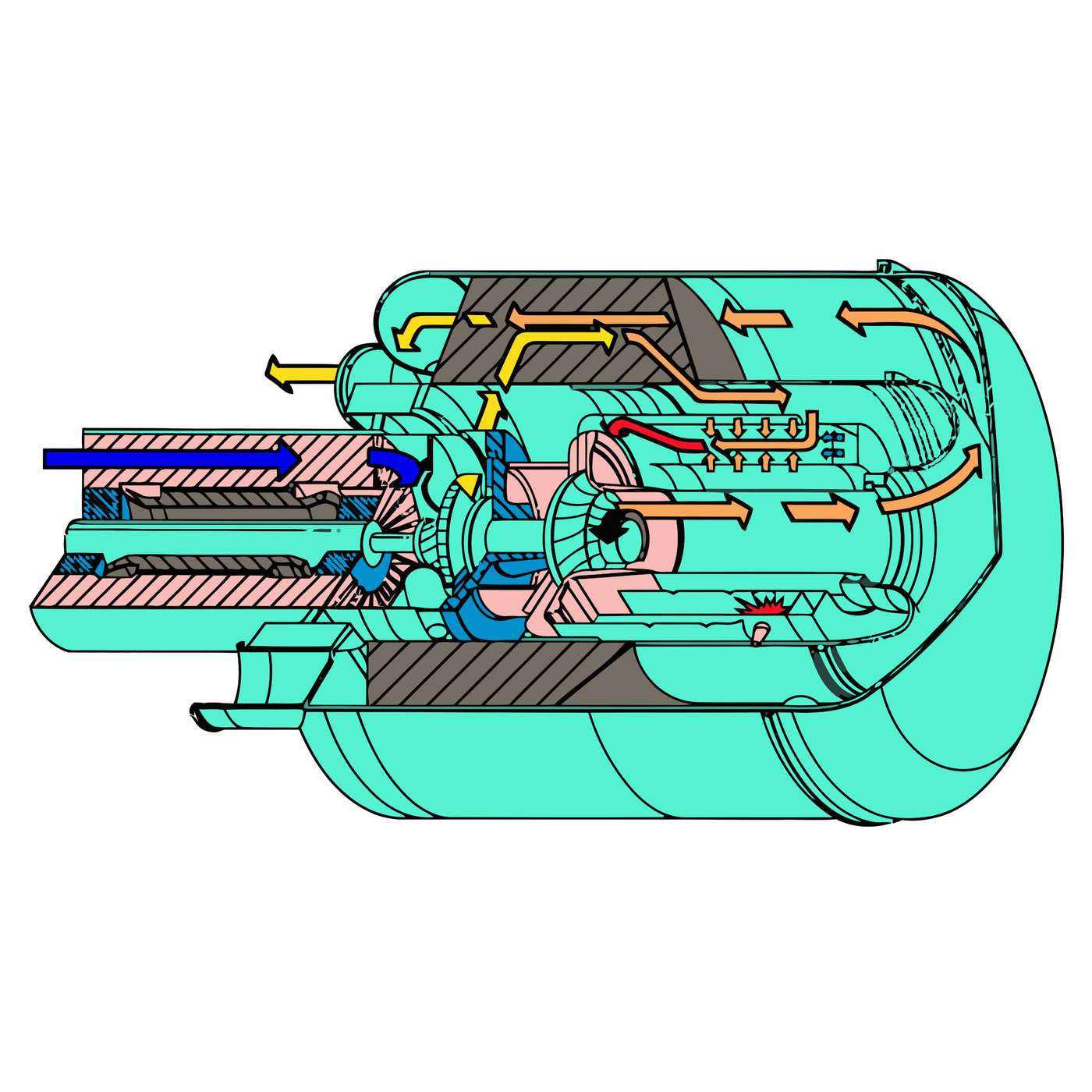
Compress air, burn fuel in it, and expand the hot gas through a turbine that also turns the compressor. The idea is simple and old. Making it work took until 1903, when the Norwegian engineer Ægidius Elling ran the first gas turbine that delivered more power than its own compressor consumed.
The difficulty is arithmetic. The compressor takes most of what the turbine makes, so small losses in either machine wipe out the net output entirely. It needed efficient compressors and turbine metal that could stand red heat — and the Whittle turbojet in this catalogue is the result.
This rung works out the arithmetic, then demonstrates it safely with an air turbine and a compressor on the bench.
Intermedio
About 3 hours
Instrucciones
1
1
Net work: turbine minus compressor
Net work: turbine minus compressor
Cargando el cuaderno de Jupyter…
2
2
Demonstrate the energy bill with compressed air
Demonstrate the energy bill with compressed air
No combustion here. Print a small impulse air turbine — a 60 mm wheel with 20 cupped buckets — on the shaft of a hobby motor used as a generator, with a 330 Ω load and the multimeter across it. Blow it with the air compressor through the regulator and a nozzle made from a short piece of tube.
Measure the electrical power out (V² ÷ R). Then measure the power the compressor draws from the wall while it runs — the clamp meter on the live conductor, times the mains voltage.
The turbine returns a tiny fraction of what the compressor took. That is the gas turbine's problem without the fuel: compression is expensive, and only by adding heat between compressor and turbine does the turbine get back more than it cost.
Materiales para este paso:
 Filamento PETG30 g
 Motorreductor1 pieza
 Resistencia de 330 ohmios1 pieza
 Tubo de vinilo transparente0.5 metro
Herramientas necesarias:
 Compresor de aire
 Regulador reductor de presión
 Multímetro
 Pinza amperimétrica CA/CC de 600 A
 Impresora 3D de filamento (FDM)
 Gafas de seguridad transparentes
 Protección auditiva (orejeras, SNR 30 dB)
3
3
History and context
History and context
**Ægidius Elling, Norway, 1903** — the first gas turbine to deliver net power — more than its own compressor consumed. No patent number is asserted here, and the details of his machine are left to the sources; the principle is the payload. Earlier attempts had failed exactly as the notebook predicts: the compressor ate all the turbine's output.
The line runs through Büchi's turbocharger (the next rung) — a gas turbine driving a compressor, fed by an engine's exhaust — to the Whittle turbojet and the power-station gas turbine.
**Honest limits.** Efficiency depends on turbine inlet temperature, which is limited by materials and cooling; small gas turbines are inefficient; and part-load efficiency falls away. **Do not build a combustion gas turbine**: the parts spin at speeds where a failure is a shrapnel event, and the combustor is a blowtorch.
Materiales
4- 30 gMarcador de posición
- Marcador de posición
- 1 piezaMarcador de posición
- 0.5 metroMarcador de posición
Herramientas requeridas
7- 1 vendor sell this, none ship to you yetMarcador de posición
- Marcador de posición
- Marcador de posición
- Marcador de posición
- Marcador de posición
- Marcador de posición
- Marcador de posición
Blueprints relacionados
Estos blueprints comparten conocimiento — técnicas, materiales o principios
Parsons Steam Turbine
por Martin
Física
50
0
0
0
0
0
The Heat of Compression: Why Compressed Air Is Hot and Wet
por Martin
Mecánica
37
0
0
0
0
0
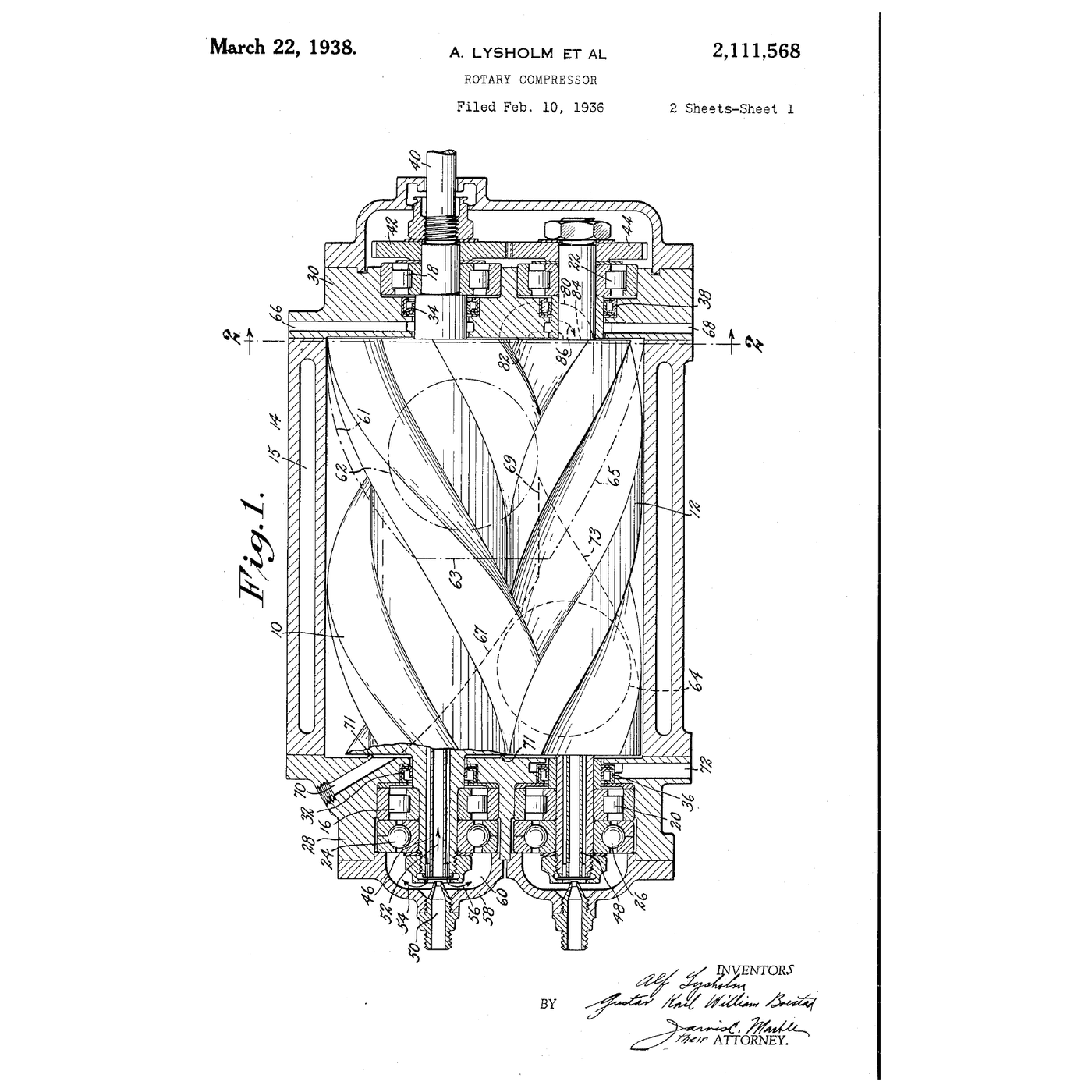
The Screw Compressor: A Built-In Ratio, and the Cost of the Wrong One
por Martin
Mecánica
36
0
0
0
0
0

The Rotary Regenerator: Store Heat in a Wheel and Carry It Across
por Martin
Mecánica
36
0
0
0
0
0

The Sirocco Fan: Many Shallow Forward-Curved Blades
por Emma
Mecánica
36
0
0
0
0
0
CC0 Dominio público
Este Blueprint se publica bajo CC0. Eres libre de copiar, modificar, distribuir y usar este trabajo para cualquier propósito, sin pedir permiso.
Apoya al Maker comprando productos a través de su Blueprint, donde gana una Comisión del Maker establecida por los vendedores, o crea una nueva iteración de este Blueprint e inclúyela como conexión en tu propio Blueprint para compartir ingresos.