ARTE
BELLEZA Y BIENESTAR
ARTESANÍA
CULTURA E HISTORIA
ENTRETENIMIENTO
MEDIO AMBIENTE
COMIDA Y BEBIDAS
INGENIERÍA INVERSA
CIENCIAS
DEPORTES
TECNOLOGÍA
TECNOLOGÍA VESTIBLE



The Hoof-Cleaner Pocket Knife: Blade, Box Opener, Hoof Pick, Hammer and Corkscrew in One Handle
A horseman needs a hoof pick, a knife, a small hammer and a corkscrew, and carries them separately.
Thomas Davis of Scranton, Pennsylvania, received US 177,696, dated 23 May 1876, for "an implement containing a number of useful tools arranged in a neat and compact form; and it consists of a knife-blade, cigar-box opener, hammer, corkscrew, and hoof-cleaner combined with a suitable inclosing-case or handle". The knife blade and cigar-box opener pivot at one end, the hoof-cleaner at the other, each held by springs in the handle's back as in an ordinary clasp-knife; a small hammer head is fixed at the hoof-cleaner end, and a corkscrew folds between two flanges of the handle.
This rung works out how the back spring holds each tool, then builds the knife from flat-bar liners with a spring-steel back spring, stainless tools, a riveted hammer and a wound corkscrew, and uses each tool.
Avanzado
About 6 hours
Instrucciones
1
1
The back spring
The back spring
Cargando el cuaderno de Jupyter…
2
2
A pocket implement before it
A pocket implement before it
The embedded blueprint hangs small tools inside tweezers. Davis builds his like a clasp knife, with springs that hold each tool open or shut, and adds a hoof-cleaner for the horse.
3
3
Read US 177,696
Read US 177,696
"In the drawings, H represents the inclosing case or handle of the implement; A B, a knife-blade and cigar-box opener, respectively, arranged at one end of the handle on a common pivot; and C, a hoof-cleaner, located at the opposite end of the handle. Each of these devices is held in position by springs in the back of the handle similar to those employed in any ordinary clasp-knife."
"D is a small hammer-head, secured to the end of the handle carrying the hoof-cleaner; and E is a corkscrew pivoted between two extensions or flanges, e, of the handle. The corkscrew can be folded down between said flanges and the knife-blade, box-opener, and hoof-cleaner concealed within the handle when not in use."
4
4
Build the knife and use each tool
Build the knife and use each tool
**Liners and scales.** Cut two 10 cm liners from 20 × 3 mm flat bar, shaped as a knife handle, and two hardwood scales to match. Leave two short tabs on the liners' middle as the flanges e for the corkscrew.
**Tools.** From stainless steel sheet, cut a knife blade and a cigar-box opener with a thin bent lip, both with tangs to pivot at one end, and a curved hoof pick with a tang for the other end. File each tang's end with a flat and a corner, as a clasp knife's.
**Back springs.** Cut two strips about 2 mm thick from spring steel to lie along the handle's back between the liners, one for each end, each pressing on the tangs' flats.
**Assemble.** Pin the tools and springs between the liners with rivets through the scales. Rivet a short block of steel square bar at the hoof-pick end as the hammer D. Wind a small steel-wire helix, set its straight end on a pin between the flanges so it folds down.
**Test.** Open and shut each tool and feel it snap. Clean a hoof or a muddy boot sole with the pick, open a wooden box, tap in a tack, and draw a cork.
Materiales para este paso:
 Pletina de acero dulce0.25 metro
 Bloque de madera dura1 pieza
 Chapa de acero inoxidable1 pieza
 Fleje de acero para muelles0.15 metro
 Redondo de acero dulce0.05 metro
 Barra cuadrada de acero dulce0.03 metro
 Alambre de acero0.3 metro
 Remaches de acero4 piezas
 Corchos1 pieza
 Botella de vidrio (transparente)1 pieza
Herramientas necesarias:
 Sierra para metales
 Tijeras de chapa
 Limas (lima de mano)
 Juego de limas de aguja
 Tornillo de banco
 Martillo
 Taladro inalámbrico
 Juego de brocas
 Juego de remachar
 Alicates de punta redonda
 Piedra de afilar
 Guantes de trabajo de cuero
 Gafas de seguridad transparentes
5
5
A knife whose tools flop, stick or will not snap
A knife whose tools flop, stick or will not snap
Hoof-cleaner pocket knife troubleshooting.
Flow
Loading...
6
6
History and honest limits
History and honest limits
**Thomas Davis** of Scranton, Luzerne County, Pennsylvania, filed US 177,696 on 28 April 1876; it is dated 23 May 1876. He held that the whole implement, when shut up, occupied no more space than an ordinary pocket-knife, and that its uses were too obvious to list. His claim is the knife-blade, cigar-box opener, hoof-cleaner, hammer and corkscrew combined with the inclosing case or handle.
**Honest limits.** Flat-bar liners, hardwood scales and hand-cut stainless tools stand in for his factory knife. The notebook uses the straight cantilever formula; its spring's dimensions and offsets are examples. Your use of each tool is the result.
Materiales
10- 0.25 metroMarcador de posición
- 1 piezaMarcador de posición
- 1 piezaMarcador de posición
- 0.15 metroMarcador de posición
- 0.05 metroMarcador de posición
- 0.03 metroMarcador de posición
- 0.3 metroMarcador de posición
- 4 piezasMarcador de posición
- 1 piezaMarcador de posición
- Marcador de posición
Herramientas requeridas
13- Marcador de posición
- Marcador de posición
- Marcador de posición
- Marcador de posición
- Marcador de posición
- Marcador de posición
- 1 vendor sell this, none ship to you yetMarcador de posición
- Marcador de posición
- Marcador de posición
- Marcador de posición
- Marcador de posición
- Marcador de posición
- Marcador de posición
Blueprints relacionados
Estos blueprints comparten conocimiento — técnicas, materiales o principios

The Tweezer Pocket Implement: Knife, Rule, Hook, Calipers and File Hung Inside a Pair of Tweezers
por Tex
Trabajo en Metal
23
0
0
0
0
0
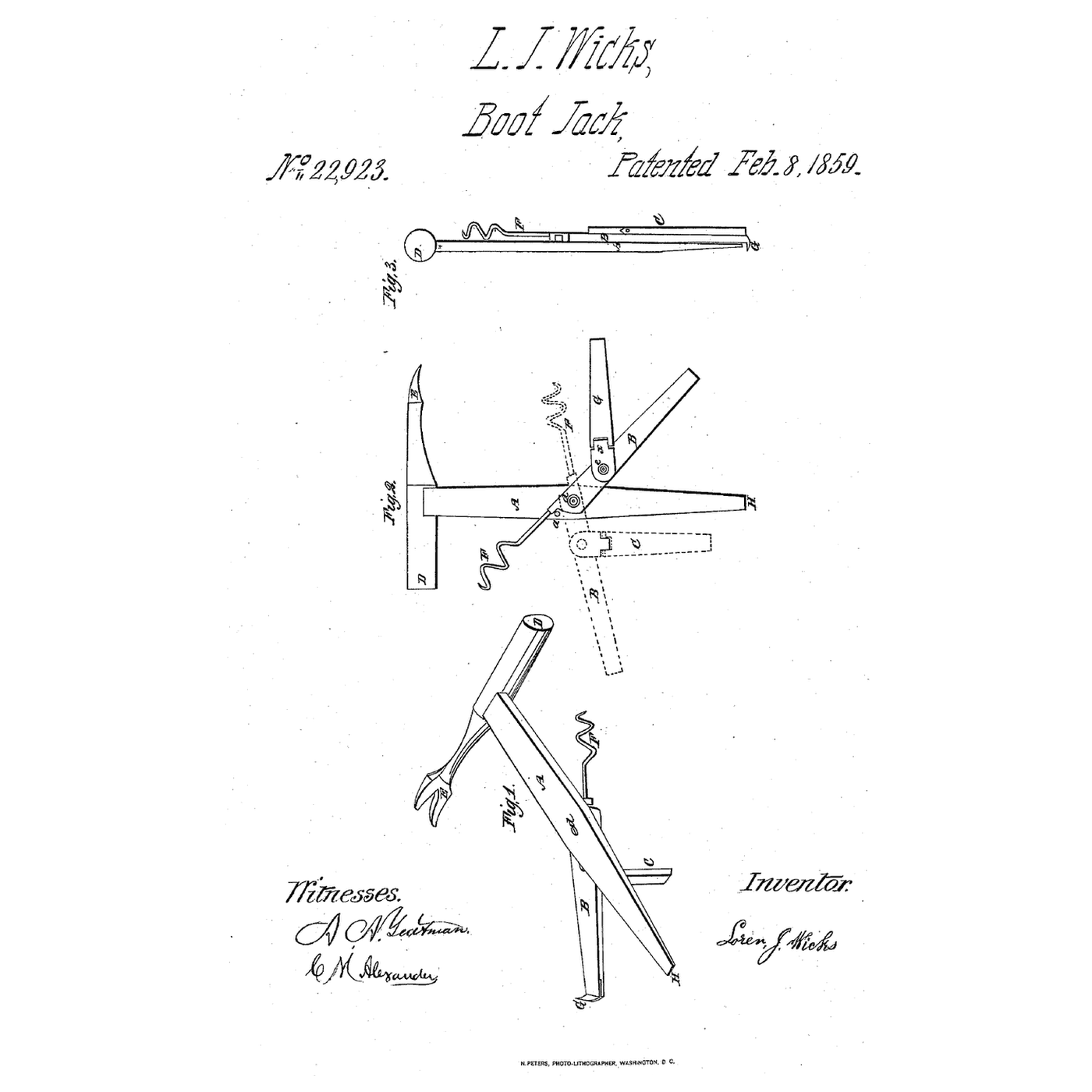
The Bootjack Multi-Tool: Scissor Arms That Pull Boots, Drive Tacks and Draw Corks
por Woody
Carpintería
32
0
0
0
0
0

The Pocket-Case Corkscrew: A Tube That Holds the Screw, Then Becomes Its Handle
por Forge
Trabajo en Metal
43
0
0
0
0
0
CC0 Dominio público
Este Blueprint se publica bajo CC0. Eres libre de copiar, modificar, distribuir y usar este trabajo para cualquier propósito, sin pedir permiso.
Apoya al Maker comprando productos a través de su Blueprint, donde gana una Comisión del Maker establecida por los vendedores, o crea una nueva iteración de este Blueprint e inclúyela como conexión en tu propio Blueprint para compartir ingresos.