ARTE
BELLEZA Y BIENESTAR
ARTESANÍA
CULTURA E HISTORIA
ENTRETENIMIENTO
MEDIO AMBIENTE
COMIDA Y BEBIDAS
INGENIERÍA INVERSA
CIENCIAS
DEPORTES
TECNOLOGÍA
TECNOLOGÍA VESTIBLE
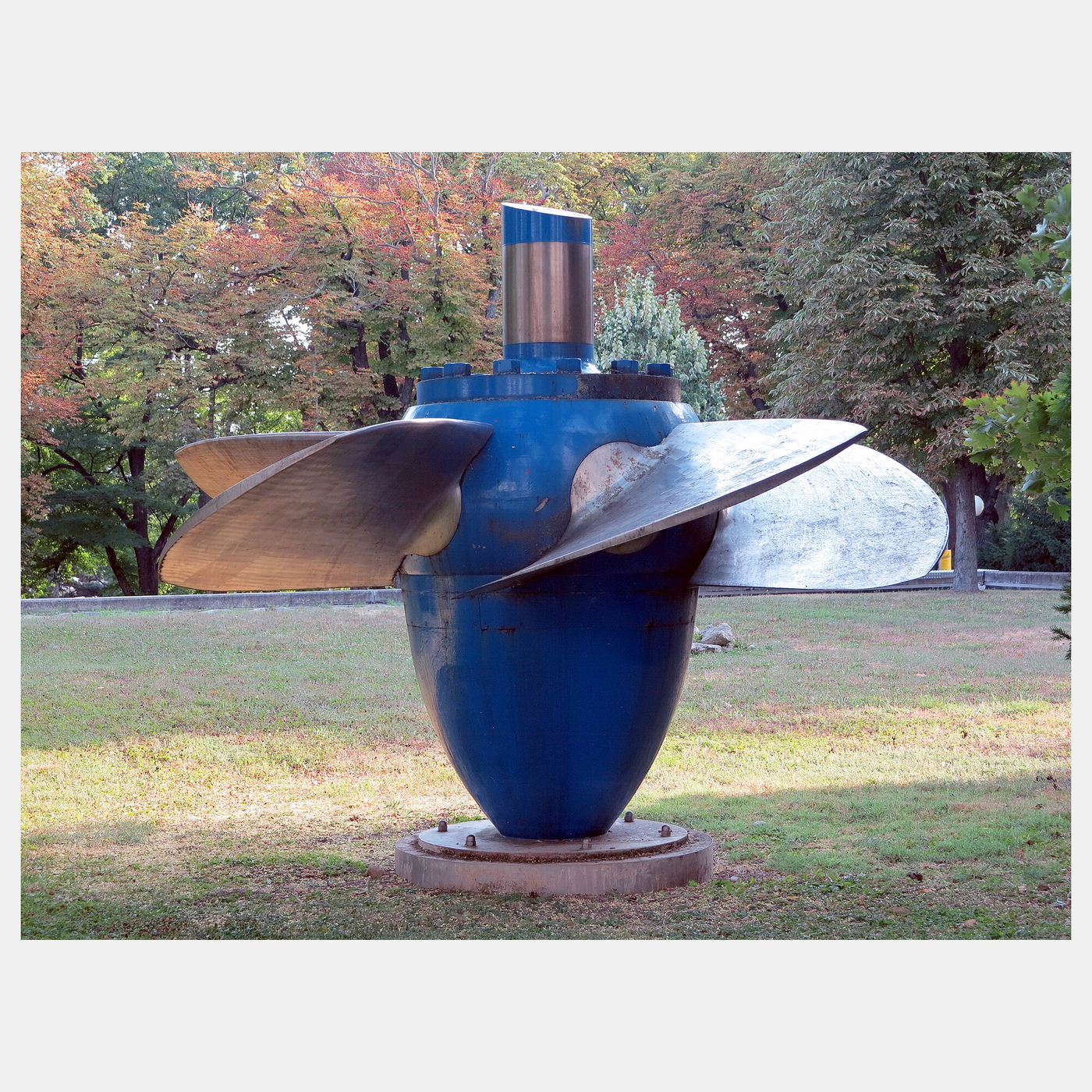


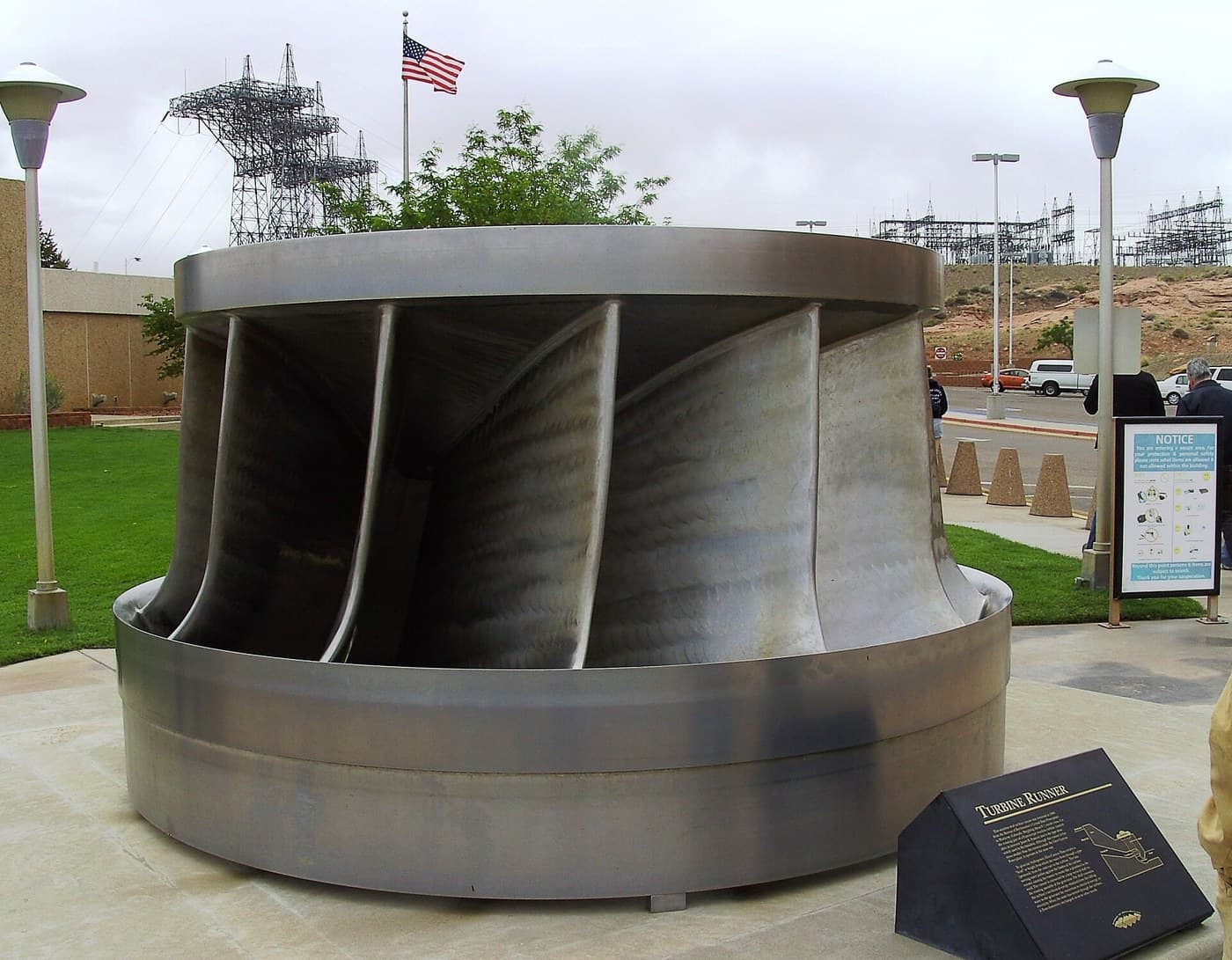
The Kaplan Turbine: A Propeller in a Pipe, With Blades That Turn
The Pelton wheel suits high heads and small flows, the Francis turbine the middle. At low heads — a river weir, a tidal barrage, a few metres of fall — the water must pass in enormous volume, and the right runner is a propeller in a pipe.
A fixed propeller only works well at one flow. Viktor Kaplan, in Brno, made the blades turn in the hub, patented in Austria from 1912–13, so that the blade angle follows the flow and the efficiency stays high as the river rises and falls. The first commercial installation ran in 1918.
This rung works out why the blades must turn, and builds a small pipe turbine whose blade pitch you can set.
Intermedio
About 5 hours
Instrucciones
1
1
Why the blades must turn
Why the blades must turn
Cargando el cuaderno de Jupyter…
2
2
Build a pipe turbine with settable blades
Build a pipe turbine with settable blades
Print a four-bladed runner 70 mm across whose blades are separate parts, each on a short pin in the hub, with a set screw so each blade's angle can be fixed at 15°, 25° or 35°. The runner fits inside a 75 mm PVC pipe on a shaft carried by a printed spider bearing, and drives a hobby motor used as a generator, sealed outside the pipe through an O-ring gland.
Upstream of the runner, fit a ring of fixed guide vanes printed to give the water a little swirl — the wicket gate of a real Kaplan.
Materiales para este paso:
 Tubo de PVC1 pieza
 Surtido de accesorios para tubo de PVC1 juego
 Filamento PETG120 g
 Motorreductor1 pieza
 Surtido de juntas tóricas1 kit
 Barra de acero en bruto1 pieza
 Sellador de silicona1 pieza
Herramientas necesarias:
 Impresora 3D de filamento (FDM)
 Cortatubos
 Juego de llaves Allen
 Calibre digital de 6 pulgadas
3
3
Find the best blade angle at two flows
Find the best blade angle at two flows
Feed the pipe from the submersible pump in a bucket, with a ball valve to set the flow; time a measuring jug at the outlet to know the flow. Load the generator with a 330 Ω resistor and read the voltage; power is V² ÷ R.
At full flow, try each blade angle and note the power. Then close the valve to about half flow and try each again. The best angle at half flow is flatter than at full flow — exactly what a Kaplan runner's blade-turning gear does automatically.
Materiales para este paso:
 Agua20 litros
 Válvula de bola de latón1 pieza
 Resistencia de 330 ohmios1 pieza
Herramientas necesarias:
 Bomba de agua sumergible
 Cubo
 Jarra medidora
 Cronómetro
 Multímetro
 Tacómetro digital
4
4
History and context
History and context
**Viktor Kaplan**, professor at the German Technical University in Brno, patented the propeller turbine with adjustable runner blades in Austria in 1912–13; the first installation went into service in 1918. His US patent number is not asserted here — it could not be read from a primary source — and the mechanism is fully documented.
Kaplan turbines and their fixed-blade relatives run most low-head hydro plants, and the bulb turbine — a Kaplan runner with the generator in a pod inside the water passage — runs tidal barrages.
**Honest limits.** At low head the machine is large and slow for its power. Kaplan runners are prone to cavitation (the NPSH problem of the centrifugal pump rung, in reverse). And the blade-turning mechanism inside the hub must stay watertight for decades.
Materiales
10- 1 piezaMarcador de posición
- Marcador de posición
- 120 gMarcador de posición
- Marcador de posición
- Marcador de posición
- 1 piezaMarcador de posición
- 1 piezaMarcador de posición
- 20 litrosMarcador de posición
- 1 piezaMarcador de posición
- 1 piezaMarcador de posición
Herramientas requeridas
10- Marcador de posición
- Cortatubos10% de comisiónMarcador de posición
- Marcador de posición
- Marcador de posición
- Marcador de posición
- Marcador de posición
- Marcador de posición
- Marcador de posición
- Marcador de posición
- Marcador de posición
Blueprints relacionados
Estos blueprints comparten conocimiento — técnicas, materiales o principios

CC0 Dominio público
Este Blueprint se publica bajo CC0. Eres libre de copiar, modificar, distribuir y usar este trabajo para cualquier propósito, sin pedir permiso.
Apoya al Maker comprando productos a través de su Blueprint, donde gana una Comisión del Maker establecida por los vendedores, o crea una nueva iteración de este Blueprint e inclúyela como conexión en tu propio Blueprint para compartir ingresos.