ARTE
BELLEZA Y BIENESTAR
ARTESANÍA
CULTURA E HISTORIA
ENTRETENIMIENTO
MEDIO AMBIENTE
COMIDA Y BEBIDAS
INGENIERÍA INVERSA
CIENCIAS
DEPORTES
TECNOLOGÍA
TECNOLOGÍA VESTIBLE


The Reusable Can Opener: A Stop on the Knife and a Rim Left to Use Again
A can hacked open is fit only to be thrown away.
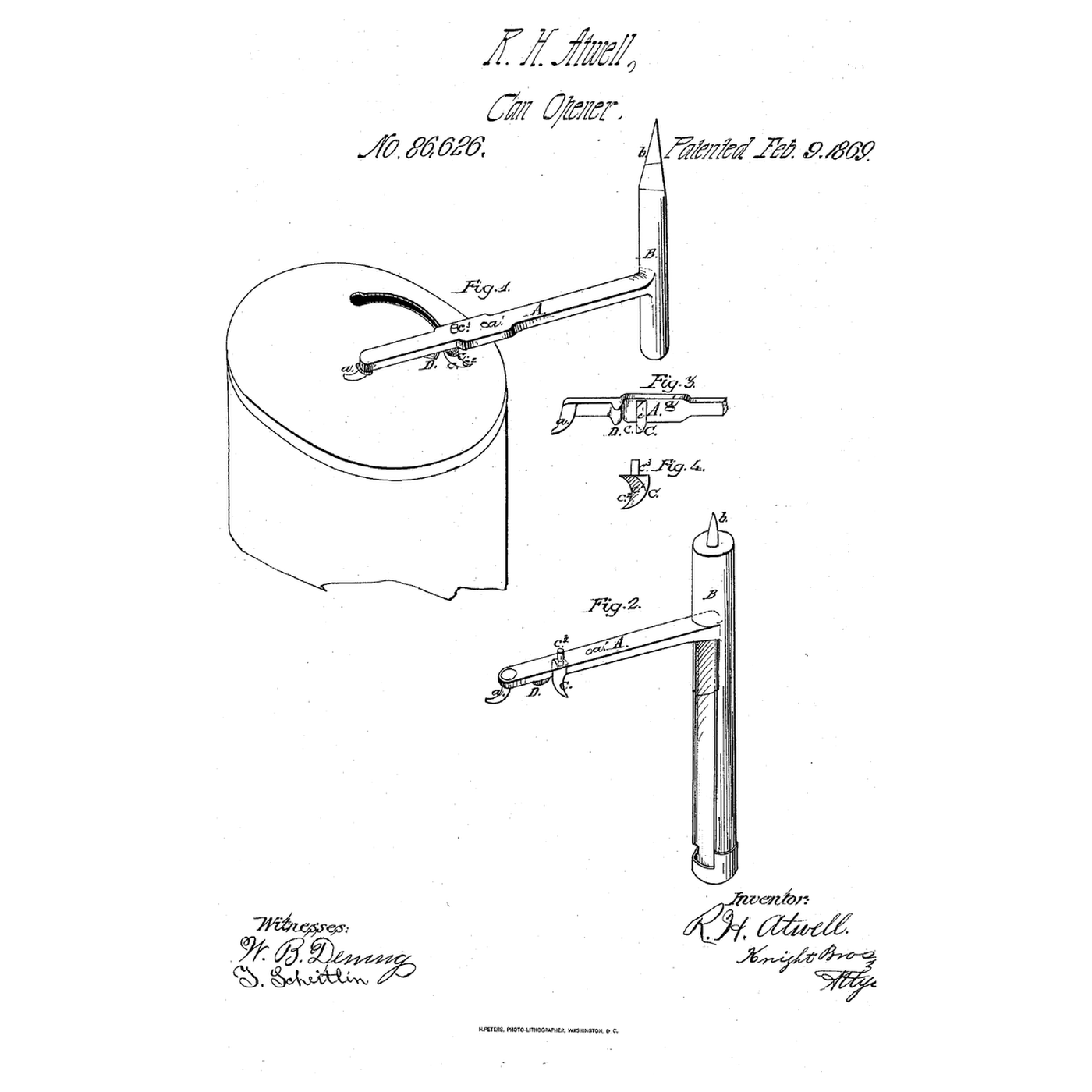
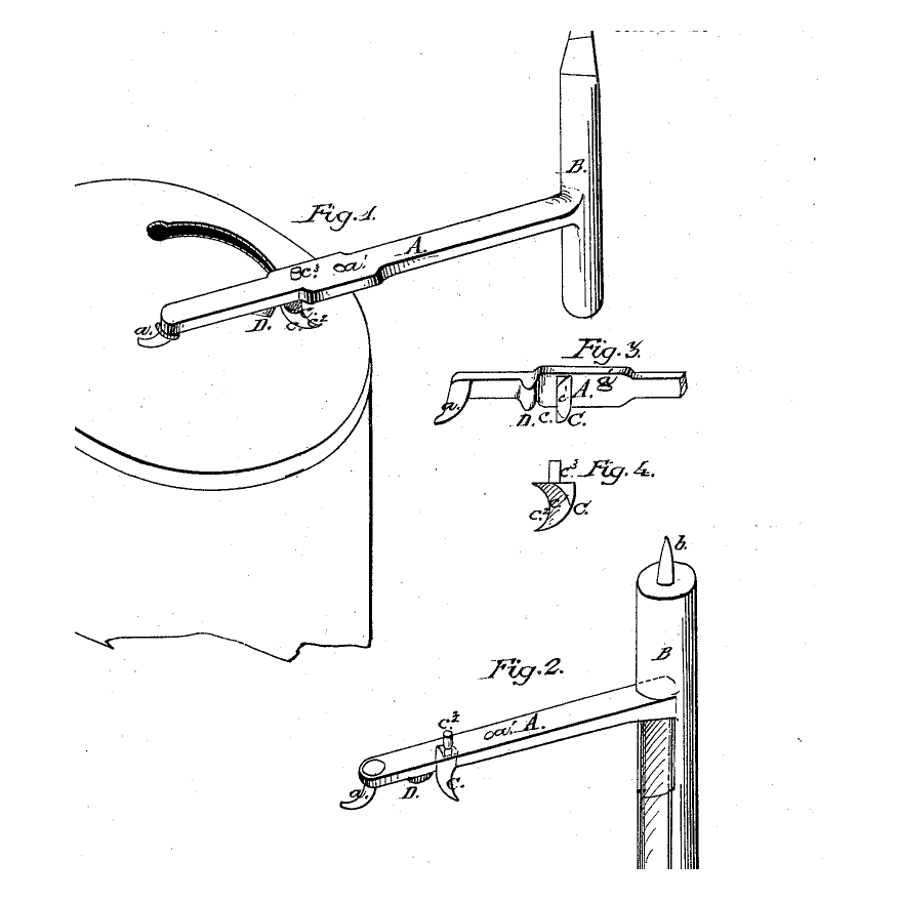
Richard H. Atwell of Baltimore, Maryland, received US 86,626, dated 9 February 1869, for a can opener: a bar at right angles to a handle that carries a piercer, a hook-shaped fulcrum pin in a hole made at the centre of the piece to be removed, a concave knife in one of several holes, and a stop that limits how far the knife goes in; the edges of the opening are so turned "as to adapt the can to be again used."
This rung works out which hole leaves a usable rim, then builds the bar, pin, knife and stop and opens a can cleanly enough to refill.
Intermedio
About 3 hours
Instrucciones
1
1
Which hole leaves a rim
Which hole leaves a rim
Cargando el cuaderno de Jupyter…
2
2
A centre-pivot cutter before it
A centre-pivot cutter before it
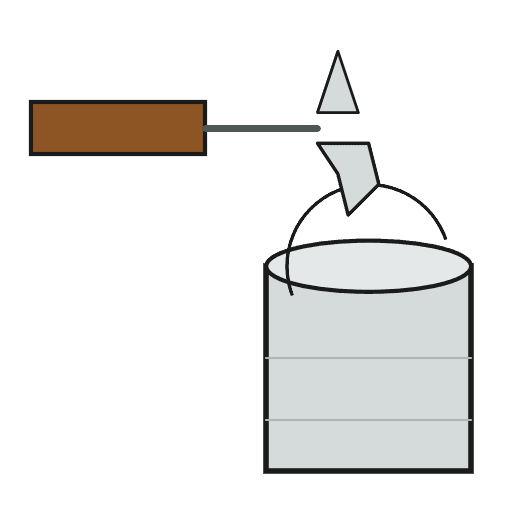
The embedded blueprint cuts a round hole round a spike. Atwell adds a stop on the knife and turns the edge so the can is fit to use again.
3
3
Read US 86,626
Read US 86,626
"The edges of the opening made in the can are so turned, by this construction of knife, as to adapt the can to be again used."
"A rest or stop, D, preferably cast on the bar, and arranged between the fulcrum a and knife C, limits the insertion of the knife, and thus prevents its hanging in the tin at its shank."
4
4
Make the bar and handle
Make the bar and handle
Cut 90 mm of 25 × 3 mm flat bar and drill 5 mm holes 20, 28 and 36 mm from one end. Fix its other end at right angles into a hardwood handle with epoxy, and file a point on the handle's far end as the piercer.
Materiales para este paso:
 Pletina de acero dulce1 pieza
 Espigas de madera dura1 pieza
 Epoxi de dos componentes1 pieza
Herramientas necesarias:
 Sierra para metales
 Granete
 Taladro inalámbrico
 Juego de brocas
 Limas (lima de mano)
5
5
Make the hook pin and stop
Make the hook pin and stop
Bend 4 mm steel rod into a hook and fix it through the bar's end as the fulcrum pin. Epoxy a hardwood stop under the bar between the pin and the first hole, 4 mm deep.
Materiales para este paso:
 Redondo de acero dulce1 pieza
 Bloque de madera dura1 piezaEpoxi de dos componentes1 pieza
Herramientas necesarias:
 Tornillo de banco
 MartilloSierra para metalesTaladro inalámbricoJuego de brocas
6
6
Make the knife
Make the knife
Cut a knife from 1 mm steel sheet with a 5 mm shank, file its cutting edge concave and its flat side toward the pin. Fit the shank through a hole and nut it on top.
Materiales para este paso:
 Chapa de acero dulce1 pieza
 Tuerca hexagonal1 pieza
 Tornillos de máquina1 pieza
Herramientas necesarias:
 Tijeras de chapaLimas (lima de mano)
 Piedra de afilar
 Llave inglesa ajustable
 Gafas de seguridad transparentes
7
7
The patent drawing
The patent drawing
US 86,626 drawing sheet, public domain (expired patent).
8
8
Open a can for reuse
Open a can for reuse
Pierce the centre of a sealed can's top with the handle's point and hook the pin in. Press the knife through to the stop and turn the bar round once. Measure the rim left and run a finger-safe check along it with a rag.
Materiales para este paso:
 Lata1 pieza
Herramientas necesarias:
 Calibre digital de 6 pulgadas
 Cronómetro
 Guantes de trabajo de cuero
9
9
A knife that hangs, wanders or leaves a ragged rim
A knife that hangs, wanders or leaves a ragged rim
Reusable can opener troubleshooting.
Flow
Loading...
10
10
History and honest limits
History and honest limits
**Richard H. Atwell** of Baltimore, Maryland, received US 86,626, dated 9 February 1869. His bar may be cast in one piece with the handle or hinged to it; the knife is held from lateral pressure and bending, its edge preferably concave so it need not be pressed down to its work. When the can is not to be refilled, part of the circle may be cut and the piece bent up.
**Honest limits.** Epoxy and a hardwood stop stand in for his casting, and the knife is unhardened sheet. Your rim measurements are the result.
Materiales
9- 1 piezaMarcador de posición
- 1 piezaMarcador de posición
- 2 piezasMarcador de posición
- 1 piezaMarcador de posición
- 1 piezaMarcador de posición
- 1 piezaMarcador de posición
- 1 piezaMarcador de posición
- 1 piezaMarcador de posición
- 1 piezaMarcador de posición
Herramientas requeridas
14- Marcador de posición
- Marcador de posición
- 1 vendor sell this, none ship to you yetMarcador de posición
- Marcador de posición
- Marcador de posición
- Marcador de posición
- Marcador de posición
- Marcador de posición
- Marcador de posición
- Marcador de posición
- Marcador de posición
- Marcador de posición
- Marcador de posición
- Marcador de posición
Este plano hace
Blueprints relacionados
Estos blueprints comparten conocimiento — técnicas, materiales o principios


CC0 Dominio público
Este Blueprint se publica bajo CC0. Eres libre de copiar, modificar, distribuir y usar este trabajo para cualquier propósito, sin pedir permiso.
Apoya al Maker comprando productos a través de su Blueprint, donde gana una Comisión del Maker establecida por los vendedores, o crea una nueva iteración de este Blueprint e inclúyela como conexión en tu propio Blueprint para compartir ingresos.