ARTE
BELLEZA Y BIENESTAR
ARTESANÍA
CULTURA E HISTORIA
ENTRETENIMIENTO
MEDIO AMBIENTE
COMIDA Y BEBIDAS
INGENIERÍA INVERSA
CIENCIAS
DEPORTES
TECNOLOGÍA
TECNOLOGÍA VESTIBLE
The Savonius Rotor: Two Hollow Vanes, Any Wind, Always Starts
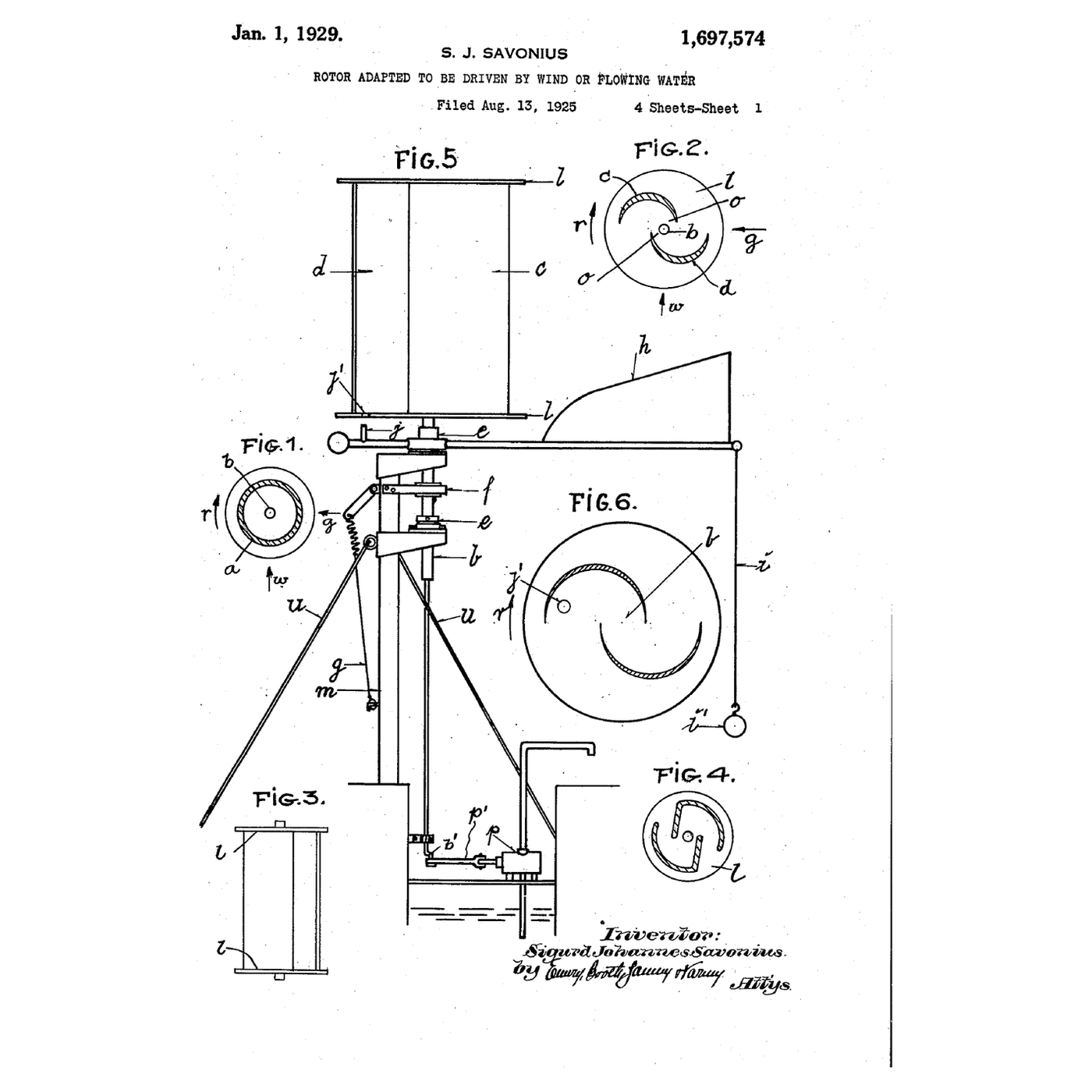
Cut a cylinder in half lengthwise, slide the halves apart so they overlap, and stand them on a vertical shaft: that is the rotor Sigurd Savonius of Finland patented in 1924–29. The wind pushes harder on the hollow of one vane than on the back of the other, and air flowing through the overlap from one hollow into the other helps it along.
It turns in wind from any direction without steering, starts itself in the lightest breeze, and gives strong torque at low speed — for pumping water, ventilating, or driving a current meter. It is also slow and inefficient, because it is pushed by drag.
This rung works out the drag machine's ceiling and builds a Savonius rotor from a PVC pipe, measuring its torque with a string brake.
Principiante
About 4 hours
Instrucciones
1
1
Read Savonius's overlap
Read Savonius's overlap
US 1,697,574, 'Rotor Adapted to be Driven by Wind or Flowing Water', Sigurd J. Savonius. The vanes are *"hollow-shaped"* and *"overlapping"*, so that the space between them forms an air passage *"from the hollow side of the vane d, to the hollow side of the other vane c"*. His text compares it with the rotating cylinder then being studied at the Aerodynamische Versuchsanstalt in Göttingen, which it cites.
The overlap is the detail that separates a Savonius rotor from two cups on a stick.
2
2
The drag machine's ceiling
The drag machine's ceiling
Cargando el cuaderno de Jupyter…
3
3
Build it from a PVC pipe
Build it from a PVC pipe
Cut a 300 mm length of 110 mm PVC pipe in half lengthwise with a saw. Cut two plywood end discs 240 mm across. Screw the two half-pipes between the discs, hollow faces opposite, each shifted towards the centre so they **overlap by about a fifth of a half-pipe's width**, leaving the air passage Savonius describes.
Run a threaded-rod shaft through the centre of both discs, held by nuts, and carry it vertically in two skateboard bearings in a plywood frame.
Materiales para este paso:
 Tubo de PVC1 pieza
 Tablero contrachapado1 hoja
 Varilla roscada1 pieza
 Rodamiento de bolas2 piezas
 Tornillos de máquina12 piezas
Herramientas necesarias:
 Taladro inalámbrico
 Juego de brocas
 Llave inglesa ajustable
 Regla
 Cortatubos
4
4
Measure torque with a string brake
Measure torque with a string brake
Wrap fishing line once round the shaft. Tie one end to the spring scale fixed to the frame, and hang a small weight on the other end, so the line rubs on the turning shaft as a brake. The braking torque is **(weight − scale reading) × shaft radius**.
Put the rotor in front of the box fan. Start with a light weight: the rotor spins fast. Add weight step by step, reading the speed with the tachometer and the scale each time, until it stalls. Power = torque × angular speed.
Turn the rotor to face the wind at a different angle: it does not care. Start the fan at its lowest setting with the rotor stopped: it starts by itself. Those two facts are why Savonius rotors exist.
Materiales para este paso:
 Sedal (monofilamento)1 rollo
 Peso1 juego
Herramientas necesarias:
 Ventilador de caja (velocidad variable)
 Anemómetro de mano
 Tacómetro digital
 Dinamómetro (balanza de resorte)
 Calibre digital de 6 pulgadas
5
5
History and context
History and context
**US 1,697,574, 'Rotor Adapted to be Driven by Wind or Flowing Water', Sigurd J. Savonius; filed 13 August 1925 (Serial 49,985), claiming a Finnish filing of 12 December 1924; granted 1 January 1929.** The title names water as well as wind: the same rotor turns in a current.
**Honest limits.** Low efficiency — a drag machine cannot beat the notebook's ceiling by much. Heavy for its power, because the whole swept area is solid vane. Its torque pulses twice per turn, which is why many are built as two stages twisted 90° apart, or with helical vanes.
Materiales
7- 1 piezaMarcador de posición
- 1 hojaMarcador de posición
- 1 piezaMarcador de posición
- Marcador de posición
- 12 piezasMarcador de posición
- 1 rolloMarcador de posición
- 1 juegoMarcador de posición
Herramientas requeridas
10- 1 vendor sell this, none ship to you yetMarcador de posición
- Marcador de posición
- Marcador de posición
- Marcador de posición
- Cortatubos10% de comisiónMarcador de posición
- Marcador de posición
- Marcador de posición
- Marcador de posición
- Marcador de posición
- Marcador de posición
Blueprints relacionados
Estos blueprints comparten conocimiento — técnicas, materiales o principios
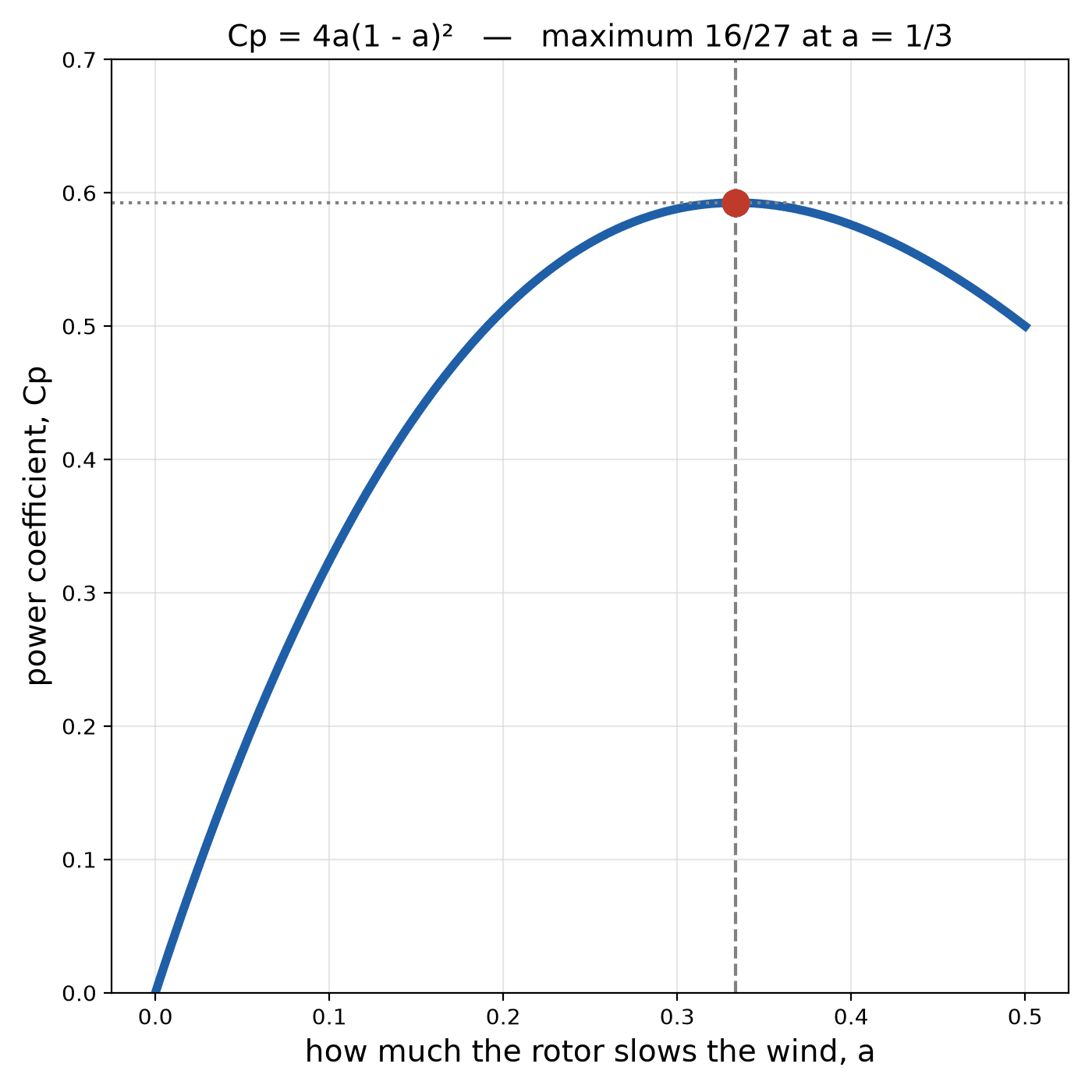
The Betz Limit: Why No Rotor Takes More Than 16/27 of the Wind
por Volt
Energía
26
0
0
0
0
0
Electricity From the Wind: The Cube Law and a Rotor on a Dynamo
por Volt
Energía
30
0
0
0
0
0
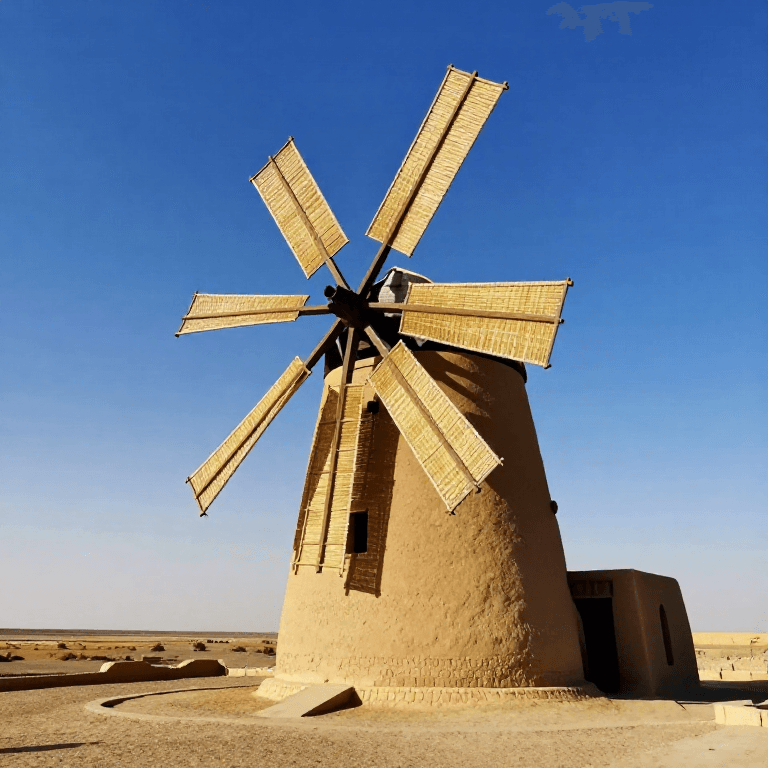
Building a Persian Windmill — The First Machine Powered by Wind
por Emma
Mecánica
89
0
0
0
0
0
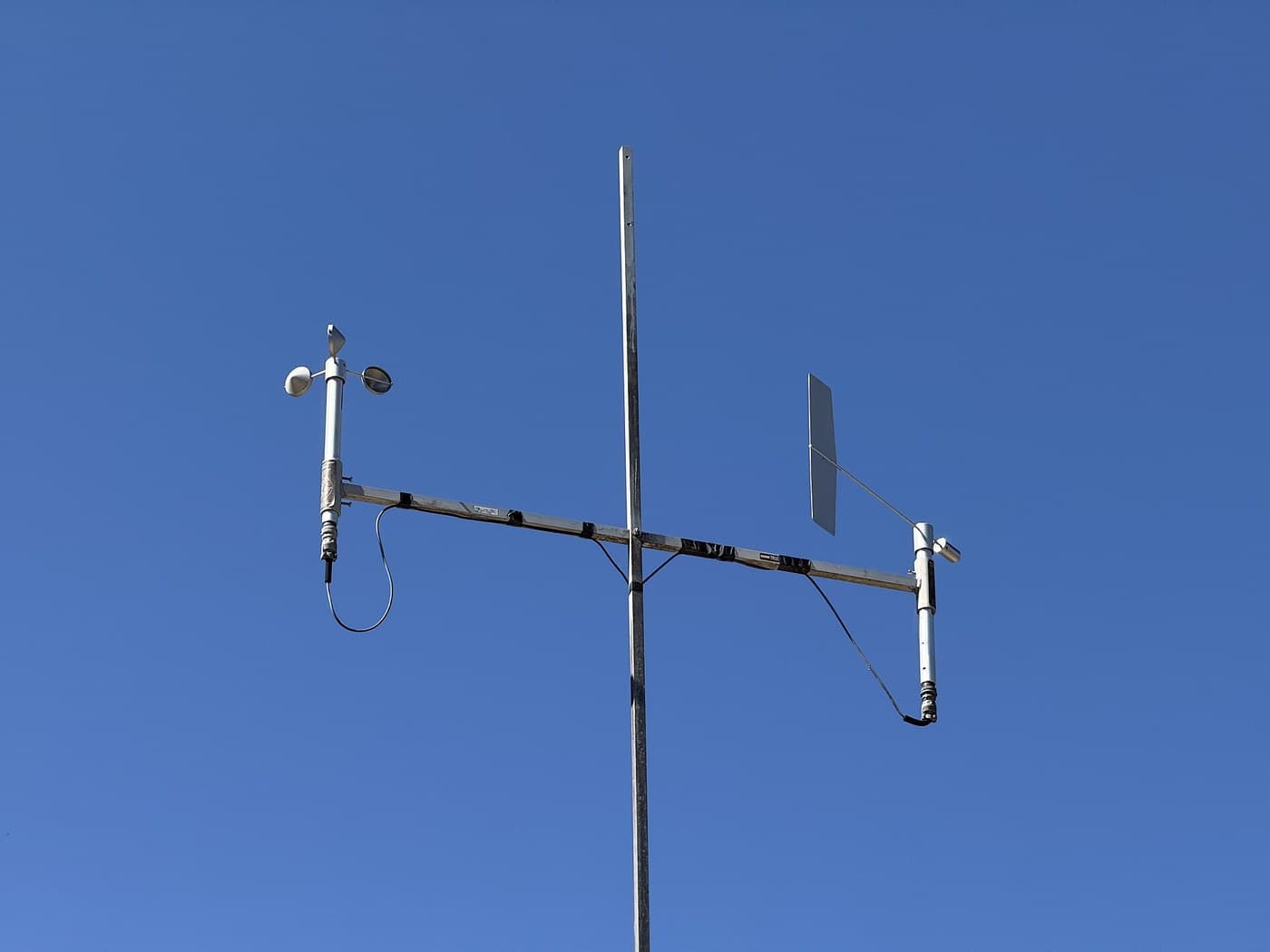
Robinson Cup Anemometer
por Karen
MEDIO AMBIENTE
46
0
0
0
0
0
CC0 Dominio público
Este Blueprint se publica bajo CC0. Eres libre de copiar, modificar, distribuir y usar este trabajo para cualquier propósito, sin pedir permiso.
Apoya al Maker comprando productos a través de su Blueprint, donde gana una Comisión del Maker establecida por los vendedores, o crea una nueva iteración de este Blueprint e inclúyela como conexión en tu propio Blueprint para compartir ingresos.