ARTE
BELLEZA Y BIENESTAR
ARTESANÍA
CULTURA E HISTORIA
ENTRETENIMIENTO
MEDIO AMBIENTE
COMIDA Y BEBIDAS
INGENIERÍA INVERSA
CIENCIAS
DEPORTES
TECNOLOGÍA
TECNOLOGÍA VESTIBLE
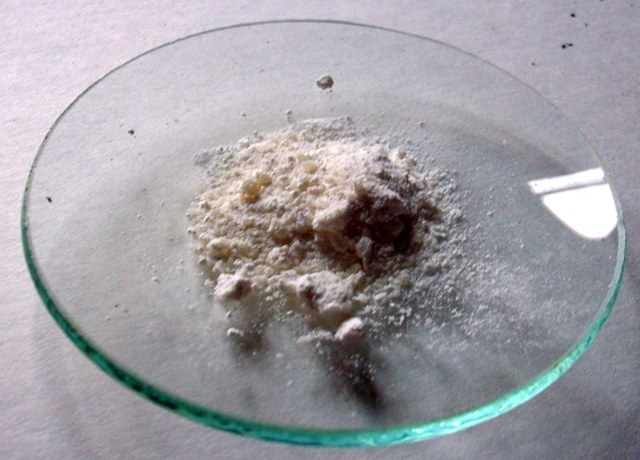


Tin Oxide: Tin Burnt in an Open Iron Pot
Tin oxide is made by burning tin in air: melted tin in an open pot slowly turns to a white powder. Andrew Ure (1839) describes the enamel makers' way, with a lead-tin alloy in a flat iron pot, the powder raked aside as it forms, then ground and washed fine. Done with pure tin it gives the milky white oxide used in glazes, opal glass and polishing.
The picture: tin(IV) oxide powder on a watch glass.
Intermedio
A day
Instrucciones
1
1
Melt the tin in an open pot
Melt the tin in an open pot
Melt the tin in a flat cast-iron pot over a charcoal fire. Leave the pot open to the air.
Materiales para este paso:
 Lingote de estaño1 kg
 Carbón vegetal1 as required
Herramientas necesarias:
 Balanza de platillos
 Crisol de hierro fundido
 Horno de carbón vegetal
 Tenazas
 Guantes resistentes al calor
2
2
Burn it, rake the powder aside
Burn it, rake the powder aside
Raise the heat towards a dull red and keep stirring the surface. Rake the white crust to the sides as it forms, as Ure describes, and add tin as it is used up. Keep the heat as low as will do: Ure warns that too strong a fire fuses the powder and makes it hard to grind.
Herramientas necesarias:
Crisol de hierro fundido Rastrillo de hierro
 Espumadera perforadaGuantes resistentes al calor
3
3
Pick out the metal
Pick out the metal
Let the powder cool. Sift it and pick out any beads of tin; Ure: no metal may be left in the oxide. Melt the beads back in.
Herramientas necesarias:
 Tamiz fino
 Gafas de protección química
4
4
Grind and wash
Grind and wash
Grind the powder fine with water. Stir it up in a bucket of water, let the coarse part settle for a moment and pour off the milky water; let the fine part settle out of that, as Ure washed his. Dry it in a dish and store it closed.
Materiales para este paso:
 Agua10 litros
Herramientas necesarias:
 Mortero y mano de mortero
 Moleta
 Cubo
 Cápsula de evaporación
 Tarro de vidrio
5
5
Tin to oxide
Tin to oxide
Cargando el cuaderno de Jupyter…
6
6
Limits
Limits
Burning tin in air is how tin oxide is made (Wikipedia); the pot, raking, low heat and washing are Ure's practice for the lead-tin calx of enamel makers, used here with pure tin by our choice. Tin oxidises more slowly than Ure's lead-rich alloy, so allow time.
Materiales
3- Marcador de posición
- 1 as requiredMarcador de posición
- 10 litrosMarcador de posición
Herramientas requeridas
14- Marcador de posición
- Marcador de posición
- Marcador de posición
- Marcador de posición
- Marcador de posición
- Marcador de posición
- Marcador de posición
- Marcador de posición
- Marcador de posición
- Marcador de posición
- Marcador de posición
- Marcador de posición
- Marcador de posición
- Marcador de posición
Este plano hace
CC0 Dominio público
Este Blueprint se publica bajo CC0. Eres libre de copiar, modificar, distribuir y usar este trabajo para cualquier propósito, sin pedir permiso.
Apoya al Maker comprando productos a través de su Blueprint, donde gana una Comisión del Maker establecida por los vendedores, o crea una nueva iteración de este Blueprint e inclúyela como conexión en tu propio Blueprint para compartir ingresos.