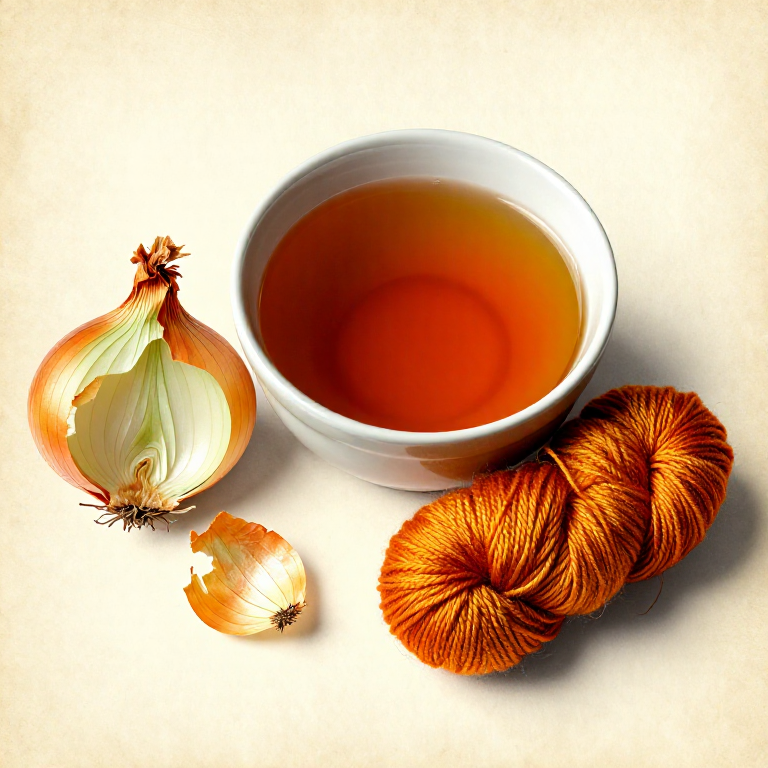


Dyeing with Onion Skins — Orange-Gold from the Kitchen
Consignes
Collect Onion Skins
Collect Onion Skins
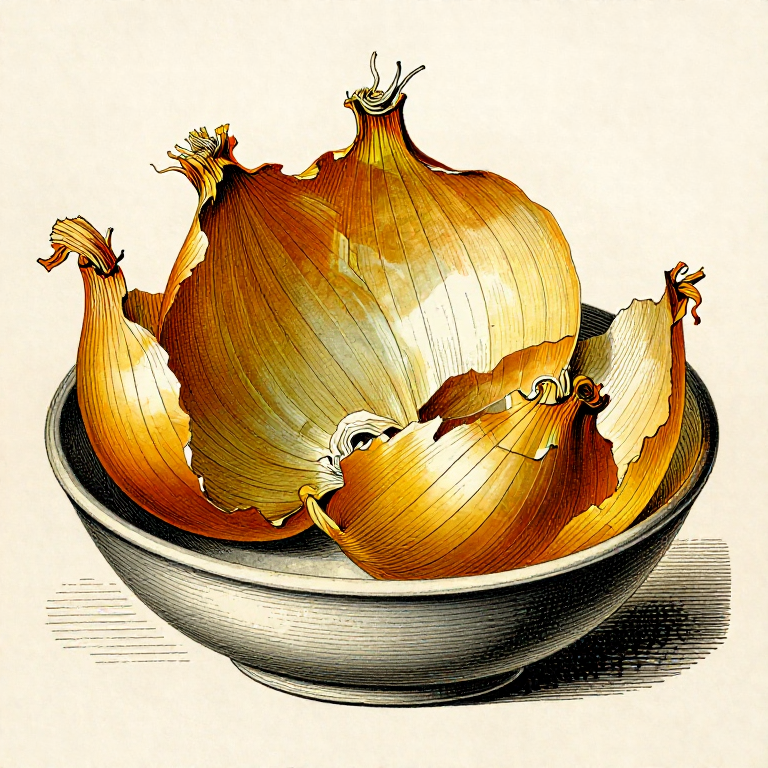
Collect the dry papery outer skins of yellow onions — you need roughly 100 g of skins per 100 g of fibre
Matériaux pour cette étape :
 Pelures d'oignon (sèches, jaunes)100 grams
Soak Skins in Water
Soak Skins in Water
Place the onion skins in a dye pot, cover with cold water, and soak for 1 hour to begin releasing the pigment
Matériaux pour cette étape :
 Eau8 litres
Outils nécessaires :
 Marmite haute
Simmer the Dye Bath
Simmer the Dye Bath
Heat the dye bath slowly to 80-90°C and simmer for 45 minutes — the water will turn a deep amber
Matériaux pour cette étape :
 Bois de chauffage1 botte
Strain Out Skins
Strain Out Skins
Strain the dye bath through cloth to remove all onion skin fragments
Outils nécessaires :
 Étamine (pour filtrer)
Dissolve Alum Mordant
Dissolve Alum Mordant
Dissolve alum at 10% weight-of-fibre (10 g per 100 g wool) in a cup of hot water
Matériaux pour cette étape :
 Alun (alun de potassium)10 grams
Add Mordant to Bath
Add Mordant to Bath
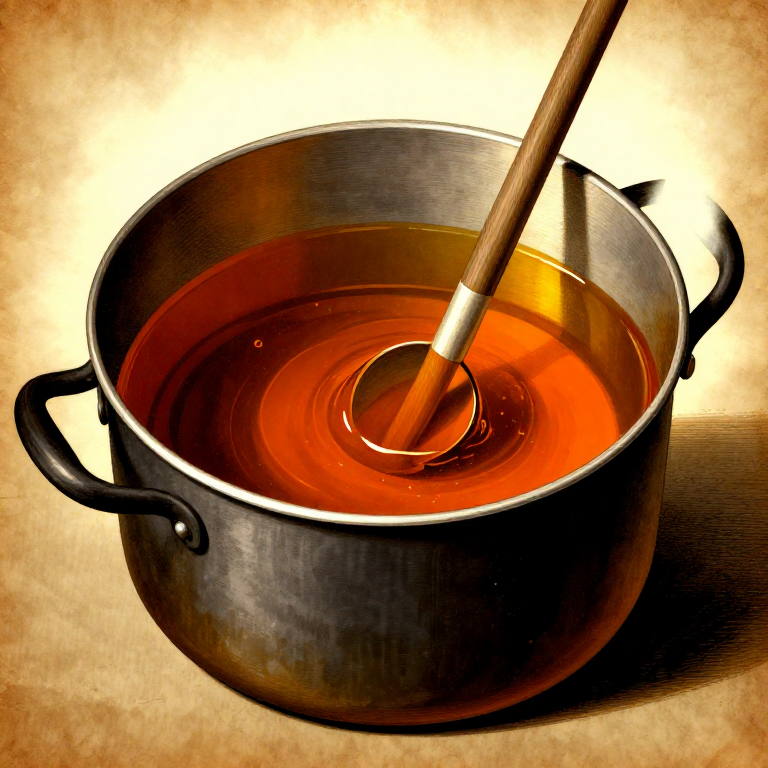
Stir the dissolved alum into the strained dye bath and mix thoroughly
Wet the Wool
Wet the Wool
Soak the undyed wool skein in warm water for 15 minutes so it absorbs dye evenly
Matériaux pour cette étape :
 Écheveau de laine100 grams
Enter the Dye Bath
Enter the Dye Bath
Lower the wetted wool into the onion skin dye bath, pressing it gently below the surface
Simmer for 45 Minutes
Simmer for 45 Minutes
Heat to 80°C and hold for 45 minutes, turning the wool every 10 minutes for even colour
Check the Colour
Check the Colour
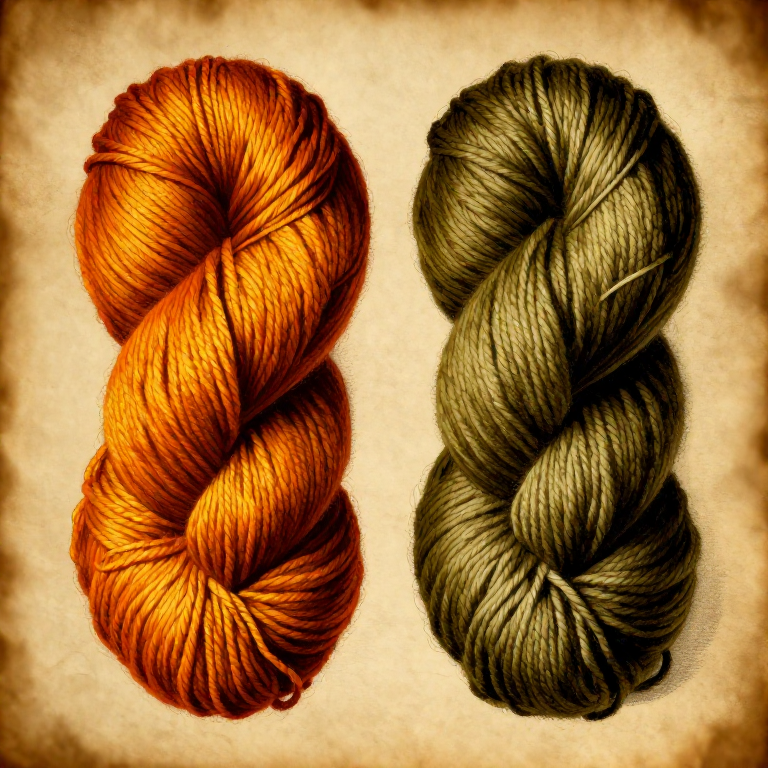
Lift a section to check — the wool should be a rich orange-gold when wet, drying slightly lighter
Deepen if Desired
Deepen if Desired
For a deeper burnt orange, simmer for an additional 30 minutes or leave in the cooling bath overnight
Iron Modifier (Optional)
Iron Modifier (Optional)
For an olive-khaki shift, dissolve 2 g ferrous sulfate in water and add to a separate rinse — dip the dyed wool briefly
Matériaux pour cette étape :
 Sulfate de fer2 grams
Rinse Thoroughly
Rinse Thoroughly
Rinse the dyed wool in progressively cooler water until the water runs clear
Matériaux pour cette étape :
Eau10 litresSqueeze Gently
Squeeze Gently
Squeeze excess water out between your palms — never wring or twist dyed wool
Dry in Shade
Dry in Shade
Hang the orange-gold dyed wool in shade to dry completely — onion skin dye with alum mordant is very lightfast
Matériaux
6- 100 gramsEspace réservé
- 18 litresEspace réservé
- 1 botteEspace réservé
- 10 gramsEspace réservé
- 100 gramsEspace réservé
- 2 gramsEspace réservé
Outils requis
2- Espace réservé
- Espace réservé
Matériaux des Blueprints connectés

CC0 Domaine public
Ce blueprint est publié sous CC0. Vous êtes libre de copier, modifier, distribuer et utiliser ce travail pour tout usage, sans demander la permission.
Soutenez le Maker en achetant des produits via son Blueprint où il perçoit une Commission Maker définie par les Vendeurs, ou créez une nouvelle itération de ce Blueprint et incluez-le comme connexion dans votre propre Blueprint pour partager les revenus.