ART
BEAUTÉ ET BIEN-ÊTRE
ARTISANAT
CULTURE ET HISTOIRE
DIVERTISSEMENT
ENVIRONNEMENT
NOURRITURE ET BOISSONS
INGÉNIERIE INVERSE
SCIENCES
SPORTS
TECHNOLOGIE
TECHNOLOGIE PORTABLE
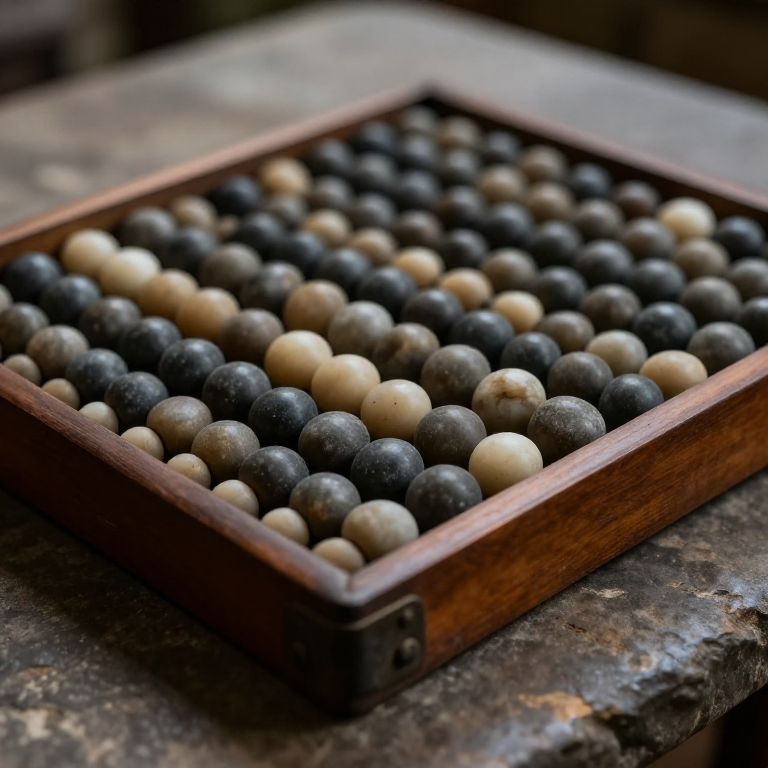


Sieve of Eratosthenes — Hunt Prime Numbers on a Grid
A hands-on maths project for the classroom: make a hundred-square, then cross out the multiples of each number with counters until only the prime numbers are left. A Python cell checks the 25 primes you find, and a compendium explains why primes are the building blocks of every number.
Débutant
30 minutes
Consignes
1
1
What is a prime?
What is a prime?
A prime number can only be split into equal groups as one big group or as single ones -- 5, 7 and 11 are primes. Every other number can be built by multiplying smaller ones. Around 240 BC Eratosthenes found a simple way to sift the primes out, and you will do it by hand.
2
2
Make a hundred-square
Make a hundred-square
On a sheet of card rule a 10 by 10 grid and write the numbers 1 to 100 in it, ten to a row. This is your sieve.
Matériaux pour cette étape :
 Assortiment de papier cartonné1 pièce
Outils nécessaires :
 Jeu de crayons graphite
 Règle
Règle3
3
Cross out the multiples
Cross out the multiples
Cross off 1 (not prime). Circle 2, then place a counter on -- or cross out -- every other multiple of 2: 4, 6, 8, and so on. Move to the next uncrossed number, 3, circle it, and cross out every third number. Do the same for 5 and 7. Once you pass 10 you can stop. Every number still uncrossed is prime -- count them: there should be 25.
Matériaux pour cette étape :
 Perles de verre1 pièce
4
4
Check the primes you found
Check the primes you found
Chargement du notebook Jupyter…
Outils nécessaires :
 Ordinateur de bureau
5
5
Compendium: the atoms of arithmetic
Compendium: the atoms of arithmetic
What your grid shows. (1) Every whole number above 1 is either prime or breaks down into primes in exactly one way -- the Fundamental Theorem of Arithmetic -- so primes are the 'atoms' that build all the other numbers. (2) You only had to cross out multiples up to the square root of 100 (that is, 10), because any larger composite already got crossed by a smaller factor -- a neat shortcut worth thinking about. (3) Primes get rarer as numbers grow, but never run out (Euclid proved there are infinitely many). (4) The hunt for large primes and the difficulty of un-multiplying big numbers is exactly what keeps online banking and messaging secure today.
Matériaux
3- Espace réservé
- 1 pièceEspace réservé
- 1 feuilleEspace réservé
Outils requis
3- Espace réservé
- Espace réservé
- Espace réservé
Blueprints liés
Ces blueprints partagent des connaissances — techniques, matériaux ou principes


CC0 Domaine public
Ce blueprint est publié sous CC0. Vous êtes libre de copier, modifier, distribuer et utiliser ce travail pour tout usage, sans demander la permission.
Soutenez le Maker en achetant des produits via son Blueprint où il perçoit une Commission Maker définie par les Vendeurs, ou créez une nouvelle itération de ce Blueprint et incluez-le comme connexion dans votre propre Blueprint pour partager les revenus.