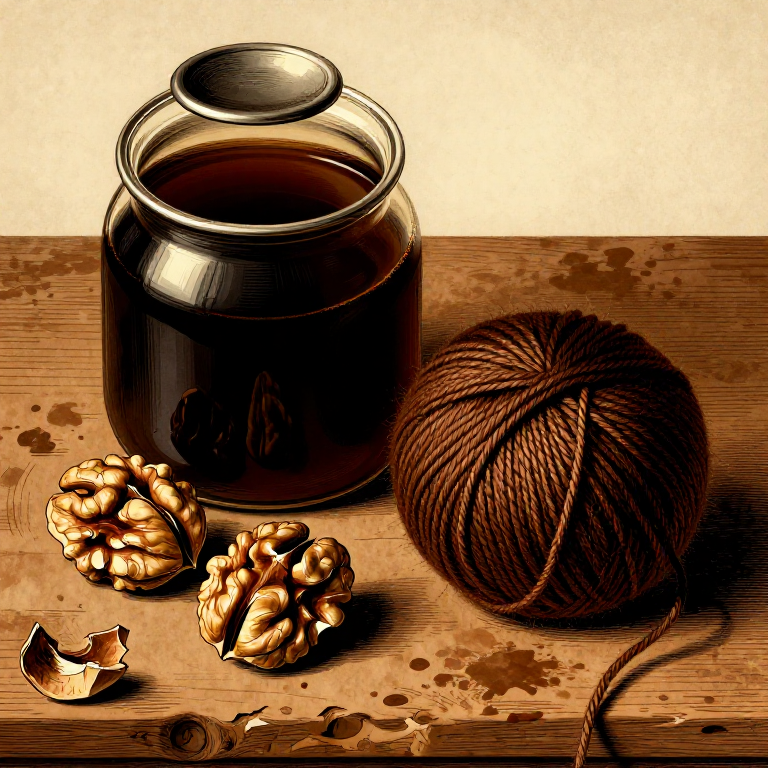


Dyeing with Walnut Hulls — Ancient Brown Dye
Consignes
Collect Walnut Hulls
Collect Walnut Hulls
Collect fresh green or blackened walnut hulls — approximately 500 g for every 100 g of fibre to dye
Matériaux pour cette étape :
 Brous de noix noire500 grams
Outils nécessaires :
 Gants en cuir
Break Open Hulls
Break Open Hulls
Break or crush the hulls into smaller pieces to expose more surface area — wear gloves, juglone stains skin brown
Outils nécessaires :
 Percuteur de pierre
Fill Dye Pot
Fill Dye Pot
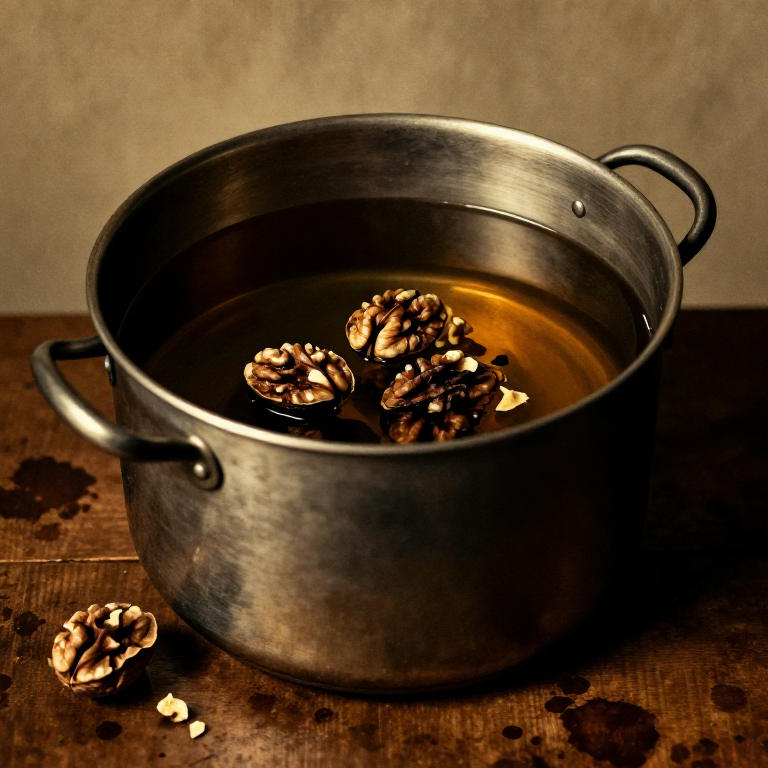
Place the crushed hulls in a large pot and cover with cold water — use enough to fully submerge the fibre later
Matériaux pour cette étape :
 Eau10 litres
Outils nécessaires :
 Marmite haute
Soak Overnight
Soak Overnight
Let the hulls soak in cold water for 12-24 hours — the water will turn dark brown as juglone leaches out
Simmer the Bath
Simmer the Bath
Heat the dye bath slowly to a gentle simmer (80-90°C) and hold for 1 hour to extract maximum colour
Matériaux pour cette étape :
 Bois de chauffage1 botte
Strain Out Hulls
Strain Out Hulls
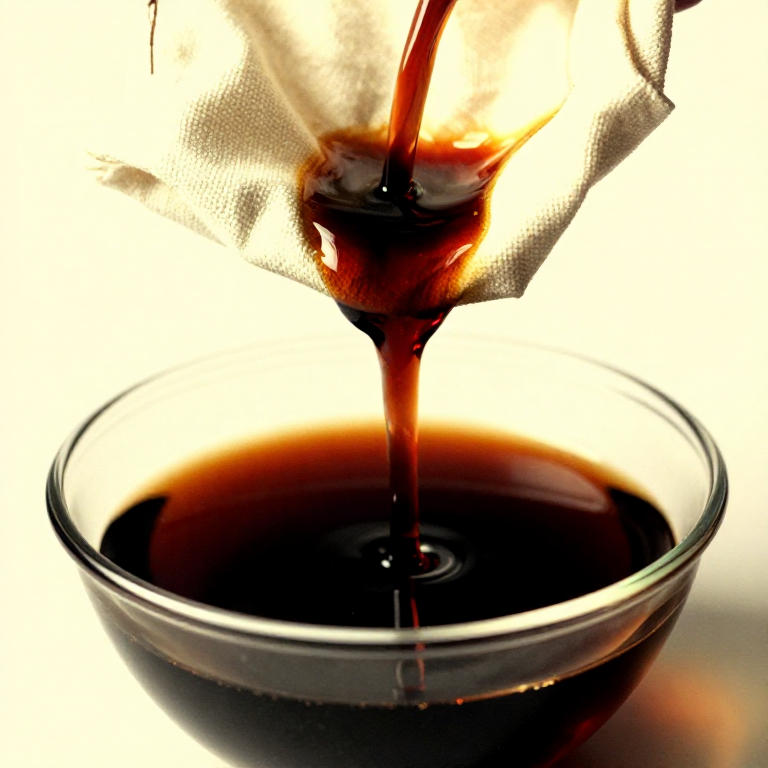
Strain the dye bath through cloth to remove all hull fragments — the liquid should be very dark brown
Outils nécessaires :
 Étamine (pour filtrer)
Reheat Strained Bath
Reheat Strained Bath
Return the strained dye liquid to the pot and reheat to 70°C
Wet the Fibre
Wet the Fibre
Thoroughly wet the wool skein in warm water — this ensures even dye penetration with no dry spots
Matériaux pour cette étape :
 Écheveau de laine100 grams
Enter the Dye Bath
Enter the Dye Bath
Lower the wetted fibre gently into the walnut dye bath, pressing it below the surface
Simmer for 1 Hour
Simmer for 1 Hour
Heat to 80°C and hold for 1 hour, turning the fibre gently every 15 minutes
Check Depth of Colour
Check Depth of Colour
Lift the fibre to check — it will dry lighter than it looks wet, so aim darker than your target shade
Extend for Darker Brown
Extend for Darker Brown
For a deeper chocolate brown, leave the fibre in the cooling dye bath overnight
Remove and Rinse
Remove and Rinse
Remove the dyed fibre and rinse in progressively cooler water until the water runs clear
Matériaux pour cette étape :
Eau10 litresSqueeze Gently
Squeeze Gently
Squeeze out excess water between your palms — do not wring or twist the dyed wool
Dry in Shade
Dry in Shade
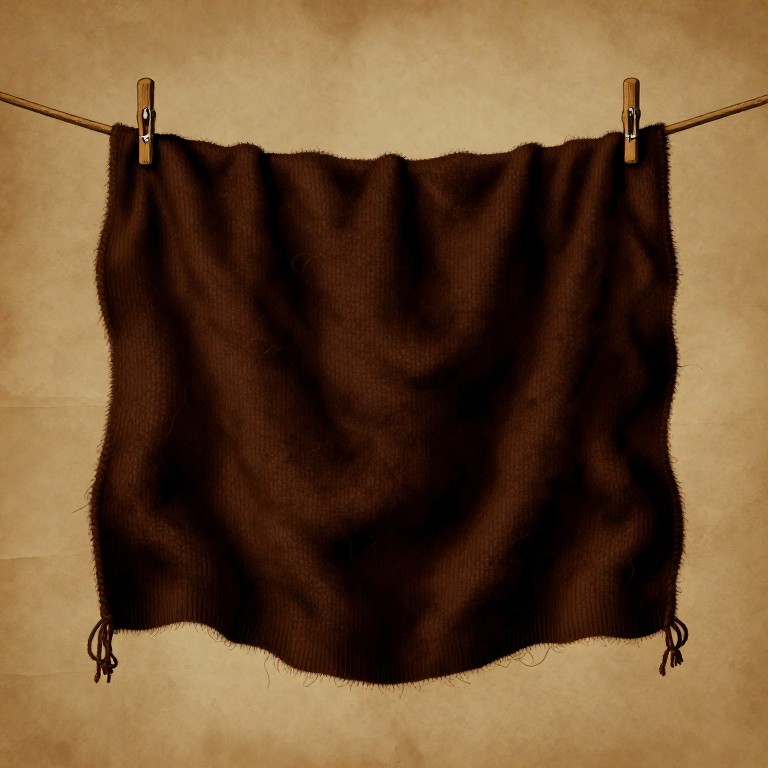
Hang the dyed skein in shade to dry completely — the finished walnut brown is one of the most permanent natural dyes known
Matériaux
4- 500 gramsEspace réservé
- 10 litresEspace réservé
- 1 botteEspace réservé
- 100 gramsEspace réservé
Outils requis
4- Espace réservé
- Espace réservé
- Espace réservé
- Espace réservé
CC0 Domaine public
Ce blueprint est publié sous CC0. Vous êtes libre de copier, modifier, distribuer et utiliser ce travail pour tout usage, sans demander la permission.
Soutenez le Maker en achetant des produits via son Blueprint où il perçoit une Commission Maker définie par les Vendeurs, ou créez une nouvelle itération de ce Blueprint et incluez-le comme connexion dans votre propre Blueprint pour partager les revenus.